
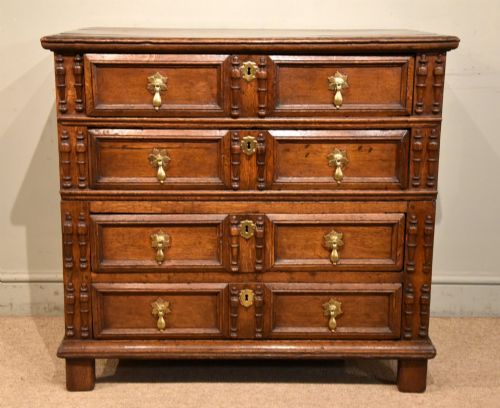
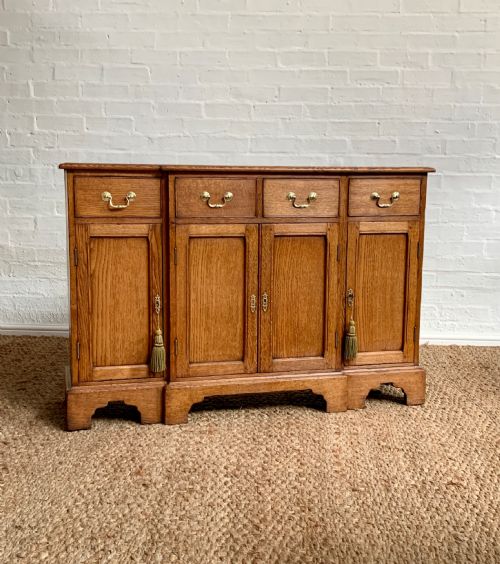
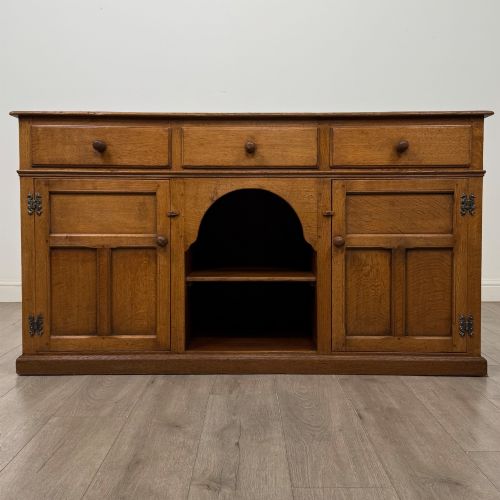
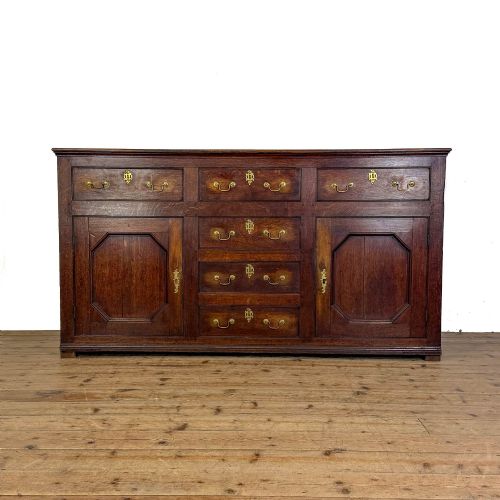
Panelled Oak Dresser Base
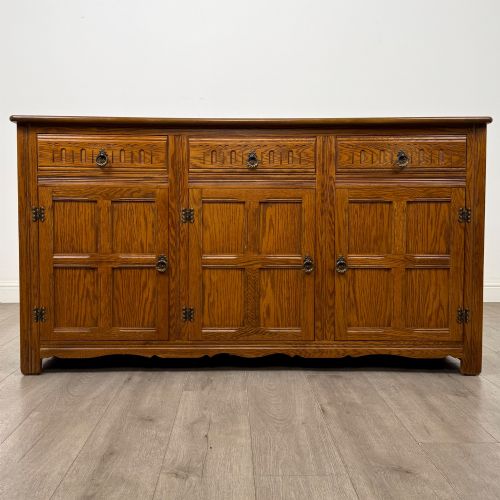
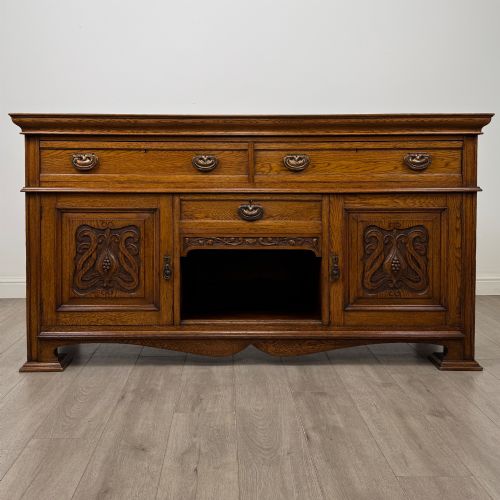
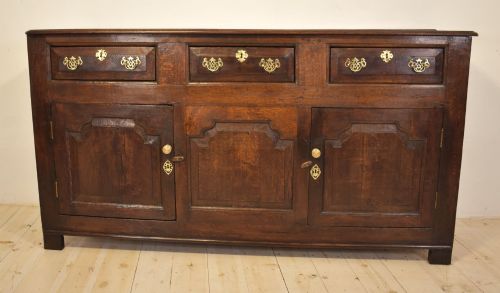
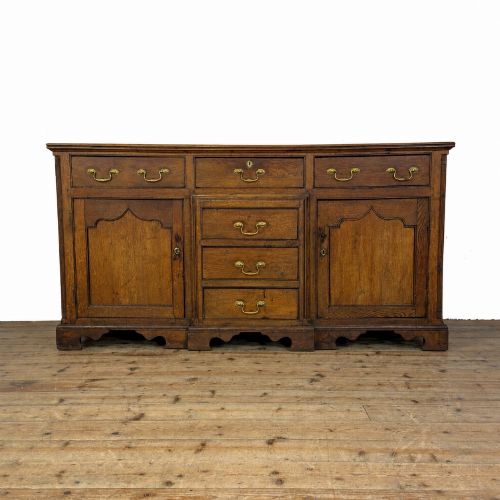
A panelled oak dresser base provides robust storage and a sturdy working surface, grounding a room with centuries of utilitarian craft.
Panelled Oak Dresser Base
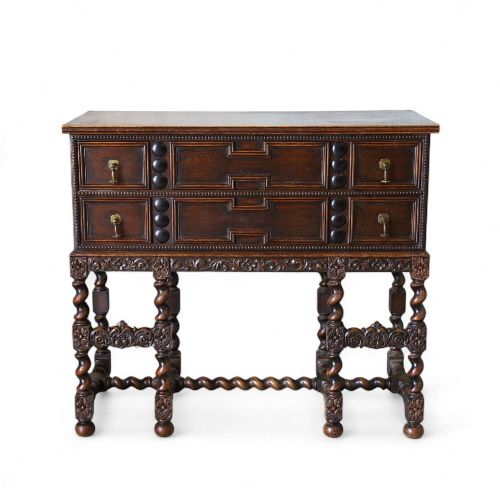
A panelled oak dresser base stands as a heavy, low storage unit traditionally used in domestic interiors for food preparation and tableware storage. Buyers seeking a panelled oak dresser base will encounter forms ranging from seventeenth-century joined construction to later revivals.
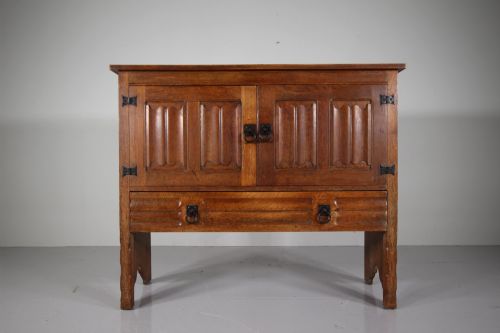
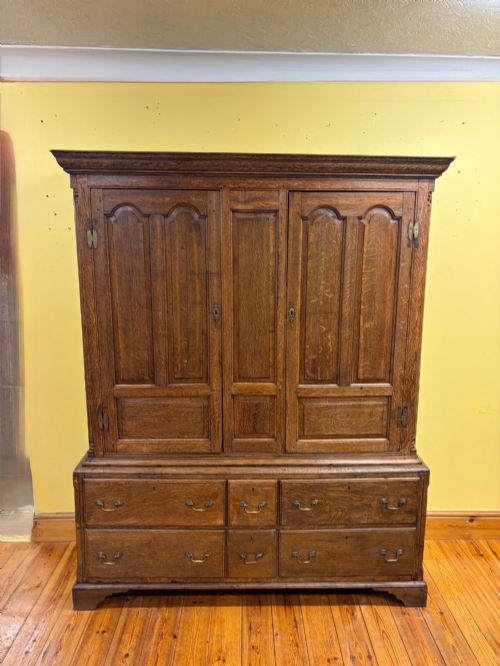
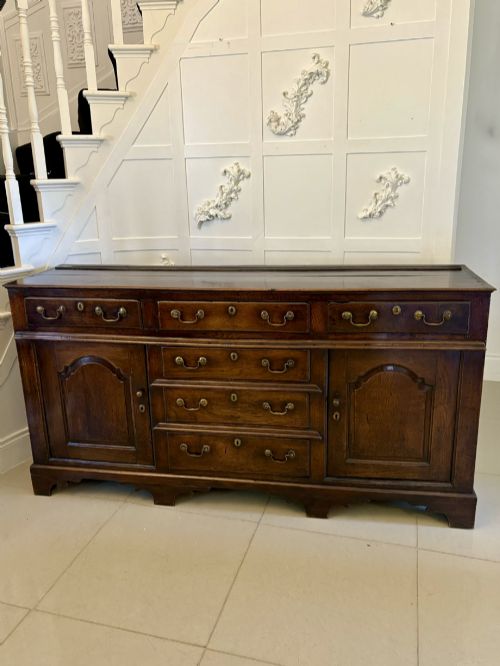
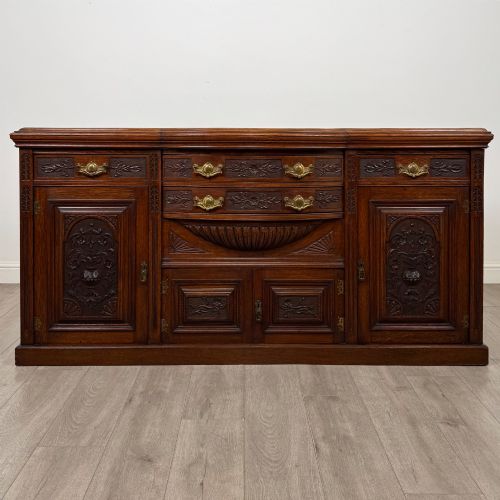
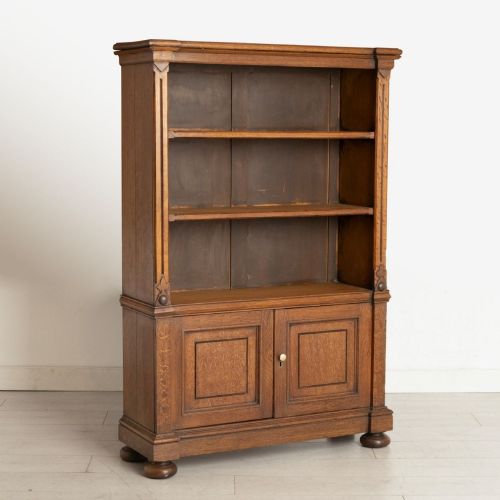
The selections span multiple centuries, including eighteenth-century Georgian examples and nineteenth-century interpretations. These pieces often feature rows of drawers above enclosed cupboards, sometimes incorporating pot boards beneath.
While many retain their original utilitarian character, others reflect stylistic revivals such as Jacobean or Gothic tastes. Each piece demonstrates the enduring utility of heavy timber furniture in domestic spaces.
Materials and Construction
Carpenters built these units primarily from solid oak, sometimes combining secondary woods like walnut or ash within internal structures. Panels were set into grooved framing to accommodate the natural expansion and contraction of the timber over time.
Joinery relied heavily on mortise and tenon joints secured with wooden pegs rather than modern metal fasteners. Hardware such as brass or iron drop handles and hinges completed the construction, though many early mounts represent later replacements.
One robust Victorian specimen doubles as a window seat, proving that tired diners once sat directly upon their storage.
Assessing Quality and Character
Quality rests in the integrity of the timber selection and the precision of the primary joinery. Heavy figuring in the oak and well-defined mouldings distinguish superior examples from plain utility pieces.
The survival of original surfaces, such as early polish or untouched dry patina, elevates a piece significantly. Alterations to bases, replaced drawer linings, or heavily reworked carved elements alter the historical standing of the furniture.
The Panelled Oak Dresser Base Glossary
- Panelled
- Construction method where flat or raised pieces of timber are fitted within a surrounding frame. This technique prevents major warping as the wood responds to humidity.
- Pot board
- An open lower shelf built into the base of a dresser. Historically, it held heavy earthenware pots and copper domestic vessels.
- Joined construction
- Framework assembled using interlocking wood joints secured by pegs. This predates widespread use of metal screws in heavy cabinetwork.
- Geometric moulding
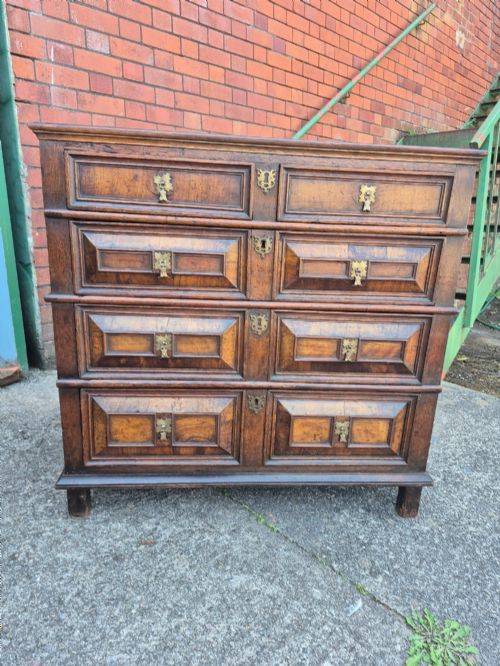
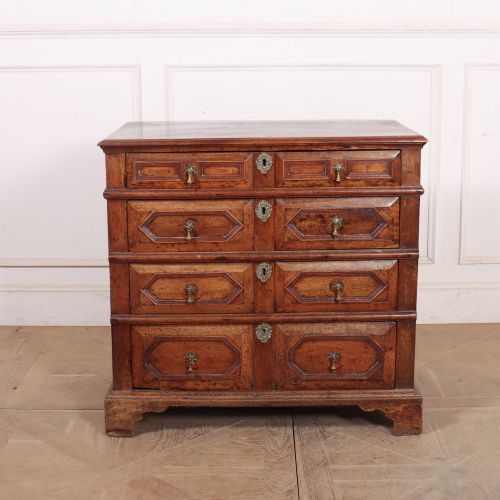
- Raised decorative wooden strips applied in repeating angular patterns onto drawer fronts or cupboard doors. It is particularly characteristic of seventeenth-century joinery.
- Patina
- The surface sheen and colour acquired by wood through decades of handling, polishing, and exposure to light. A desirable skin shows age without artificial enhancement.
Panelled Oak Dresser Base: Frequently Asked Questions
What is a panelled oak dresser base used for?
These low cabinets served as practical workspace and storage in traditional kitchens and dining rooms. They held heavy ceramics, cutlery, and provisions behind sturdy panelled doors.
Today, buyers frequently utilise them as sideboards in dining spaces, media consoles in living areas, or hallway storage units.
How do I date an oak dresser base?
Dating relies on observing construction methods, timber characteristics, and hardware placements. Seventeenth-century examples often display joined frameworks and geometric mouldings, while eighteenth-century versions typically feature refined drawer proportions.
Later Victorian and Edwardian pieces frequently incorporate revival styles like Jacobean carving or exhibit machine-sawn timber elements hidden inside.
Are all these pieces from the seventeenth century?
The inventory spans multiple eras, including seventeenth, eighteenth, and nineteenth centuries, alongside later twentieth-century revivals. Many items date from the Georgian and Victorian periods.
Earlier examples feature hand-riven oak boards and peg joinery, while revival pieces from later eras imitate these historic styles.
How should I care for antique oak furniture?
Maintain the wood by keeping it away from direct heat sources and rapid humidity shifts, which cause splitting. Apply a quality wax polish sparingly to nourish the dry timber.
Avoid commercial liquid cleaners that strip the historic surface sheen and damage the accumulated patina.