
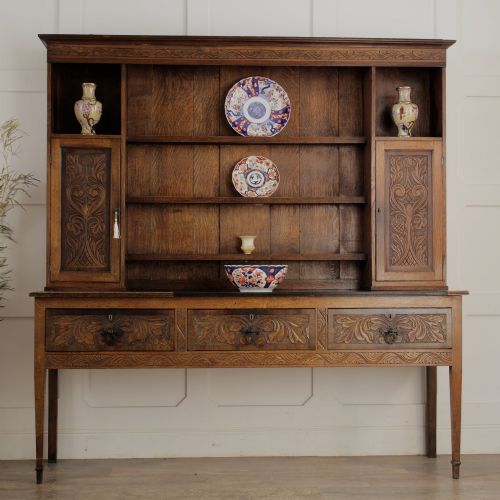
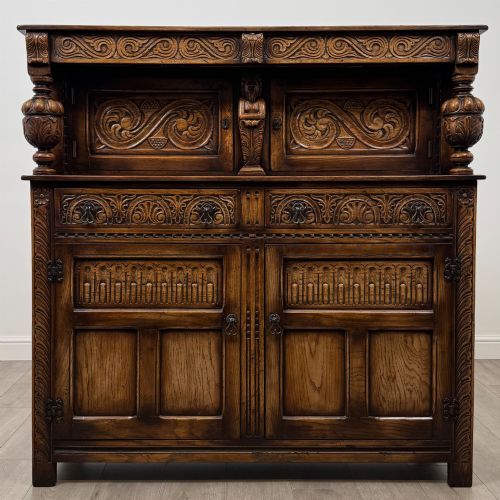
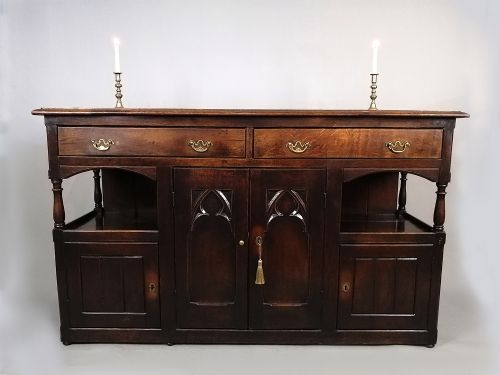
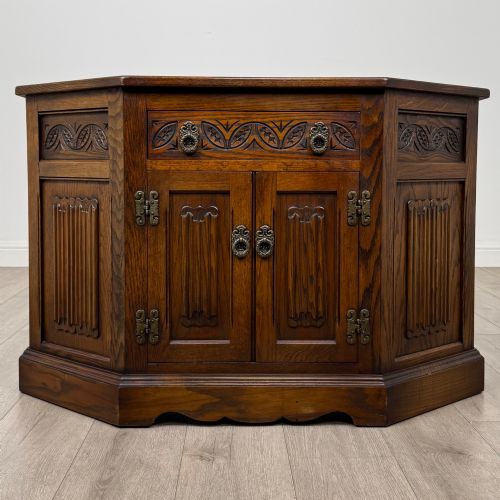
Oak Server Cabinet
These oak server cabinet pieces combine utility with traditional craftsmanship, offering sturdy storage that suits both period and modern interiors.
What these pieces are
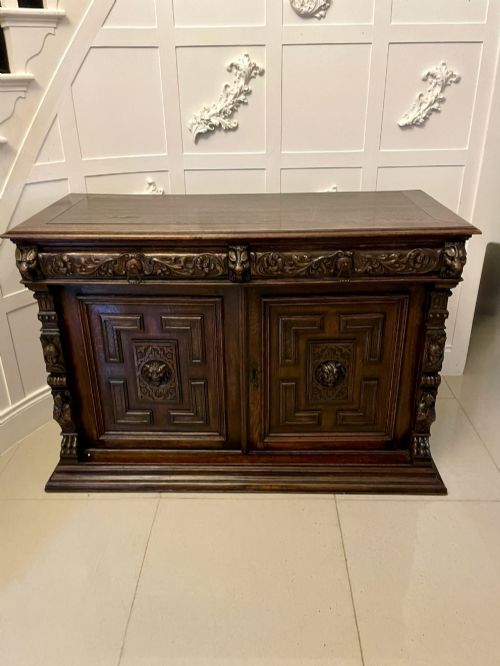
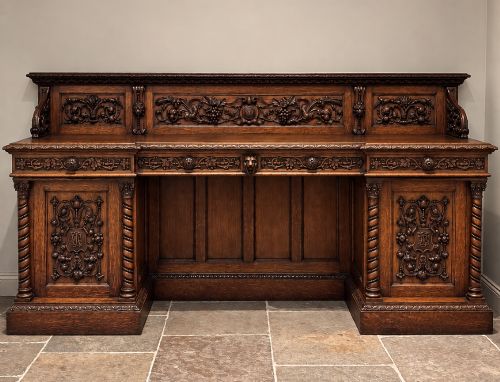
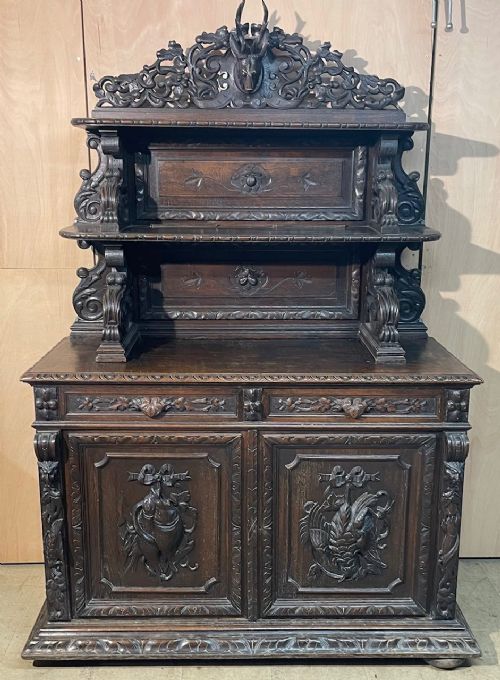
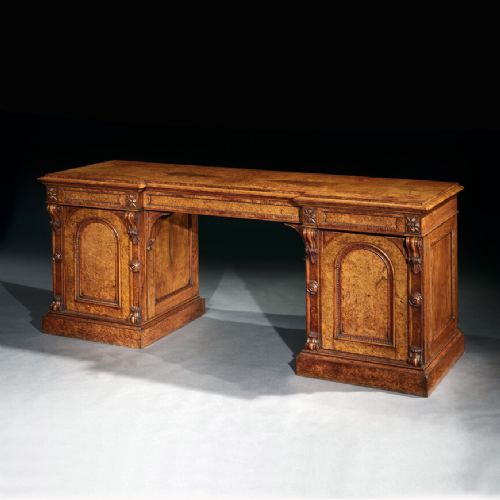
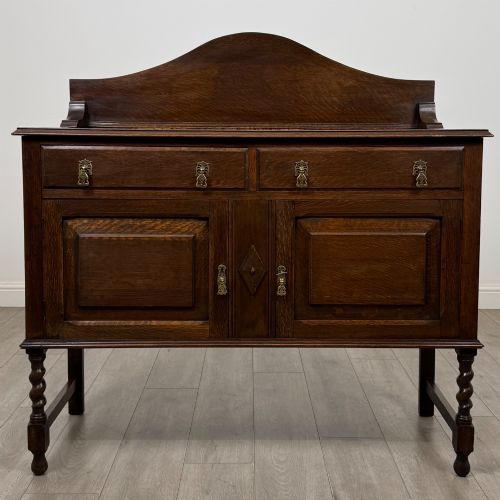
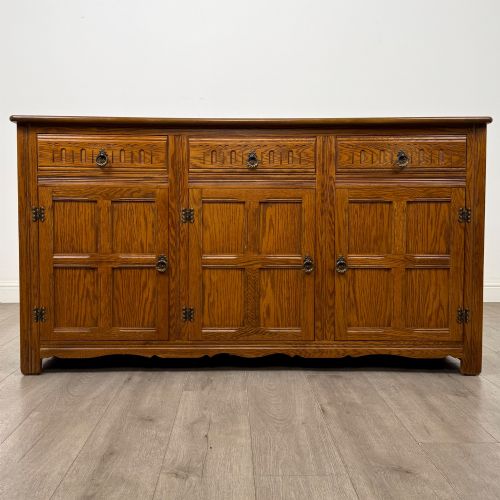
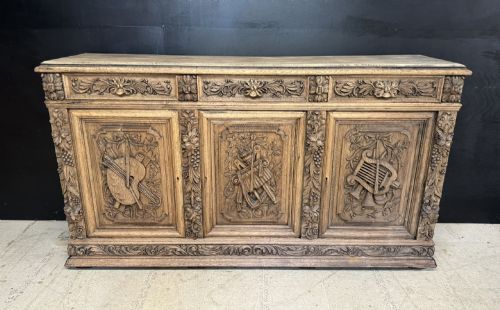
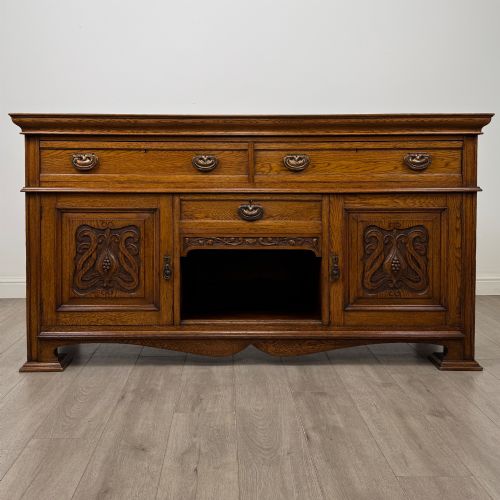
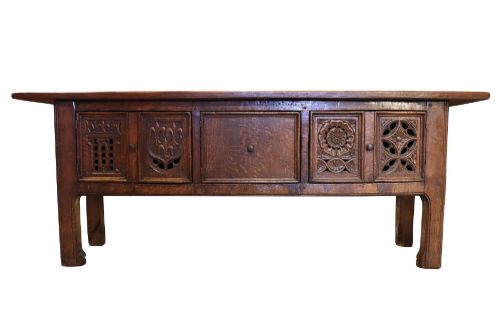
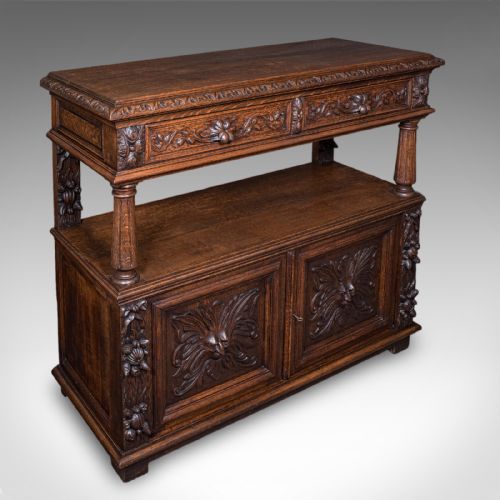
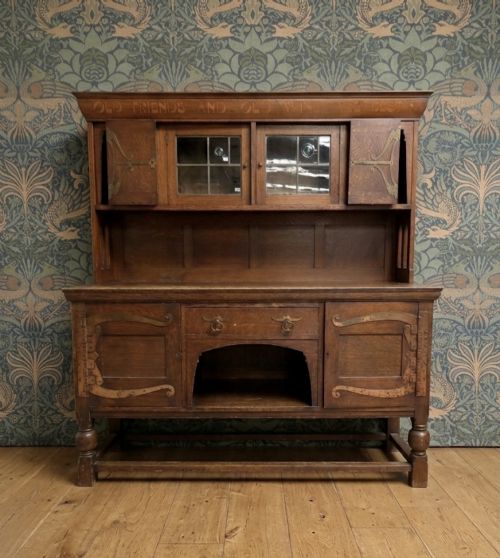
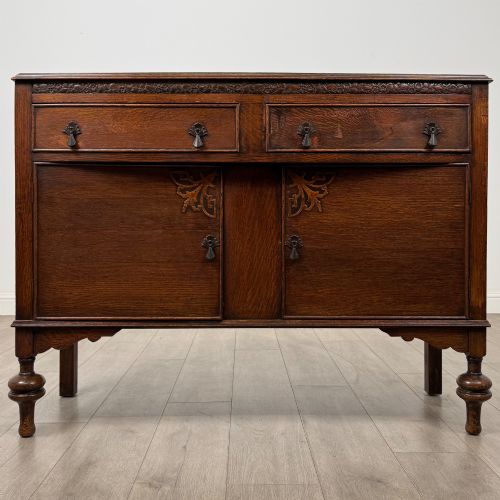
An oak server cabinet provides robust storage through sideboard, dresser base, and credenza forms. These pieces often serve dining rooms or hallways as both workspace and display surfaces.
The selection ranges from early Georgian examples and Arts and Crafts pieces to Edwardian items and 1930s Art Deco designs. Regional styles like Northern French and Border Counties low dressers also appear.
Buyers most frequently encounter Edwardian and Georgian interpretations alongside late nineteenth-century Arts and Crafts items. Each period brings distinct carving details and structural proportions to the category.
How they were made
Construction relies primarily on solid oak, complemented occasionally by walnut elements. Cabinet makers shaped these woods using traditional joinery methods suited to heavy domestic furniture.
Metal components include brass, iron, copper, and general metalwork used for handles, hinges, and decorative mounts. Glass and mirror panels appear in selected doors and upper sections for display purposes.
Retail Price Guide 2026
Typical UK retail prices for oak server cabinet, calculated from the Sellingantiques database of over a million retail prices indexed since 2003. This retail price guide relies exclusively on Sellingantiques data; no external sources or auction records are used, so the figures do not describe the wider market.
Current listings feature items spanning the Georgian, Edwardian, 1890, and 1930 periods, constructed primarily in oak with brass, glass, and iron.
What varies in quality
The degree of hand carving and the crispness of surface detail distinguish standard utilitarian pieces from finer workshop productions. Early regional examples show distinct joinery methods that reflect local traditions.
The selection of timber grain and the quality of associated hardware, such as brass pulls and iron hinges, mark the distinction between everyday furniture and superior examples.
Gomme
The Oak Server Cabinet Glossary
- Dresser base
- A low wooden storage unit featuring drawers and cupboards, historically used for food preparation and serving.
- Sideboard
- A long dining room cabinet designed for storing tableware and serving food.
- Jacobean Revival
- A nineteenth-century revival style mimicking seventeenth-century English furniture, known for heavy proportions and geometric carvings.
- Arts and Crafts
- A design movement favouring visible construction, honest materials, and handcrafted simplicity over mass production.
Frequently Asked Questions
What is an oak server cabinet?
An oak server cabinet is a sturdy storage furniture piece designed for dining rooms and hallways. These units function as sideboards, credenzas, or dresser bases.
They provide enclosed cupboard space and drawer storage alongside a flat top surface for serving food or displaying objects.
How do I date an oak server cabinet?
Dating relies on examining the construction methods, hardware materials, and stylistic details present in the piece. Periods range from Georgian and Edwardian to the 1890s and 1930s.
Carving styles, such as Jacobean Revival or Art Deco, further indicate the specific era of manufacture.
Where should I place a server cabinet?
These cabinets suit dining rooms, large hallways, or living spaces where surface area and storage are useful. Their robust wooden construction anchors a room visually.
Ensure adequate clearance for doors and drawers to open fully in your chosen space.
What materials are used in these cabinets?
Solid oak forms the primary structural material across the entire selection. Additional woods like walnut occasionally appear in specific components.
Hardware and decorative elements incorporate brass, iron, copper, glass, and mirror.