
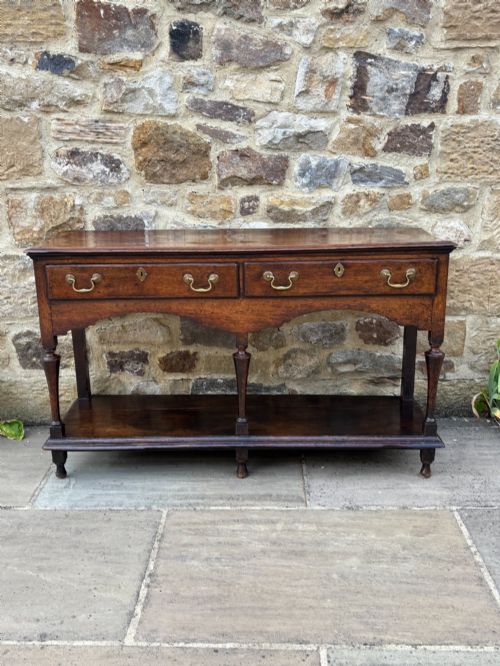
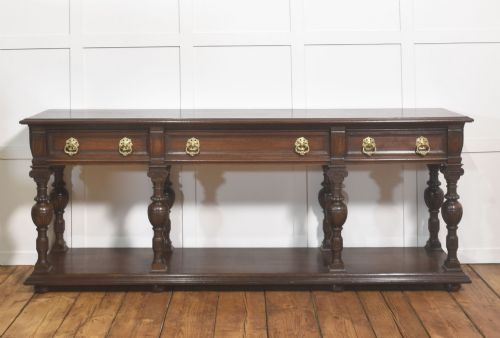
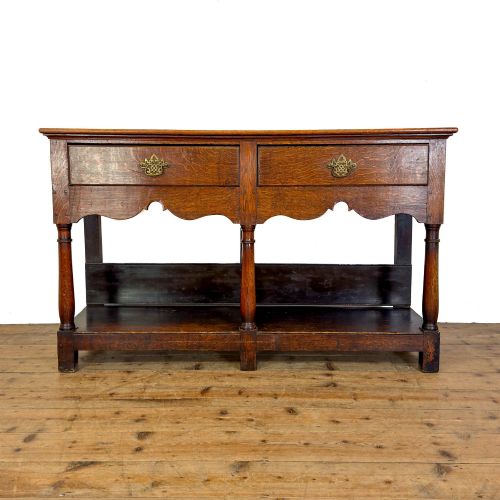
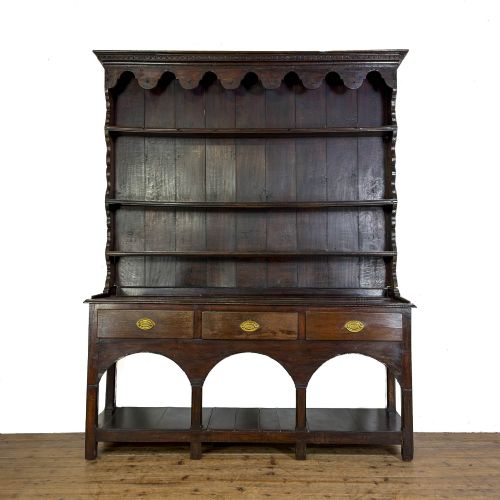


Carved Oak Potboard Dresser
A carved oak potboard dresser brings architectural presence and honest utility to a room, offering both display surface and open lower storage.
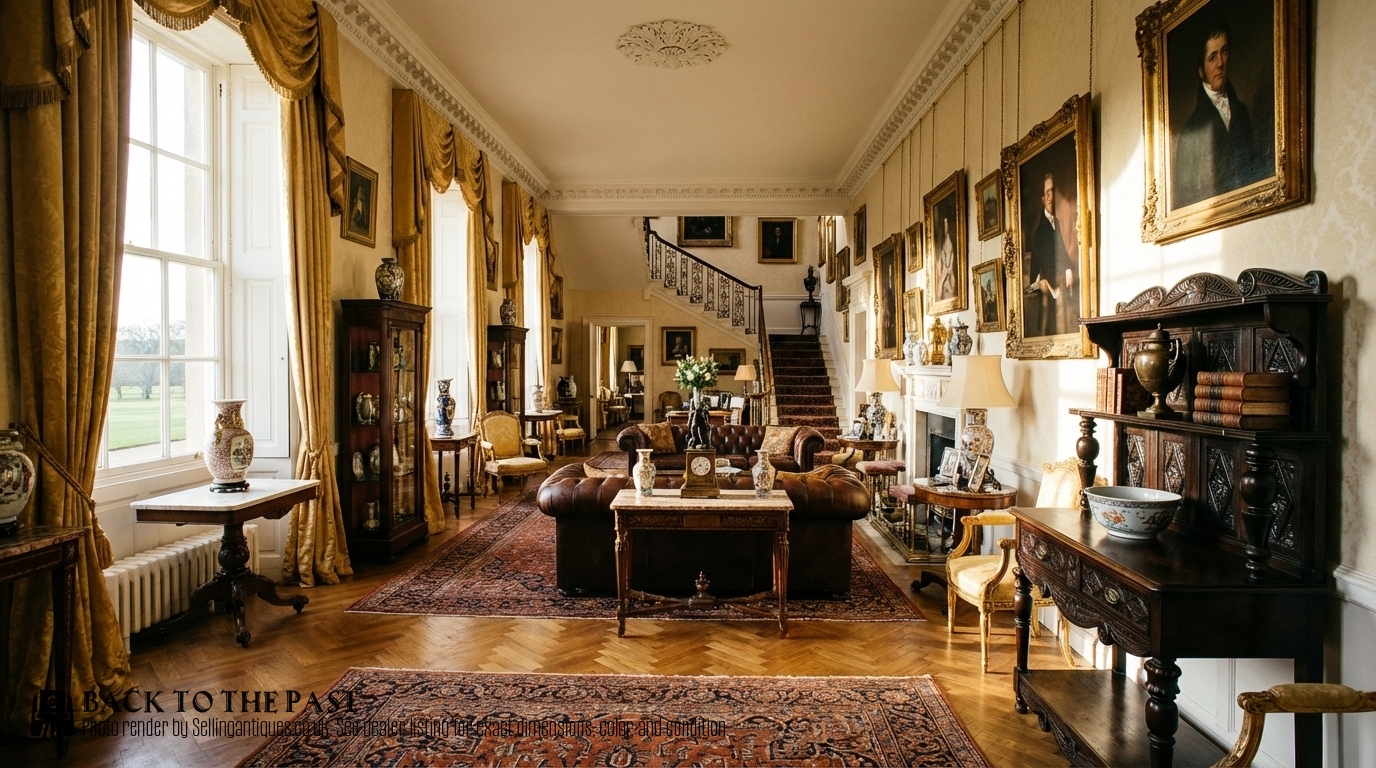
Carved Oak Potboard Dresser
A carved oak potboard dresser is a substantial storage piece featuring an open lower shelf, known as a potboard, positioned beneath the main counter or drawers. Buyers seeking this form will find examples ranging from small proportions to larger formats, often incorporating plate racks or upper shelving.
The pieces appearing here span the eighteenth century, the Victorian era, and later revivals from the early twentieth century. Regional vernacular styles such as Welsh country and English country sit alongside formal Georgian pieces and heavily carved Jacobean revival interpretations.
Most examples encountered on this page function as dresser bases or complete sideboards, utilising native timber and traditional construction. The lower potboard shelf provides a defining characteristic that distinguishes these items from standard enclosed sideboards.
What varies in quality
The distinction between tiers of quality rests largely on the crispness of the timber carving and the balance of proportions in smaller scales. Early eighteenth century pieces demonstrate tighter joinery and more harmonious grain patterns compared to later revival items.
Surface finish and patination dictate visual depth, with original bleached or darkened oak finishes holding greater integrity than later interventions. The stability of the lower potboard and the integration of original brass or iron fittings further separate standard examples from superior ones.
Periods represented span from the eighteenth century through Victorian craftsmanship to early twentieth century revival pieces.
The Carved Oak Potboard Dresser Glossary
- Potboard
- The open lower shelf of a dresser, historically used for storing pots, pans, and heavy tableware. This timber platform sits just above the floor, supported by the main legs of the base.
- Dresser base
- The lower section of a dresser comprising drawers and cupboards without the upper plate rack. Many surviving pieces exist solely in this base format.
- Jacobean style
- A decorative manner drawing on seventeenth century motifs, characterised by geometric mouldings and strapwork carving. Revival pieces from the Victorian and Edwardian periods frequently emulate this aesthetic.
- Plate back
- The upper shelving superstructure attached to a dresser base for displaying ceramic plates and platters. It transforms a simple sideboard into a tall display unit.
Carved Oak Potboard Dresser: Frequently Asked Questions
What is a potboard dresser?
A potboard dresser is a form of furniture featuring a flat working surface above drawers or cupboards, anchored by an open low shelf near the floor. This lower board provided practical storage for heavy kitchen pottery in traditional homes.
Today, the form serves as a versatile sideboard in dining rooms or kitchens, offering both surface display space and lower shelf storage for books or baskets.
How do I date an oak dresser?
Dating relies on examining the construction methods, timber patination, and decorative carving styles present on the piece. Eighteenth century examples typically show hand-planed surfaces and pegged joinery, whereas later revival pieces often display machine tooling.
Stylistic clues such as geometric mouldings point towards specific revivals or periods, while overall proportions tend to become more standardised in nineteenth and twentieth century manufacturing.
Where should I place a dresser base?
These pieces suit dining rooms, kitchens, or large hallways where their depth and substantial timber presence can be accommodated. The low potboard shelf makes them ideal for grounding a wall space while keeping the upper visual weight moderate.
Ensure the room has sufficient clearance for the doors and drawers to open fully without obstruction from surrounding furniture.
What is the difference between a Welsh dresser and an English dresser?
Welsh dressers frequently utilise native regional oak and often incorporate open potboard bases alongside tall plate racks designed for local display traditions. English country versions share similar utility but may exhibit regional variations in drawer arrangement and cornice detailing.
Both types emphasise solid timber construction and practical storage, though specific proportions and carving details vary according to their workshop origin.