

English Brass Wall Clock
When you search for an english brass wall clock, you are looking at timepieces spanning the 17th century to the 20th century, housed in mahogany, oak, or rosewood.
English Brass Wall Clock
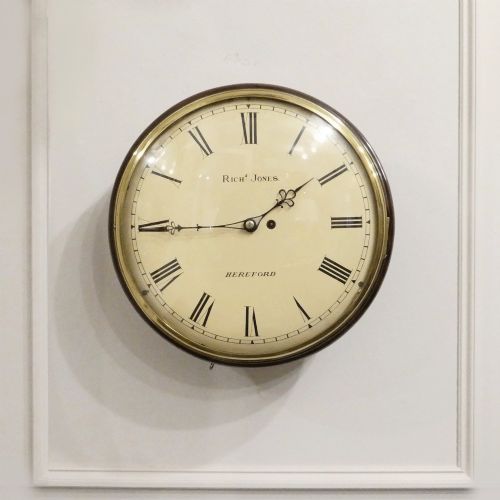
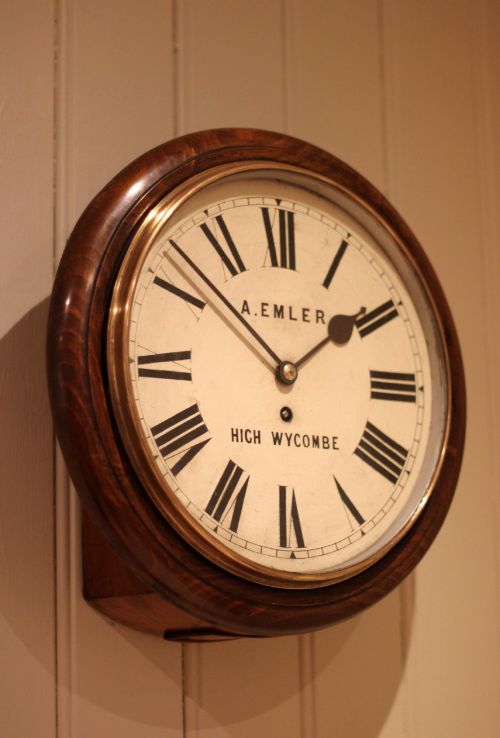
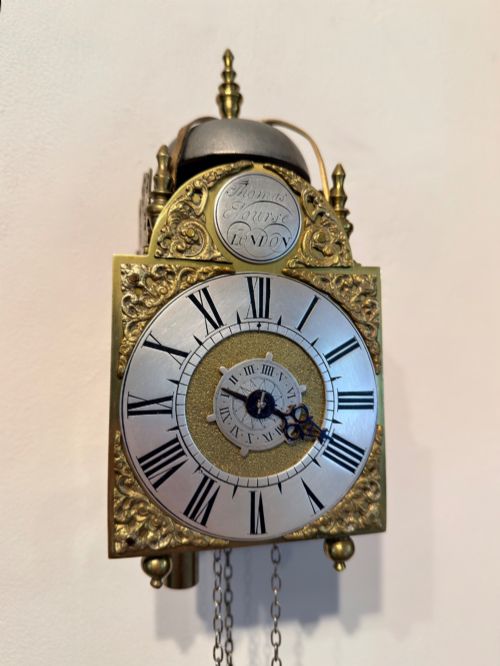
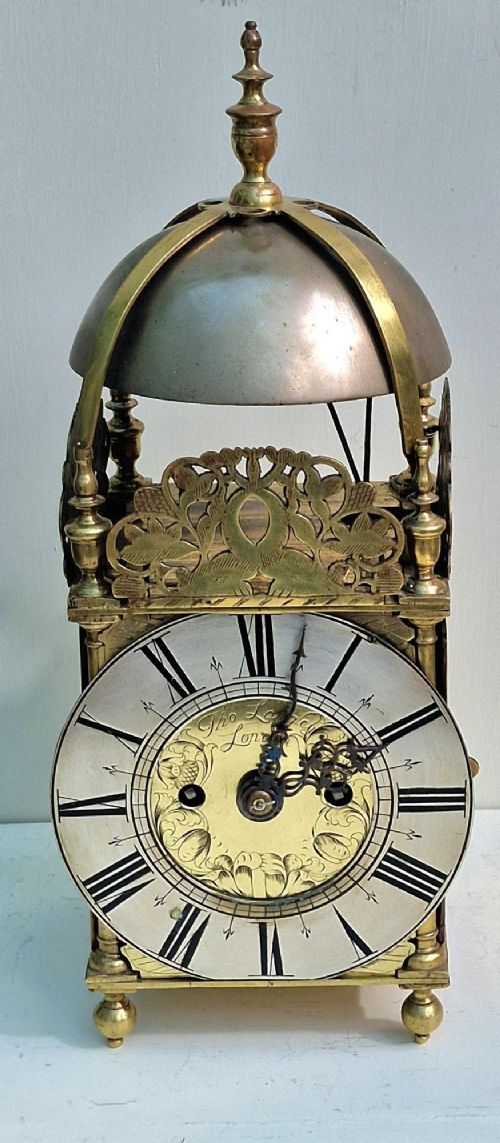
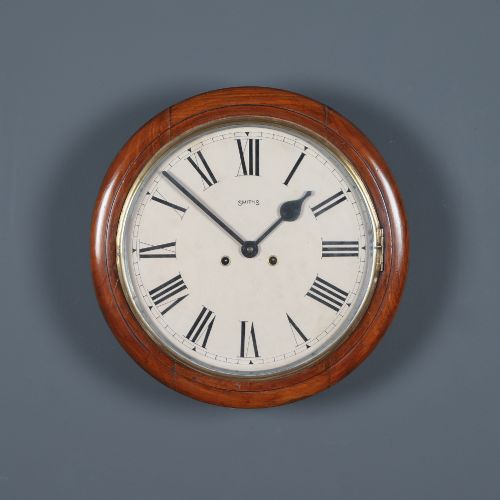
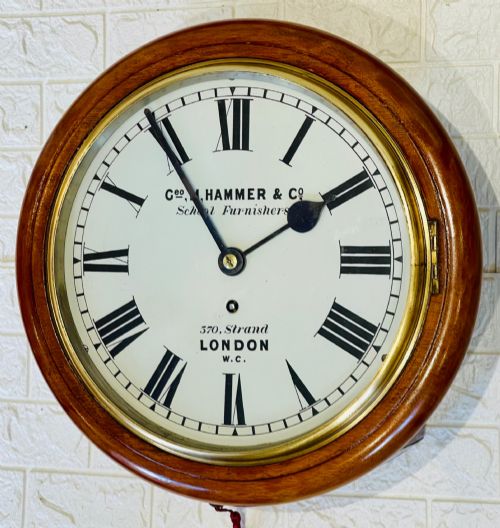
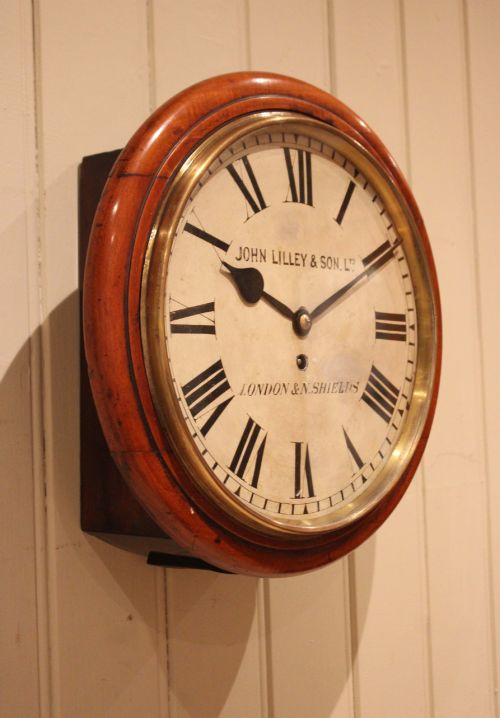
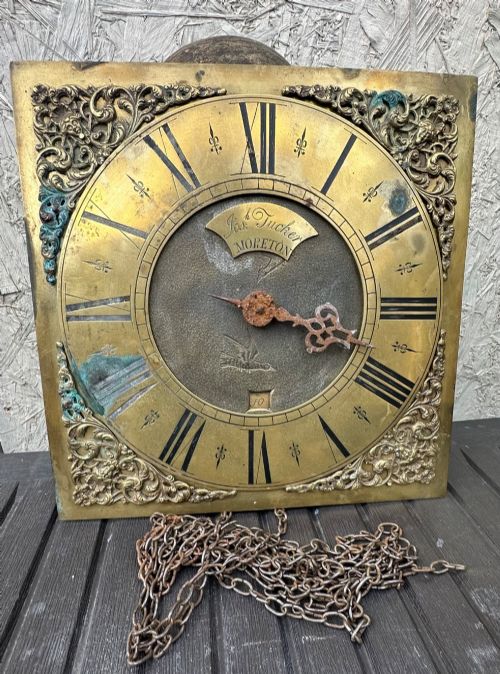
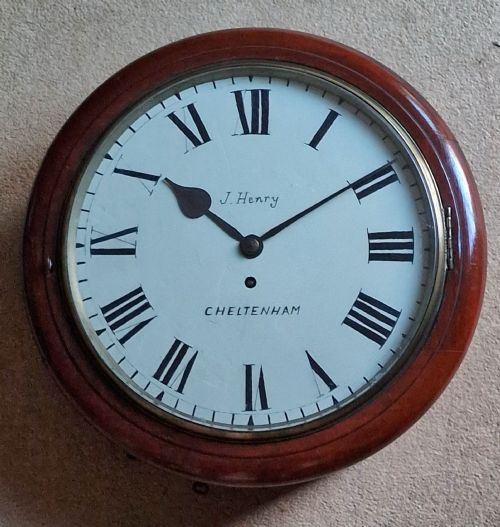
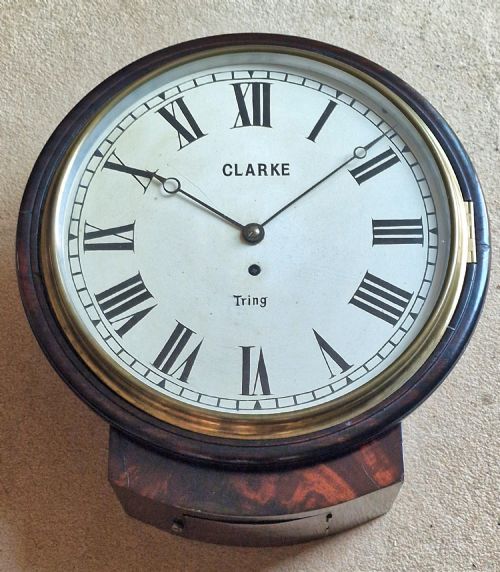
An english brass wall clock encompasses several distinct forms, from early weight-driven brass lantern clocks of the 17th century to spring-driven fusee dial clocks and mahogany drop-dial wall clocks of the Georgian, Regency, and Victorian periods.
The material record includes brass components paired with wooden cases in mahogany, oak, rosewood, and beech, alongside painted metal dials and glass bezels.
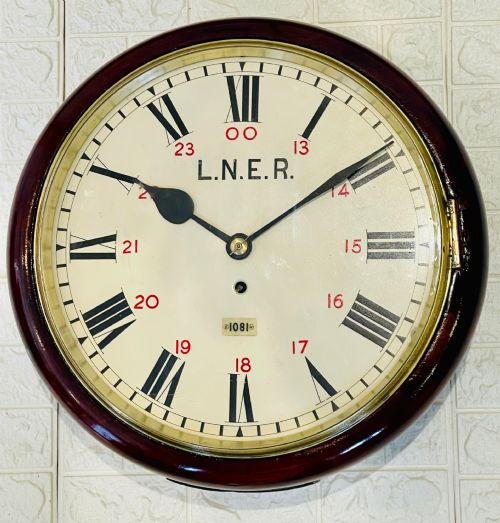
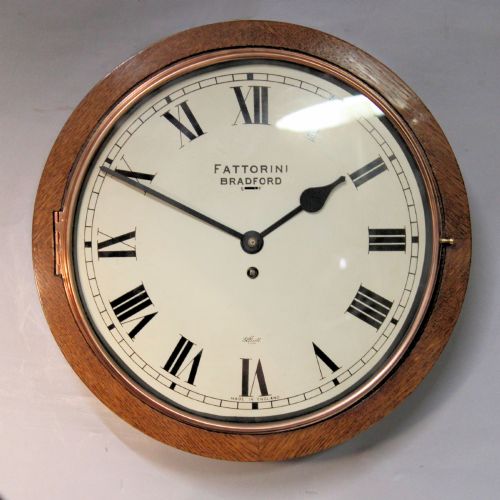
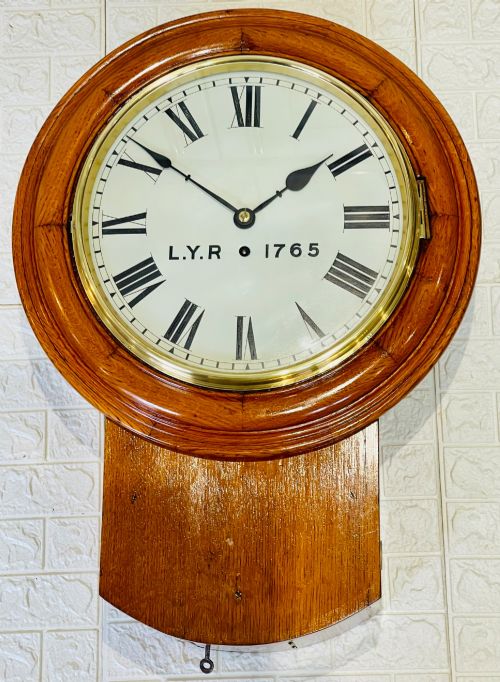
Railway companies, stations, and schools utilised robust fusee dial clocks, producing many examples bearing company initials and town names across the Victorian era and into the early 20th century.
How They Were Made
Clockmakers constructed movements using brass plates, wheels, and gears, often driven by chain or wire fusee mechanisms designed to maintain even tension as the mainspring unwound.
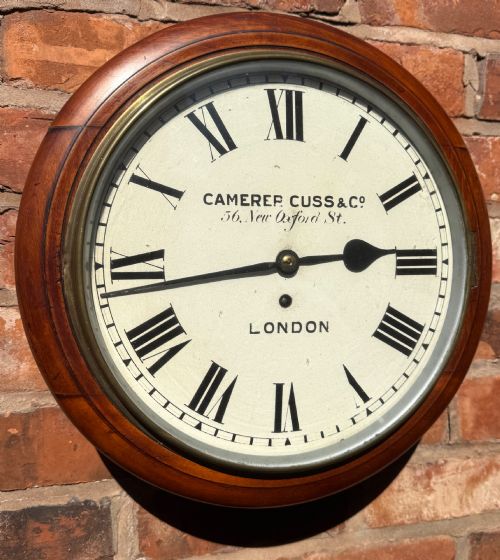
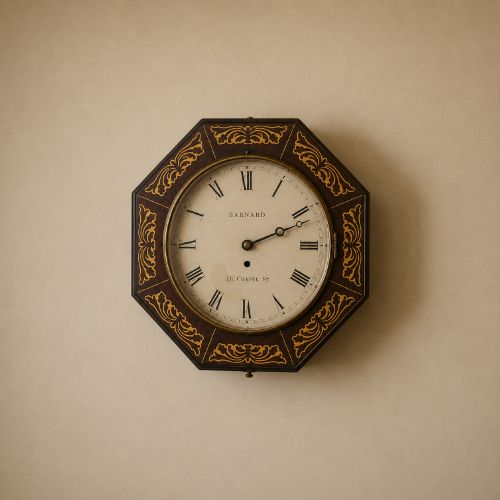
Enclosed cases combined cabinet-making timbers such as mahogany, oak, and rosewood, frequently featuring brass inlay, turned bezels, and side access doors.
Dials were produced in painted metal or wood, sometimes convex in shape, with hands and numerals finished by hand.
Some railway station clocks managed train departures while enduring decades of coal smoke and flying chalk dust.
What Varies in Quality
The fineness of the movement dictates standard, with hand-engraved brass dial work and signed backplates by known makers marking the upper tier of production.
Case timber selection and secondary details, such as brass inlay work on Regency mahogany or specialised drop-dial proportions, separate utilitarian station pieces from domestic parlour clocks.
The integrity of the dial and the original matching of case components to the movement influence the overall standard of survival.
Richard Jones of Hereford·Camerer Cuss and Co London·Thomas Langley London·John Spershott of Titchfield·Joseph Bird of Stroud·Thomas Hedge of Colchester·John Walker London·Thomas Lindey of Bristol
The English Brass Wall Clock Glossary
- Fusee
- A conical pulley connected to the mainspring by a chain or cord, designed to equalise the torque as the spring unwinds. This mechanism improves timekeeping consistency.
- Lantern clock
- An early brass chamber clock of cage-like construction, originating in the 17th century and often adapted for wall mounting with spike and hook supports.
- Drop dial
- A wall clock featuring an extended wooden trunk below the circular dial, allowing space for a longer pendulum or a fusee movement.
- Verge escapement
- An early type of escapement mechanism utilising a crown wheel and a vertical rod with pallets, common in 17th-century timepieces.
- Bezel
- The metal or wooden ring that holds the glass protecting the clock face, frequently hinged for access to the hands.
English Brass Wall Clock: Frequently Asked Questions
What is a fusee wall clock?
A fusee wall clock relies on a conical pulley and chain mechanism to regulate power from the mainspring.
This design ensures even force reaches the escapement as the clock runs, delivering more accurate timekeeping than standard spring-driven movements.
How do I date an antique wall clock?
Dating depends on examining the case timber, dial construction, and signature styles characteristic of periods like the Georgian, Regency, or Victorian eras.
Makers' signatures inscribed on the brass dial or movement backplate often provide specific biographical dates for the workshop.
Were railway clocks different from domestic clocks?
Railway clocks were built specifically for heavy utility in stations and offices, favouring sturdy oak or mahogany cases with clear painted dials.
Many bear company lettering such as GWR or LNER on the dial face to identify their specific operating network.
What is a lantern clock?
A lantern clock is a small brass domestic clock from the 17th century featuring distinctive corner pillars and overhead bell placement.
They were originally hung on a wall bracket using spiked feet and a wall spike, operated by falling weights.