

Edwardian Painted Table
An edwardian painted table brings surface colour and delicate floral or classical motifs into a room, spanning lighter occasional pieces and writing desks.
Edwardian Painted Table
When you search for an edwardian painted table, you encounter items predominantly made around the turn of the twentieth century, combining traditional furniture forms with decorative surface work. The selection ranges from satinwood occasional tables and Pembroke or drop-leaf designs to writing desks, games tables, and small lamp stands.
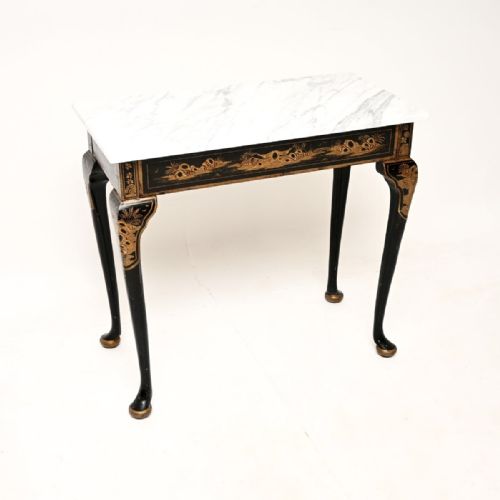
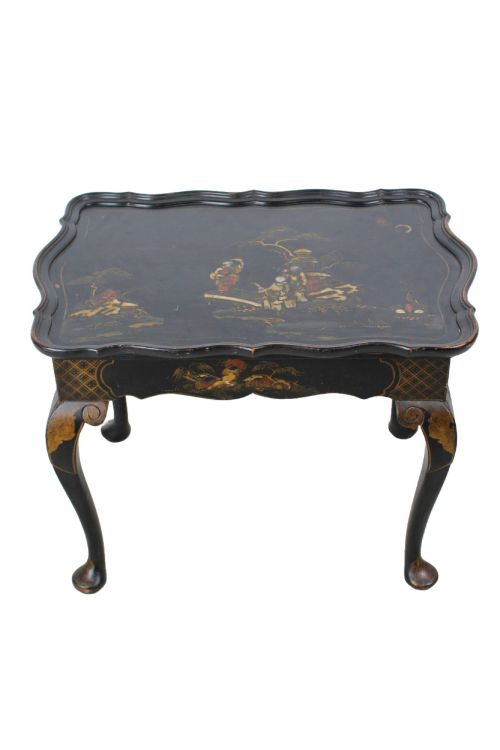
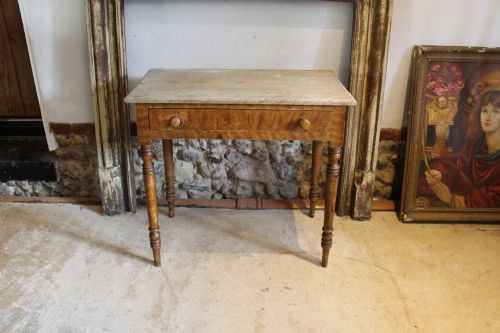
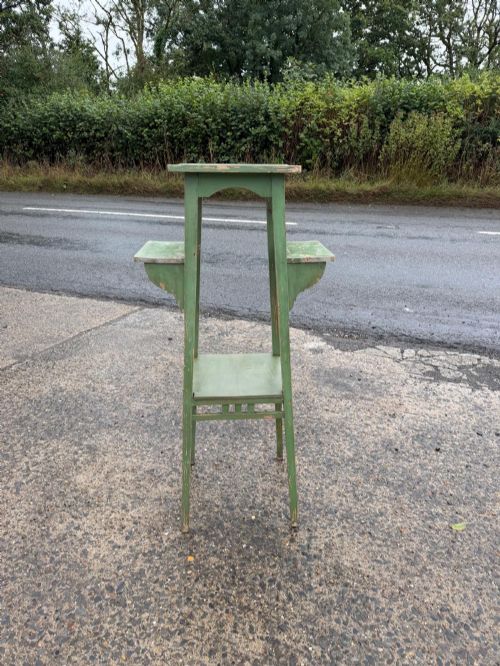
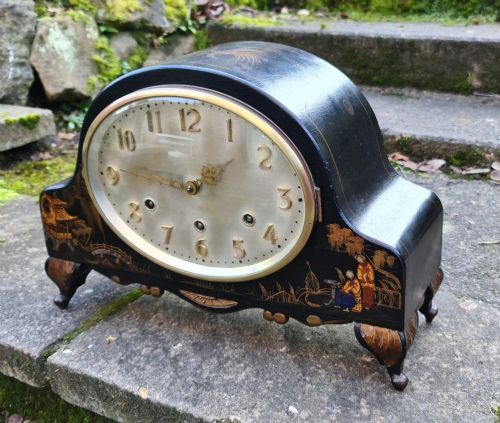
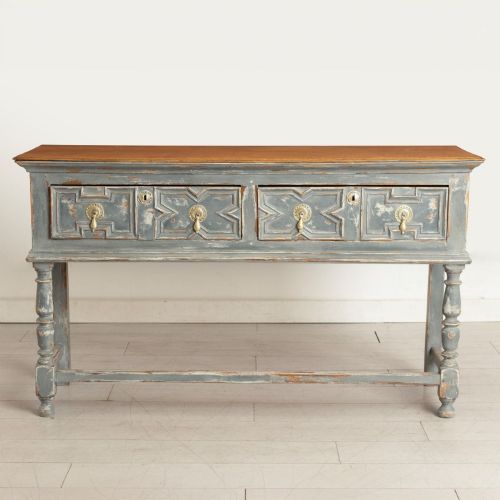
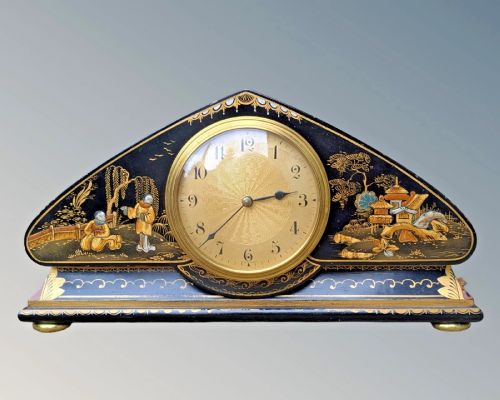
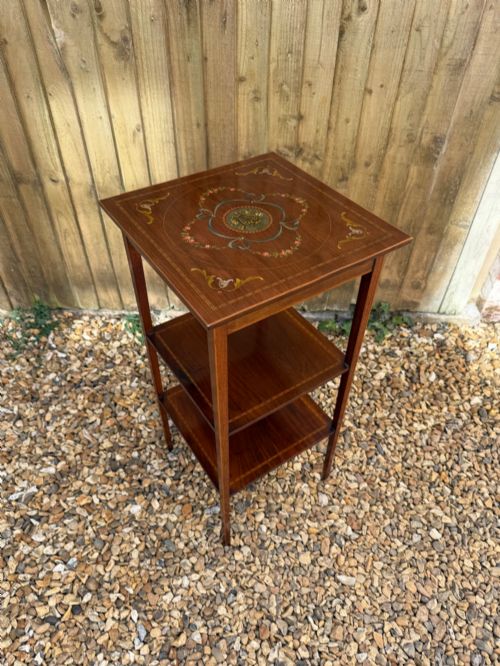
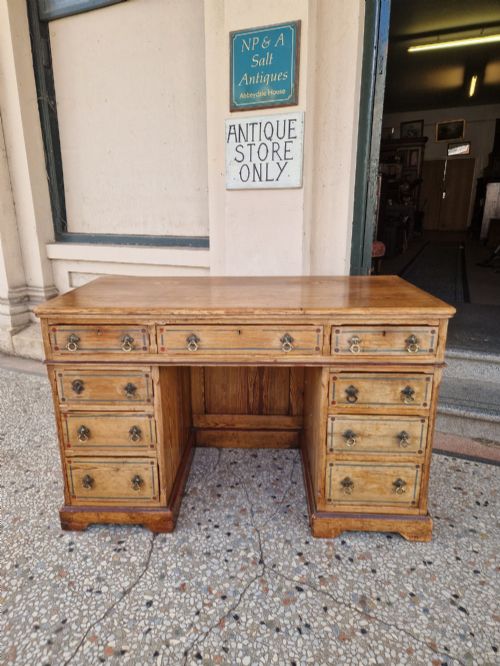
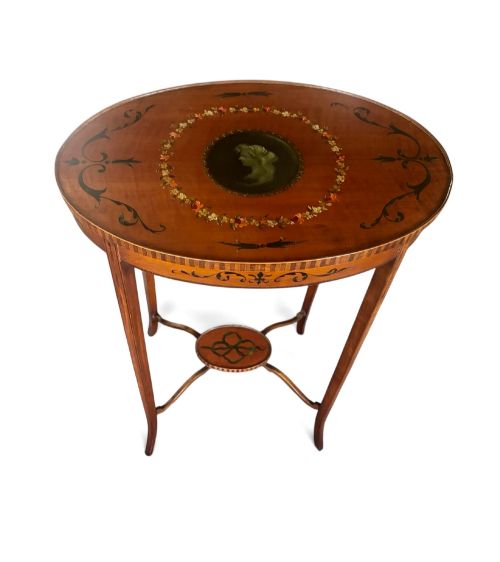
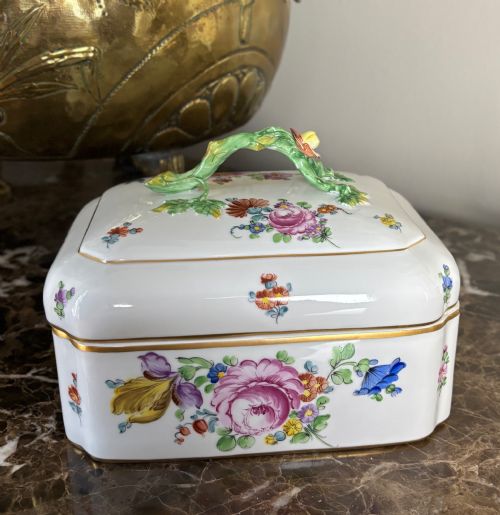
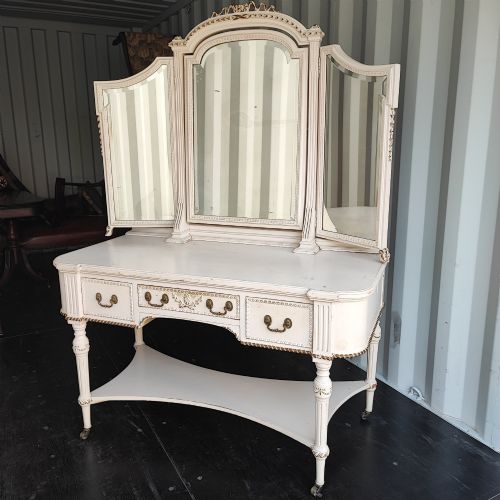
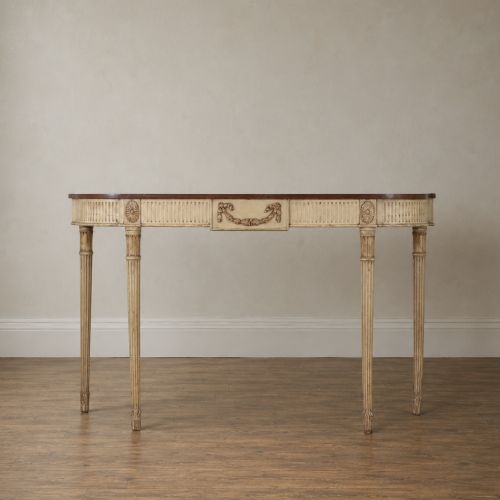
The version you are most likely to meet on this page is an occasional or side table constructed from satinwood or mahogany, decorated with hand-painted floral swags, ribbons, or neoclassical urn motifs. Surviving examples also include pine pieces featuring original painted finishes, alongside occasional japanned and Chinoiserie variants.
Makers and workshops during this period drew heavily on eighteenth-century Sheraton and Hepplewhite precedents, reviving the taste for light timbers adorned with polychrome brushwork. These pieces served domestic functions in sitting rooms and boudoirs, functioning as display surfaces or writing supports.
How they were made
The foundation of these tables relies primarily on cabinet timbers such as satinwood and mahogany, though pine appears frequently where surfaces received a solid coat of paint or scumble glaze. Craftsmen shaped tapered legs, demi-lune tops, and envelope folds using traditional joinery, frequently pairing the pale timber with contrasting stringing and banding.
Surface decoration involved meticulous hand-painting directly onto the wood or over a prepared ground, applying floral bouquets, classical figures, or intricate borders in oil or water-based pigments. Protective clear varnishes were then applied over the painted areas to seal the design and withstand light daily use.
Surviving tables occasionally retain traces of nineteenth-century card parties inside their folded leaves, hinting at quiet evenings spent playing whist.
What varies in quality
The distinction between ordinary and superior pieces rests largely on the execution of the hand-painted decoration and the selection of timber veneers. Finest examples feature crisp, highly detailed brushwork with subtle shading and well-figured satinwood grains, whereas simpler items display more repetitive or stencilled floral motifs.
Structural integrity and the survival of the original painted surface without extensive repainting also govern the standing of an item. Tables retaining their untouched patination and original hardware command greater attention than those with compromised finishes or later surface alterations.
Maples of London and Paris·Royal Worcester·Hinks·Taylor Tunnicliff
The Edwardian Painted Table Glossary
- Satinwood
- A dense, lustrous tropical hardwood native to Ceylon and India, prized for its golden yellow colour and satiny sheen. It served as the primary canvas for painted neoclassical furniture.
- Demi-lune
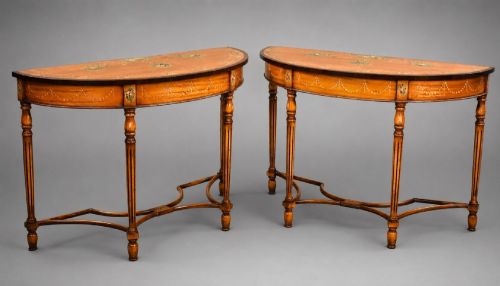
- A half-moon shape characteristic of console and side tables designed to sit flush against a wall. These tables often feature folding tops configured for games or display.
- Sheraton Revival
- A late nineteenth and early twentieth-century design movement inspired by the neoclassical furniture of George Sheraton. It relies on straight tapered legs, satinwood veneers, and delicate painted ornamentation.
- Chinoiserie
- European decorative style employing Chinese-inspired motifs, often executed in lacquer with raised details. On these tables, it appears as figurative scenes or landscapes rendered in gold and dark pigments.
- Occasional table
- A small, movable piece of furniture designed for specific, intermittent domestic tasks such as holding a lamp or book. They appear frequently in satinwood with painted floral decoration.
Edwardian Painted Table: Frequently Asked Questions
What rooms suit an edwardian painted table?
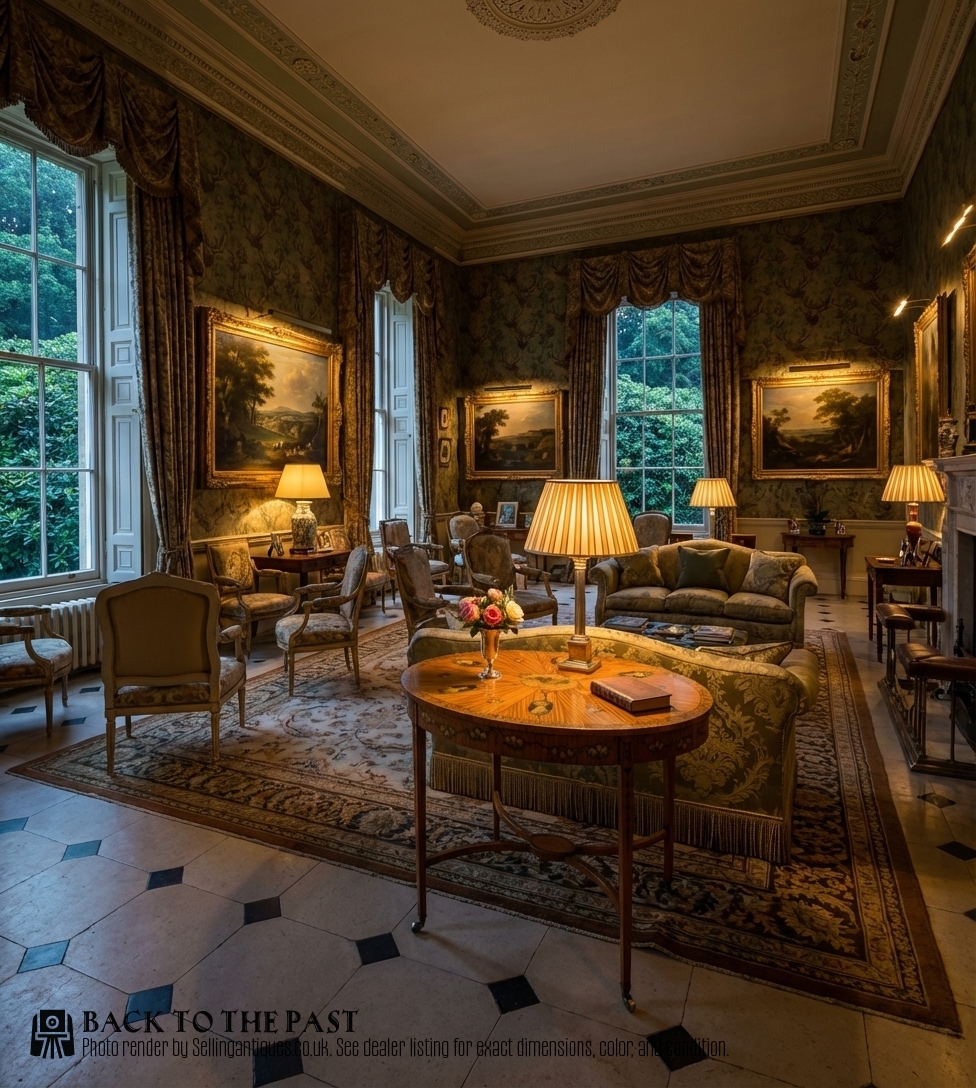
These lighter pieces integrate naturally into drawing rooms, bedrooms, or hallways where heavy dark furniture might overwhelm the floor space. Their compact dimensions allow them to function as bedside stands, lamp tables, or decorative corner accents.
The pale satinwood and painted floral details harmonize easily with both traditional period interiors and brighter, contemporary decorative schemes.
Were these tables used for writing?
Certain forms, particularly those designated as writing desks or occasional tables with fitted drawers, were indeed built for correspondence and light paperwork. They provided a compact surface for a portable inkstand and stationery in a private boudoir or bedroom.
Other variations, such as card tables and envelope tables, accommodated evening parlour games rather than written correspondence.
How can I distinguish Edwardian pieces from Victorian ones?
Edwardian painted furniture generally displays a lighter, more delicate construction, favouring pale satinwood and pastel floral motifs influenced by the Sheraton Revival. Victorian examples from earlier decades often incorporate heavier proportions, darker mahogany structures, or bolder polychrome and scumble paint finishes.
Examining the construction methods, secondary woods underneath, and overall weight helps clarify the manufacturing era.