




Hand Painted Occasional Table
A hand painted occasional table brings lightness and personal brushwork into a room, spanning delicate satinwood and glossy black lacquer.
Hand Painted Occasional Table
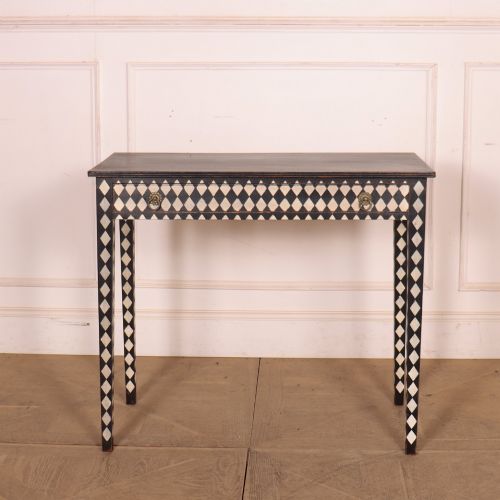
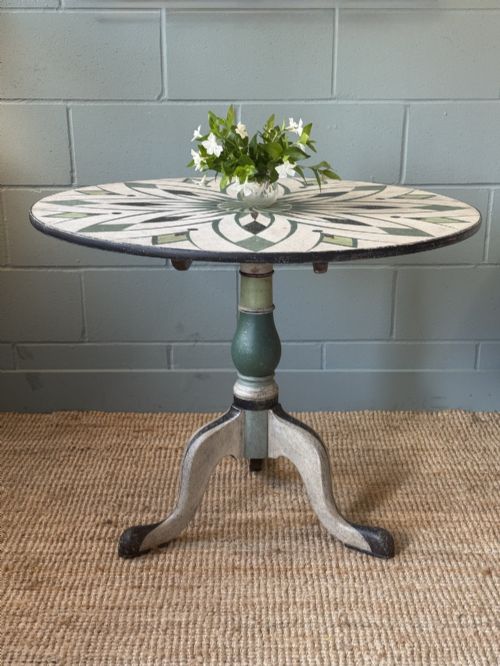
A hand painted occasional table serves as a movable surface for lamps, books or tea, originating mostly in the nineteenth and early twentieth centuries. These pieces cross various forms, including side tables, nests, tilt-top tables, and tray tables, reflecting diverse domestic uses.
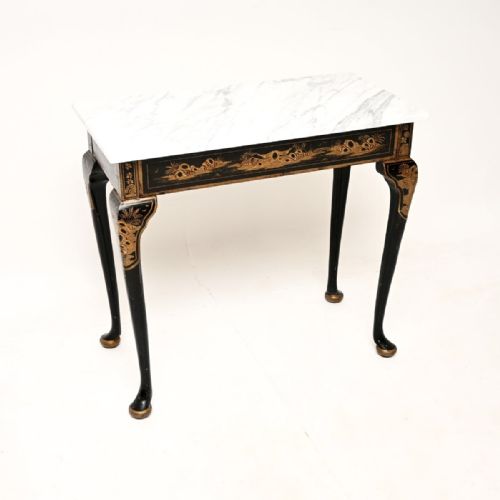
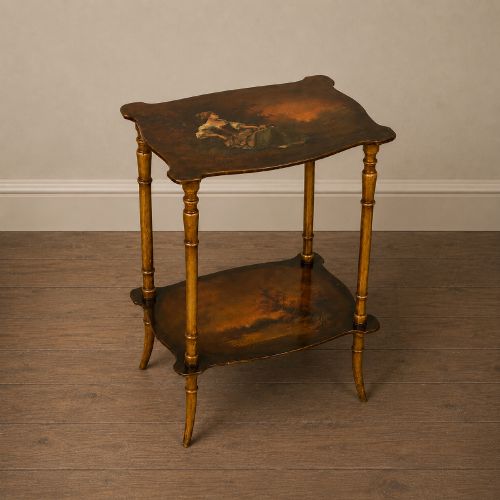
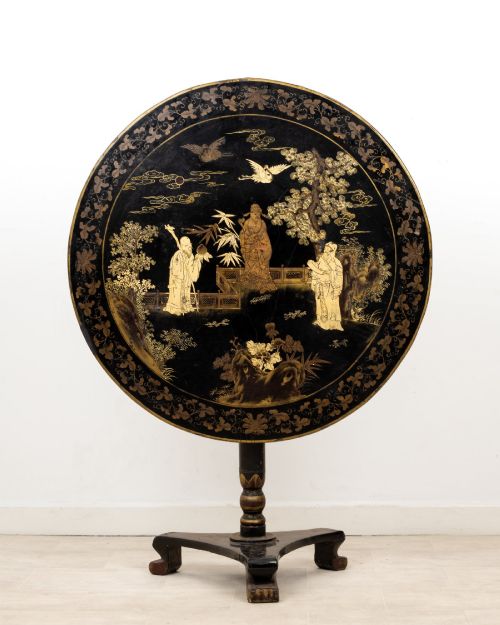
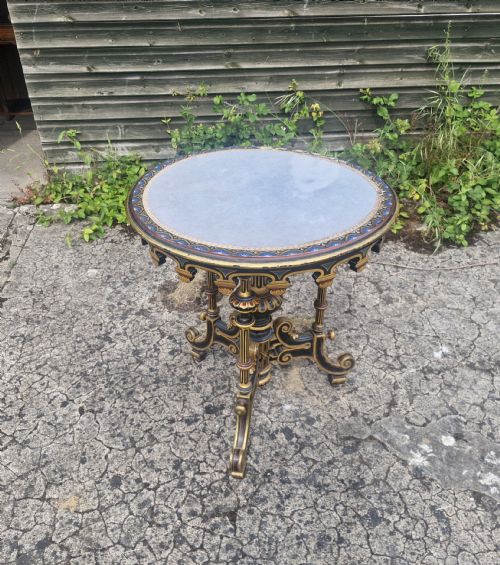
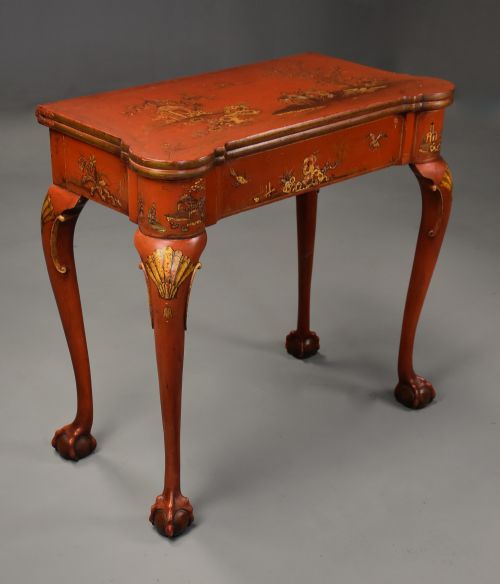
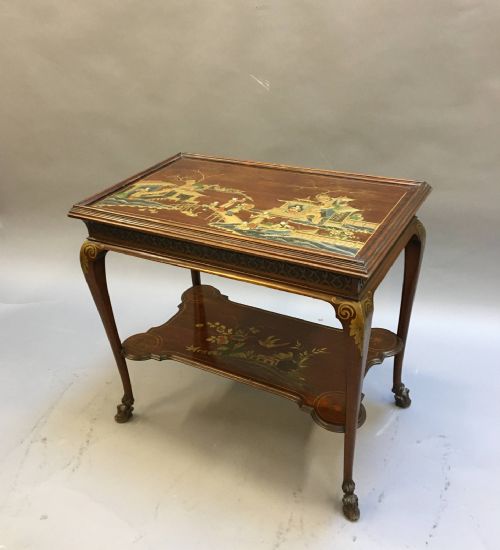
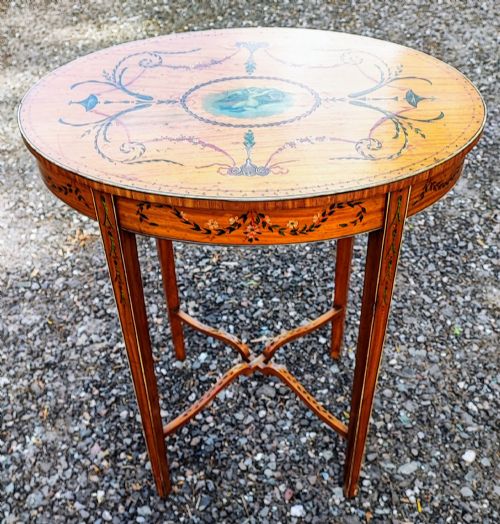
The version most commonly encountered on this page is the Victorian or Edwardian satinwood or lacquered side table, often displaying floral motifs or Chinoiserie scenes. Tables appear from periods spanning the nineteenth century through to the nineteen-thirties, with regional expressions from England, Italy, China, and Burma.
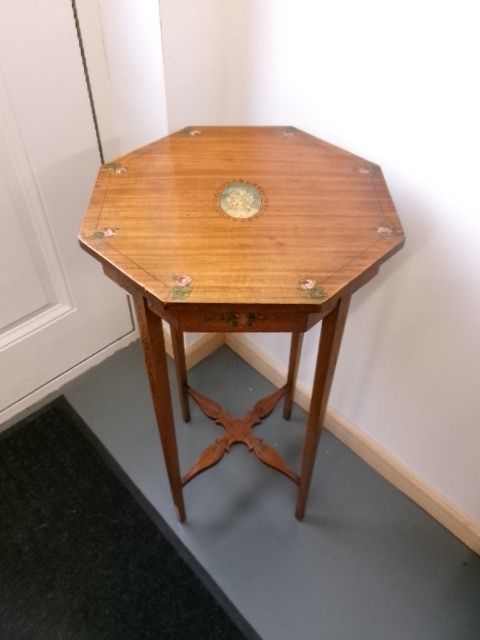
Makers and makers' workshops employed specific regional styles, from Sheraton Revival satinwood in Britain to black lacquer Chinoiserie and painted folk art on walnut. Buyers encounter everything from small octagonal lamp tables to multi-tiered étagères and sets of nested tables.
How They Were Made
Carpenters constructed these tables using timbers such as satinwood, mahogany, walnut, beech, pine, and papier-mâché, applying structural brass accents where appropriate. Surfaces were then prepared for decoration using gesso, black or red lacquer, and ebonising.
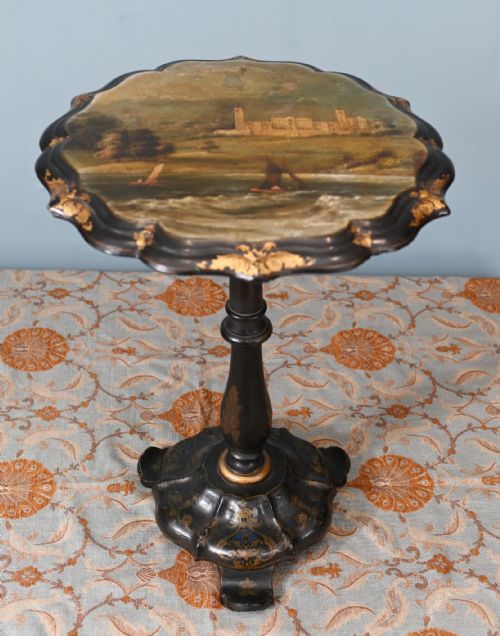
Artisans applied hand painting directly onto wood or lacquer grounds, frequently incorporating gold leaf, gilt highlights, and intricate floral or figural Chinoiserie designs. Some tables feature inlaid elements alongside the painted decoration, while others utilise porcelain plaques mounted into the timber top.
Materials recorded across the inventory include satinwood, mahogany, papier-mâché, brass, gold leaf, and tiger bamboo alongside traditional paint and lacquer.
What Varies In Quality
The distinction between tiers of quality lies in the execution of the brushwork and the selection of timber underneath. Fine examples exhibit crisp, detailed hand painting and choice cabinet woods like satinwood or dense mahogany, whereas lesser pieces rely on simpler decoration over common pine.
Construction methods and original components also define the better examples, such as stable tilt-top mechanisms, intact lacquer without excessive craquelure, and matching nests of tables where every tier shares identical workmanship. Later or secondary painted decorations applied to older structural frames alter the character of a piece compared to unified original manufacture.
The Hand Painted Occasional Table Glossary
- Satinwood
- A lustrous, hard timber native to Ceylon and India, prized for its yellow-gold colour and fine grain. It served as a favoured canvas for painted tables in the eighteenth and nineteenth centuries.
- Étagère
- A piece of furniture consisting of open shelves for displaying small objects. These tables provide multiple tiers of surface space.
- Tilt-top table
- A table with a hinged top that pivots to a vertical position when not in use. This mechanism allowed furniture to sit flat against a wall to save space.
- Papier-mâché
- A composite material made from paper pulp or layers of paper bound with glue, pressed and dried. It formed a smooth base for lacquer and hand-painted decoration in the nineteenth century.
Hand Painted Occasional Table: Frequently Asked Questions
Where should I place an occasional table?
These tables fit easily beside a sofa, armchair, or in a hallway where surface space is needed without a heavy visual footprint.
Because they feature decorative painted surfaces, keep them away from direct, harsh sunlight to protect the pigments and lacquer.
How do I clean a painted table?
Dust the surface gently with a soft, dry cloth rather than using feather dusters that might snag on delicate edges.
Avoid chemical polishes, modern detergents, or wet cloths, as moisture and solvents damage historic paint layers and varnish.
Are tilt-top tables stable?
Yes, when the original brass or iron catch engages properly beneath the top, the surface remains secure for daily use.
Check the pivot mechanism and pillar joint to ensure the table does not wobble when locked into the horizontal position.
What is a nest of tables?
A set of graduating tables designed to slide neatly underneath one another to save floor space in smaller rooms.
Victorian and Edwardian makers produced these sets in lacquered Chinoiserie and painted satinwood for flexible entertaining.