
Small Tilt Top Table
A small tilt top table serves as a versatile piece for holding a lamp, wine, or books while folding flat when space is needed.
Small Tilt Top Table
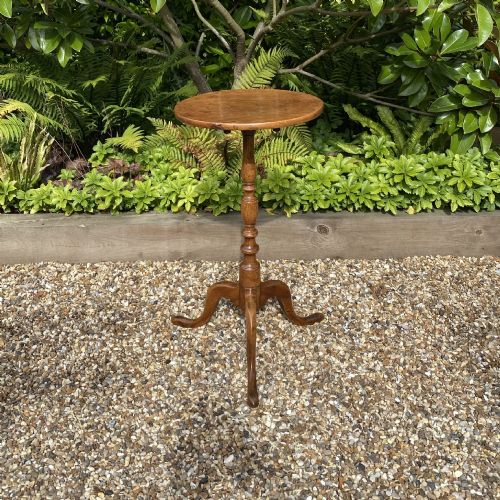
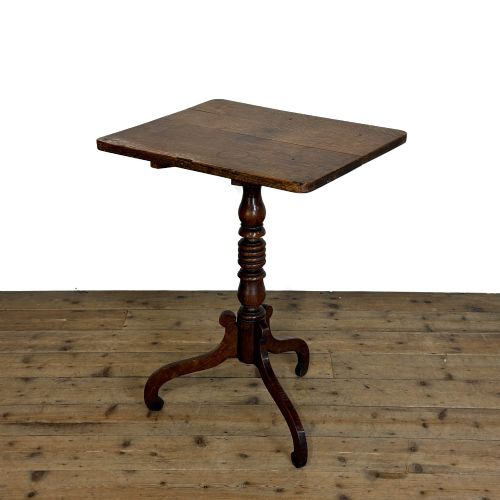
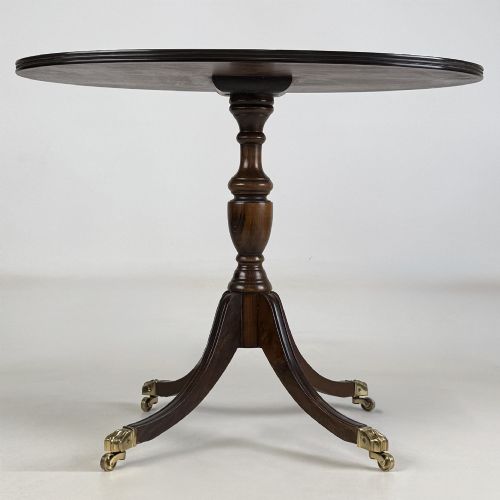
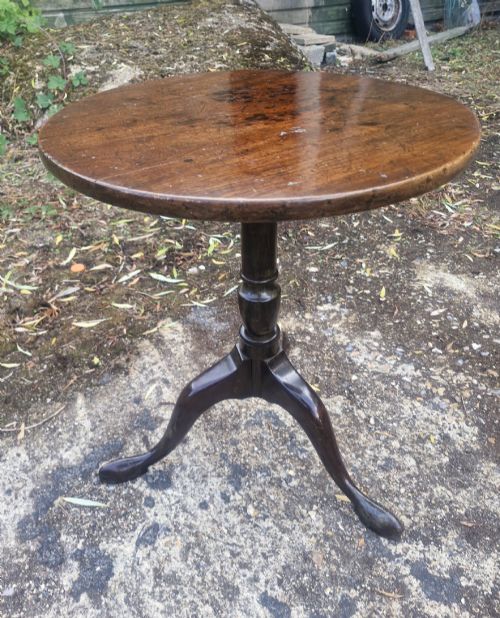
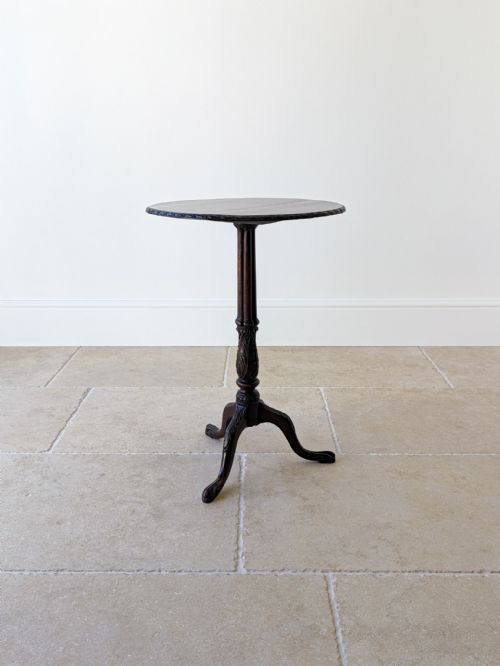
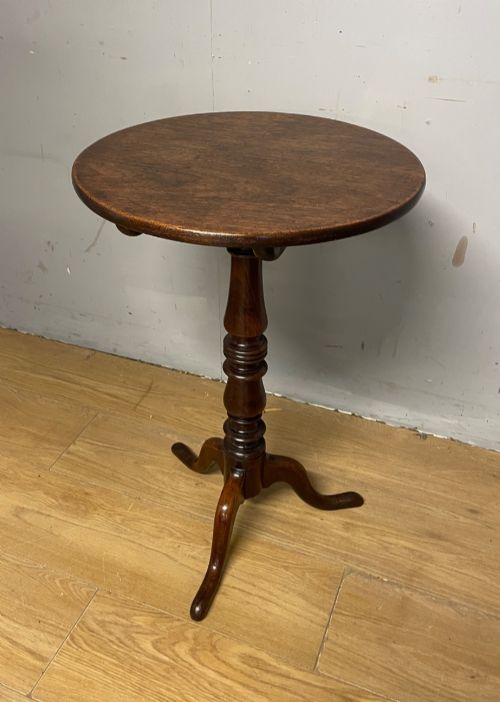
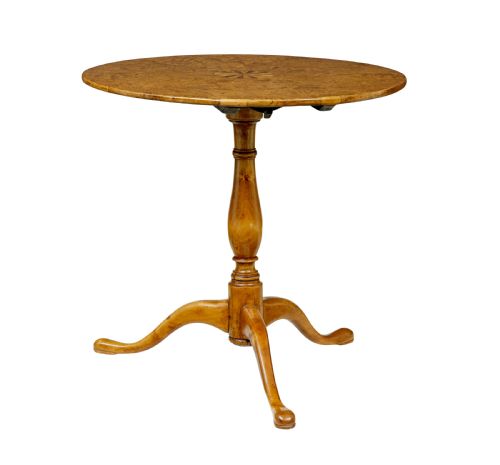
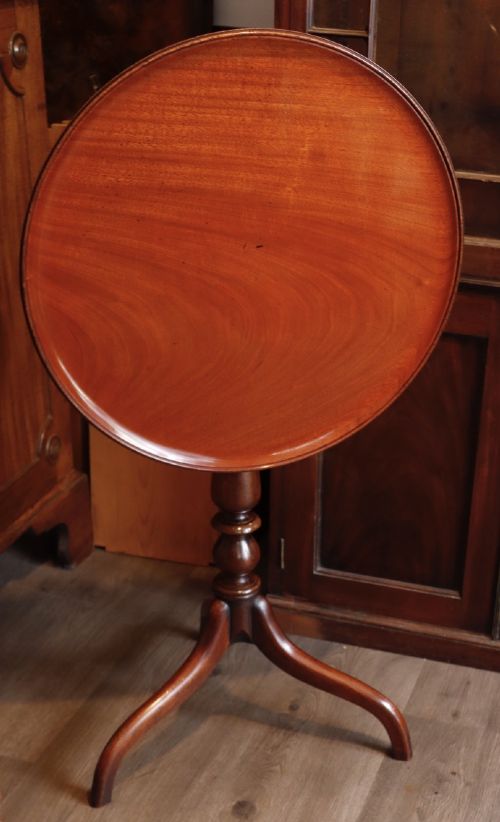
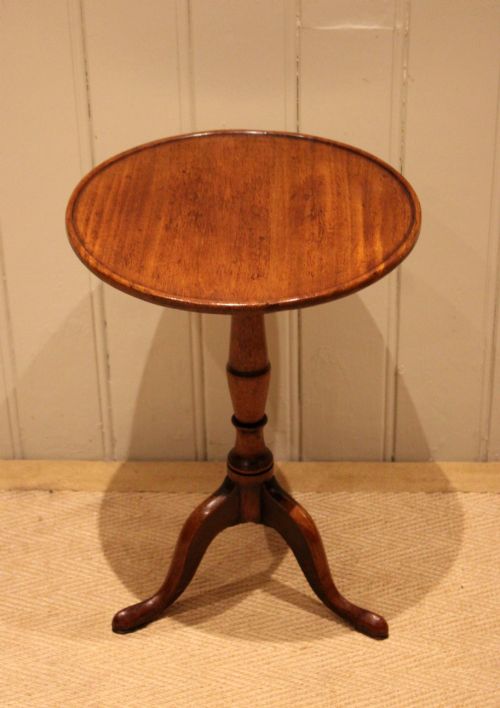
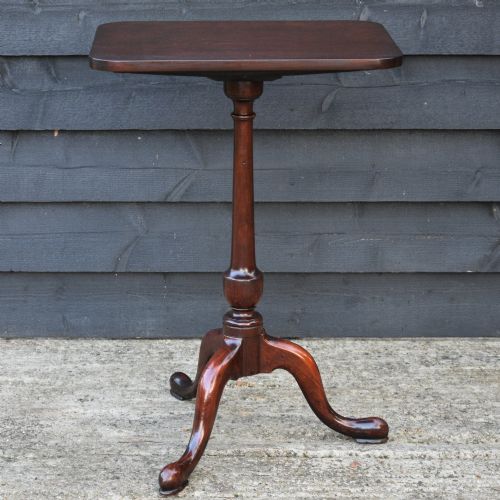
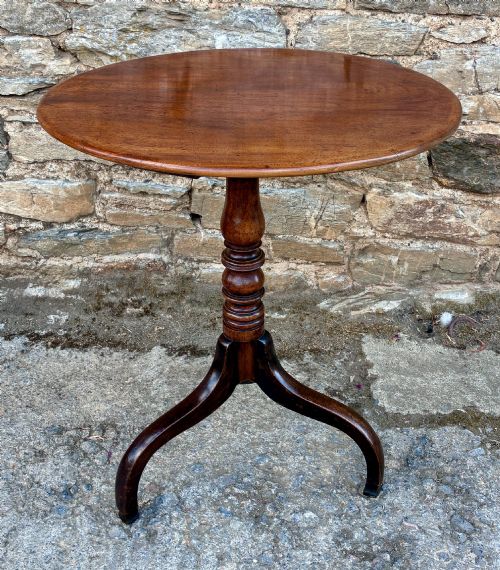
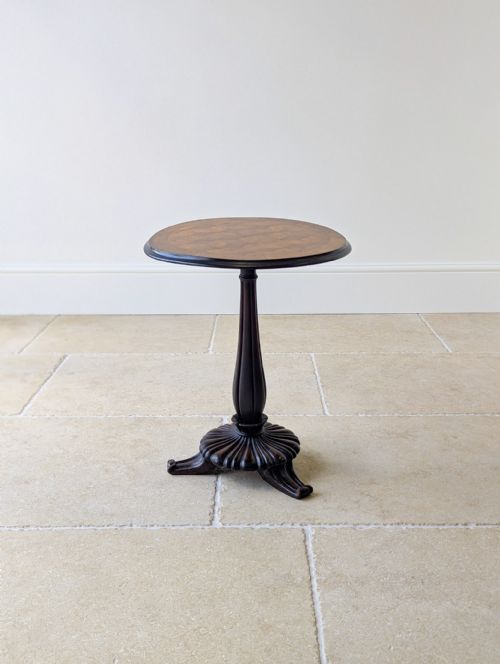
A small tilt top table functions as a portable stand, appearing in forms such as wine tables, lamp tables, and occasional tables. These pieces originate from periods spanning the eighteenth century through the Edwardian era, with nineteenth-century and Georgian examples appearing most frequently.
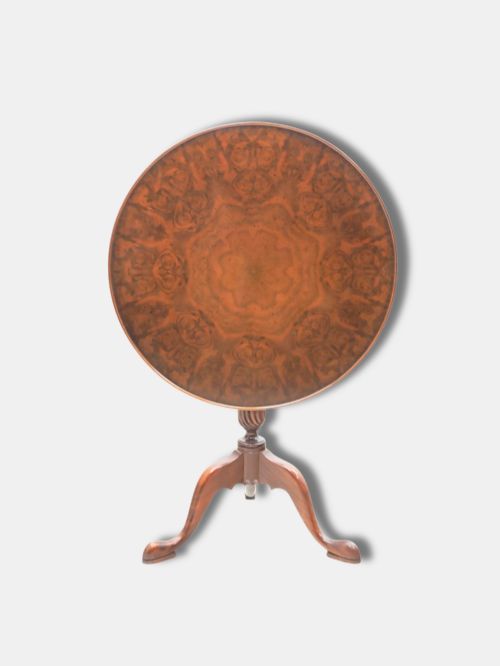
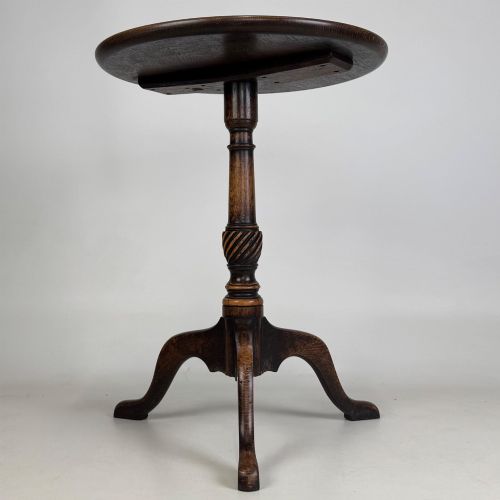
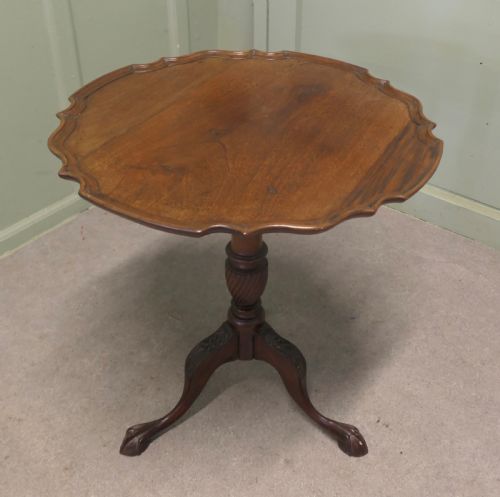
The construction typically relies on a circular or scalloped top mounted on a birdcage or pivot mechanism, supported by a turned pillar and a three-legged tripod base. This design allows the surface to tilt vertically, enabling the table to stand against a wall when not in use.
How They Were Made
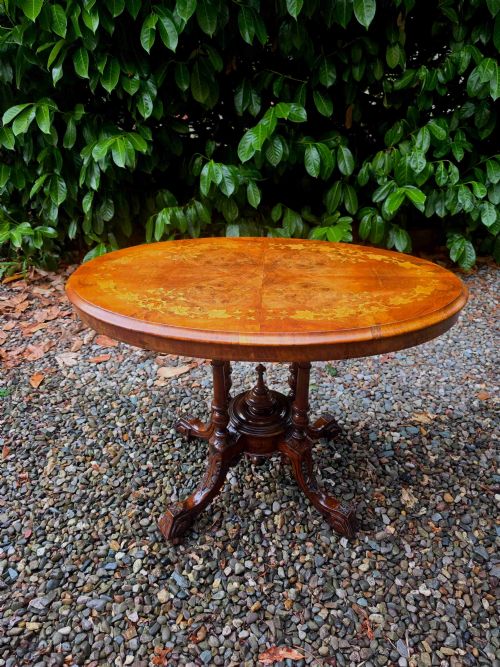
Cabinet makers utilised dense timbers such as mahogany, walnut, oak, and rosewood for the tops and turned pedestals. Decorative variants incorporate contrasting inlays of boxwood, brass, or fruitwood, alongside penwork decoration and hand-painted surfaces.
Joinery involved turned wood shafts fixed to tripod legs, often utilising dovetail or dowel joints for stability. The tilting mechanism relies on wooden catches or brass pivots to secure the top in either the horizontal or vertical position.
Listings feature mahogany, walnut, oak, and rosewood across periods from the eighteenth century to the Edwardian era.
What Varies in Quality
The choice of timber grain dictates much of the visual merit, with figured veneers, burr walnut, and burr oak sitting above plain domestic woods. The crispness of the turned pillar and the symmetry of the tripod base indicate the level of craftsmanship invested in the piece.
The mechanism governing the tilt action reveals the original maker's intent, ranging from simple peg fixings to sophisticated brass-fitted catches that hold the top rigid without wobble.
The Small Tilt Top Table Glossary
- Tilt top
- A table top hinged to pivot from horizontal to vertical. This mechanism allows the furniture to occupy minimal floor space when pushed against a wall.
- Tripod base
- A support structure comprising three legs radiating from a central pillar. It provides stable footing on uneven floors.
- Wine table
- A small occasional table designed to hold a glass and bottle. These pieces stand at a convenient height next to a seating area.
- Pie crust edge
- A raised, carved border shaped in undulating curves around the perimeter of the table top. It derives its name from pastry work.
- Snap top
- An alternative term for a tilt top table utilising a spring or latch mechanism. The top snaps securely into the horizontal position during use.
Small Tilt Top Table: Frequently Asked Questions
What was a small tilt top table used for?
These tables served as movable stands for holding drinks, books, or lighting in various rooms of the house. Because the top folded down, servants could store multiple tables away in a corner until required for evening entertaining.
Over time, owners moved them beside chairs as lamp tables or occasional surfaces. Their portable nature meant they followed the occupants from parlour to drawing room as daylight shifted.
How do I identify a Georgian tilt top table?
Georgian examples often feature solid mahogany or walnut with slender, finely turned pedestals and pad or snake feet on the tripod base. The timber displays a rich, deep patina developed through centuries of polishing.
Construction details such as hand-cut dovetails and pegged joints beneath the pivot block point towards eighteenth or early nineteenth-century workshop practices.
Why does the top tilt on these tables?
The tilting function was originally designed to save floor space in domestic interiors when the furniture was not actively holding items. Rooms served multiple purposes throughout the day, requiring furniture that could clear the floor quickly.
This pivoting action also made the tables easier to transport between rooms or to protect from damage when cleaning the surrounding floorboards.
Where should I place a tripod table?
A tripod table fits comfortably beside an armchair or sofa to function as a surface for a reading lamp or cup. Its small footprint allows it to occupy tight corners where larger rectangular furniture will not fit.
Keeping the top tilted against a wall when not in use also displays any decorative wood grain or inlay work as a panel of art.