
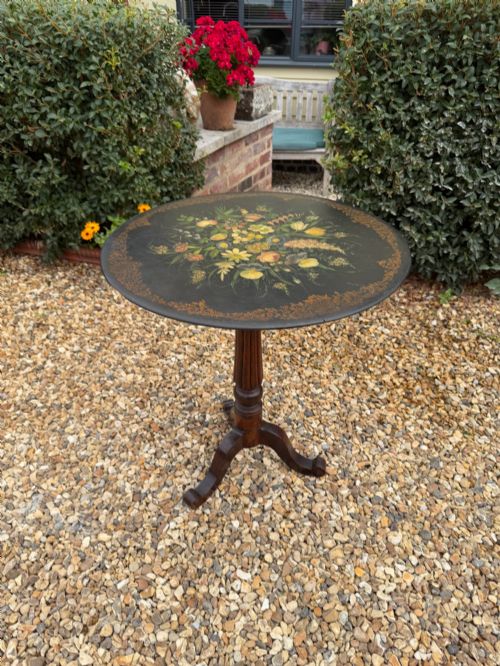
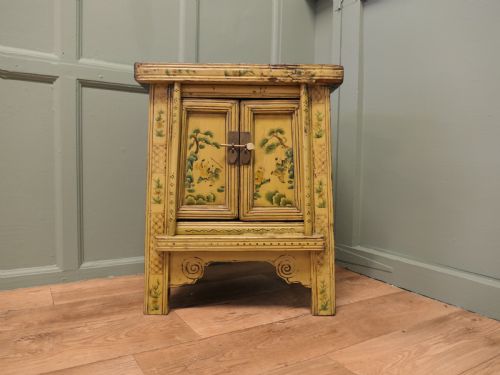
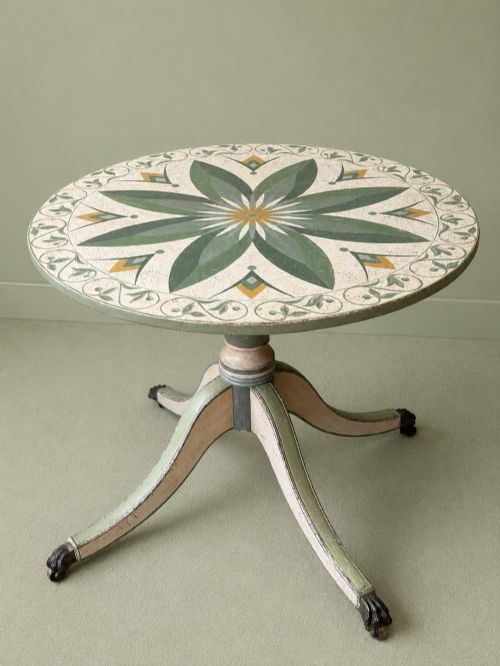
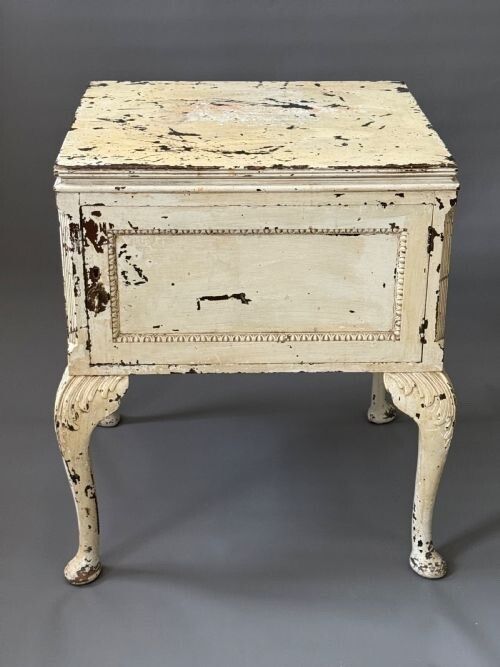
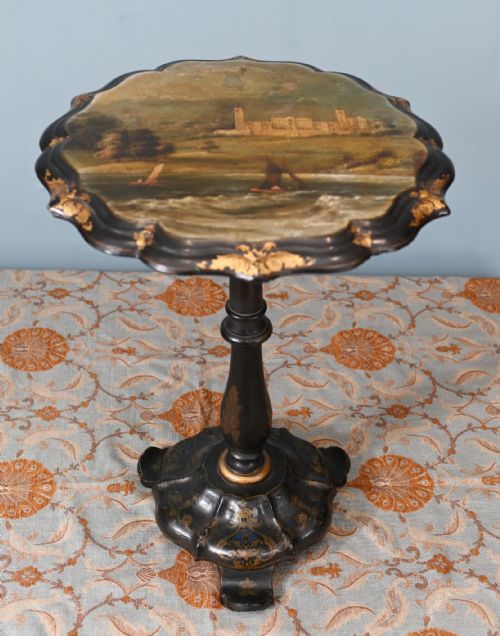
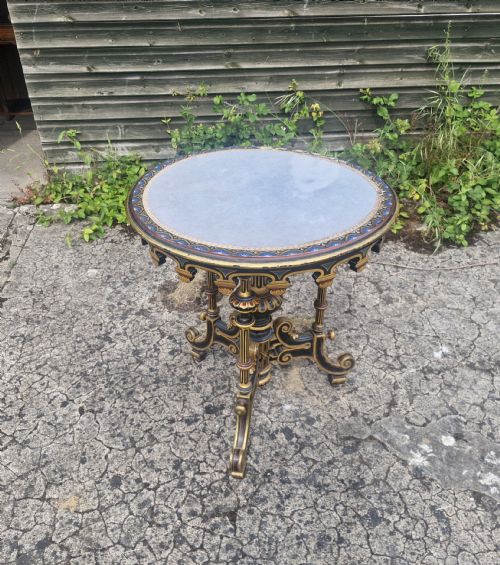


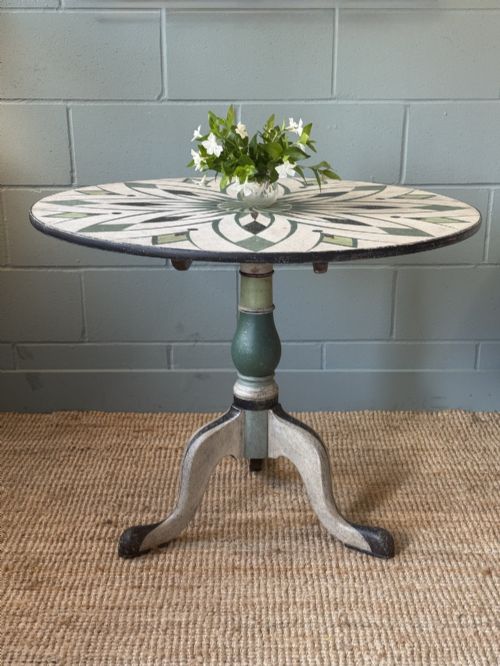


Victorian Painted Pedestal Table
A victorian painted pedestal table brings a functional centrepiece into a room, combining solid timber with decorative surface work.
Victorian Painted Pedestal Table
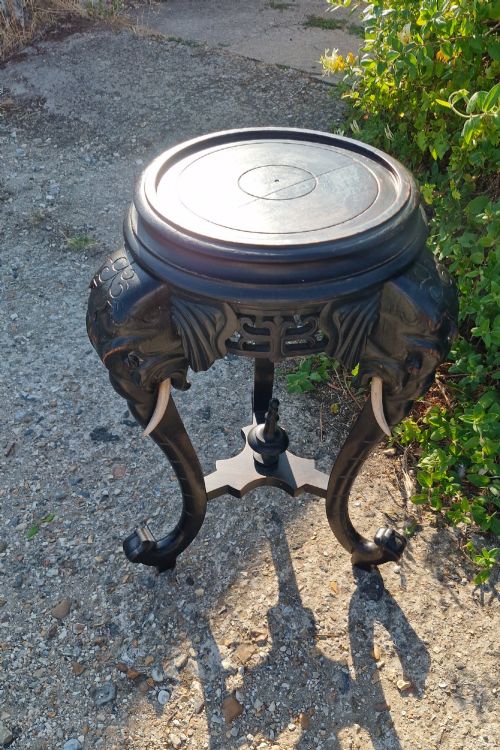
A victorian painted pedestal table brings together a central column support and a decorated timber top, often found in formats such as tilt top tables and tripod occasional pieces.
The materials recorded across these pieces include pine, satinwood, ebonised wood, and lacquered surfaces, reflecting the varied tastes of the nineteenth century.
Makers and decorators utilised styles ranging from Chinoiserie and Anglo-Indian to Arts and Crafts and Victorian Folk Art, applying hand-painted floral designs and faux finishes.
How they were made
Carpenters constructed the structural elements using pine, mahogany, and satinwood, turning central pedestals on lathes and mounting tabletops on fixed or tilting mechanisms.
Surface decoration involved applying paint, lacquer, or japanning directly to the wood, often finished with hand-painted floral motifs, faux marble, or intricate Chinoiserie detailing.
Listings for this phrase include pine, satinwood, and ebonised wood alongside lacquer, paint, and faux marble finishes.
What varies in quality
The standard of execution in the surface decoration separates standard domestic examples from finer decorative works, particularly where hand-painted details or lacquering show greater precision and depth.
Structural integrity of the pedestal base and the smoothness of any tilt top mechanism indicate the original joinery skill employed during manufacture.
The Victorian Painted Pedestal Table Glossary
- Tilt top
- A tabletop mounted on a hinge mechanism that allows the surface to fold vertical when not in use. This design saved space in nineteenth century rooms.
- Japanning
- A European imitation of East Asian lacquerwork created using heat-dried varnishes and paints. It produces a glossy black or dark surface.
- Pedestal
- A central columnar support resting on feet or a tripod base. It holds the weight of the tabletop above.
- Tripod
- A three-legged base providing stability on uneven floors. It is commonly found supporting circular occasional tables.
Victorian Painted Pedestal Table: Frequently Asked Questions
How are tilt top tables used?
These tables served as versatile furniture that could move against a wall when folded down. They provided a surface for lamps or tea service when active.
In modern rooms, they function well as display surfaces or bedside pieces that preserve floor space.
What is japanned furniture?
Japanning is a European varnishing technique that mimics Asian lacquerware. Craftsmen built up layers of dark finish to achieve a glossy sheen.
Many nineteenth century examples feature hand-painted details applied over this dark ground.
How do I identify a pedestal base?
A pedestal base consists of a central pillar rising from tripod legs or a solid platform. This design eliminates corner legs to allow more legroom.
It forms the main structural support for circular tables from the period.
What distinguishes painted surfaces?
Painted decoration ranges from simple floral motifs applied over pine to intricate Chinoiserie scenes on lacquered wood. Some pieces received later decorative layers.
Original pigment work displays natural wear consistent with age and use.