



Satin Birch Side Table
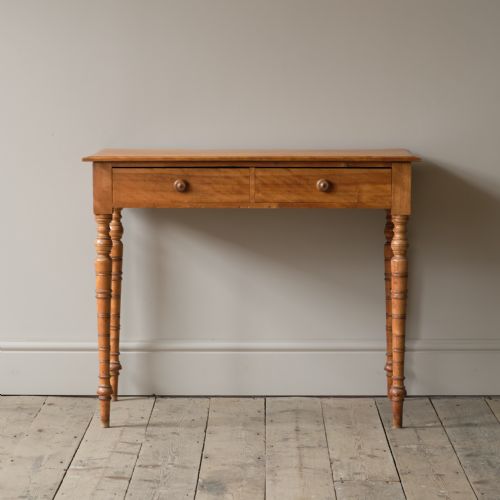
A satin birch side table brings a pale, figured timber to smaller rooms as a writing desk, bedside stand or occasional surface.

Satin Birch Side Table
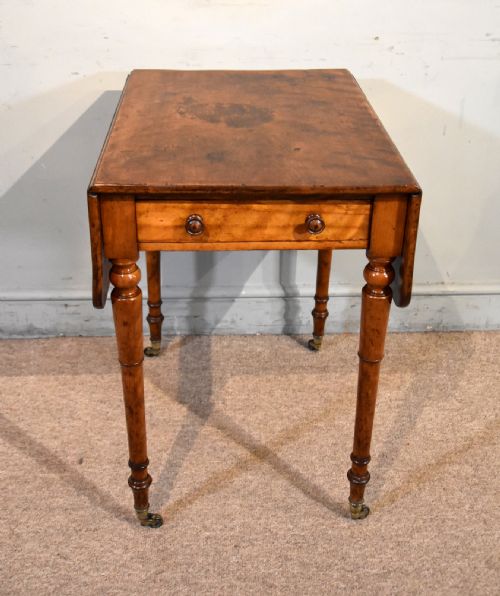
When you search for a satin birch side table, you encounter compact timber furniture built across the nineteenth and early twentieth centuries in various regional styles. These pieces function variously as writing desks, Pembroke tables, bedside stands, and small occasional surfaces.
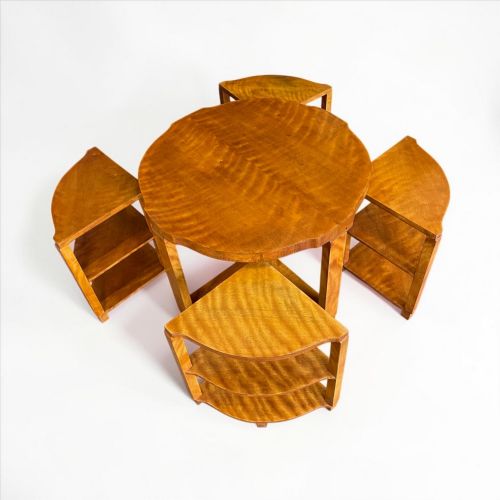
The nineteenth century yields the highest volume of examples, spanning Victorian, Biedermeier, and Aesthetic Movement designs. Makers adapted the pale wood to drum tables, tray tops, and tea tables, alongside later Art Deco nests and coffee tables.
Forms range from simple circular pedestals with turned legs to elaborate desks fitted with drawers and leather writing surfaces. Swedish and English workshops predominate, utilising the bright timber for both domestic utility and formal display.
Materials and construction
Makers built these tables primarily using solid birch or applying satinwood veneer over foundational woods like pine, sometimes pairing the pale timber with contrasting walnut or incorporating brass hardware. The characteristic light, shimmering grain comes from figured wood selected for its visual impact on table tops and drawer fronts.
Construction techniques include turning for pedestals, precise jointing for drawers, and occasional specialised additions like specimen marble inserts or inset leather writing panels. Cabinetmakers shaped the timber into drum tops, Pembroke drop leaves, and multi-tiered nests suited to varied interior functions.
Satin Birch Side Table Retail Price Guide 2026
Typical asking prices for satin birch side table among the pieces listed under this phrase on Sellingantiques today, from the lower quarter to the upper quarter. They describe what is for sale here now, not the wider market.
One twelfth-century-style twelve-sided top rests on a satin birch base, incorporating exotic woods from New Zealand.
Assessing quality
Quality rests in the selection of the figured timber and the precision of the cabinetmaker's joinery, distinguishing straightforward utility items from bespoke showroom pieces. Finer examples display exceptional grain matching across surfaces and well-executed secondary elements like brass mounts or hand-turned pedestals.
Maker attribution elevates certain tables, particularly pieces bearing the stamps or paper labels of known firms such as Johnstone and Jeanes, Howard & Sons, Heal & Sons, or Hindley and Son. The integration of specialised materials like specimen marble or exotic inlays further separates standard regional items from high-status commissions.
Johnstone and Jeanes·Howard & Sons·Heal & Sons·Hindley and Son
The Satin Birch Side Table Glossary
- Satin birch
- A bright, pale timber featuring a distinctive chatoyant grain that resembles satin when polished. It was favoured by nineteenth-century cabinetmakers for decorative veneer and solid construction alike.
- Pembroke table
- A small rectangular table featuring two hinged drop leaves on opposite sides. This form often includes one or two small drawers and slender legs.
- Drum table
- A circular library or occasional table with a deep, cylindrical top containing drawers around the perimeter. It typically sits on a central column and spreading base.
- Biedermeier
- A central European style spanning the early to mid nineteenth century characterised by utilitarian comfort and clean lines. It highlights natural wood grain over applied ornamentation.
- Occasional table
- A small, movable table designed for specific, intermittent domestic uses such as holding books, tea, or a lamp. These pieces appear in numerous shapes throughout the Victorian and Edwardian periods.
Satin Birch Side Table: Frequently Asked Questions
What is a satin birch side table used for?
These pieces serve as compact surfaces for lamps, writing, or bedside storage in smaller spaces.
Their varied forms allow them to function as desks, tea tables, or occasional stands depending on the specific room layout.
How do I date a satin birch table?
Dating relies on stylistic clues like Victorian proportions, Biedermeier minimalism, or Art Deco geometry seen in the design.
Construction methods and documented maker attributions further narrow the period of manufacture across the nineteenth and early twentieth centuries.
Are these tables solid wood or veneer?
Makers utilised both solid satin birch and satinwood veneer applied over secondary woods like pine or birch.
Figured sections were frequently chosen as veneers to display striking grain patterns across table tops and drawer fronts.
What styles are common for these tables?
Victorian, Biedermeier, and Aesthetic Movement designs dominate the nineteenth-century examples on record.
Later pieces from the twentieth century incorporate Art Deco forms, including coffee tables and nests of multiple surfaces.