

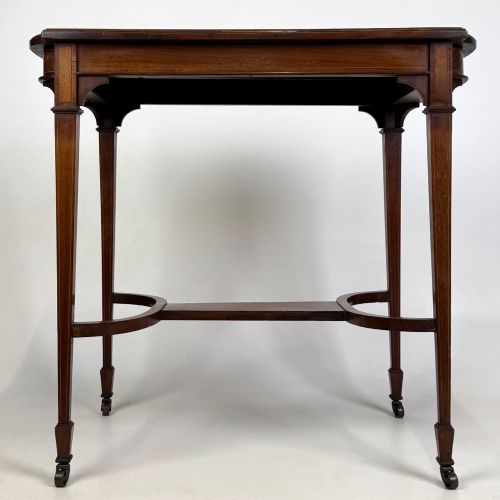
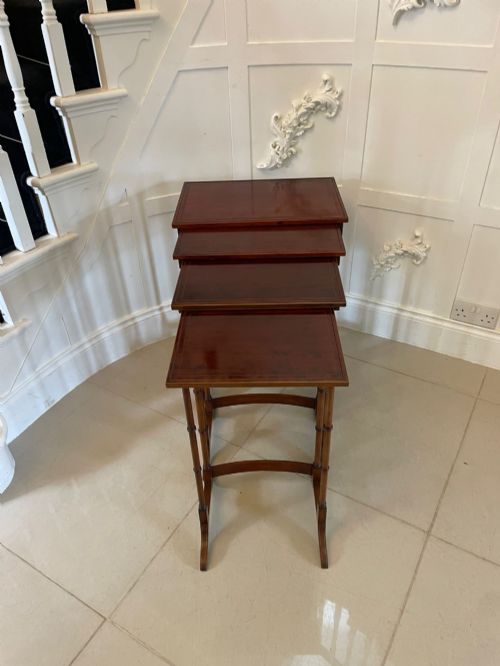
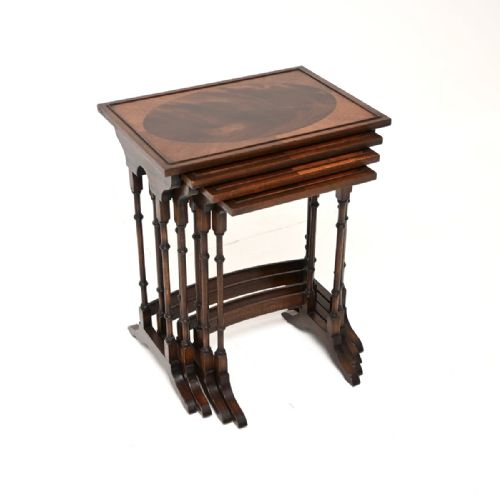
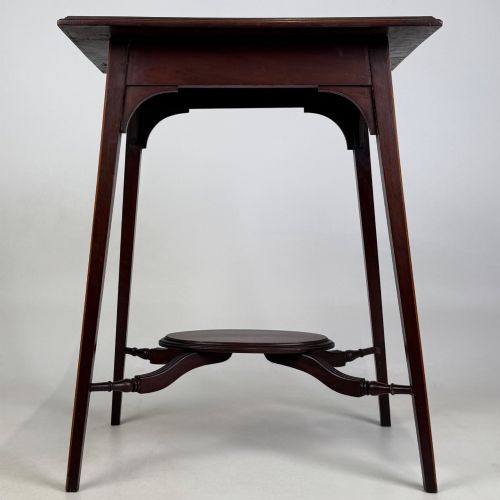
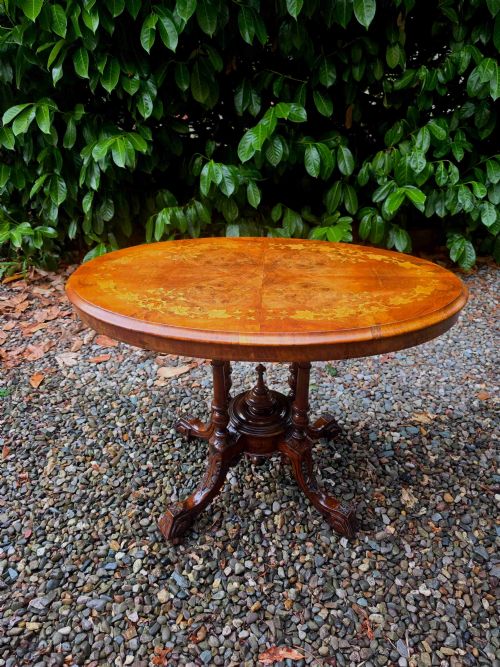
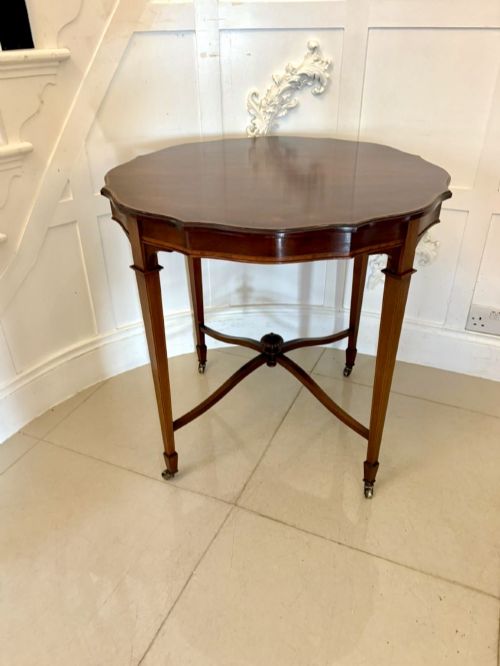
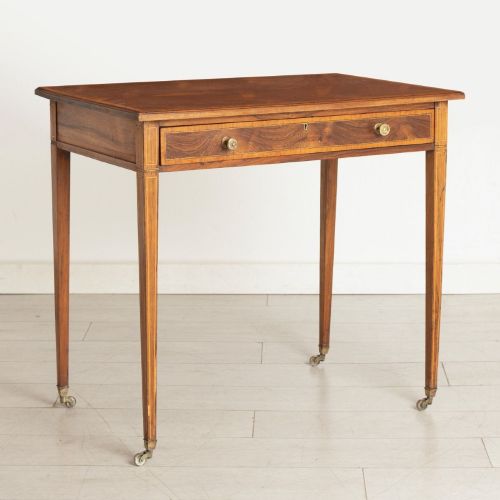
Edwardian Inlaid Occasional Table
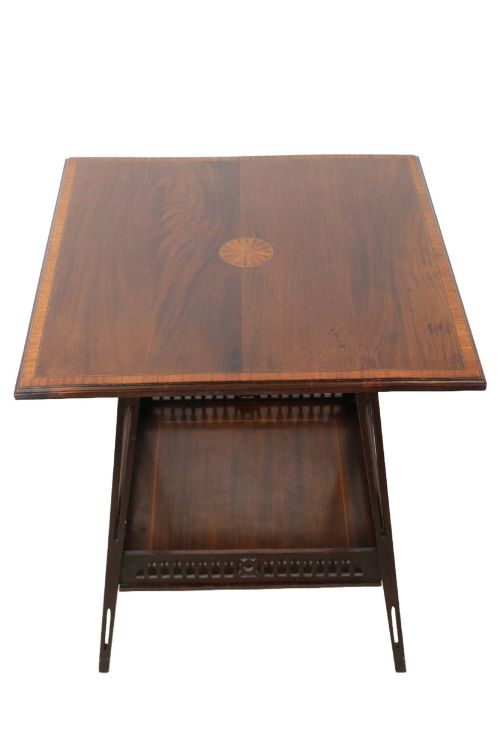
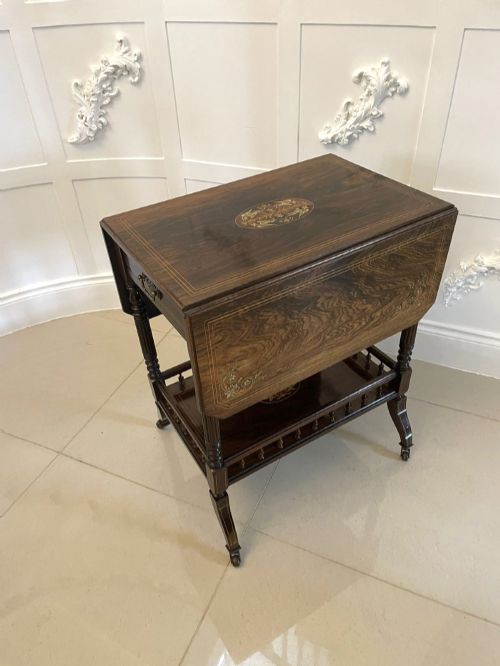
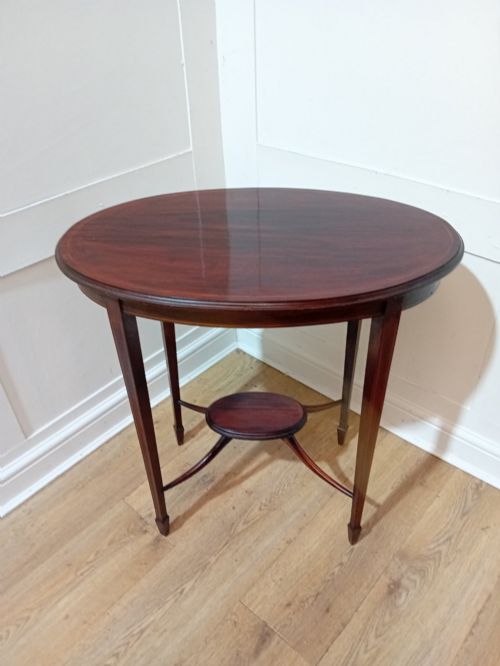
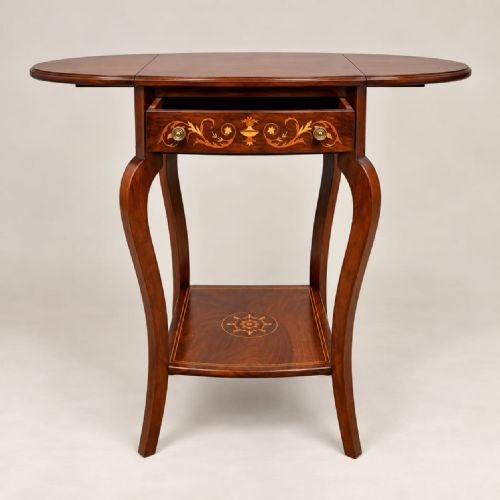
When an edwardian inlaid occasional table enters a room, it brings the refined portable surface work of the early twentieth century.
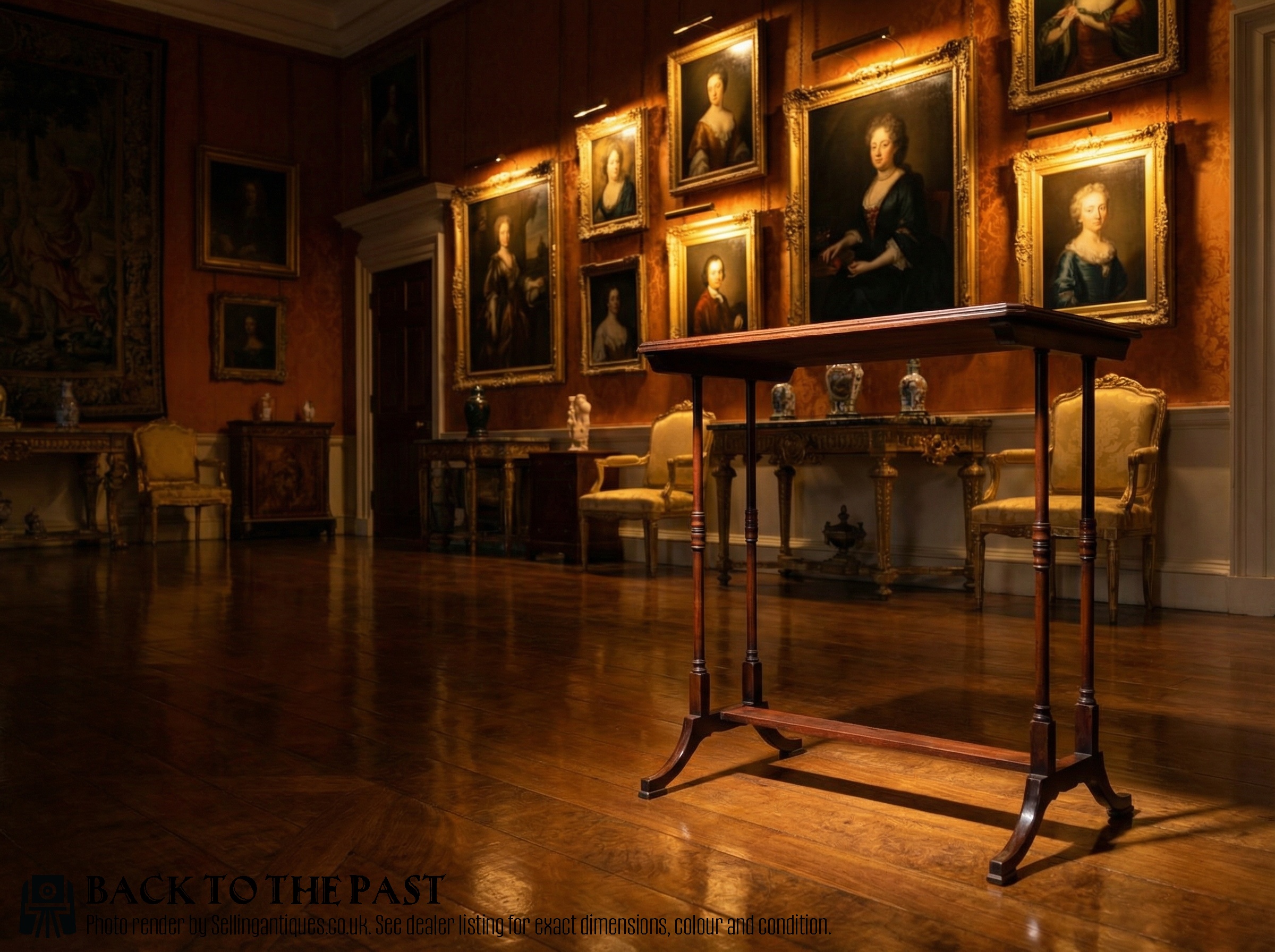
Edwardian Inlaid Occasional Table
An edwardian inlaid occasional table brings together compact side surfaces, lamp stands, and nesting forms created during the late nineteenth and early twentieth centuries. These movable pieces served multiple functions in domestic interiors, holding books, lamps, or tea.
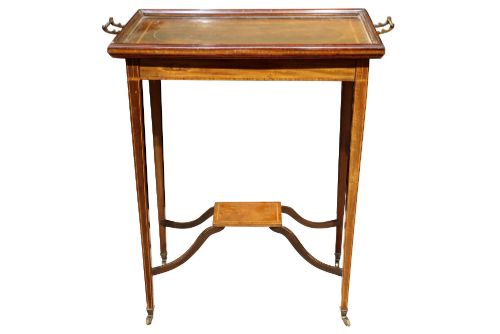
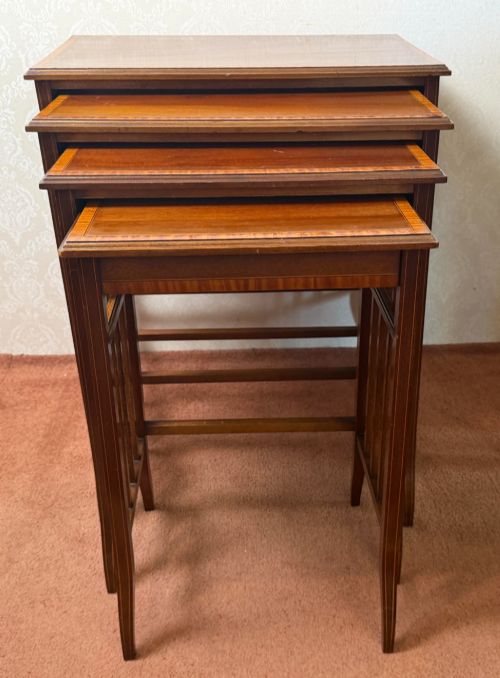
The version most frequently met on this page is the mahogany occasional table decorated with delicate wood inlay, often adopting oval, rectangular, or kidney shapes. Alongside these standard formats, variants include multi-tiered étagères, drop-leaf tables, and quartetto nests.
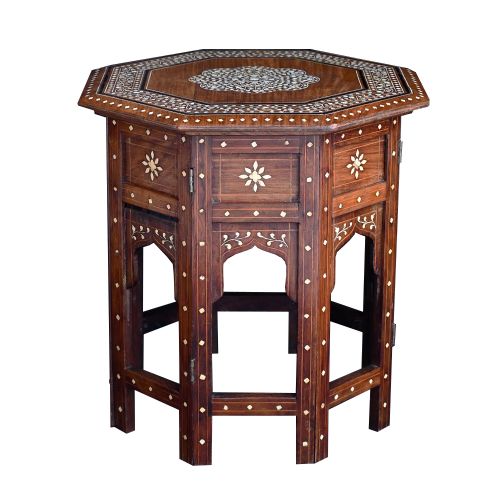
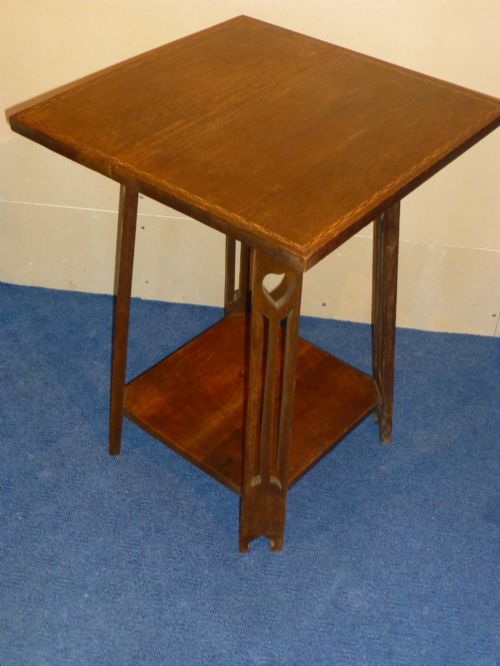
Makers and designers working within the Sheraton Revival style heavily influenced the visual vocabulary, applying classical urns, swags, and bellflowers to light timber bases. Other interpretations span Anglo-Indian bone inlay and Arts and Crafts oak construction.
Materials and Technique
Cabinetmakers utilised mahogany, rosewood, walnut, and satinwood as primary timbers, framing lighter decorative surfaces with contrasting grain. Solid woods provided structural integrity for slender legs, while cross-banding framed the perimeters of table tops.
Contrasting materials such as boxwood, satinwood, and bone formed intricate linear patterns and floral motifs set flush into the primary timber. Carpenters employed hand-cut recesses to secure these delicate veneers and stringing lines before scraping and polishing the finished top.
Edwardian Inlaid Occasional Table Retail Price Guide 2026
Typical asking prices for edwardian inlaid occasional table among the pieces listed under this phrase on Sellingantiques today, from the lower quarter to the upper quarter. They describe what is for sale here now, not the wider market.
Listings feature mahogany, rosewood, and satinwood alongside boxwood inlay across Edwardian, Victorian, and Arts and Crafts periods.
Craftsmanship and Proportion
The distinction between ordinary utility pieces and exceptional examples rests in the precision of the joinery and the depth of the timber selection. Finer tables exhibit balanced proportions, tight joints at the leg junctions, and carefully figured mahogany or rosewood grain.
Inlaid decoration serves as a primary indicator of workshop standard, separating mechanical execution from thoughtful hand-work. Crisp, tightly fitted stringing and well-defined floral details distinguish superior examples from simpler mass-produced items.
Trevor Page & Co·William Birch·Liberty & Co
The Edwardian Inlaid Occasional Table Glossary
- Cross-banding
- A border veneer applied around the edge of a table top with the grain running perpendicular to the centre panel. This technique frames the primary timber and protects vulnerable edge grain.
- Stringing
- Thin lines of contrasting wood inlaid into channels cut into the table surface. It creates geometric borders and outlines decorative motifs.
- Quartetto nest
- A set of four graduating tables designed to slide neatly beneath one another. They gained popularity during the late Victorian and Edwardian periods for flexible entertaining.
- Sheraton Revival
- A late nineteenth-century design movement inspired by the furniture of George Sheraton. It relies on neoclassical motifs, light satinwood, and slender tapered supports.
- Pembroke table
- A drop-leaf table featuring hinged flaps on opposing sides supported by pivoting brackets. The form originated in the eighteenth century and persisted into later periods.
Edwardian Inlaid Occasional Table: Frequently Asked Questions
What is an edwardian inlaid occasional table used for?
These versatile tables were designed to be moved around drawing rooms and parlours as needed. Owners used them to support small lamps, display decorative objects, or hold books and tea.
Their light construction made relocation simple, allowing homeowners to adapt their living spaces for guests throughout the day.
How do I identify a sheraton revival piece?
Sheraton Revival furniture draws heavily on eighteenth-century neoclassical designs promoted by George Sheraton. Look for satinwood finishes, painted or inlaid urns, swags, and delicate tapered legs.
These pieces date predominantly from the late Victorian and Edwardian decades rather than the Georgian era.
Are nesting tables an edwardian invention?
Sets of graduating tables appeared in various forms during the nineteenth century, but quartetto nests became especially popular during the Edwardian era. Makers produced them in sets of three or four.
They provided maximum surface area while occupying minimal floor space when stored.
What timber was used for these tables?
Mahogany served as the most common primary timber, supplemented by rosewood, walnut, and occasional satinwood. Darker woods provided a stable backdrop for contrasting boxwood and light fruitwood inlay.
Alternative regional styles incorporated oak or exotic imported materials alongside bone.