


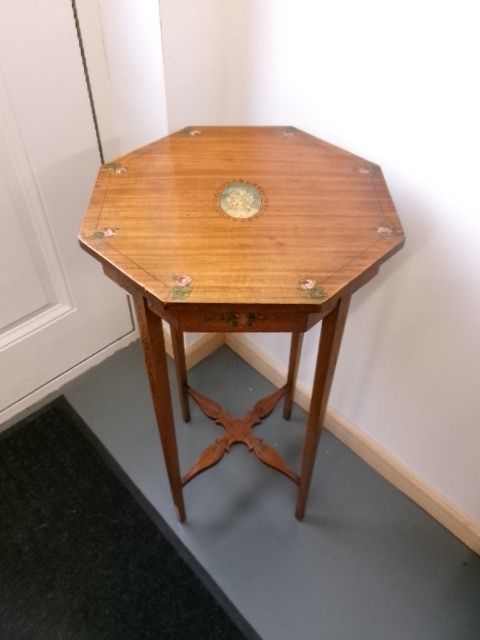


Painted Satinwood Side Table
A painted satinwood side table brings delicate colour and classical ornament to a room, drawing on the refined aesthetics of the eighteenth and nineteenth centuries.
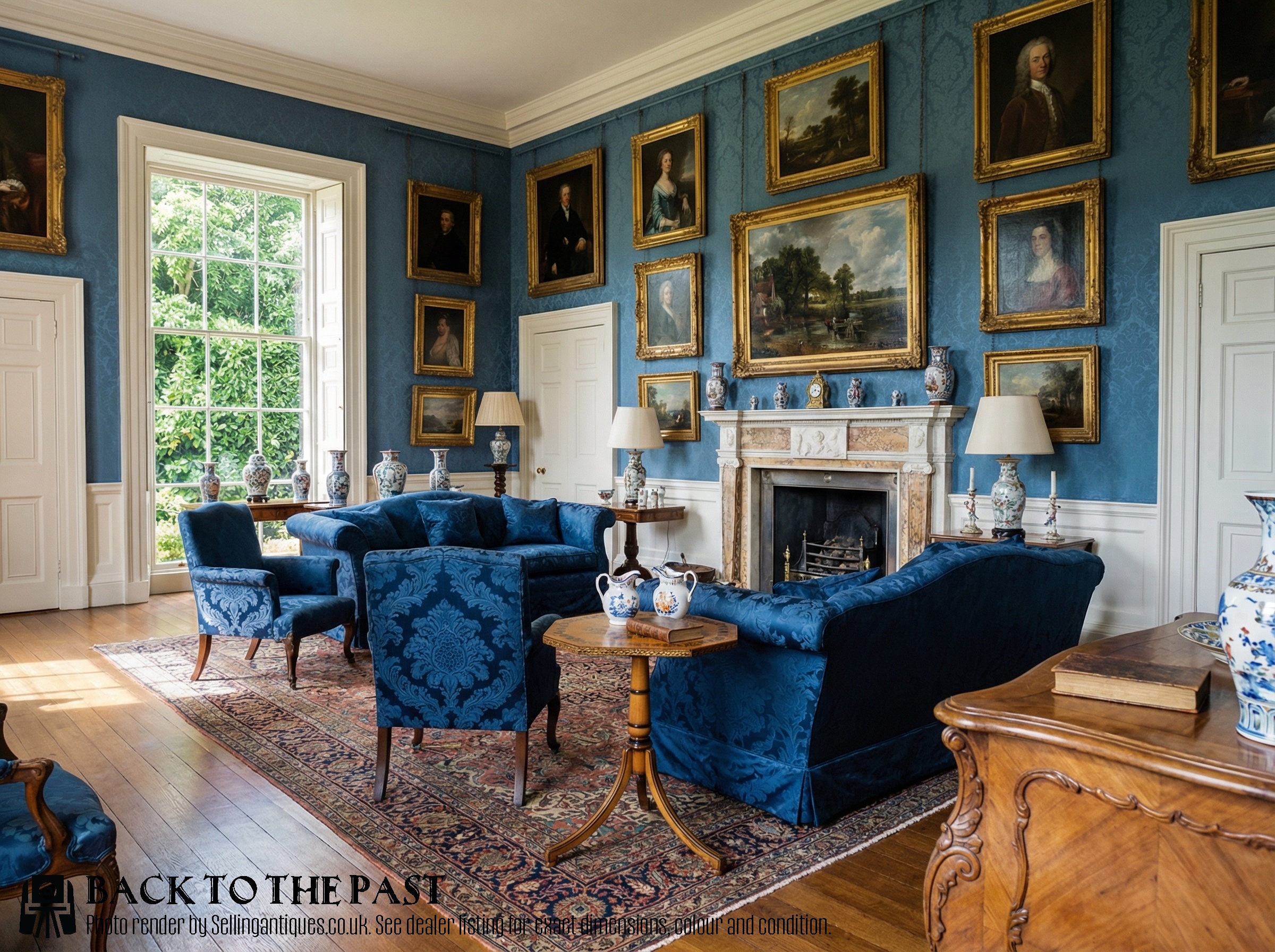
Painted Satinwood Side Table
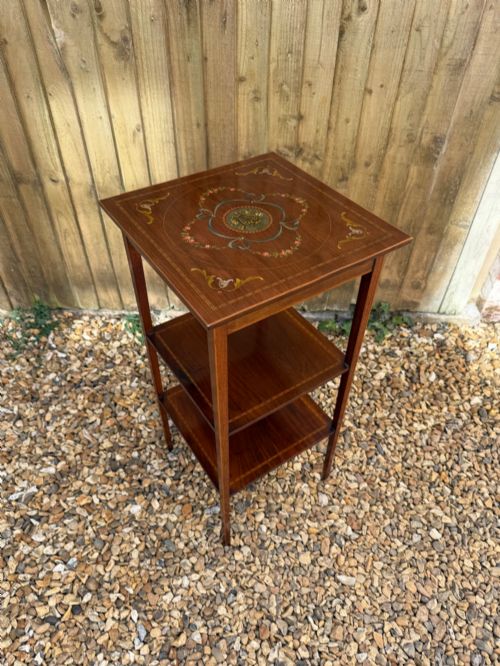
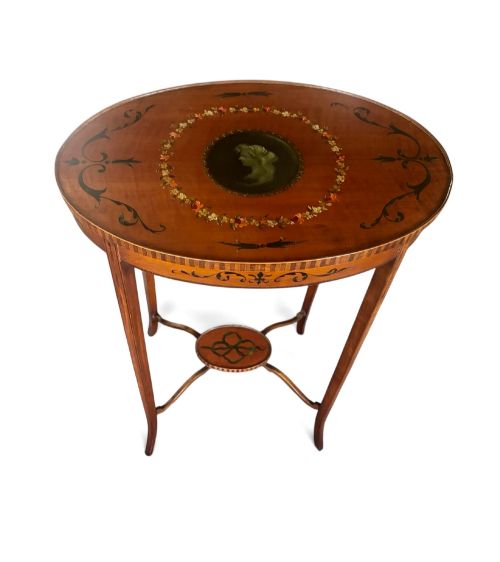
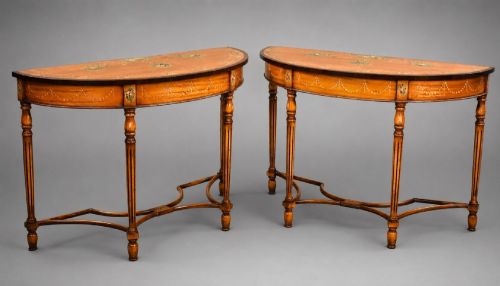
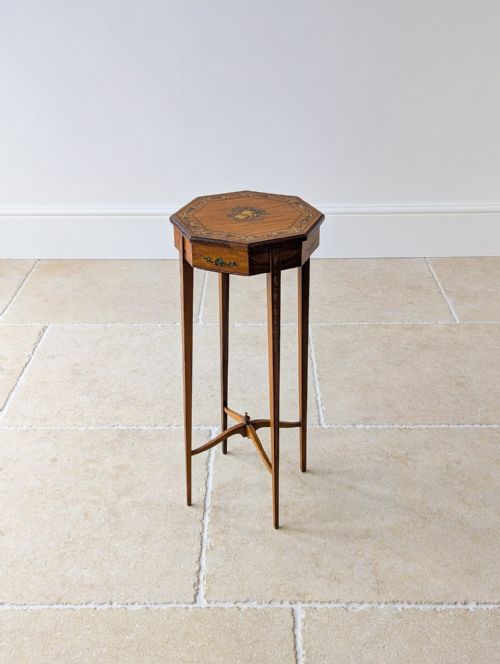
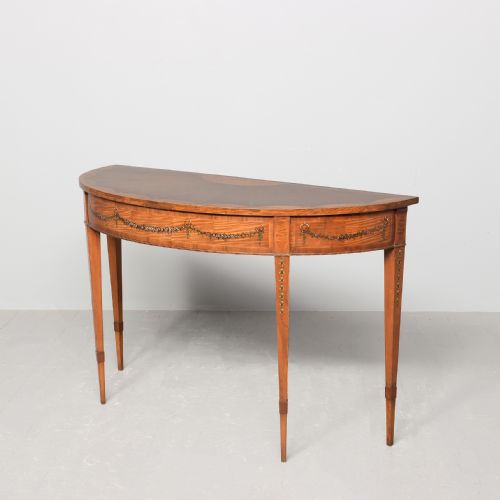
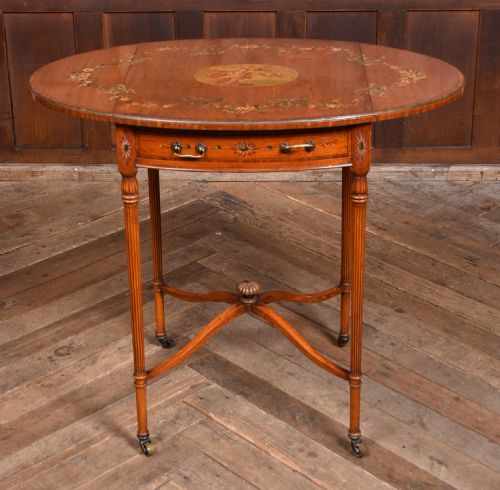
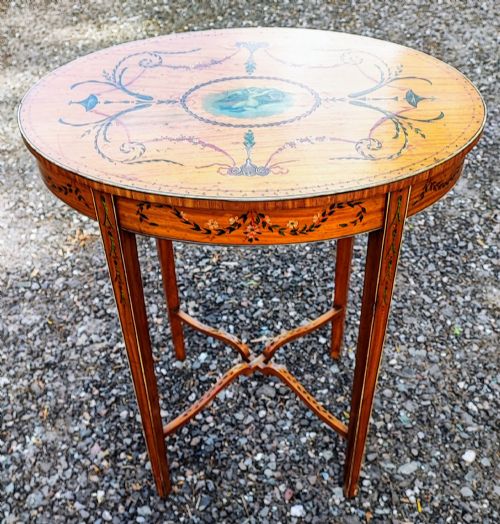
A painted satinwood side table appears in several distinct forms across this selection, most notably as a demi-lune console, an occasional table, or a Pembroke table. These pieces serve primarily as decorative surfaces or light utility tables rather than heavy workhorses of the household.
The majority of these items date from the Edwardian period and the nineteenth century, reflecting a strong revival of earlier eighteenth-century tastes. Makers during these later eras drew heavily upon Sheraton and Neoclassical design vocabulary to shape their output.
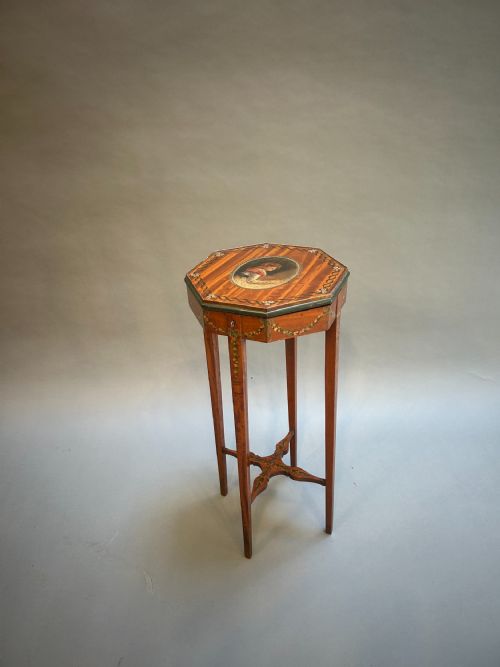
Beyond the standard side table, the selection broadens into related occasional forms such as kettle stands, work tables, and etageres. Each piece utilises the pale, golden ground of the timber to display hand-painted floral motifs or classical scenes.
Distinctions in Quality
Quality reveals itself primarily in the crispness and restraint of the hand-painted decoration rather than the mere presence of colour. The finest examples display finely rendered brushwork on the satinwood top, where floral details and portrait medallions possess genuine depth and proportion.
Construction standards also separate the range, seen in the tight joining of demi-lune frames and the careful selection of figured satinwood veneers. Weaker examples rely on heavy, mechanical decoration that lacks the spirited execution found in superior pieces.
Painted Satinwood Side Table Retail Price Guide 2026
Typical asking prices for painted satinwood side table among the pieces listed under this phrase on Sellingantiques today, from the lower quarter to the upper quarter. They describe what is for sale here now, not the wider market.
The listings combine Edwardian and nineteenth-century items using satinwood, paint, brass, and mahogany across various occasional and console forms.
The Painted Satinwood Side Table Glossary
- Satinwood
- A hard, yellow timber known for its natural sheen and smooth grain. It serves as the principal substrate for painted tables.
- Demi-lune
- A half-moon shape popular for console and side tables designed to sit flush against a wall. This profile allows the painted top to act as a primary decorative focus.
- Sheraton Revival
- A late nineteenth and early twentieth-century design movement inspired by the furniture of George Sheraton. Pieces from this era often feature painted satinwood and classical motifs.
- Pembroke table
- A small, drop-leaf table with hinged flaps on either side. These versatile pieces frequently incorporate satinwood veneers and painted decoration.
Painted Satinwood Side Table: Frequently Asked Questions
Where should I place a painted satinwood side table?
These tables suit drawing rooms, hallways, or reception spaces where their decorative painted surfaces can be properly appreciated. They function well against a wall as a console or freestanding as an occasional table.
Because direct sunlight can fade the delicate painted details and golden satinwood timber, position the table away from harsh south-facing windows to preserve its finish.
How do I clean a painted satinwood surface?
Dust the surface regularly with a soft, dry lint-free cloth to prevent particulate buildup on the paintwork. Avoid using commercial polishes, water, or chemical solvents that might soften the historic painted decoration.
Consult a professional restorer if the timber or painted panels require deeper cleaning or stabilization to ensure the finish remains undisturbed.
How do I distinguish Edwardian revival pieces from earlier originals?
Examine the secondary woods, construction techniques, and the character of the paint ageing to determine the era. Edwardian Sheraton Revival pieces often display machine-sawn elements and brighter, more uniform framing timbers compared to eighteenth-century work.
The style of the hand painting also offers clues, as late nineteenth and twentieth-century interpretations frequently employ a distinct palette and softer brushwork.
What is a demi-lune table used for?
A demi-lune table provides a flat straight edge to sit against a wall while offering a curved display surface for lamps, ceramics, or small objects. Their half-moon footprint makes them ideal for narrower hallways and alcoves.
Historically, these tables functioned as serving surfaces or elegant side pieces during formal gatherings.