



Satinwood Tilt Top Table
A satinwood tilt top table offers brilliant timber surfaces that tip upright when not in use, combining practical ingenuity with exceptional cabinet work.
Satinwood Tilt Top Table
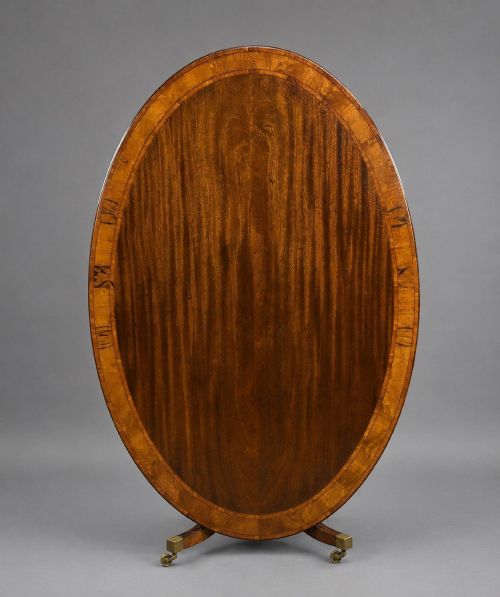
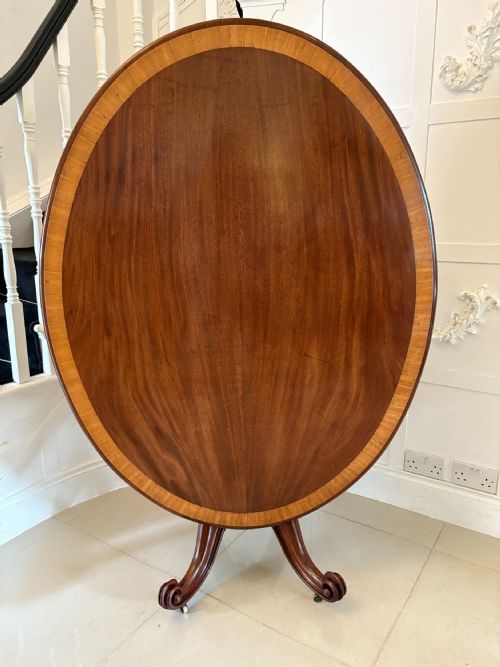
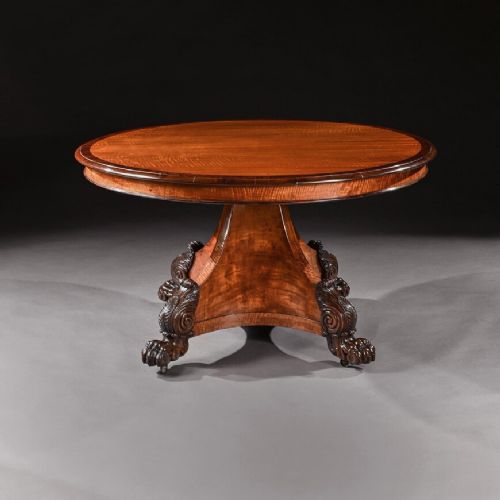
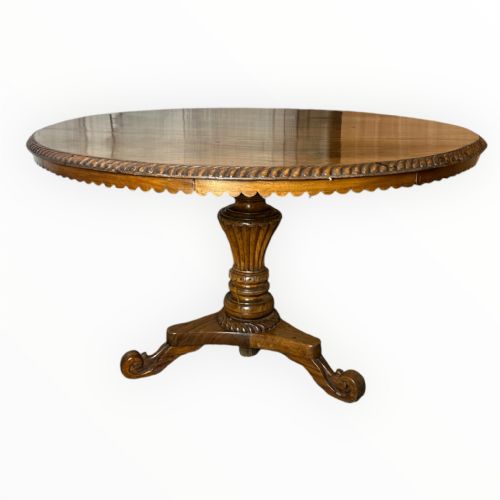
A satinwood tilt top table brings together versatile English and continental furniture types designed for dining, breakfast, and occasional use across several centuries. The examples encountered here span the Georgian, Regency, and Victorian eras, demonstrating how makers adapted folding tops for domestic interiors.
The satinwood tilt top table most commonly appears with circular or oval timber tops supported on pillar and tripod bases. Many pieces incorporate contrasting timbers such as mahogany or rosewood, while the foundational mechanism allows the surface to swivel and lock vertically to save space.
Distinctions in quality
The standard of execution rests heavily on the selection of figured timber and the precision of the veneer work across the top. Superior examples display symmetrical grain patterns and crisp inlay that remains flush with the surrounding surface.
The mechanical integrity of the catch and block assembly dictates daily utility, with finer pieces maintaining tight joints that prevent wobble when the table is locked flat.
Tables that fold flat and tuck against walls remind us that Georgian rooms doubled as dance floors at a moment's notice.
Peters of Genoa
The Satinwood Tilt Top Table Glossary
- Tilt top
- A table mechanism featuring a hinged block that allows the top to rotate into a vertical position. This clever design enabled furniture to be pushed against walls when the room was needed for other purposes.
- Crossbanding
- A border technique where thin strips of veneer are laid perpendicular to the main grain of the table top. It creates a defined frame that highlights the central timber.
- Tripod base
- A pedestal support resting on three diverging feet. This configuration provides stable three-point contact on uneven floor surfaces.
- Marquetry
- The art of forming decorative patterns using fitted pieces of various coloured wood veneers. Master craftsmen used this method to create elaborate floral or geometric motifs.
- Radially veneered
- A method where wedge-shaped pieces of timber veneer are arranged in a circle radiating from a central point. The grain creates a sunburst effect across the surface.
Satinwood Tilt Top Table: Frequently Asked Questions
Can I use a tilt top table daily?
These tables function well for everyday dining or display provided they receive sensible care and protection from excess moisture and heat. Using coasters and placemats preserves the delicate satinwood veneer and polished finish.
When pivoting the top frequently, ensure the locking catch engages fully each time the table returns to the horizontal position to maintain stability.
How do I tell a Georgian table from a Victorian one?
Georgian and George III examples often display restrained classical proportions, delicate tripod legs, and subtle stringing lines of contrasting wood. They tend to rely on the natural lustre of mahogany and early satinwood.
Victorian pieces frequently embrace bolder figures in the timber, heavier pedestals, and more elaborate marquetry or satin birch veneers reflecting later revival styles.
What is satinwood?
Satinwood is a dense, durable hardwood known for its characteristic golden-yellow sheen and lustrous, reflective grain. It gained immense popularity among elite cabinet makers during the eighteenth and nineteenth centuries.
Because of its bright appearance, craftsmen often used it sparingly as veneers or crossbanding to illuminate darker timbers like mahogany and rosewood.