

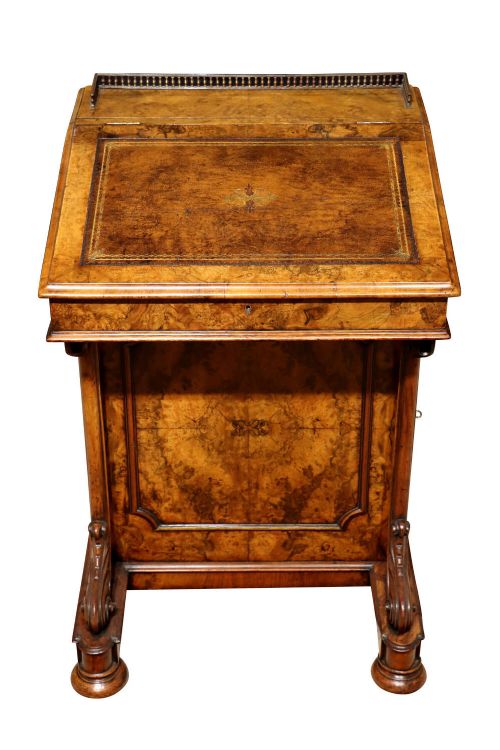


Carved Satinwood Table
A carved satinwood table offers a pale, highly figured surface that brings warmth and refinement to a room.
Carved Satinwood Table
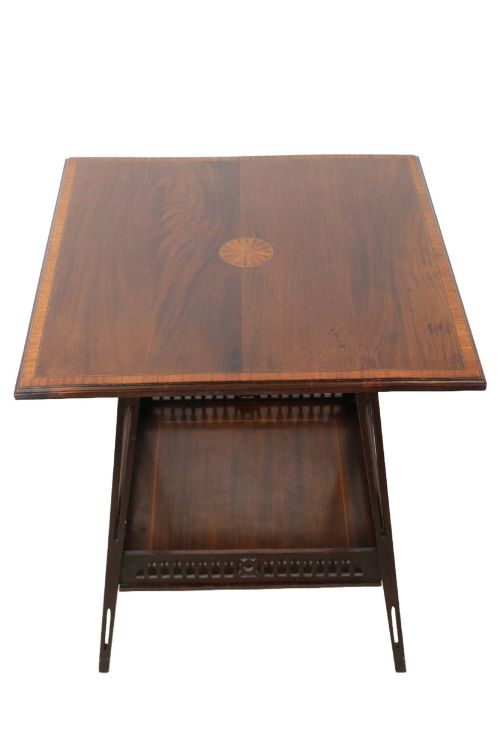
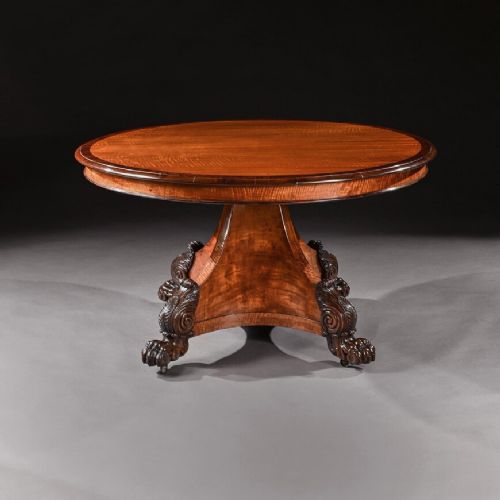
A carved satinwood table represents a tradition of fine cabinet-making, spanning periods from the eighteenth century through the Victorian and Edwardian eras. These pieces appear in forms such as tripod tables, centre tables, and side tables, utilising the distinctive golden timber.
The most likely examples to encounter on this page date from the nineteenth century, including Victorian and Edwardian interpretations. Makers often combined satinwood with contrasting timbers like mahogany, rosewood, and walnut to create decorative borders and panels.
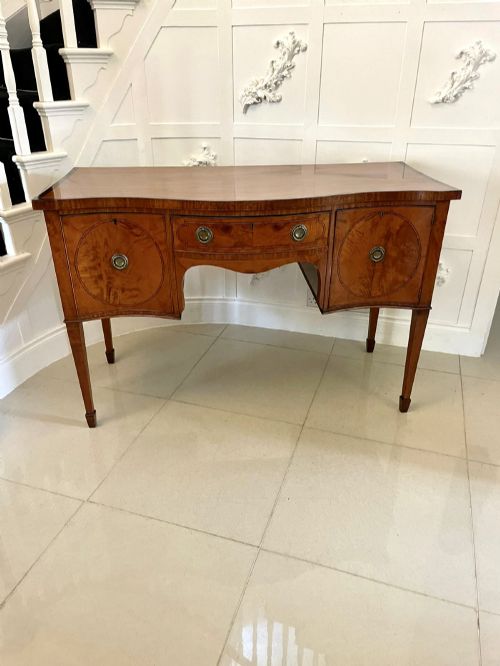
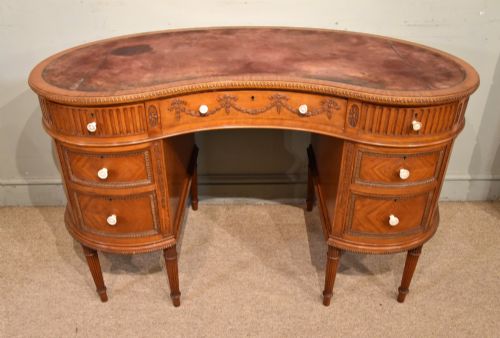
Beyond occasional and centre tables, the broader category encompasses desks, sideboards, and cabinets that share the same pale timber and careful joinery. Each piece demonstrates the versatility of satinwood in both simple domestic settings and grand reception rooms.
Materials and construction methods
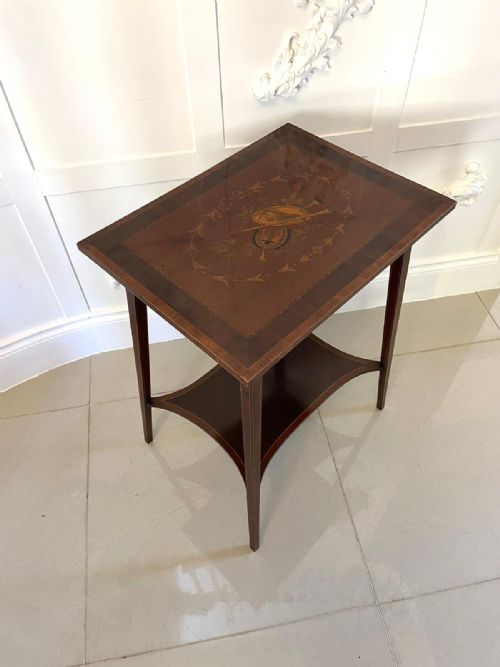
Cabinet-makers selected satinwood for its natural golden sheen and dense grain, frequently applying veneers over solid secondary timbers. Marquetry inlay work in contrasting dark woods often embellished the tops and friezes of these tables.
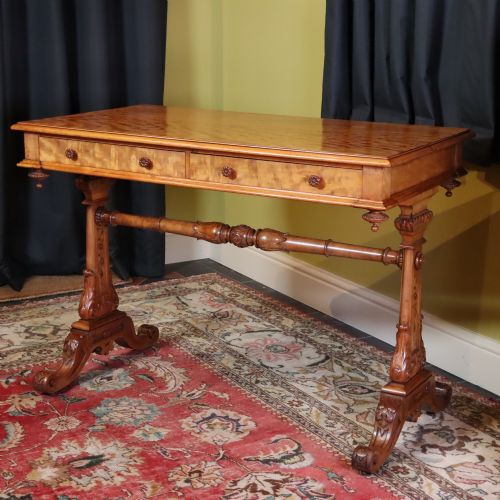
Carving was executed by hand on solid sections such as legs, feet, and edge mouldings, complementing the smooth polished veneer of the tabletop. Brass fittings, leather writing surfaces, and marble tops occasionally appeared alongside the primary timber in specific functional forms.
Some nineteenth-century tables served multiple functions simultaneously, housing everything from writing gear to writing slates and reading stands.
Assessing quality and craftsmanship
Quality rests primarily on the grain figure of the satinwood and the precision of any marquetry or inlay work. Highly figured timber displays a natural chatoyancy that shifts in the light, while inferior examples appear flat and plain.
Structural integrity and the retention of the original surface polish dictate the standing of an individual piece. Finer examples exhibit crisp hand-carving and tight joinery that have survived decades of use without substantial alteration.
Trevor Page & Co·Maple & Co·Waring & Gillows·Peters of Genoa·Sir John Bennett·Edwards and Roberts·Gillows
The Carved Satinwood Table Glossary
- Satinwood
- A dense, durable tropical hardwood prized for its pale yellow colour and chatoyant grain. It takes a high polish and serves as both solid timber and decorative veneer.
- Marquetry
- The art of applying decorative veneer pieces to a structure to form intricate patterns or pictures. Craftsmen used various coloured woods to achieve pictorial designs.
- Tripod table
- A small freestanding table supported by a central pillar and three spreading legs. They gained popularity during the Georgian period for tea service or occasional use.
- Centre table
- A freestanding table designed to be viewed from all sides and placed in the middle of a room. These pieces often feature detailed work on the top and frieze.
- Frieze
- The horizontal band running beneath the top of a table. Makers frequently decorated this area with inlay, carving, or contrasting veneers.
Carved Satinwood Table: Frequently Asked Questions
How do I clean satinwood?
Dust regularly with a soft, dry cloth to protect the polished surface from abrasive particles. Avoid using modern chemical sprays or excessive water, which can damage the historic timber and veneer.
Apply a traditional beeswax polish occasionally to nourish the wood and maintain its natural lustre. Buff gently with a clean cloth after application to restore the sheen.
Can I use a antique table daily?
These tables served practical domestic purposes originally and withstand careful everyday use in modern homes. Protecting the surface from moisture and heat preserves the polish and timber.
Placing coasters under glasses and using mats prevents marking the delicate veneer. Position the piece away from direct sunlight and radiators to stop the wood from drying out or splitting.
Is satinwood a fragile timber?
Satinwood is a hard and dense wood that resists everyday wear better than many softer decorative timbers. The primary vulnerability lies in the veneer layer and historic glue rather than the solid wood itself.
Maintaining stable room humidity prevents the veneer from lifting or cracking over time. Professional conservation addresses minor separation before it worsens.