
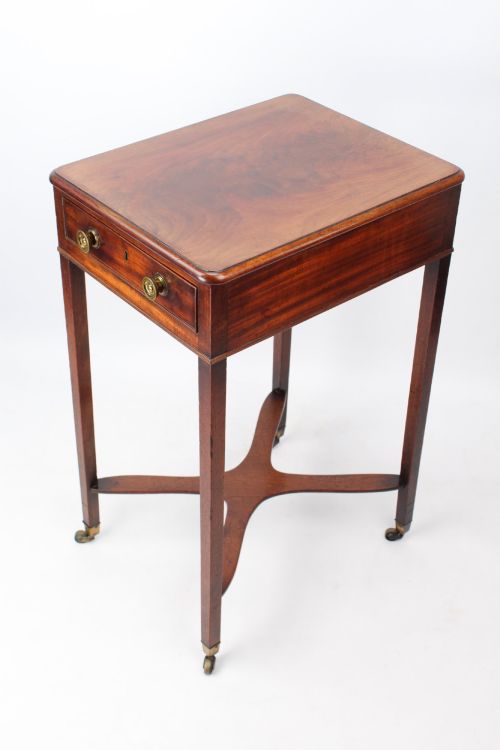
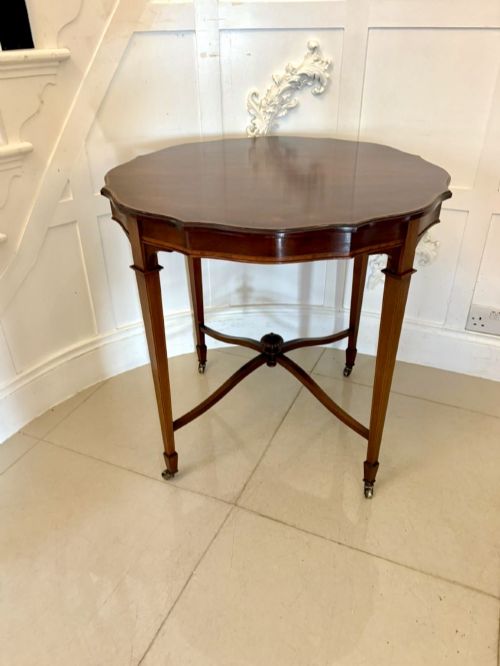
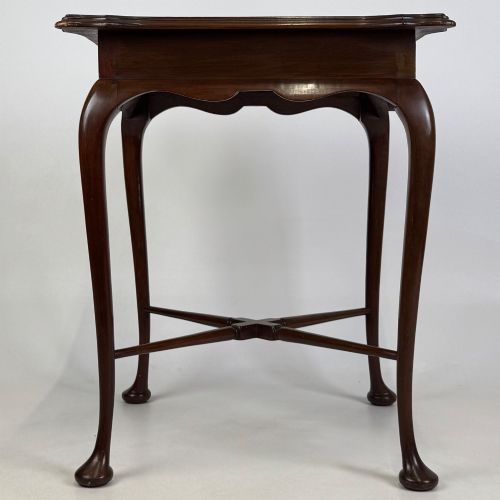
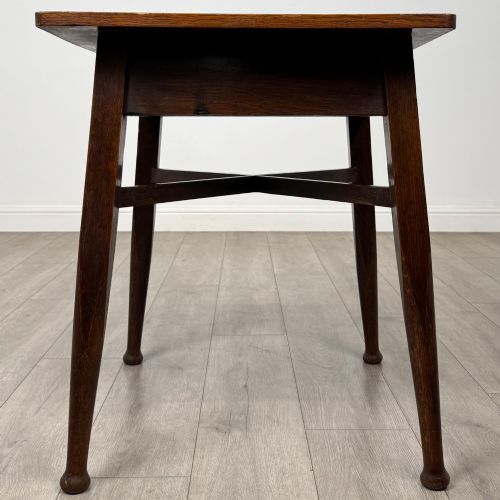


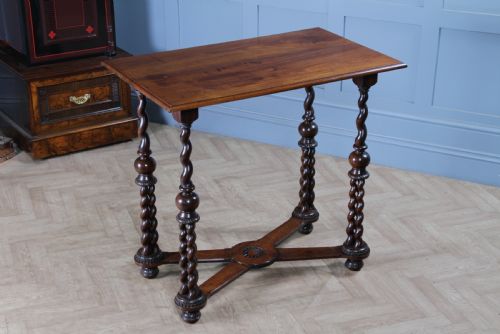


X Stretcher Occasional Table
An x stretcher occasional table brings structural stability and classical form to a room, serving as a reliable surface for lamps and objects.
X Stretcher Occasional Table
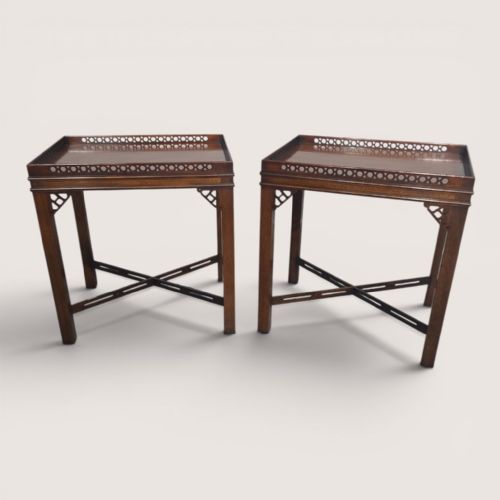
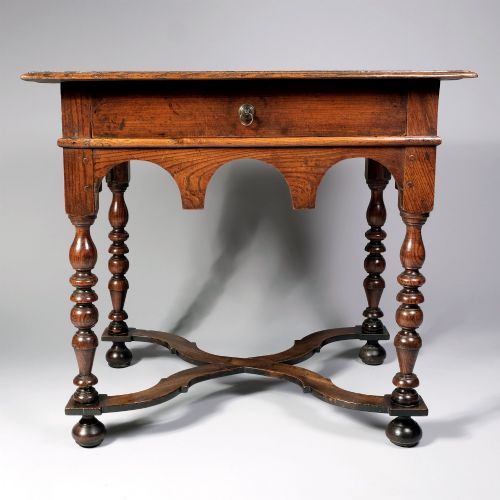
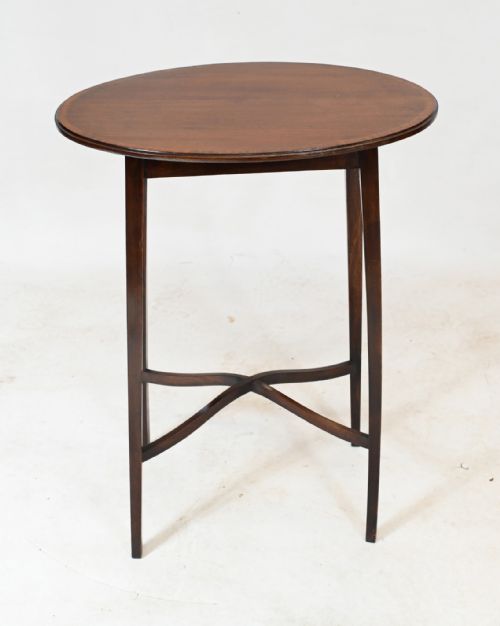
When you search for an x stretcher occasional table, you encounter pieces designed with crossing under-bracing that links the legs for added strength. These practical items appear in forms such as side tables, centre tables, and lamp tables across this selection.
The materials span from 17th-century oak and elm through to Victorian burr walnut, Edwardian satinwood, and mahogany. You meet revival styles including William and Mary, Jacobean, and Sheraton alongside pieces dating from the Georgian period.
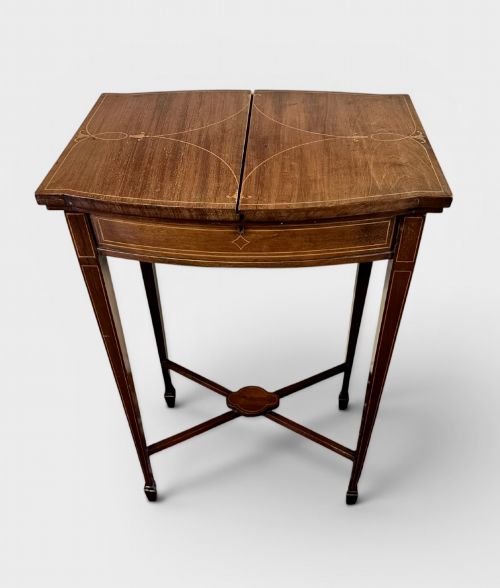
The structural X stretcher serves as both a brace and a decorative feature, frequently centred with a finial or intersecting hub. These tables function easily beside seating or in hallways as compact display surfaces.
Materials and construction
Cabinet makers utilised dense hardwoods such as oak, mahogany, walnut, and yew wood to build these frames, often applying veneers of burr walnut or satinwood to the primary surfaces. Brass mounts and handles appear on select drawers.
Joinery techniques involve pegged mortise and tenon joints for the earlier oak frameworks, alongside precise turning methods for legs and stretchers, including bobbin-turning and barley-twist profiles.
Some tables feature triple barley twists that make you wonder if the wood was spun by an enthusiastic spider.
Assessing craftsmanship and condition
The refinement of the leg turning and the symmetry of the intersecting stretcher dictate the visual standard of the piece. Crisp moulded edges and tight joints denote superior workshop execution.
Timber selection distinguishes simpler utility pieces from high-status examples, particularly where figured burr walnut, fine mahogany grain, or intricate satinwood inlay are present.
A Hindley & Sons·Gillows
The X Stretcher Occasional Table Glossary
- X stretcher
- An under-bracing configuration of diagonal members connecting the legs to prevent lateral movement. This structural element also contributes distinct geometric ornamentation beneath the tabletop.
- Bobbin-turned
- A style of furniture leg or stretcher shaped on a lathe to resemble a series of bobbins or spools. This technique is frequently observed on seventeenth-century oak examples.
- Burr walnut
- Timber taken from a growth on the walnut tree, yielding highly figured swirling patterns. Cabinet makers prized this veneer for table tops.
- Satinwood
- A durable, lustrous timber native to India and Ceylon with a natural golden sheen. It serves effectively for fine inlay work on Edwardian and revival furniture.
- Pembroke table
- A small occasional table featuring drop leaves supported by hinged brackets. Certain Georgian iterations incorporate stretcher bases.
X Stretcher Occasional Table: Frequently Asked Questions
What is an x stretcher occasional table used for?
These tables provide a stable surface for holding lamps, books, or decorative objects within living spaces and hallways. Their compact proportions allow them to fit easily beside chairs or against walls.
The underlying stretcher configuration ensures the frame remains rigid under daily use, combining practical utility with decorative support.
How do I identify the period of an oak table?
Seventeenth-century examples often display hand-split oak panels, pegged joints, and bobbin-turned supports. Later revival pieces from the Victorian and Edwardian eras show more uniform machine-sawn timber.
Examining the underside and drawer construction reveals tool marks and assembly methods characteristic of specific centuries.
Where should I place a centre table?
Centre tables function effectively in the middle of a room when finished on all sides, allowing access from multiple directions. They also sit comfortably against a wall if space is restricted.
Ensure clearance around the table so the stretcher base remains visible as a decorative feature.
How do I care for inlaid satinwood surfaces?
Keep satinwood furniture away from direct sunlight and heat sources to prevent the wood from fading and the veneer from lifting. Dust gently with a dry, soft cloth.
Apply a microcrystalline wax occasionally to nourish the timber without building up heavy residues.