





Satinwood Tray Table
These satinwood tray tables combine portable serving surfaces with refined timber framing, offering a versatile piece that brings lightness to any room.
Satinwood Tray Table
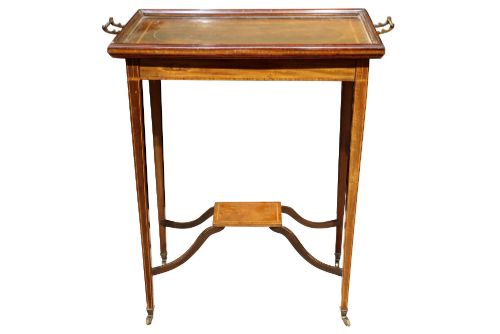
When you search for a satinwood tray table, you are looking at sophisticated occasional furniture designed for practical service and decorative display. The pieces on this page span the Georgian, Victorian, and Edwardian periods, running from late nineteenth century designs into the nineteen-twenties. The materials include satinwood, mahogany, brass, glass, and painted details, reflecting the preferences of Sheraton Revival and Neo-Classical styles.
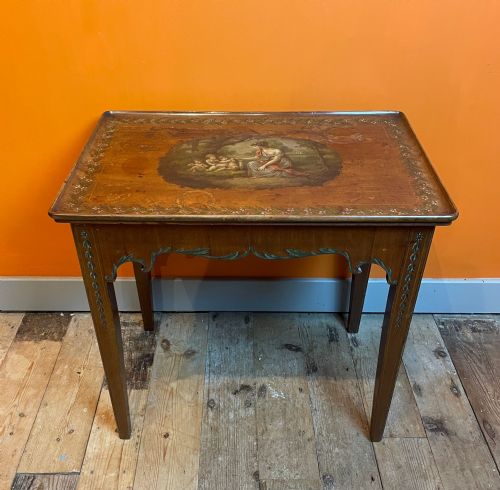
Most examples you will meet here take the form of occasional tables, etageres, and tray-top servers with removable or fixed tops. Makers of these pieces utilised mixed wood veneers and hand-painted detailing to create contrasting borders and central motifs. Whether configured as a bedside cabinet, a side table, or a tiered table, each item serves both a functional role and an aesthetic one.
How they were made
The construction of these tables relies on timber selection, pairing dense mahogany structures with pale satinwood veneers to create strong visual contrast. Cabinet makers applied these veneers over secondary woods, cutting intricate stringing and marquetry patterns to define the edges of the tray tops. Brass fittings, including handles and gallery rails, were integrated to secure items placed on the surface during use.
Surface decoration frequently involved hand-painted detailing or classical motifs applied directly to the wood before sealing with clear polish. Joinery techniques from the nineteenth and early twentieth centuries ensured stability in light frames, particularly on tiered etageres and folding stands. The finish highlights the natural chatoyant quality of the satinwood grain.
Several trays double as drinks stations, proving our ancestors took their evening refreshments very seriously indeed.
What varies in quality
The distinction between ordinary and exceptional pieces lies in the precision of the timber matching and the execution of the marquetry. Superior examples display carefully selected satinwood veneers with consistent grain patterns across the entire tray surface, rather than pieced-together scraps. The crispness of the hand-painted details and the delicacy of the inlay work further separate standard production from master craftsmanship.
Structural integrity also dictates quality, with finer tables maintaining rigid joints and well-fitted removable trays that sit flush within their galleries. Original brass hardware, such as carrying handles and gallery spindles, contributes significantly to the integrity of a piece. The depth of the timber polish and the preservation of the original surface finish complete the assessment.
Gillows
The Satinwood Tray Table Glossary
- Satinwood
- A hard, durable timber with a natural sheen resembling satin, prized for its pale yellow colour and reflective grain. It was heavily utilised during the Georgian and Sheraton Revival periods for veneers and stringing.
- Étagère
- A set of open shelves or tiers designed for displaying small objects, ornaments, or serving items. These freestanding pieces became particularly popular during the Edwardian era.
- Marquetry
- The art of applying decorative veneer pieces to a structure to form intricate pictorial or geometric designs. Craftsmen cut various coloured woods to fit together precisely before gluing them to the carcase.
- Tray Top
- A table surface featuring a raised edge or gallery designed to prevent items from sliding off during transport or use. This form evolved from serving trays mounted permanently or temporarily onto folding stands.
- Stringing
- Thin strips of contrasting wood inlaid into channels cut into the surface of furniture. This technique outlines panels and borders on tabletops and cabinet doors.
Satinwood Tray Table: Frequently Asked Questions
What is a satinwood tray table?
A satinwood tray table is an occasional piece of furniture featuring a light timber surface with a raised edge, supported by a stand or legs. These tables function as movable serving surfaces or display stands.
They appear in various forms on this page, including etageres, bedside cabinets, and side tables dating from the nineteenth and early twentieth centuries.
How were tray tables used historically?
Historically, these tables served primarily for the transport and presentation of drinks, tea, or small dining items. The raised gallery kept cups and glassware secure while moving between rooms.
Over time, they transitioned into decorative occasional furniture used for displaying ornaments and holding books in reception rooms.
How do I date an Edwardian tray table?
Dating an Edwardian tray table involves examining the timber species, construction methods, and stylistic influences. Pieces from this period often display Sheraton Revival characteristics, such as classical painted motifs and delicate mahogany framing.
Makers working around nineteen-ten combined traditional cabinet-making joints with lighter proportions suited to contemporary drawing rooms.
Are the trays removable?
Many tray tables feature a removable upper section that lifts off the supporting stand for independent use as a serving tray. Other examples integrate the tray permanently into the frame with fixed gallery rails.
Both configurations appear across the Georgian, Victorian, and Edwardian periods represented in the listings.
How do I care for satinwood furniture?
Caring for satinwood requires keeping the timber away from direct sunlight and maintaining stable indoor humidity to prevent veneer splitting. Gentle dusting with a dry cloth preserves the polished surface.
Harsh chemical cleaners should be avoided in favour of traditional wax polish applied sparingly to maintain the natural sheen.