
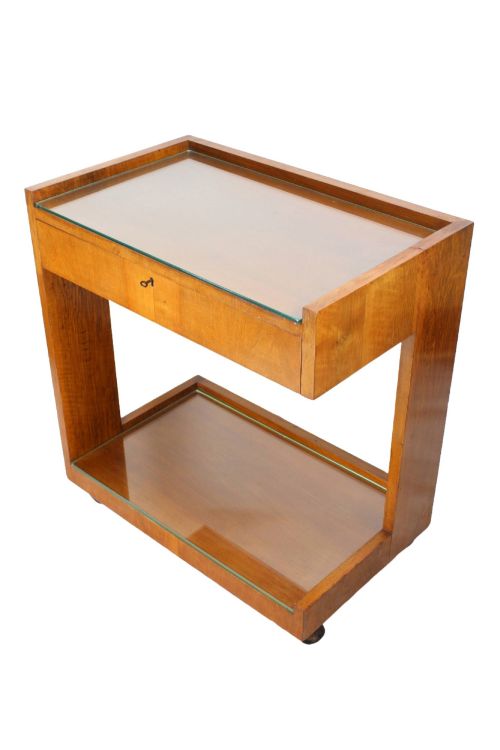
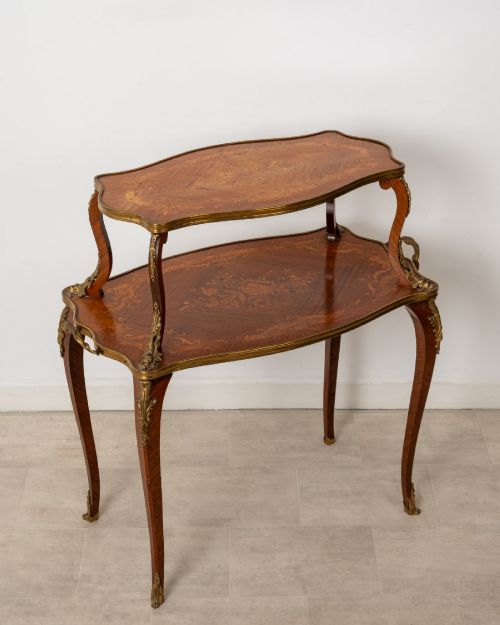
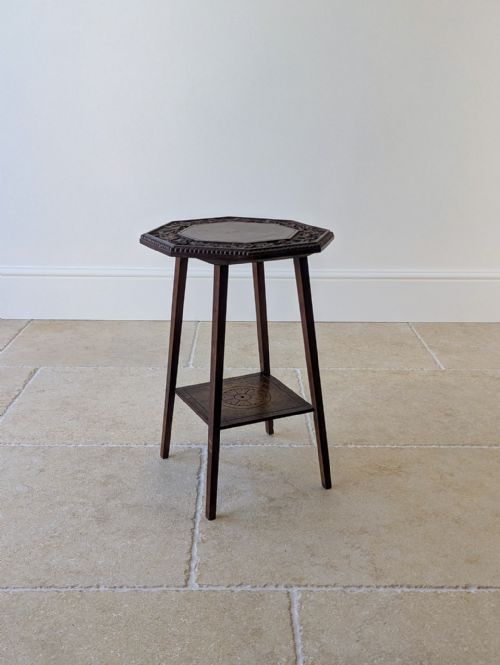
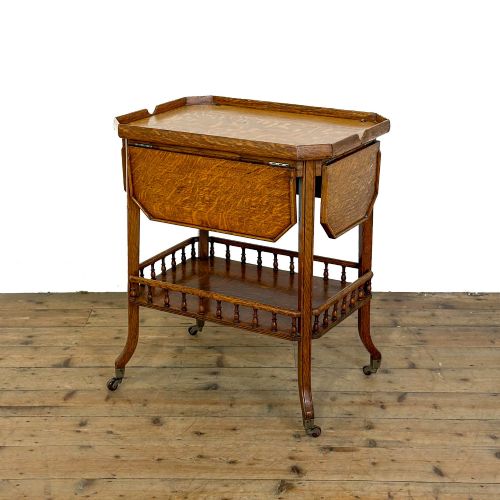
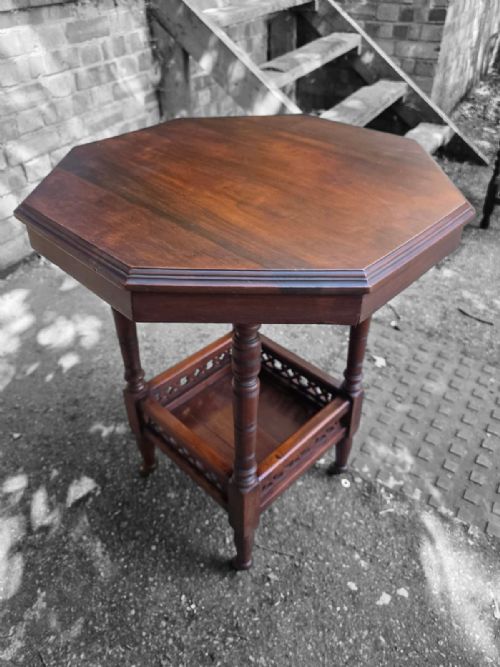
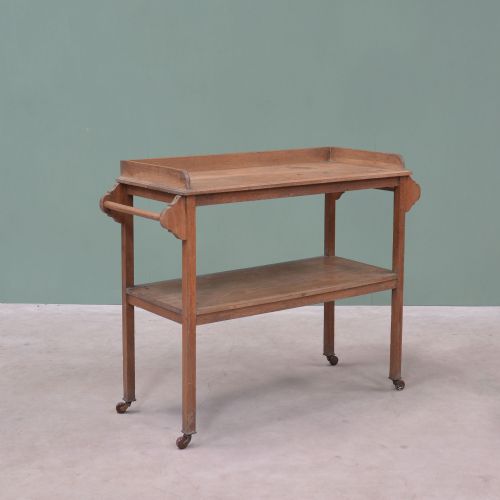
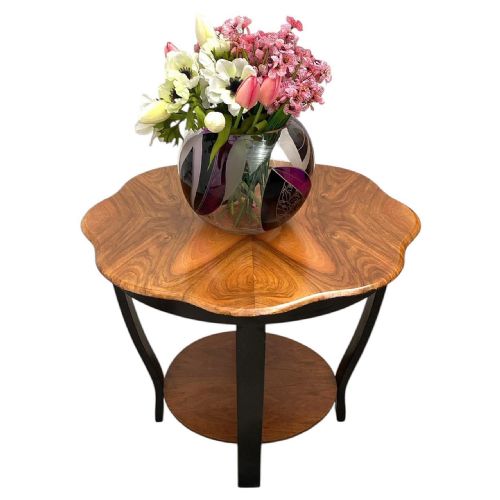
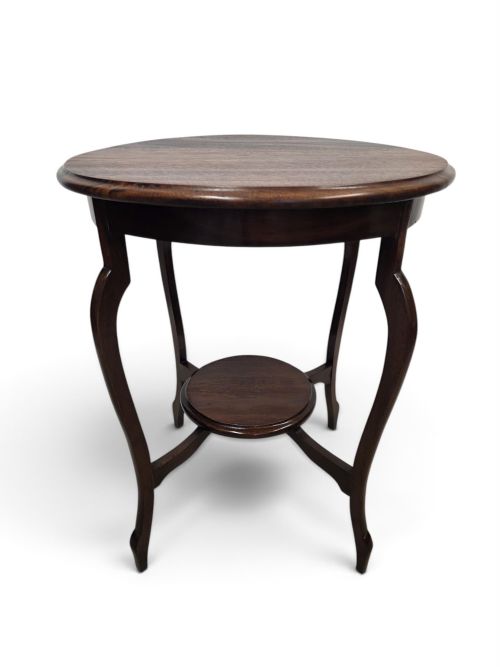
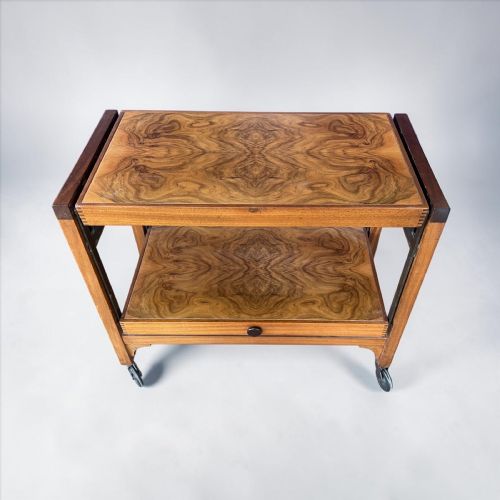
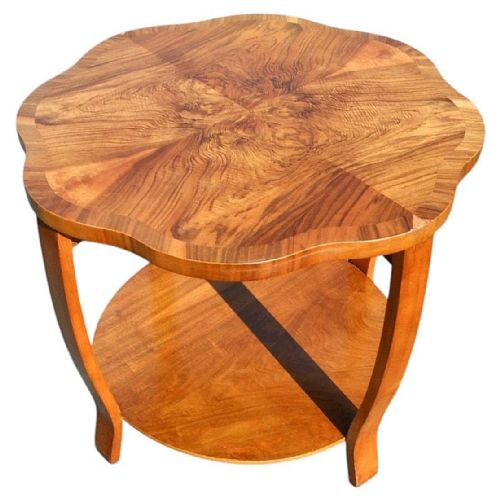
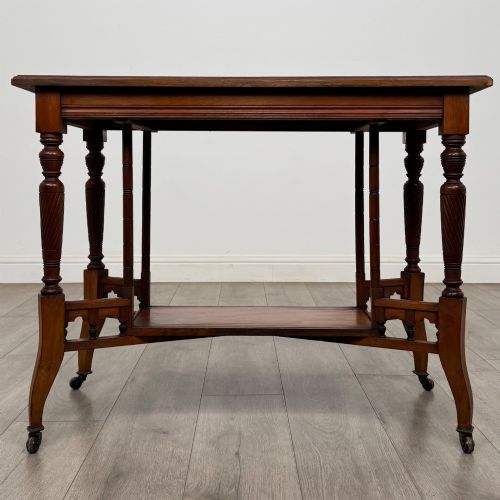
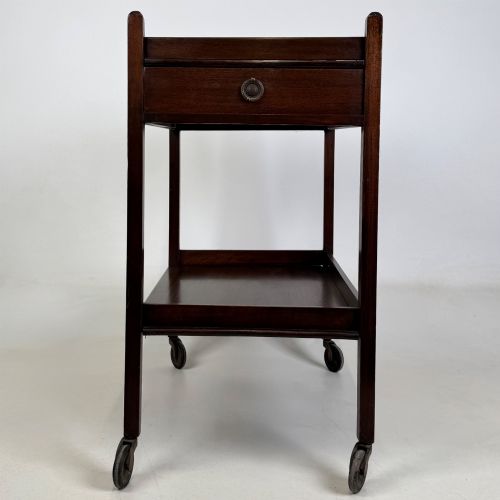
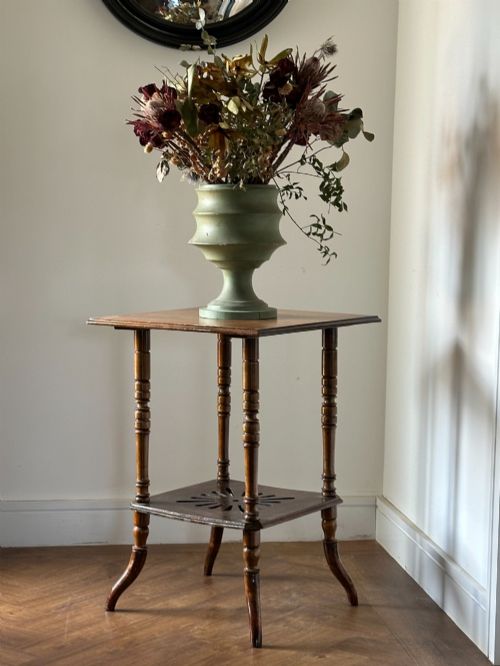
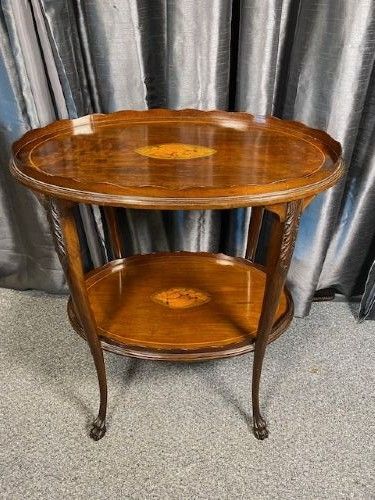
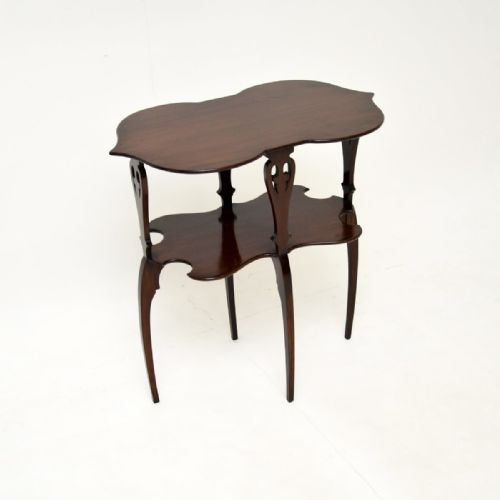
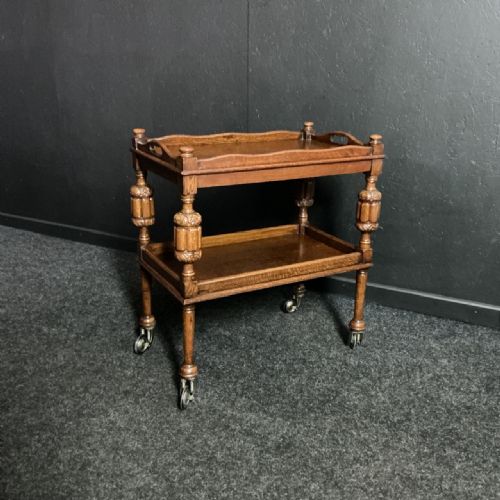
Two Tier Tea Table
A two tier tea table provides doubled surface space for serving or display, combining practical tiers with period timber character.
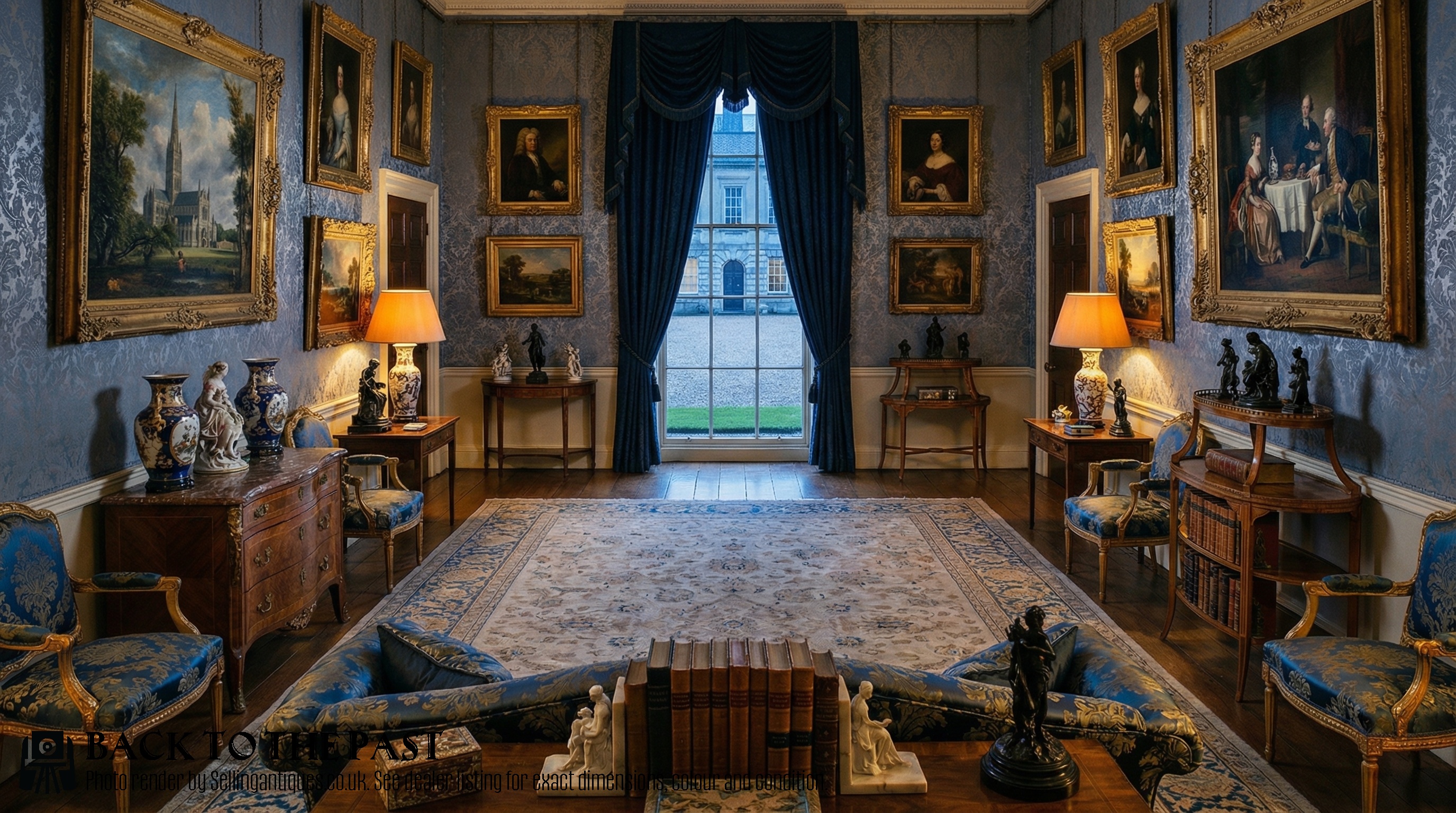
Two Tier Tea Table
A two tier tea table is a functional domestic piece built with an upper surface and a lower shelf, designed to hold afternoon refreshments or display decorative objects. When searching this phrase, a buyer encounters forms ranging from Victorian occasional tables and Edwardian tea trolleys to Art Deco coffee tables.
The pieces appearing on this page span the nineteenth and twentieth centuries, including stylistic revivals alongside periods such as the Edwardian era and the 1930s. Oak, mahogany, and walnut appear frequently as the primary woods used in construction.
Formats vary widely across the inventory, moving from stationary occasional tables and etagères to mobile serving trolleys and metamorphic designs equipped for drinks or afternoon tea.
How they were made
Makers constructed these tables predominantly in timbers such as mahogany, oak, walnut, and rosewood, frequently employing satinwood and marquetry for decorative inlay work. Brass, ormolu, and cast-iron elements appear as mounts, castors, or structural framing.
Joinery methods and surface treatments reflect the period of origin, from hand-carved Arts and Crafts oak frames to French-influenced etagères featuring detailed marquetry and hand-painted decoration.
Two Tier Tea Table Retail Price Guide 2026
Typical asking prices for two tier tea table among the pieces listed under this phrase on Sellingantiques today, from the lower quarter to the upper quarter. They describe what is for sale here now, not the wider market.
Listings feature items built from rosewood, satinwood, and ormolu alongside traditional oak, walnut, and mahogany.
What varies in quality
Quality differences lie in the selection of timber figures, such as figured walnut or book-matched mahogany veneers, and the precision of inlaid marquetry work. Finer examples display crisper carving and more integrated metal mounts or tile work.
Structural integrity and the retention of original brass castors or handles distinguish workshop-produced furniture from simpler utilitarian pieces.
Maison Giroux·George Bullock·Edwards & Roberts·Bertram & Son
The Two Tier Tea Table Glossary
- Étagère
- A set of open shelves or tiers used for small objects or display. These pieces originated in France and often feature delicate upright supports.
- Marquetry
- Decorative veneer patterns applied to furniture surfaces using pieces of wood, ivory, or shell. Craftsmen arrange these elements to form geometric or floral designs.
- Ormolu
- Gilded bronze mounts applied to furniture for decoration. This technique is prominent on French-style pieces from the nineteenth and early twentieth centuries.
- Dumb waiter
- A multi-tiered stand used for serving food or tea without domestic assistance. Examples range from stationary side tables to rolling trolleys.
- Crossbanded
- A method of bordering a panel of wood with a strip of veneer running perpendicular to the grain. This technique frames the primary timber surface.
Two Tier Tea Table: Frequently Asked Questions
What is a two tier tea table used for?
These pieces served historically for presenting afternoon tea, holding porcelain, or placing lamps and books within domestic reception rooms.
Today, they function as versatile side tables, coffee tables, or serving trolleys in modern living spaces.
How do I identify an Edwardian tea trolley?
Edwardian examples typically utilise oak or mahogany, often incorporating slatted lower shelves and rubber-tyred wheels for movement.
They reflect the domestic habits of the early twentieth century, prioritising practical service during afternoon gatherings.
What is the difference between an etagere and a tea trolley?
An etagere is a stationary display piece with multiple tiers, frequently ornamented with marquetry, ormolu mounts, or fine satinwood.
Tea and serving trolleys include castors or wheels designed for moving refreshments across rooms.
How do I care for antique wood tables?
Protect timber surfaces from direct sunlight and moisture by using coasters and placing tables away from direct heat sources.
Apply traditional wax polishes sparingly to maintain the finish without building up heavy residues.