
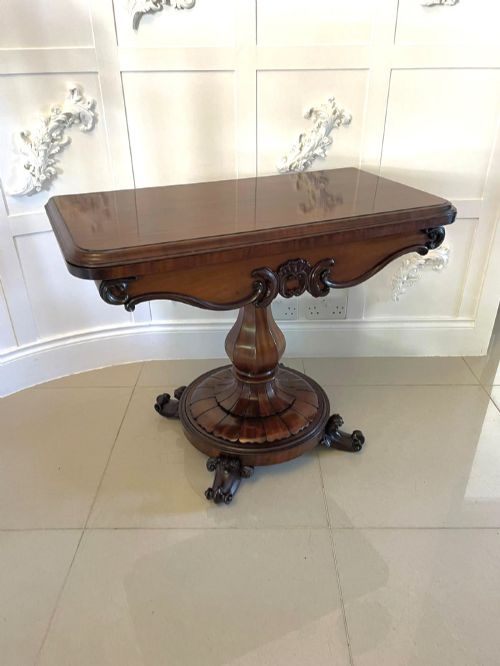

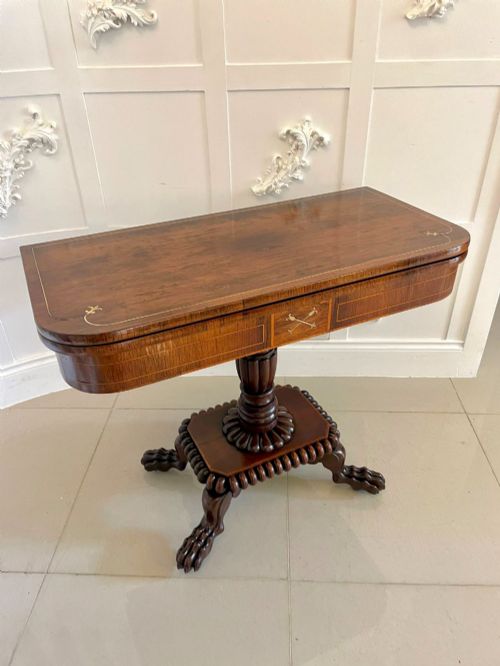
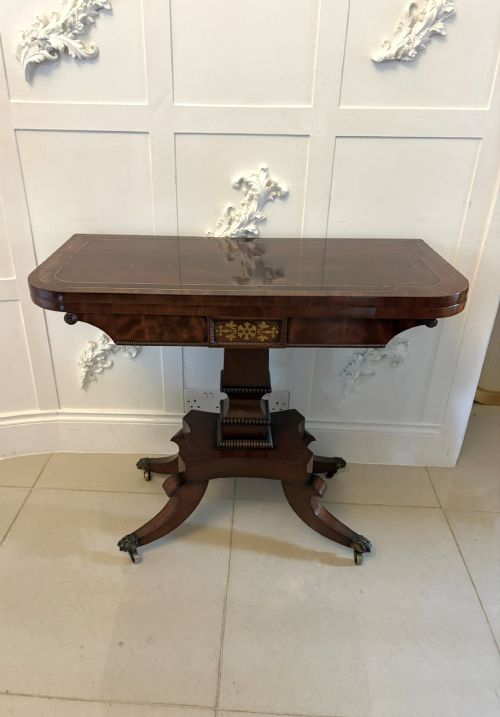
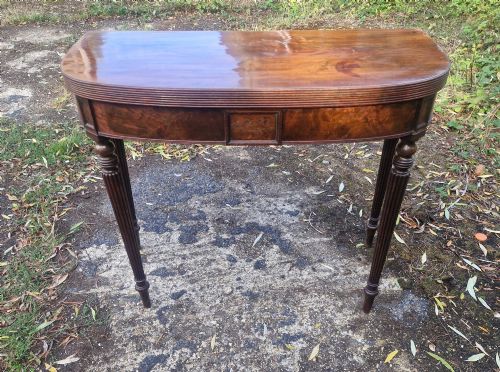
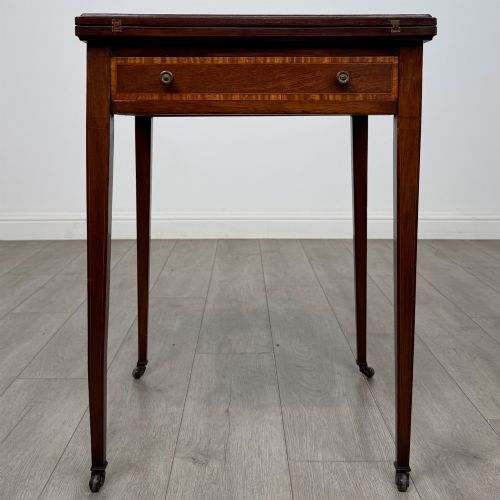
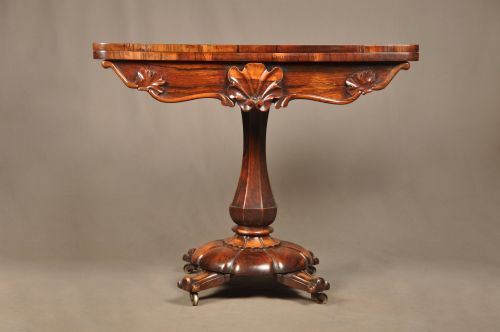
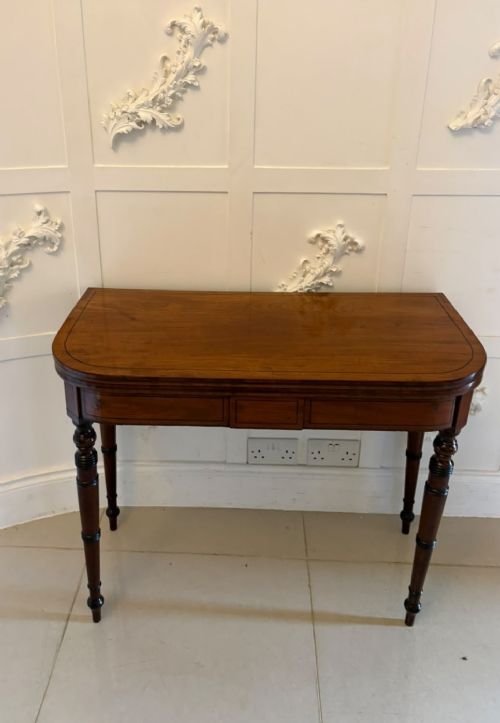
Folding Top Tea Table
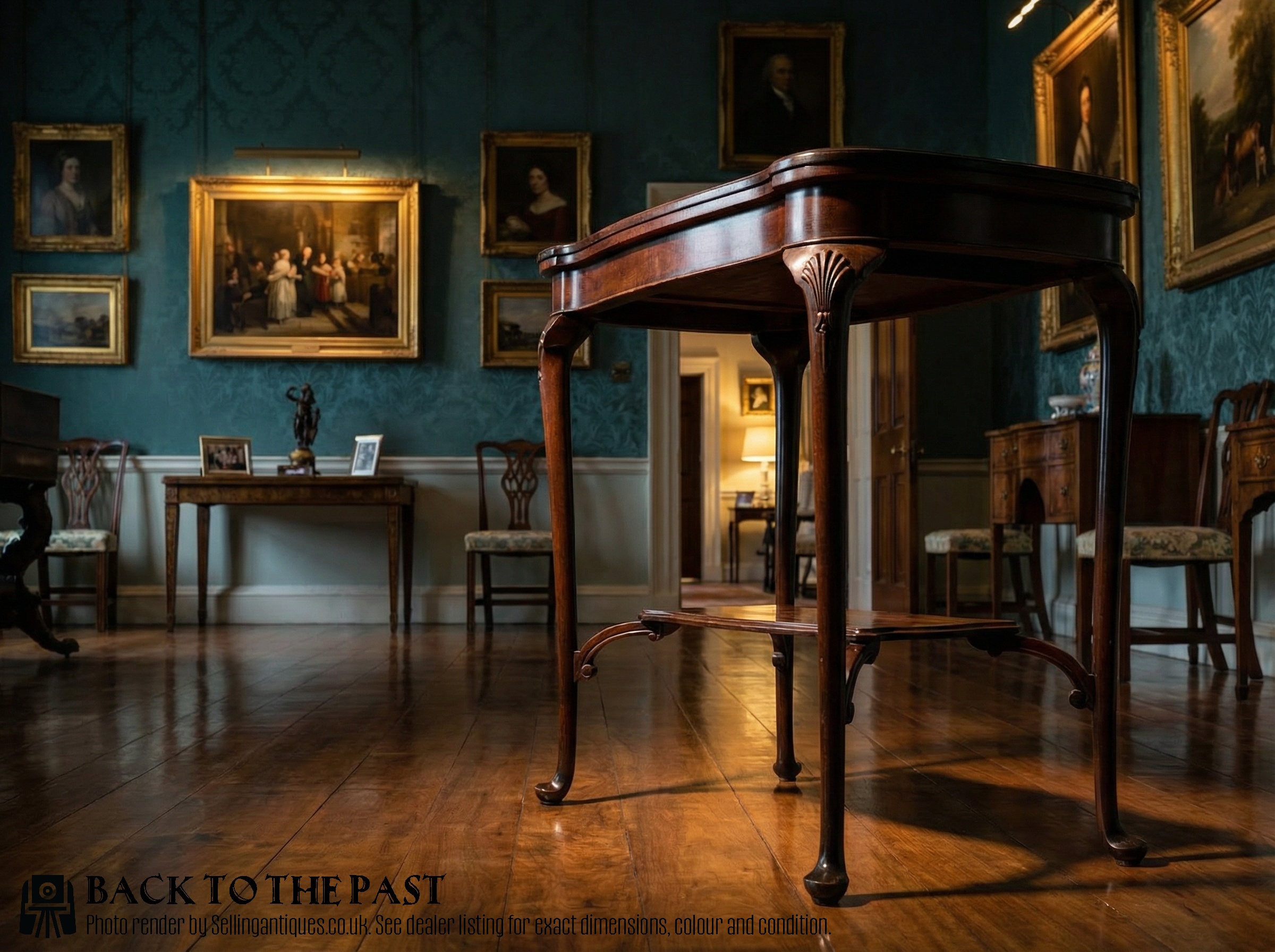
A folding top tea table brings ingenious domestic engineering into a room, offering a generous surface that neatly tucks away when tea is poured.
Folding Top Tea Table
A folding top tea table is an adaptable piece designed to sit against a wall before opening out to accommodate evening hospitality or card games.
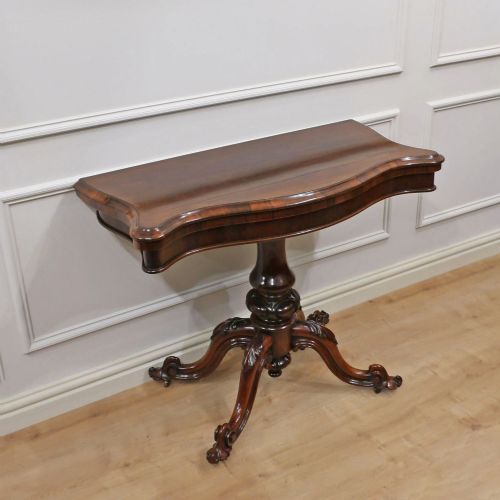
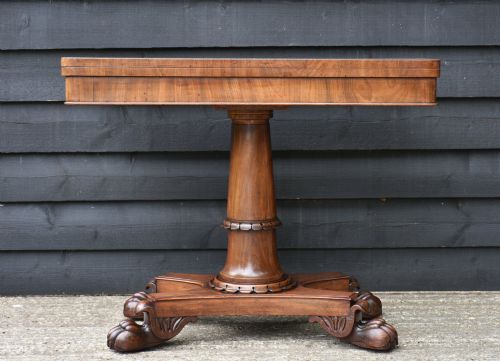
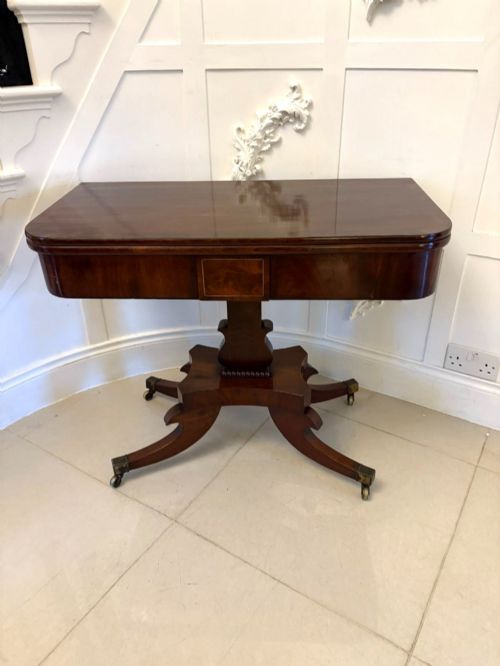
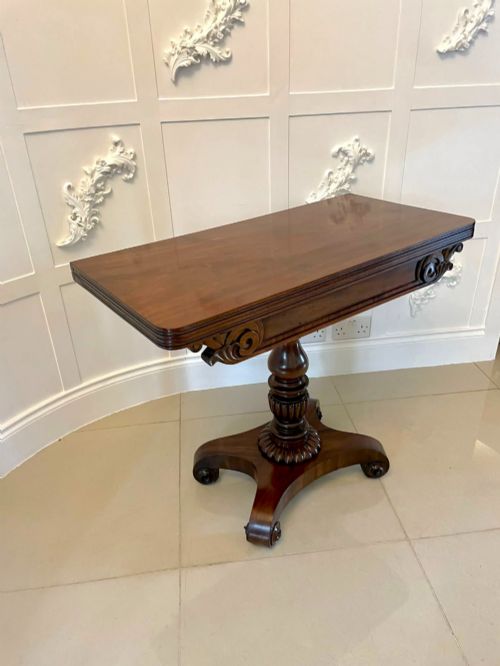
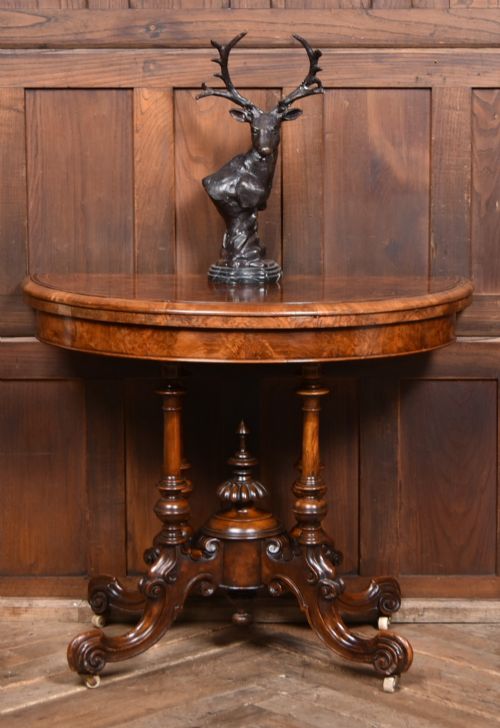
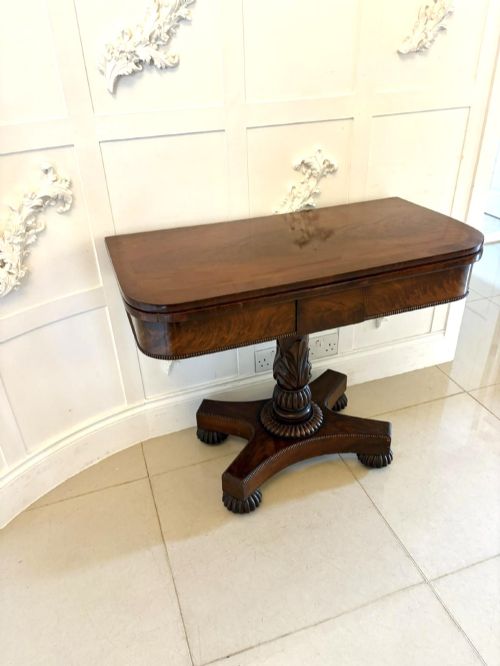
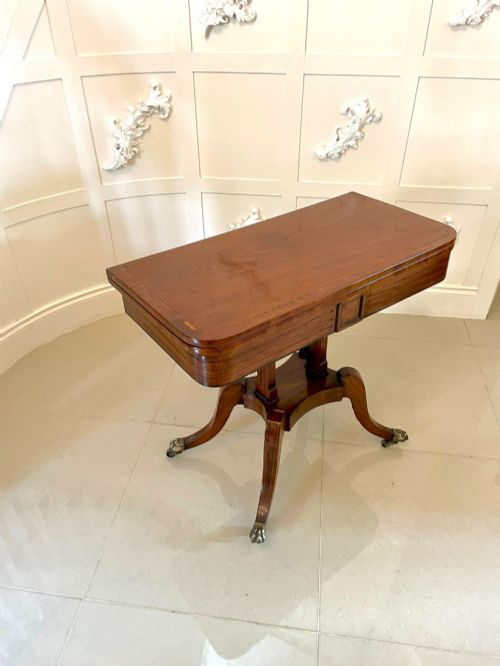
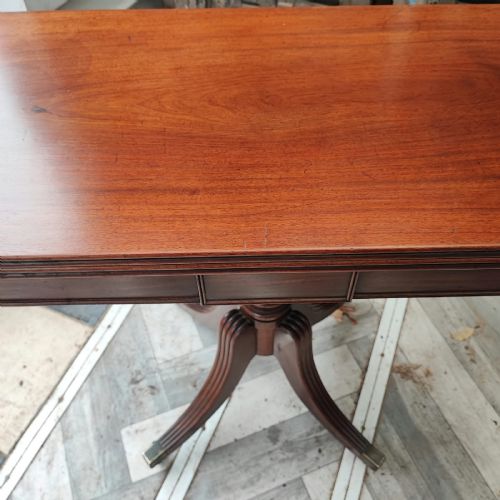
The versions most frequently met on this page span the Georgian, Regency, and Victorian periods, manifesting in rich timbers with clever hinge mechanisms.
Makers of these tables often combined the functions of tea service and gaming within a single versatile frame.
Materials and construction
Cabinetmakers relied heavily on dense tropical hardwoods like mahogany and rosewood, frequently selecting veneers with highly figured flames to catch the light on the folding leaf.
Many examples incorporate decorative stringing, brass inlay, or crossbanding in contrasting timbers such as satinwood, boxwood, and burr yew around the perimeter.
The structural integrity depends upon stable pivoting joints, D-shaped frames, and clever rear leg gates that swing out to support the expanded top.
Folding Top Tea Table Retail Price Guide 2026
Typical asking prices for folding top tea table among the pieces listed under this phrase on Sellingantiques today, from the lower quarter to the upper quarter. They describe what is for sale here now, not the wider market.
Some ingenious tables conceal tiny wells beneath their folding leaves where Georgian players once stored their ivory gaming counters.
Evaluating craftsmanship
The hierarchy of quality rests primarily on the choice of timber and the precision of the book-matched veneers displayed across the folding surface.
Superior pieces demonstrate seamless alignment when closed, tight joinery at the pivot points, and crisply carved details such as sabre legs or brass mounts rather than cast substitutes.
The Folding Top Tea Table Glossary
- Crossbanding
- A narrow strip of veneer laid perpendicularly to the main grain around the edge of a table top, framing the primary wood.
- Demi-lune
- A half-moon shape popular for console and tea tables designed to stand flush against a wall.
- Turnover top
- A hinged table leaf that rotates and folds flat onto a polished base, doubling the surface area.
- Sabre leg
- A gently curved, outward-sweeping leg of uniform section characteristic of the Regency style.
- Figured mahogany
- Timber selected for its swirling, rippled grain patterns that create shimmering optical depth under polish.
Folding Top Tea Table: Frequently Asked Questions
How were folding top tea tables used historically?
These tables stood against a parlour wall holding decorative items until evening, when servants unfolded them into the centre of the room for tea or card playing.
The clever dual-purpose design allowed households to maximise floor space without sacrificing surface area when guests arrived.
How do I tell a card table from a tea table?
While both use folding tops, card tables often feature lined interiors of baize or leather for playing games, alongside small cavities beneath the frame for counters.
Tea tables typically prioritise a polished wooden presentation surface designed to display porcelain tea services securely.
Where should I place one in a modern home?
A folding top tea table fits naturally in a hallway or living room against a flat wall, serving as a slim console for lamps or books.
Opening the leaf transforms the piece into a functional desk or a small dining surface when extra room is needed.
How do I distinguish between Georgian and Victorian examples?
Georgian versions generally display restrained classical proportions, understated mahogany framing, and subtle stringing.
Victorian iterations often embrace heavier proportions in burr walnut or rosewood, sometimes featuring elaborate scrolling supports and heavier mouldings.