



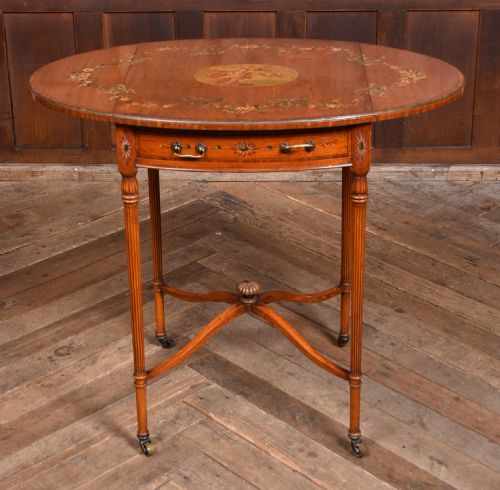
Edwardian Painted Side Table
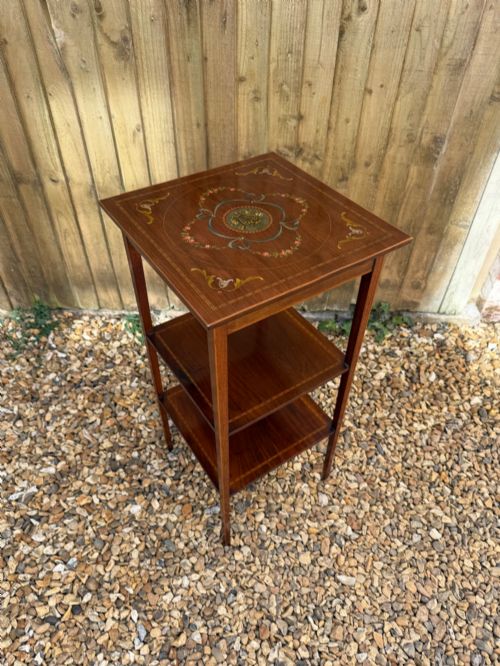
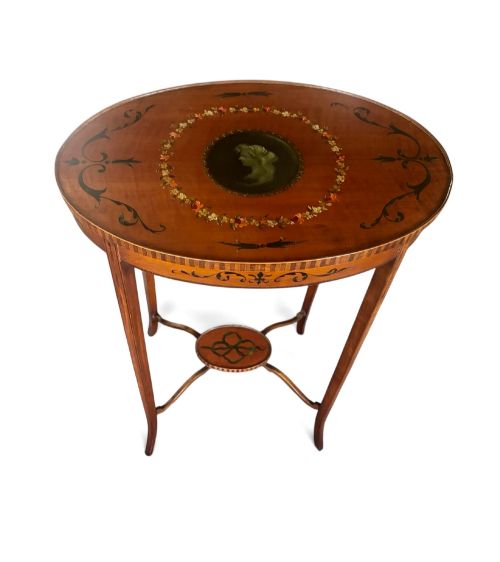
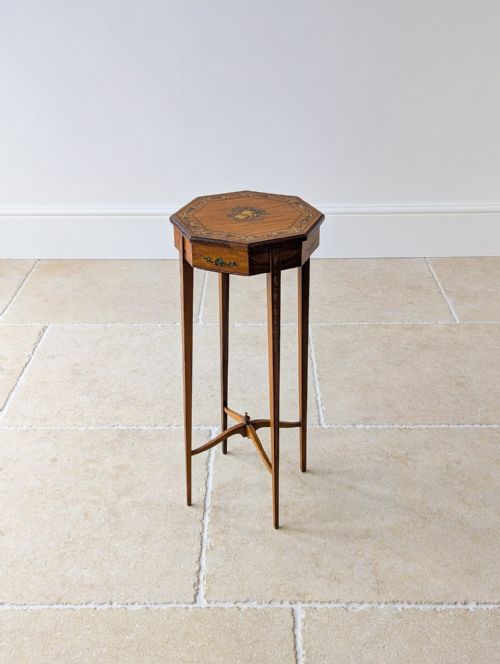
An edwardian painted side table brings bright floral motifs and delicate satinwood or mahogany surfaces into a room.
Edwardian Painted Side Table
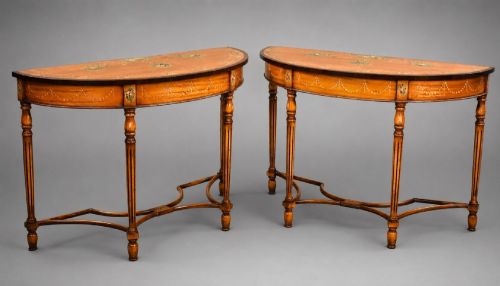
When you search for an edwardian painted side table, you encounter compact occasional furniture designed for the reception rooms and parlours of the early twentieth century. The selection spans lighter occasional tables, coffee tables, and console tables, alongside pieces carrying the distinct influence of the Sheraton Revival style.
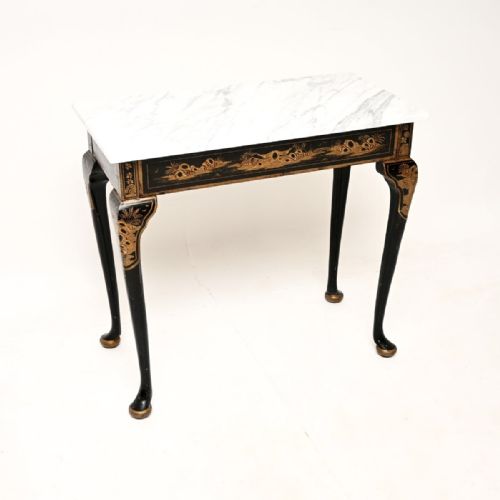
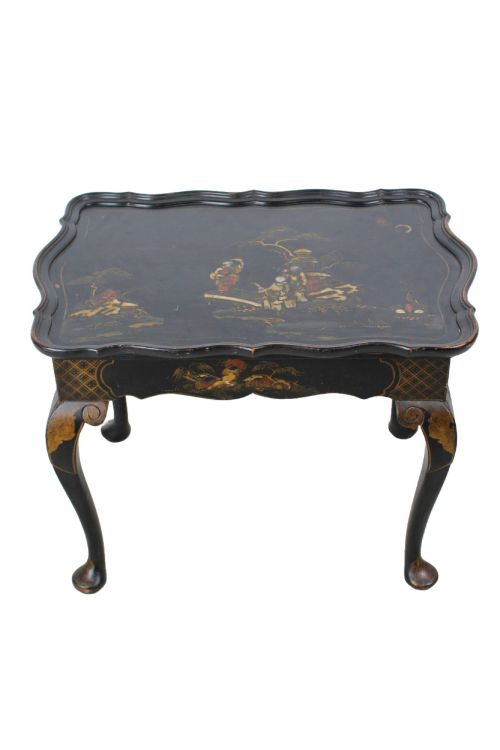
The dominant forms are Edwardian creations in satinwood and mahogany, often featuring hand-painted floral decoration or neoclassical details. Alongside these, earlier Victorian interpretations and later twentieth-century Chinoiserie lacquered examples appear within the records.
How they were made
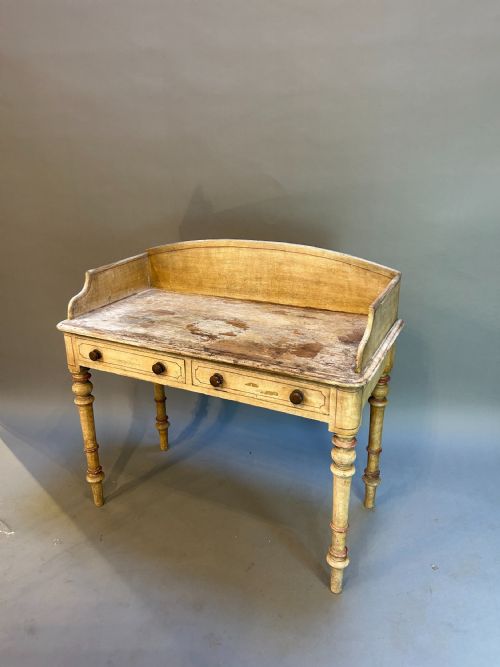
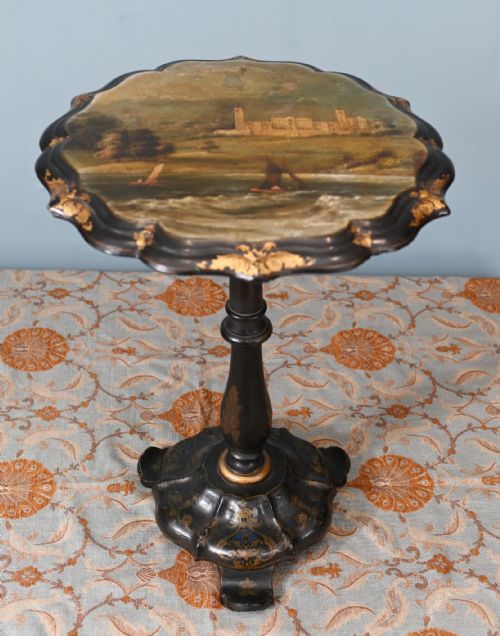
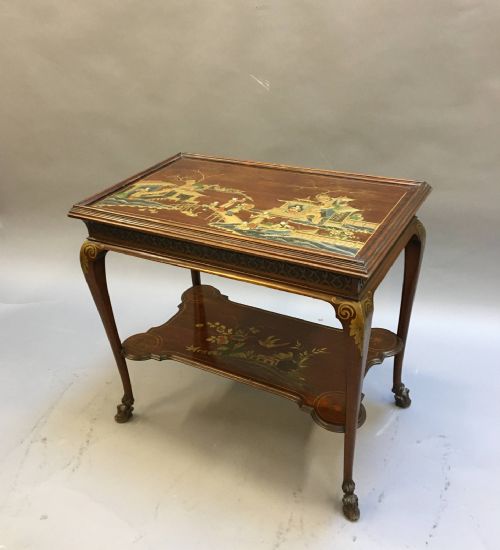
Cabinet makers utilised fine timbers such as satinwood and mahogany as a canvas for decorative paintwork, alongside pine for functional or country pieces. Surfaces received hand-painted floral motifs, intricate gilt highlights, or dark lacquer finishes.
Construction methods combine traditional joinery with applied decorative arts, linking delicate occasional tables to sturdier writing desks and bedside cabinets.
Listings feature periods from the Victorian era through the Edwardian years up to the 1930s, utilising satinwood, mahogany, pine, and lacquer.
What varies in quality
The distinction between standard domestic pieces and the finest examples lies in the execution of the hand-painted decoration and the choice of primary wood. Satinwood frames carrying detailed floral swags or crisp Neoclassical motifs sit at a different level from simpler painted pine or utilitarian tables.
Purity of style also dictates standing, with faithful Sheraton Revival interpretations showing greater refinement in proportion and inlay than later mass-produced variations.
The Edwardian Painted Side Table Glossary
- Satinwood
- A dense, light yellow timber prized by cabinet makers for its smooth sheen and suitability for fine painted decoration. It forms the primary ground for many classical revival pieces.
- Chinoiserie
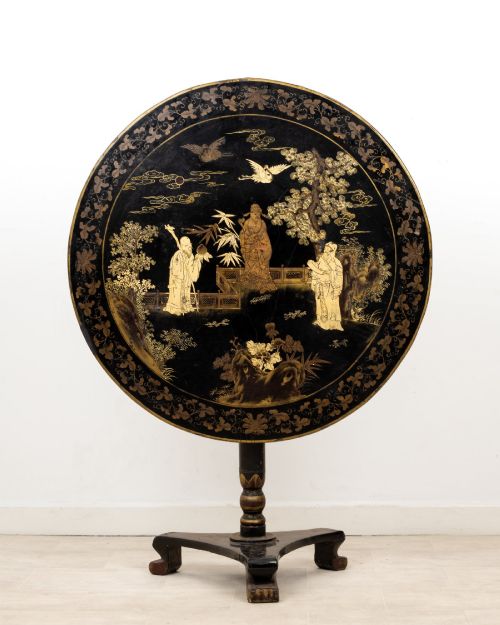
- European imitation of traditional Chinese artistic styles, typically expressed through black or coloured lacquer and gilt motifs depicting figures, pagodas, and landscapes.
- Sheraton Revival
- A late nineteenth and early twentieth century design movement that reinterprets the elegant, neoclassical furniture forms of eighteenth-century designer Thomas Sheraton.
- Demi-Lune
- Half-moon shape used for console tables designed to stand flush against a wall.
- Etagere
- A set of open shelves for displaying small decorative items, sometimes adapted as a side or occasional table.
Edwardian Painted Side Table: Frequently Asked Questions
How do I spot a genuine Edwardian painted side table?
Examine the timber beneath the paint, as authentic Edwardian pieces predominantly utilise satinwood or mahogany rather than modern manufactured boards. Look for hand-painted brushwork rather than printed transfers, noting the natural ageing and craquelure within the paint layers.
Check the construction methods of the drawer linings and joints to ensure they align with early twentieth-century workshop practices. The presence of Sheraton Revival motifs or subtle neoclassical garlands further supports the period attribution.
Where were these tables used in the home?
Edwardian households placed these compact pieces in drawing rooms, hallways, and bedchambers to hold small lamps, books, or writing materials. Their modest footprint allowed them to sit beside upholstery or against narrow wall spaces.
Today, they function well as bedside cabinets, lamp tables, or accent surfaces in sitting rooms where space is at a premium.
How do I care for a painted wooden surface?
Keep painted and satinwood surfaces away from direct sunlight and excessive heat to prevent the timber from warping and the paint from fading or cracking. Dust gently with a dry, soft cloth rather than using wet cleaners or chemical polishes.
Protect the top from moisture by using coasters beneath glasses and mugs, ensuring the delicate hand-painted decoration remains undamaged.
What is the difference between Edwardian and Victorian painted tables?
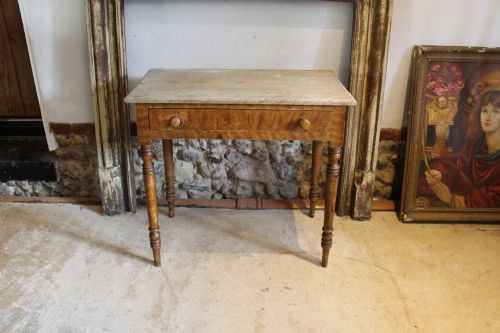
Victorian examples often feature heavier proportions and darker finishes, including scumble paint effects, heavy mahogany, or marble tops. They frequently date from the mid to late nineteenth century and can display bold Victorian Chinoiserie or robust pine construction.
Edwardian pieces lean towards lighter satinwood grounds, brighter floral decoration, and refined Sheraton Revival or Neoclassical styling with a graceful, slender silhouette.