

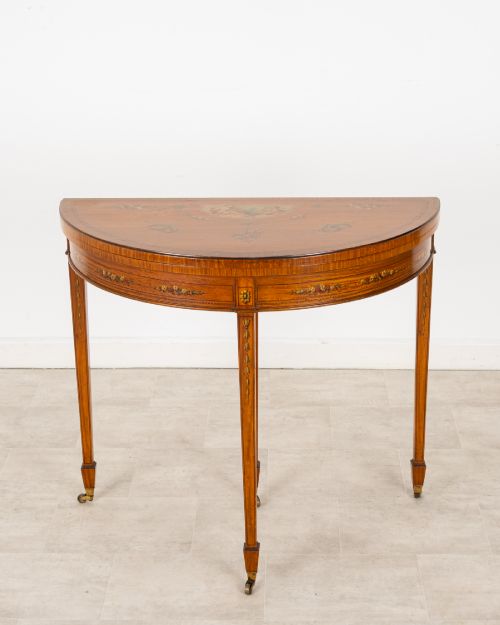


Golden Satinwood Console
A golden satinwood console brings shimmering warmth to a room through finely figured timber and graceful neoclassical lines.
Golden Satinwood Console
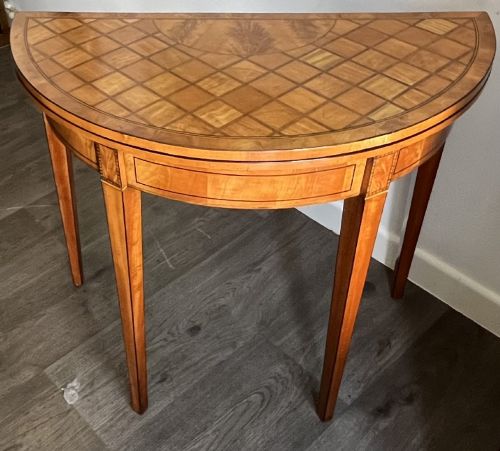
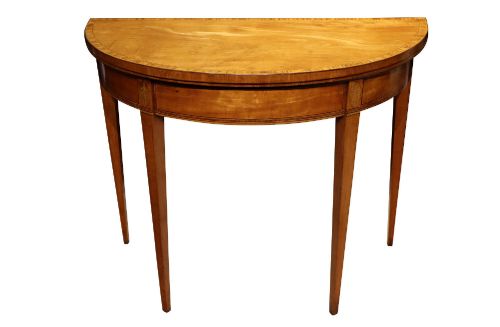
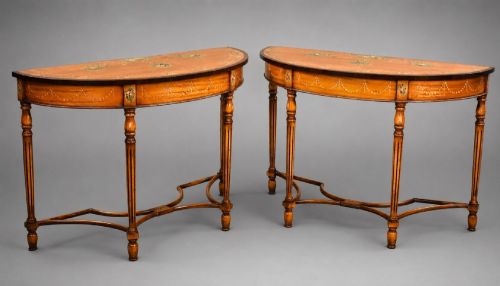
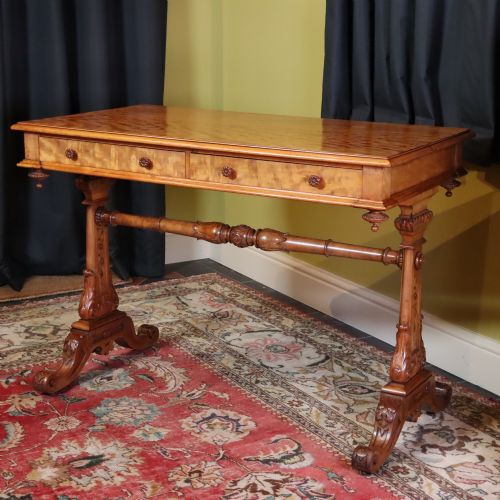
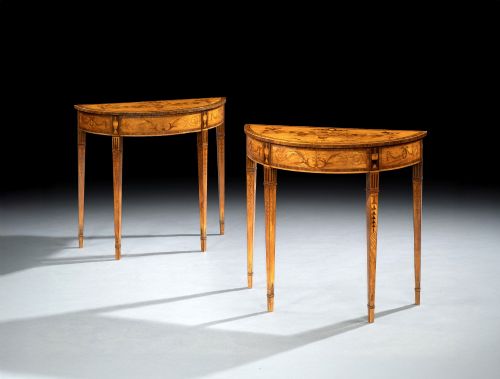
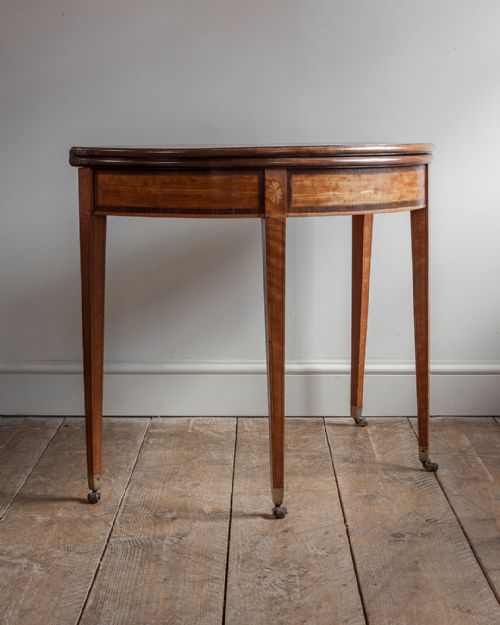
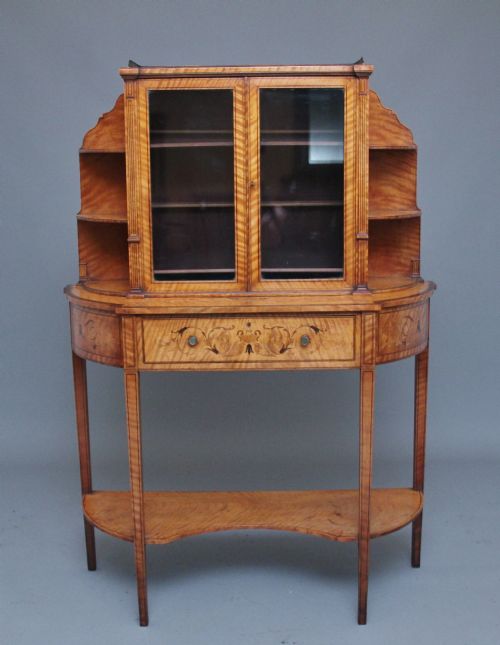
A golden satinwood console represents a refined form of antique English furniture designed to stand against a wall in a drawing room or hallway. When searching for a golden satinwood console, you encounter various demi-lune, half-round, and side table formats dating from the eighteenth century through the Edwardian period.
The pieces appearing most frequently take the form of card tables, games tables, and demi-lune console tables. These items reflect classical proportion and delicate proportions suited to period interiors.
Origins span George III workshops, nineteenth-century revivals, and Edwardian cabinetmakers. Each piece demonstrates the enduring appeal of light-toned tropical hardwoods shaped into sophisticated furniture.
Materials and Construction
Cabinetmakers built these tables using dense timber foundations overlaid with finely figured satinwood veneers. Artisans selected boards showing natural chatoyancy to catch the light across the curved surfaces.
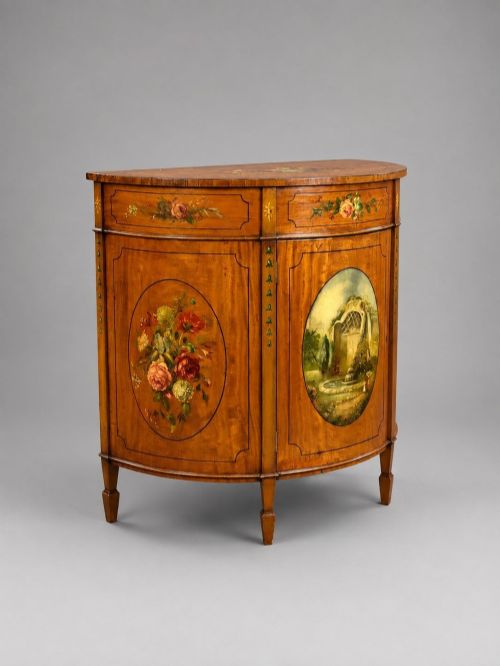
Decoration often involved contrasting timber inlays such as rosewood, kingwood, and boxwood, alongside elaborate marquetry panels. Hand-painted classical motifs and floral swags frequently adorn the satinwood ground of later revival pieces.
Joinery techniques relied on traditional cabinetmaking methods to stabilize the timber against seasonal movement. Cross-banding frames the main grain, directing the eye toward the arched or serpentine front edges.
Golden Satinwood Console Retail Price Guide 2026
Typical asking prices for golden satinwood console among the pieces listed under this phrase on Sellingantiques today, from the lower quarter to the upper quarter. They describe what is for sale here now, not the wider market.
Certain games tables double as clandestine drinking ledges, hiding compartments for evening amusements beneath their polished folding tops.
Evaluating Craftsmanship and Preservation
The distinction between ordinary and exceptional examples rests upon the intensity of the timber figure and the precision of the inlay work. Finer pieces display meticulously matched veneers that flow seamlessly across curved tabletops.
The crispness of hand-painted details and the subtlety of contrasting wood borders determine visual depth. Superior examples retain their original polished surfaces, which impart a warm glow to the satinwood ground.
Structural integrity of folding mechanisms on card tables and the preservation of delicate leg taper separate standard production from masterwork execution.
The Golden Satinwood Console Glossary
- Demi-lune
- Having a half-moon shape with a flat back edge designed to sit flush against a wall. This format dominates the console and card table categories.
- Cross-banding
- A narrow strip of veneer applied around the border of a tabletop with the grain running perpendicular to the centre panel. It creates a defined visual frame.
- Marquetry
- Decorative patterns formed by fitting together small pieces of tinted wood, shell, or ivory veneer. It creates pictorial or geometric designs across the timber surface.
- Satinwood
- A lustrous tropical hardwood native to Ceylon and the West Indies known for its golden colour and reflective sheen. It became the favoured material for neoclassical furniture.
- Sheraton Revival
- A late nineteenth and early twentieth-century movement copying the elegant, light furniture styles of the late eighteenth century. These pieces frequently feature painted satinwood.
Golden Satinwood Console: Frequently Asked Questions
Where should I place a console table?
A console table sits best in an entrance hall or against a principal wall in a reception room. Its shallow depth ensures it occupies minimal floor space while providing a surface for decorative objects.
Pairing the table with a mirror or hanging artwork above creates a balanced focal point within a traditional interior.
How do I care for satinwood furniture?
Maintain satinwood by keeping it away from direct sunlight and maintaining stable room humidity to prevent the veneer from drying out. Dust regularly with a soft, dry cloth.
Apply a microcrystalline wax occasionally to nourish the timber finish without building up heavy residues that dull the natural shine.
How do I distinguish George III from Edwardian pieces?
George III pieces date from the late eighteenth century and rely primarily on precise timber figure, cross-banding, and subtle stringing for decoration. They exhibit hand-cut joinery and authentic period patina.
Edwardian revival pieces, dating around nineteen hundred, frequently incorporate machine-sawn elements alongside hand-painted floral swags and neoclassical motifs on the satinwood ground.