




D Shaped Console Table
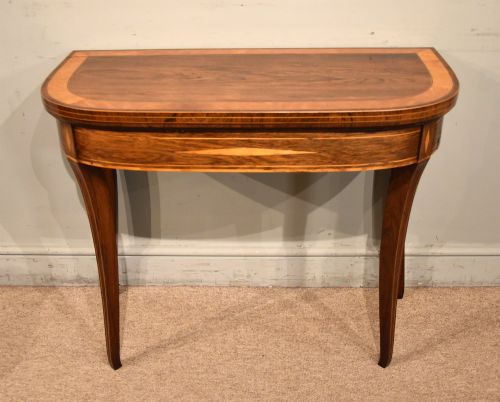
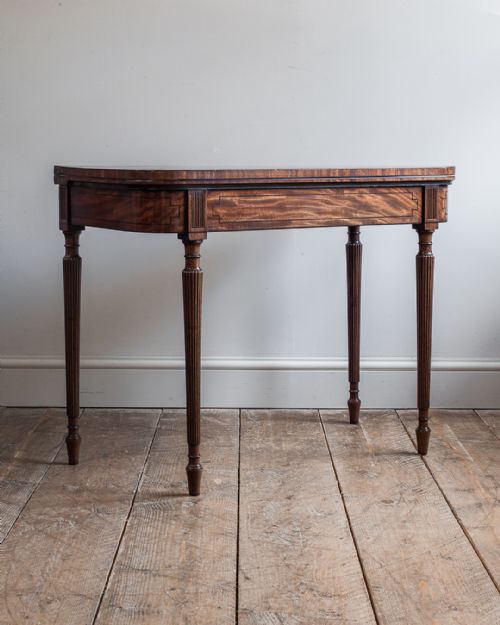
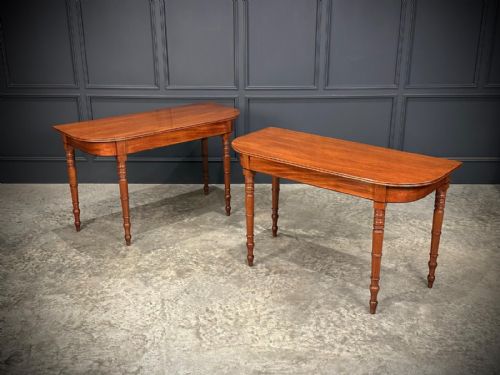
A d shaped console table offers a straight back to hug the wall and a curved front, making it a practical hall or living room surface.
Forms and Origins
A d shaped console table is a versatile surface designed to stand flat against a wall while presenting a curved profile to the room. The items found on this page span the Georgian, Regency, and Victorian periods, along with the nineteenth century.
Most examples function as console tables, side tables, card tables, or tea tables. The simpler versions provide a plain wooden top for hallway use, whilst convertible forms open up to serve multiple domestic functions.
Craftsmanship and Proportion
The difference between standard and superior pieces rests in the choice of timber and the precision of the joinery. Figured mahogany displays rich, lively grain movement that ordinary timber lacks.
Fine examples show meticulous attention to the matching of veneers and the crispness of boxwood inlay. The balance of the curved front relative to the straight back determines the visual harmony of the silhouette.
Retail Price Guide 2026
Typical UK retail prices for d shaped console table, calculated from the Sellingantiques database of over a million retail prices indexed since 2003. This retail price guide relies exclusively on Sellingantiques data; no external sources or auction records are used, so the figures do not describe the wider market.
Tables hide folding mechanisms so secretly that guests might lean on them for tea without guessing they double as card tables.
William Trotter of Edinburgh·Epstein
The D Shaped Console Table Glossary
- Console table
- A table designed to stand against a wall, frequently fixed with brackets or supported by front legs. These items occupy minimal floor space in hallways and reception rooms.
- Card table
- A folding table with a hinged top that opens to reveal a baize-lined playing surface. Many examples share the same semicircular footprint when closed.
- Tea table
- A small domestic table intended for serving tea, often featuring a folding top similar to a card table. They appear frequently in eighteenth and nineteenth-century forms.
- Demi-lune
- Half-moon shaped, describing furniture with a flat back and a curved front edge. This shape defines the vast majority of the tables in the historical archive.
Frequently Asked Questions
How do I use a d shaped console table?
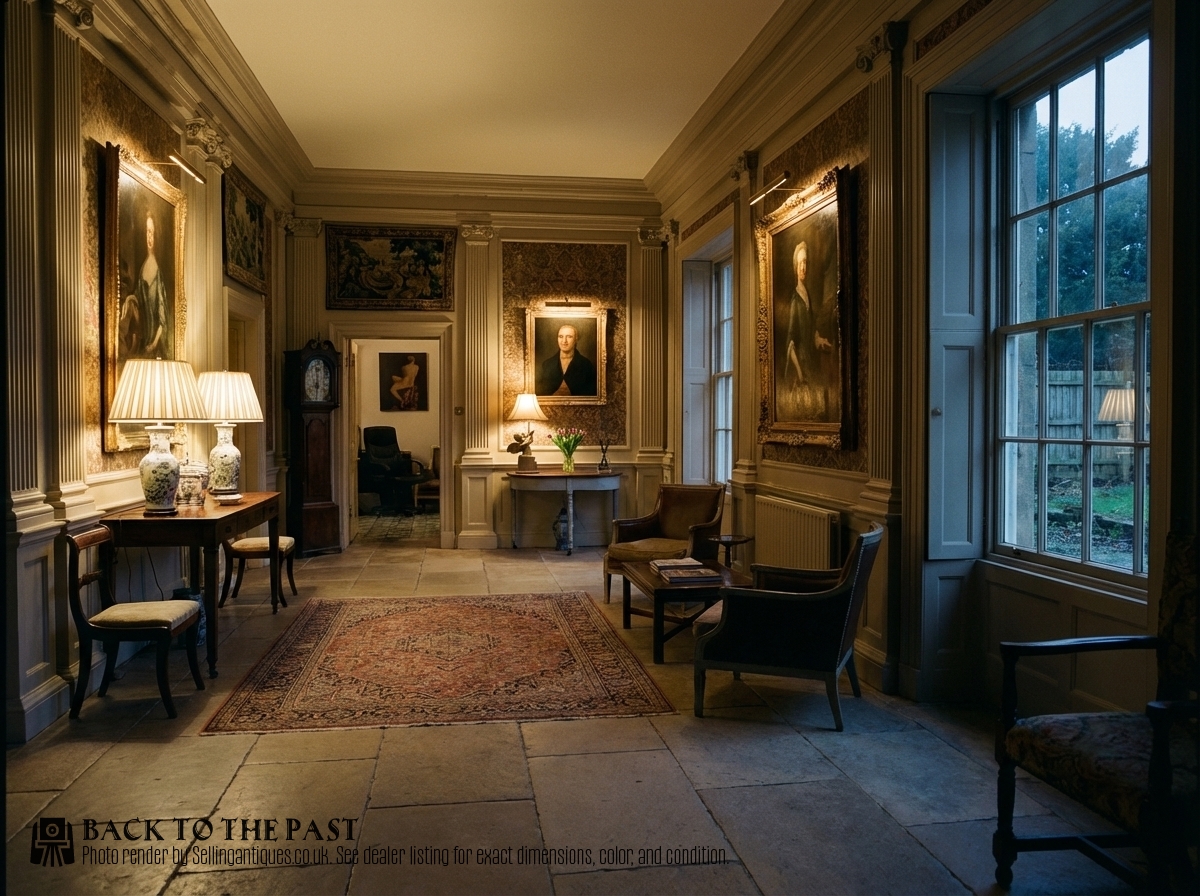
These tables sit flat against a wall in a hallway, dining room, or living space to hold lamps, mirrors, or decorative objects. Their curved front projects softly into the room without blocking narrow walkways.
Many variants also function as card or tea tables with folding tops. Opening the top creates a larger surface for games or entertaining when guests visit.
Are these tables solid wood?
Most examples utilise a combination of solid timber frames and applied wood veneers. Cabinet makers used veneers to display attractive grain patterns across the wide top surfaces.
Secondary woods form the underlying structure beneath the veneer layers. Inlays like boxwood and satinwood provide contrasting border details.
How do I identify the period?
Georgian and Regency pieces often feature figured mahogany with subtle boxwood stringing and elegant tapered legs. Later nineteenth-century examples may incorporate heavier proportions or painted finishes.
Construction methods inside the frame, such as hand-cut dovetails and timber types, help confirm the age. Comparing the specific leg style and decorative vocabulary to known historical periods clarifies the date.
Do these tables fold open?
Several examples function as dual-purpose card or tea tables with hinged tops that double in size. A swinging rear leg or gate-leg action supports the opened leaf.
When closed, they resume their compact semi-circular shape against the wall. This dual capability made them popular in period drawing rooms.