

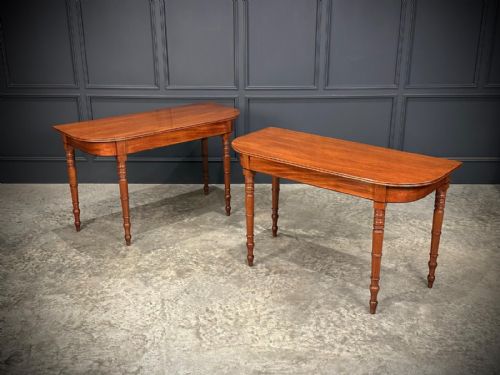


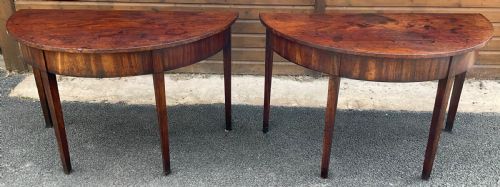


D End Console Table
A d end console table brings architectural curve and clean mahogany grain to a hall or dining room.
D End Console Table
A d end console table forms a semicircular profile designed to stand flush against a wall or join other sections into a dining surface. You will frequently find Georgian and Regency examples alongside Edwardian revivals, shaped from rich timbers.
These tables serve narrow spaces like hallways or reception rooms, often doubling as card or tea tables with fold-over tops. The selection spans straightforward single pieces to matched pairs intended to frame a doorway or fireplace.
How they were made
Cabinetmakers utilised solid mahogany, oak, and walnut, often applying figured veneers to the curved tops to catch the light. Satinwood stringing and brass fittings appear frequently as fine decorative accents.
Construction relied on sturdy frame joints and stable pedestal or tapered leg supports capable of bearing the weight of the heavy timber top.
D End Console Table Retail Price Guide 2026
Typical asking prices for d end console table among the pieces listed under this phrase on Sellingantiques today, from the lower quarter to the upper quarter. They describe what is for sale here now, not the wider market.
Some clever tables hide secret compartments beneath their folding tops for storing forgotten playing cards.
What varies in quality
Quality rests in the depth of timber figure, the crispness of any inlaid stringing, and the integrity of the structural joints. Superior pieces exhibit balanced proportions and hand-carved details that remain sharp over centuries.
Simpler workshop pieces show plainer grain and more utilitarian construction, whereas master-attributed items display precise matching of timber veneers across the semicircular leaves.
The D End Console Table Glossary
- Demi-lune
- Half-moon shape. This describes tables with a flat back edge and a curved front.
- Console table
- A table supported against a wall by consoles or legs. These items are built primarily for display and placement in hallways.
- Fold-over
- A hinged top that opens to double the surface area. This mechanism often conceals a games or card playing surface underneath.
- Satinwood
- A durable exotic timber with a golden sheen. Cabinetmakers used it for contrasting inlay and banding.
- Stringing
- Thin strips of contrasting wood inlaid into channels on the surface. This technique creates delicate borders around table edges.
D End Console Table: Frequently Asked Questions
How were d end console tables used historically?
These tables stood against hallway or drawing room walls to hold lamps and decorative objects. When built with hinged tops, owners unfolded them to serve guests for cards or tea.
Pairs of these tables could also be pulled together into the centre of a room to form a larger dining surface for dinner parties.
Can I use a d end console table for dining?
Many historical examples were constructed as part of divisible dining systems where individual consoles attached to a central leaf table. Single console tables generally remain too narrow for comfortable dining unless paired with a matching piece.
Checking the height and depth of the frame ensures proper leg clearance if you plan to seat guests around joined tables.
How do I identify a Georgian console table?
Georgian pieces typically feature solid mahogany or oak construction with hand-cut dovetails and understated proportions. Detail work often includes straight tapered legs, subtle bracket feet, or carved mahogany edges.
Earlier examples from this era rely on dense native timbers and heavy structural joinery without the lighter satinwood stringing seen in later revivals.
Where should I place a console table at home?
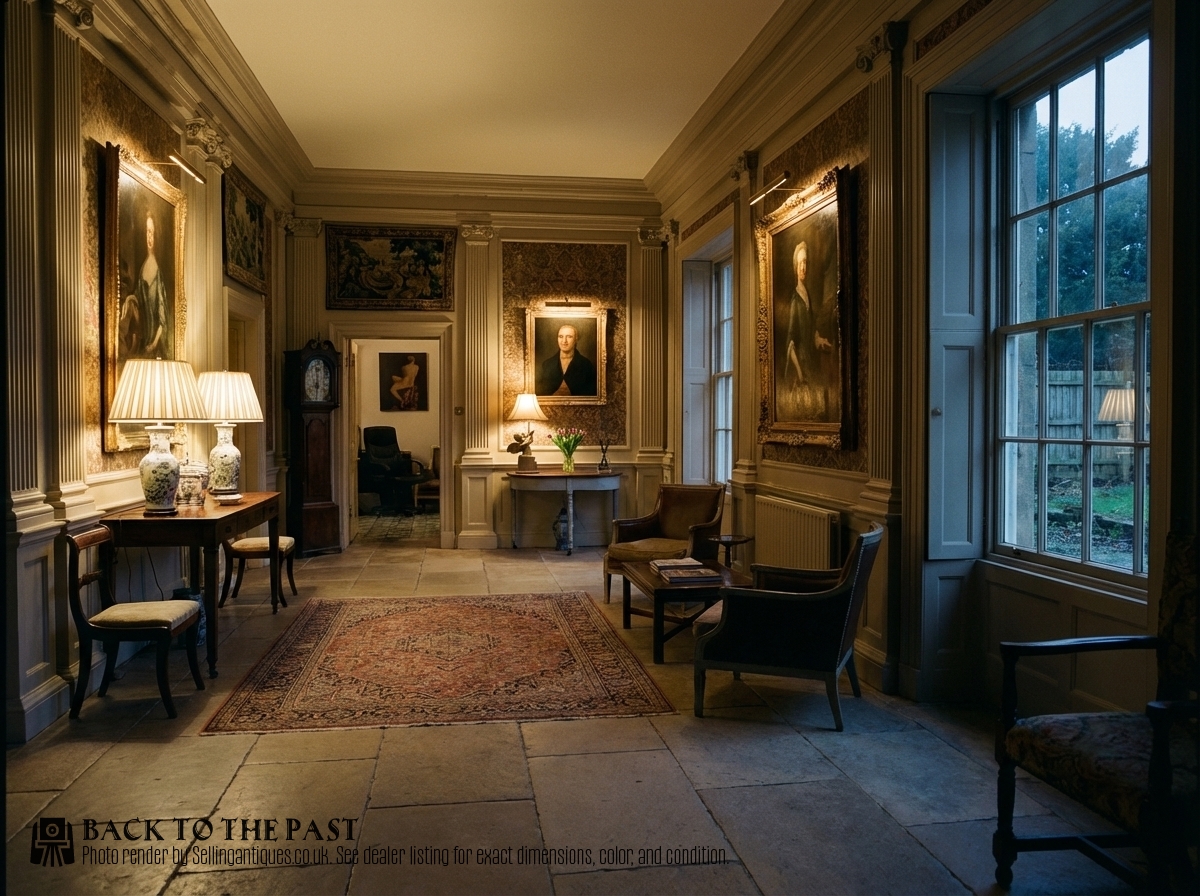
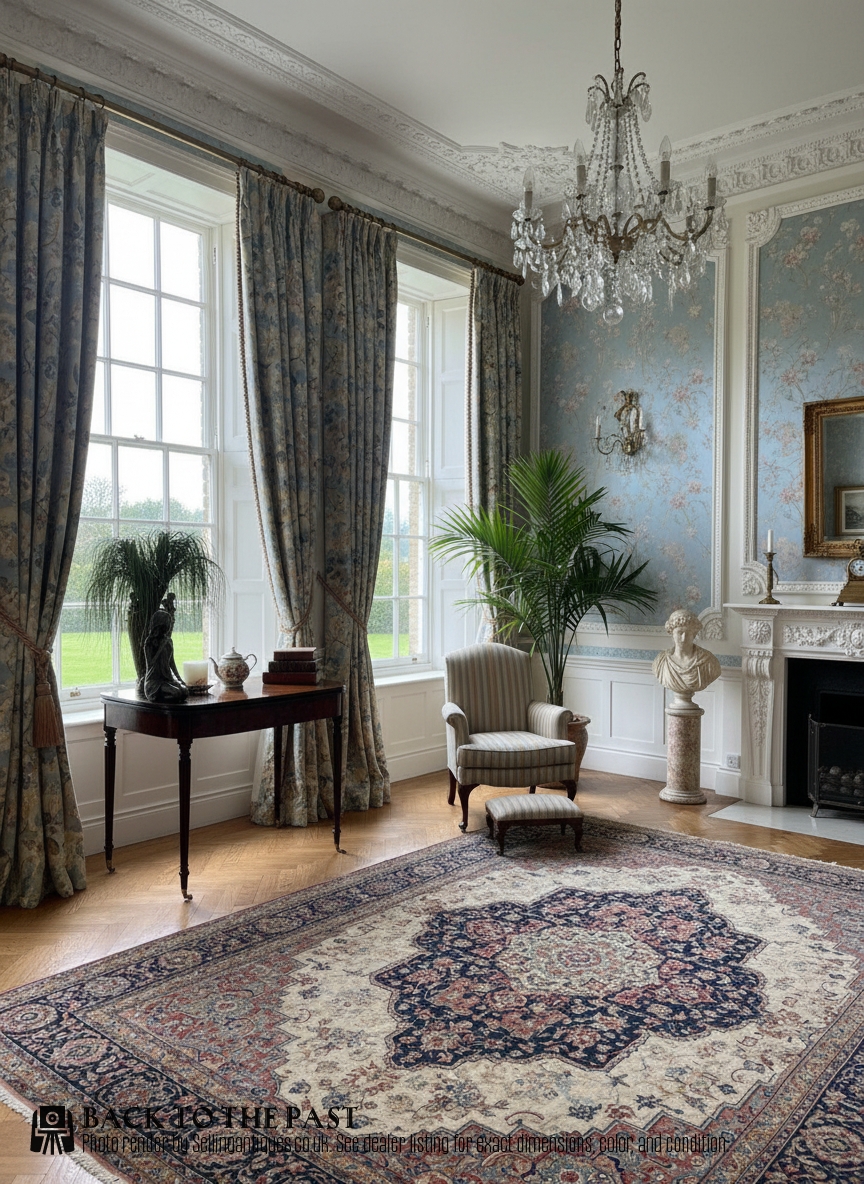
The flat back edge allows the table to rest snugly against a hallway or living room wall without blocking walkways. Placing one beneath a mirror or painting creates a traditional focal point upon entering a room.
Smaller freestanding versions also function effectively behind sofas or tucked into alcoves.