

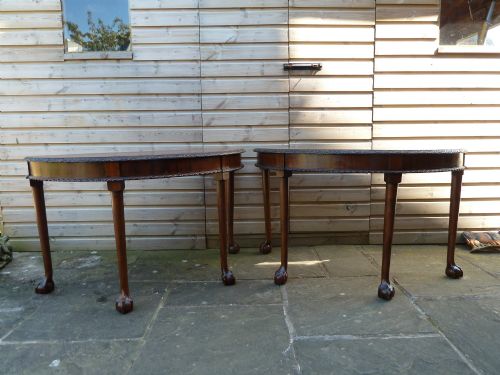


Half Round Table
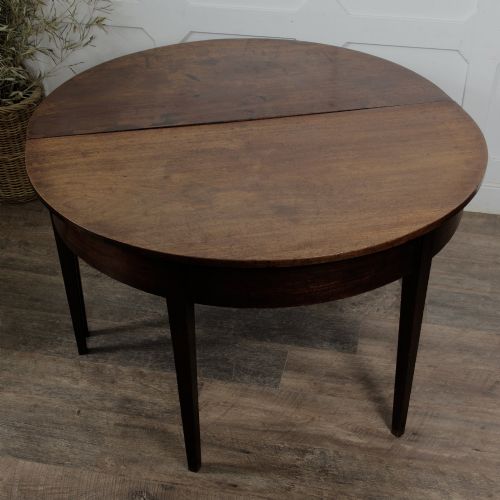
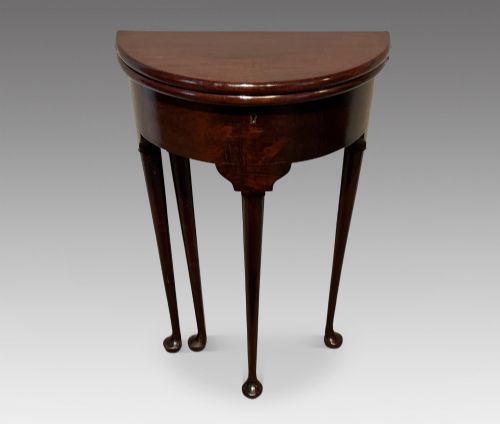
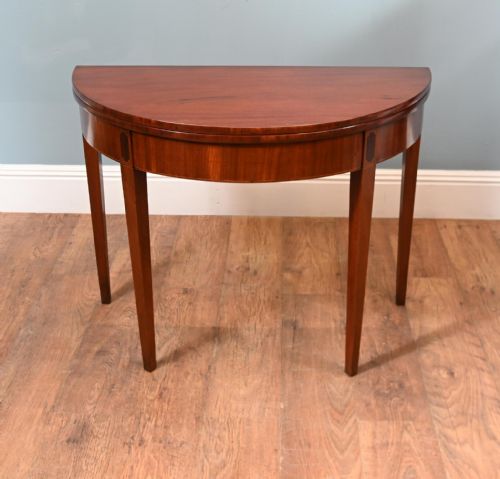
A half round table sits flush against the wall, offering a neat semicircular surface shaped from mahogany, walnut, or painted wood.
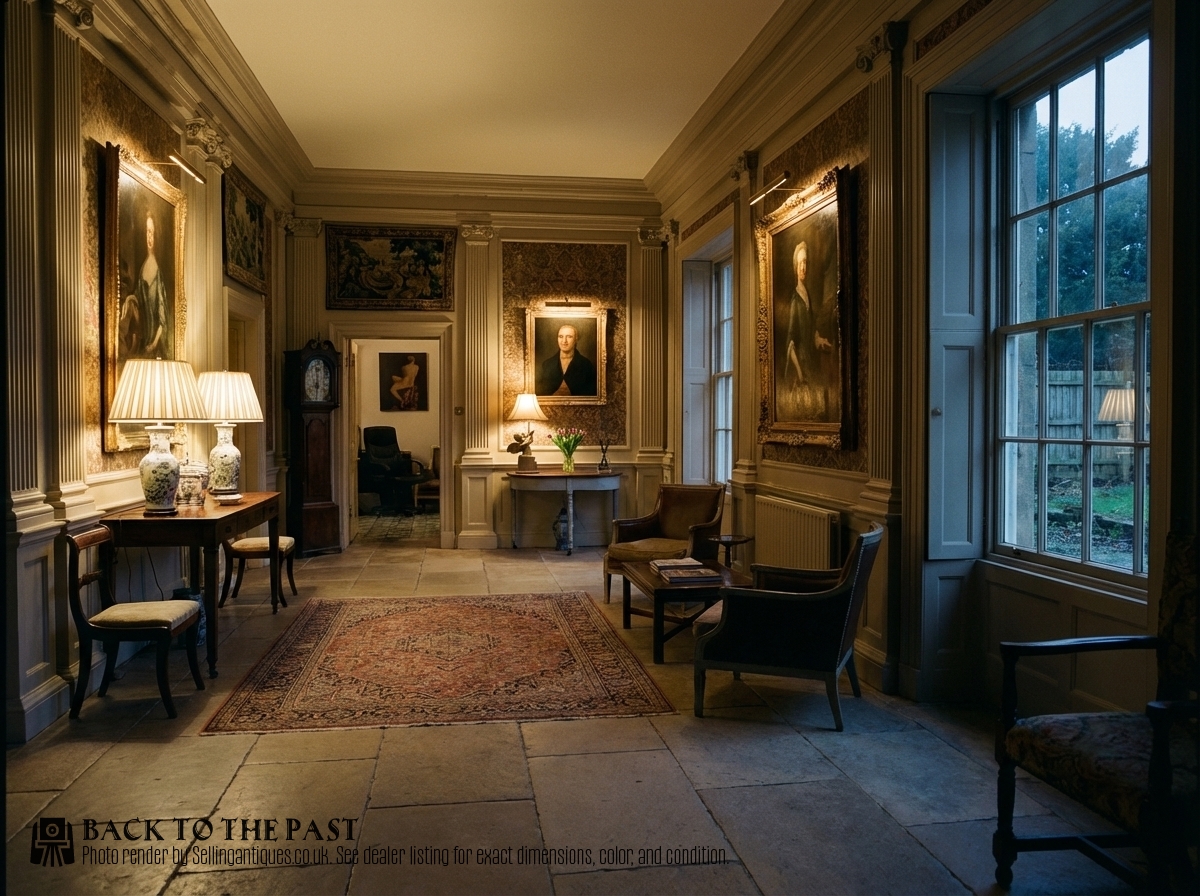
Half Round Table
A half round table appears in forms such as console tables, side cabinets, games tables, occasional tables, and commodes. These pieces trace their origins through the Georgian, Victorian, and Edwardian periods, stretching back to the eighteenth century and forward into the twentieth.
Makers designed these items to save floor space in hallways, drawing rooms, and parlours while providing a functional surface or folding mechanism for card games and tea.
Materials and construction
Joiners and cabinet makers relied heavily on timber like mahogany and walnut, frequently selecting figured veneers for the semicircular top. Pine and maple served as secondary woods for structural frames, while satinwood and painted finishes added decorative contrast.
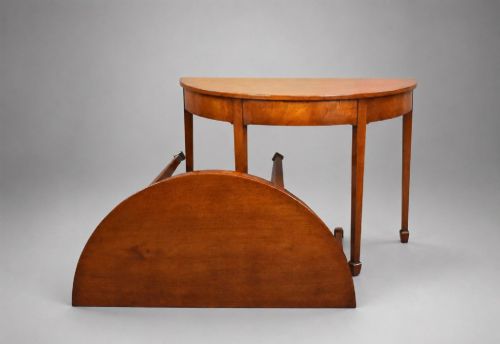
Brass fittings appeared on hinges and castors, supporting folding mechanisms on card and tea tables that swing open to double the surface area. Craftspeople employed careful shaping of the curved apron and legs, whether straight, tapered, or cabriole in form.
Some tables hide a secret fifth leg that politely swivels out just in time to stop your grandmother's tea set from sliding onto the rug.
Assessing quality in construction
Quality rests upon the selection of timber and the precision of the veneer work across the curved top and apron. Superior examples demonstrate tight joints, symmetrical figuring in the wood grain, and original brass hardware that operates smoothly.
The distinction between standard pieces and exhibition quality work lies in the depth of hand-carving, the complexity of painted or inlaid decoration, and whether the structural integrity remains unaltered by later restoration.
Pietro Ferrario
The Half Round Table Glossary
- Demilune
- A half-moon or semicircular shape applied to tables and commodes. This term often appears interchangeably with half round in descriptions.
- Console table
- A table designed to stand against a wall, traditionally fixed with brackets or resting upon front legs. These pieces suit hallways and reception rooms.
- Card table
- A hinged folding table built for games such as whist or bridge. The top unfolds to reveal a baize-lined or polished playing surface supported by a swing leg.
- Commode
- A low decorative cabinet or chest of drawers. Eighteenth-century examples often feature fine satinwood or mahogany veneers.
- Apron
- The vertical wood framing beneath the tabletop. On these pieces, the apron follows the semicircular curve and may carry inlay or carving.
Half Round Table: Frequently Asked Questions
Where do you put a half round table?
These tables find a natural home in hallways, narrow entryways, and reception rooms where a full rectangular table would obstruct foot traffic. Because the flat edge pushes directly against the wall, they occupy minimal floor space while holding lamps, mirrors, or decorative objects.
In living areas, folding versions serve double duty as card or tea tables when pulled out into the room. Pairs of console tables look particularly balanced when placed beneath large wall mirrors or flanking a doorway.
How do I date a half round table?
Dating relies on identifying the primary wood, structural joinery, and stylistic details associated with periods like the Georgian, Regency, and Victorian eras. Eighteenth-century pieces frequently showcase dense mahogany or figured walnut with hand-cut dovetails, whereas later nineteenth-century examples might employ machine-sawn elements and maple or pine framing.
Makers' marks, brass hardware styles, and the presence of specific revival motifs such as Chippendale or Neoclassical elements further narrow the date of manufacture.
Did these tables fold out?
Many examples designed as card or tea tables feature a hinged top that opens to form a full circle or a larger square surface. The rear leg typically swings out on a gate-leg pivot to support the weight of the opened flap.
Stationary console tables and side cabinets remain fixed in their semicircular shape without folding mechanisms, intended purely for display and surface use against the wall.
How do I care for antique wood?
Maintain antique mahogany, walnut, and satinwood surfaces by keeping them away from direct sunlight and sudden changes in temperature or humidity. Regular dusting with a soft, dry cloth prevents particulate accumulation.
Apply a microcrystalline wax polish sparingly every year or two to nourish the timber and protect the finish without building up heavy, dull layers.