



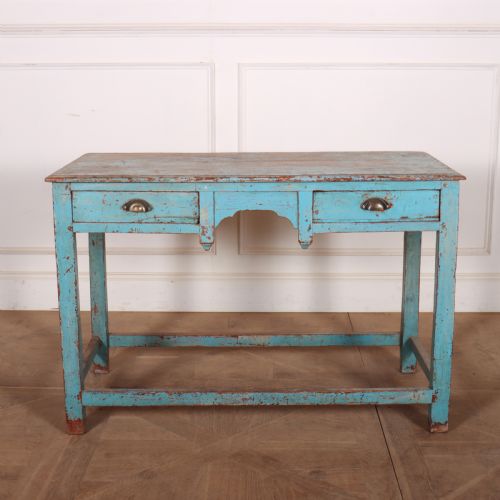


Blue Painted Hall Table
A blue painted hall table brings useful surface space and character to an entryway through traditional craftsmanship and painted wooden surfaces.
Blue Painted Hall Table
When you search for a blue painted hall table, you encounter console tables, side tables, and occasional pieces designed for narrow spaces. These items appear across various historical periods, including the eighteenth century, the nineteenth century, and the early twentieth century.
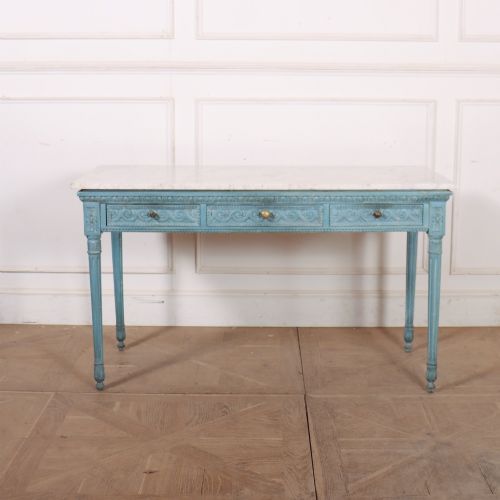
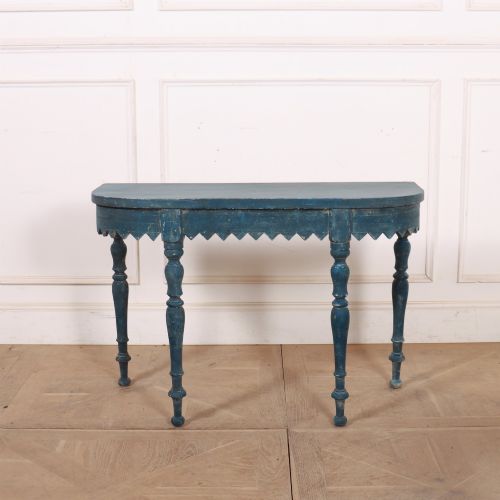
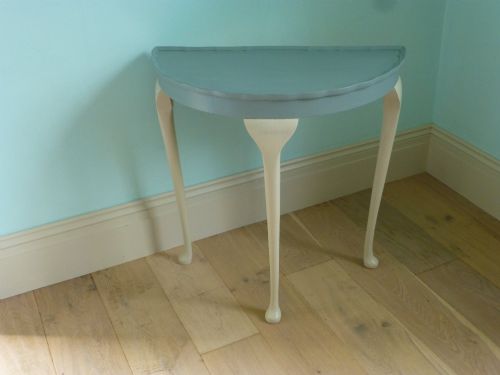
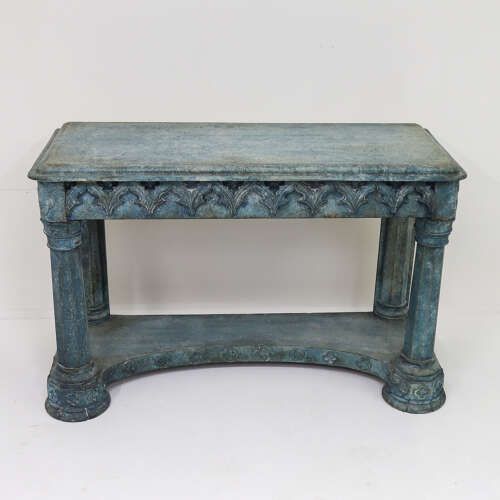
The selections available span multiple regional styles such as English Country, French Provincial, Italian Neoclassical, and Gothic Revival. Forms range from demi lune consoles and bow ends to simple pine side tables and washstands.
Makers and makers of the past utilised timber, pine, and wood substrates finished with traditional paint layers. Many examples incorporate marble tops or brass hardware to complement the painted wooden framework.
How they were made
Constructed predominantly from timber and pine, these tables rely on traditional joinery methods suited to domestic furniture. Carpenters shaped wooden boards to form console tops, dresser bases, and lamp tables before applying surface finishes.
The painted finishes incorporate layers of paint applied over wood, sometimes complemented by gesso details on more formal pieces. Marble inserts appear on specific console and washstand designs to provide durable upper surfaces.
Listings feature pieces spanning from the eighteenth century through to the 1920s, incorporating pine, timber, marble, and brass elements.
What varies in quality
Quality differences emerge in the execution of the woodwork and the character of the painted surface. Finer examples display harmonious proportions, careful moulding profiles, and integrated stylistic details such as Gothic tracery or Italian carving.
The integrity of the timber construction and the preservation of original or historic paint layers dictate the standing of an individual piece. Surface execution ranges from simple folk craftsmanship to refined architectural styling.
Gillows Design
The Blue Painted Hall Table Glossary
- Console table
- A table designed to stand against a wall, frequently secured with brackets or resting on front legs. These items suit narrow hallways and reception spaces.
- Demi lune
- A half moon shape used for tables and console tops. This configuration allows furniture to sit flush against a wall while occupying minimal floor space.
- Gesso
- A plaster mixture applied to wood surfaces to create a smooth base for painting or gilding. This material allows for crisp moulded decoration.
- Washstand
- A wooden piece of furniture originally designed to hold a basin and pitcher for washing. Many feature marble tops to resist water damage.
- Potboard dresser base
- A sturdy wooden base featuring an open lower shelf for storing kitchen pottery. These items originate from country houses and domestic interiors.
Blue Painted Hall Table: Frequently Asked Questions
Where should a blue painted hall table go?
These tables fit narrow corridors, entranceways, and reception areas where floor space is limited. Their shallow depths accommodate circulation without obstructing movement through the room.
They provide a convenient surface for correspondence, lamps, and decorative objects while introducing colour and period character to an interior.
How do I identify an older painted table?
Examination of the timber construction, joint types, and paint layering reveals the age of a piece. Older items typically show hand-planed surfaces and traditional fixings beneath the paint.
Stilistic cues such as Gothic Revival motifs or Georgian proportions help assign pieces to specific centuries and regional traditions.
Are marble tops original to these tables?
Marble inserts appear frequently on washstands and specific console tables intended for more formal rooms. They provided a durable, water-resistant surface for practical daily use.
Makers selected white or coloured marble to complement the painted wooden framework of the base.