

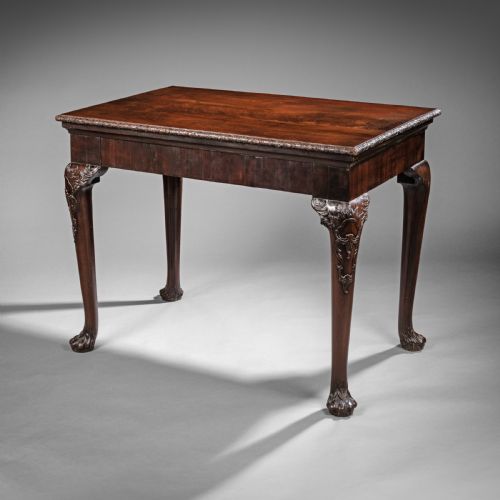
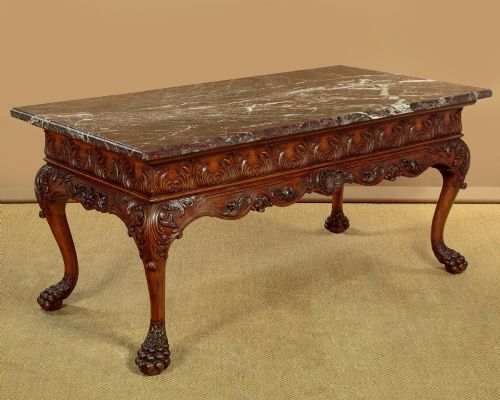

Georgian Mahogany Pier Table
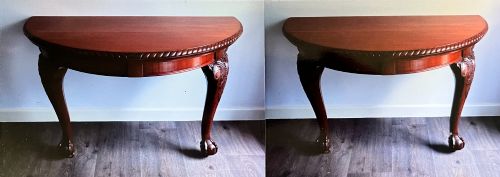
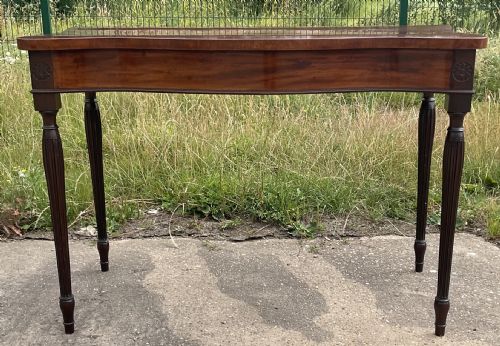
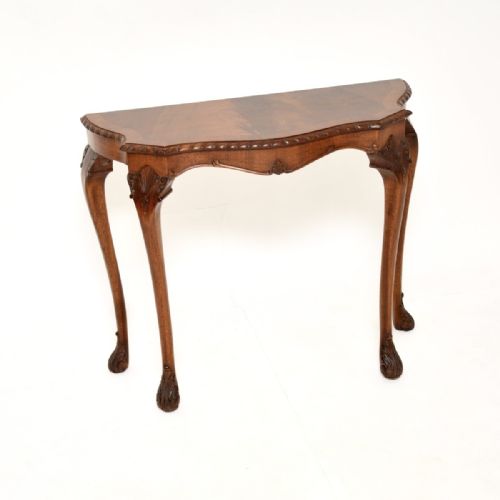
A georgian mahogany pier table sits flush against the wall, bringing rich timber and classic proportions to a hallway or drawing room.
Georgian Mahogany Pier Table
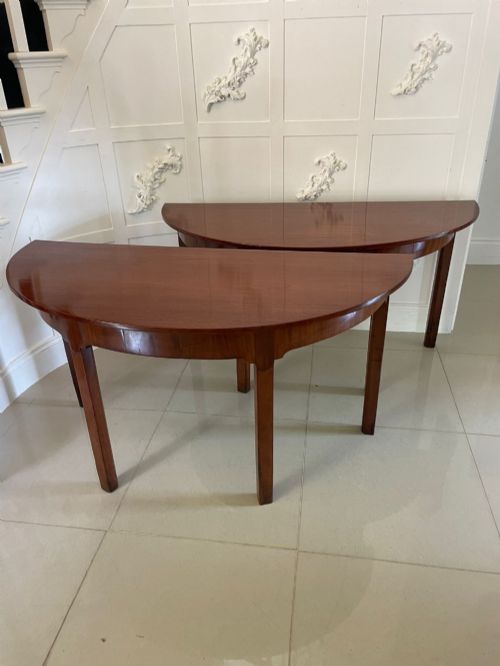
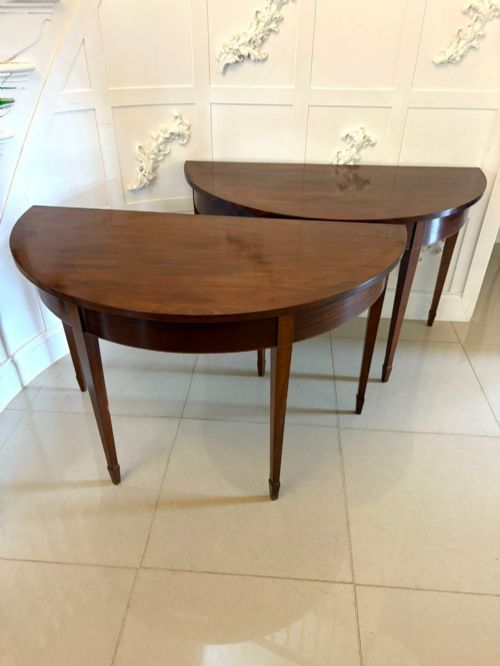
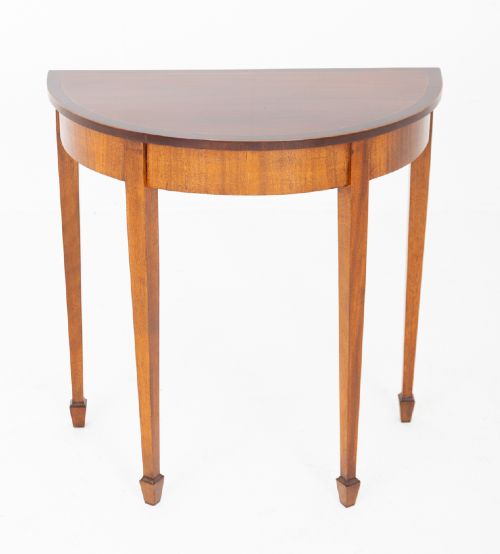
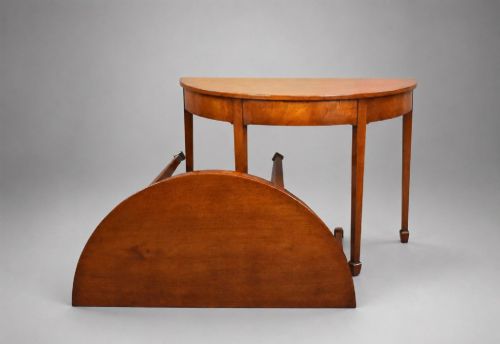
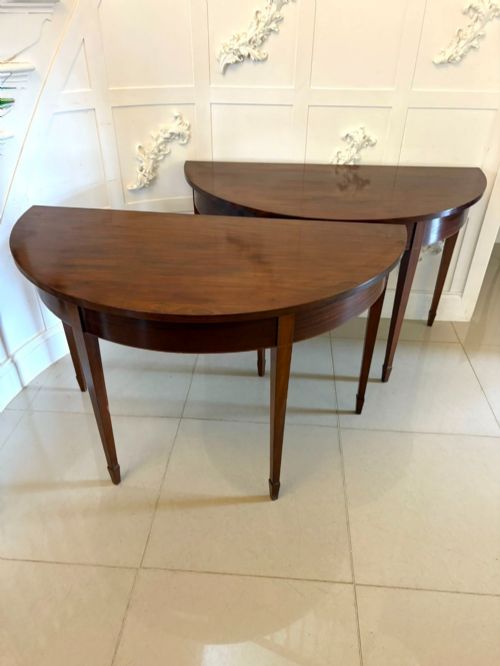
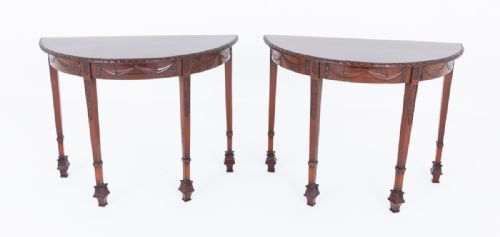
A georgian mahogany pier table is a formal side or console table designed to stand between windows, often featuring a half-moon or demi-lune shape that fits neatly against flat wall spaces. These tables span several distinct eras, appearing in authentic eighteenth-century Georgian forms alongside later nineteenth-century Regency and William IV interpretations, plus twentieth-century revival pieces.
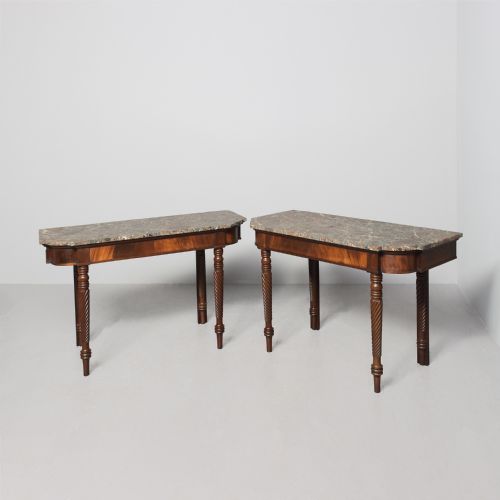
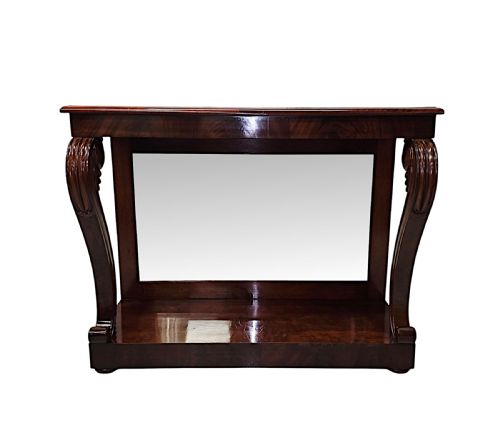
The selections on this page encompass related console tables, side tables, and hall tables that share the same wall-anchored function and timber framework. Many examples take the form of matching pairs, while others stand alone as singular focal points in a room.
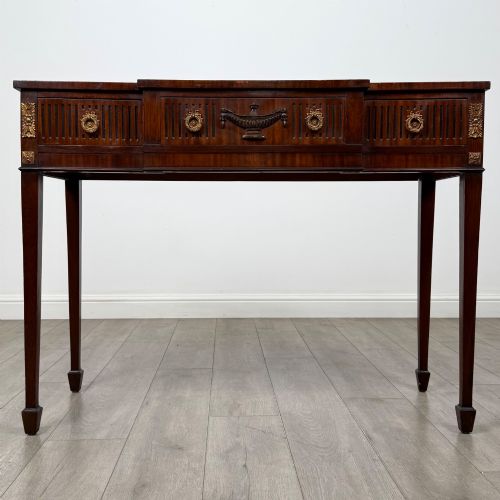
Origins stretch from English workshops to Irish production centres, displaying regional stylistic preferences such as intricate carving or inlaid details. Buyers encounter everything from compact half-moon side tables to large break-front hall furniture.
What varies in quality
The standard of a georgian mahogany pier table rests upon the depth of the timber figuring and the crispness of any hand-carved ornamentation on the apron and legs. Grain selection on demi-lune tops dictates visual balance, where well-matched veneers display deliberate symmetry.
Structural integrity and the retention of original components, such as marble slabs or inlay work, distinguish superior examples from later replacements. The finesse of the proportions and the authority of the regional style, whether Neoclassical or Chippendale, elevate certain pieces above standard utility furniture.
Listings feature mahogany, marble, brass, and satinwood across eighteenth, nineteenth, and twentieth-century periods.
Gillingtons of Dublin·Hicks of Dublin·Gillows
The Georgian Mahogany Pier Table Glossary
- Demi-lune
- A half-moon shape characteristic of console and pier tables designed to sit flat against a wall. This form allows the furniture to occupy minimal floor space while providing a useful display surface.
- Flame mahogany
- A veneer cut from timber where the branches join the main trunk, producing a flamelike pattern of swirling grain. Cabinet makers prized this wood for high-status table tops.
- Inlay
- A decorative technique where contrasting materials such as boxwood or satinwood are inserted into recesses within the primary mahogany surface. This creates crisp geometric or botanical patterns.
- Pier table
- A decorative table built specifically to stand against the wall pier between two windows, frequently positioned beneath a matching wall mirror. These pieces served both aesthetic and functional roles in formal interiors.
- Serpentine front
- A furniture front characterised by a wavy contour featuring a convex centre flanked by concave curves, or vice versa. This sophisticated shaping requires advanced woodworking skill.
Georgian Mahogany Pier Table: Frequently Asked Questions
Where do you place a pier table?
A pier table belongs against a flat wall space, traditionally positioned between two windows or beneath a large hanging mirror. This placement anchors the piece visually within a formal room without blocking thoroughfares.
In modern settings, these tables function effectively in narrow hallways, living rooms, or entrance foyers where depth is restricted. Their flat backs ensure stability against the wall surface.
How do I spot a true Georgian piece?
Authentic Georgian construction displays period-appropriate joinery methods, hand-cut timber components, and secondary woods consistent with eighteenth-century workshops. Details such as hand-carved mahogany mounts and aged patination reveal age.
Revival pieces from later centuries often mimic these historic styles but utilise twentieth-century manufacturing signatures or standardised fixings. Examining the underside and drawer linings clarifies the manufacturing period.
What is the difference between a console and a pier table?
Console tables and pier tables share similar wall-anchoring forms, though pier tables historically earned their name from occupying the masonry pier between windows. Console tables represent a broader category of wall-mounted or leg-supported side furniture.
In practice, antique dealers and cataloguers often use the terms interchangeably due to overlapping designs and room functions across the eighteenth and nineteenth centuries.
Can I use a demi-lune table as a desk?
Demi-lune tables offer shallow surface depths designed for display rather than extended writing tasks. Their curved fronts and narrow proportions limit knee clearance and workspace.
They serve best holding decorative lamps, ceramics, or correspondence rather than functioning as daily workspaces.