
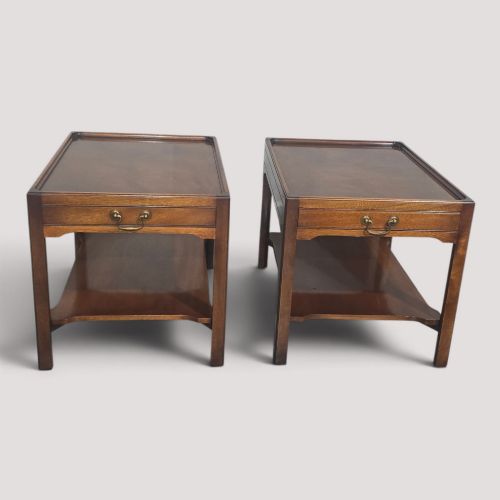
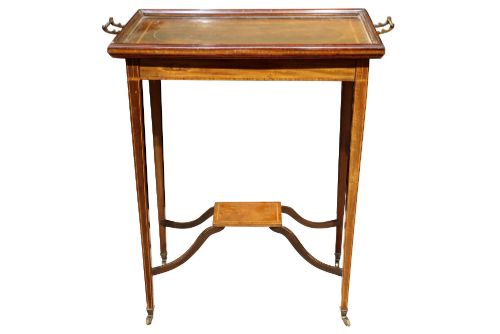


Brass Handle Tray Table
A brass handle tray table combines portable servingware with a sturdy wooden stand, offering a versatile piece for daily hospitality and display.
Brass Handle Tray Table
When you search for a brass handle tray table, you are looking at items that bridge the gap between portable serving trays and fitted occasional furniture. These pieces typically feature a removable or fixed timber tray top equipped with metal carrying handles, mounted securely onto a folding or static stand.
The examples available on this page draw from the Georgian, Edwardian, and nineteenth-century periods, showing forms such as side tables, occasional tables, bedside tables, and etageres. You will frequently encounter tray tops shaped in rectangular, oval, or kidney formats.
Construction relies heavily on timbers like mahogany and satinwood, often enhanced with boxwood or satinwood inlay, alongside marquetry decoration. The hardware consists of brass handles, which allow the top section to function independently as a serving platter when lifted from its base.
Materials and construction methods
Cabinetmakers constructed these tables using solid mahogany or mixed wood veneers over a secondary timber frame, often shaping the tray edges with raised galleries to secure glassware and china. Satinwood and boxwood provided contrasting stringing and decorative inlay.
Surface ornamentation frequently included marquetry motifs and delicate satinwood inlay work set into the primary timber field. Stands were built as fixed side tables or folding supports designed to hold the tray securely.
Some trays lift right off their stands, ready to rescue tea service after a long morning of rearranging the parlour.
Judging the standard of manufacture
Quality in these tables rests on the crispness of the inlay work, the thickness of the timber veneers, and the secure integration of the brass handles into the tray rim. Finer pieces demonstrate precise dovetail joinery and balanced grain selection across the surface.
The structural integrity of the stand and the tight fit between the tray and its support distinguish finer examples from standard utility pieces. Original brass fittings and undamaged gallery edges indicate better preservation.
The Brass Handle Tray Table Glossary
- Butlers tray
- A portable wooden tray with hinged or solid sides, traditionally used for serving and clearing.
- Étagère
- A set of open shelves for displaying small objects, often taking a tiered form in these listings.
- Marquetry
- Decorative veneer work forming patterns using different coloured woods and shell.
- Sheraton Revival
- A late nineteenth and early twentieth century design style drawing on eighteenth century neoclassical motifs.
- Satinwood inlay
- Contrasting light-coloured timber inserted into recesses within the main wood surface to create geometric or floral borders.
Brass Handle Tray Table: Frequently Asked Questions
What is a brass handle tray table?
A brass handle tray table is a hybrid furniture piece consisting of a timber serving tray fitted with metal carrying handles and placed upon a dedicated stand. It functions both as a portable tray and an occasional side table.
These items span periods from the eighteenth century through to the Edwardian era, utilising woods such as mahogany, satinwood, and walnut with decorative inlay.
How were tray tables used historically?
Historically, these tables served elite households for moving tea, wine, or dining accessories from kitchens to entertaining rooms. The removable top allowed servants to clear settings efficiently while the stand remained in place.
Over time, the form transitioned into a permanent living room fixture, appreciated for its dual capability as a display surface and a practical serving tray.
How do I care for a mahogany tray table?
Protect the polished wooden surface by avoiding direct heat, moisture, and sunlight, which can fade veneers and damage inlay. Use coasters and placemats when placing items on the tray top.
Apply a light microcrystalline wax periodically to nourish the timber and maintain the natural sheen of the mahogany and satinwood without building up heavy residues.
How can I tell Edwardian pieces from Georgian ones?
Georgian tray tables, dating from the eighteenth century, typically feature heavier solid mahogany construction with understated lines and deep patination. Their brass hardware tends to be heavier and hand-cast.
Edwardian and Sheraton Revival examples from around nineteen hundred often incorporate lighter satinwood veneers, intricate marquetry, and refined inlay work reflecting revivalist tastes of that era.