






Sheraton Revival Tea Table
These pieces take the refined lines of the late eighteenth century and recast them for late Victorian and Edwardian drawing rooms.
Sheraton Revival Tea Table
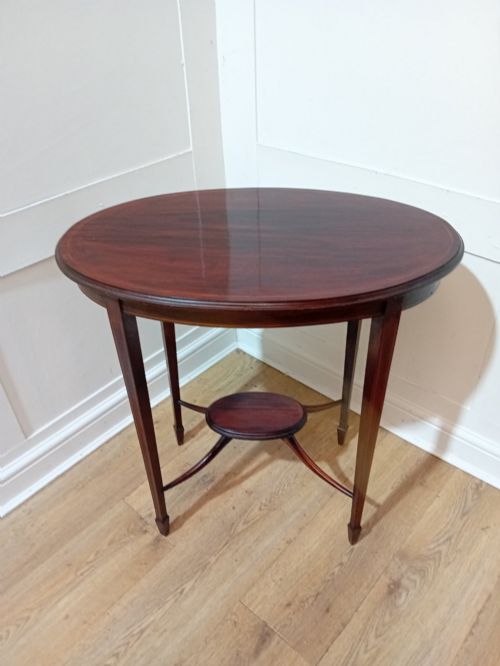
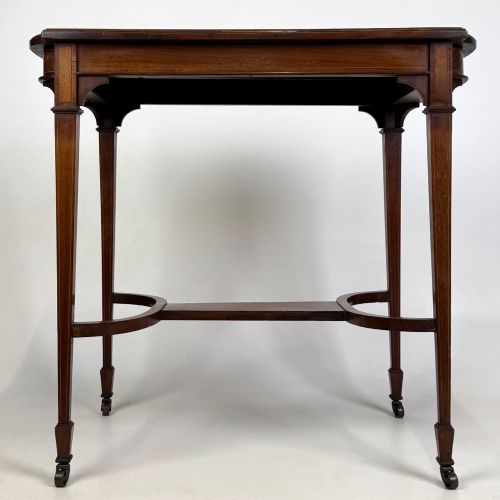
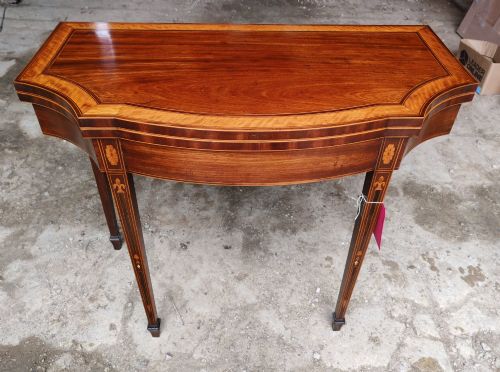
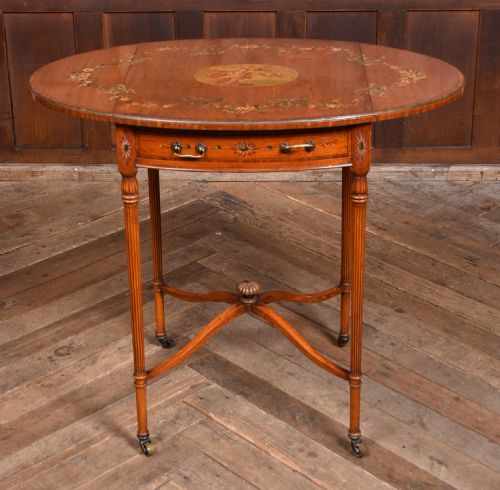
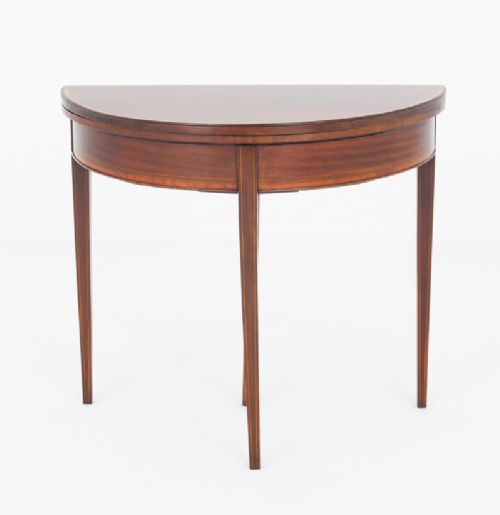
A sheraton revival tea table brings eighteenth-century neoclassical lightness into late Victorian and Edwardian interiors. You encounter these most frequently as mahogany or satinwood pieces made around nineteen hundred, taking the form of occasional tables, side tables, and foldover card tables.
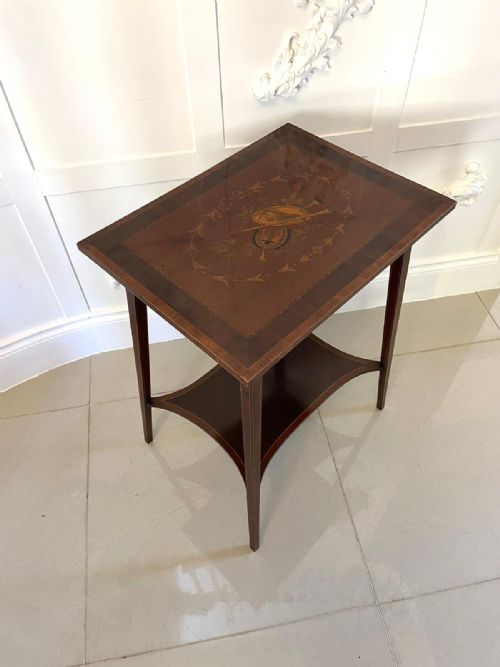
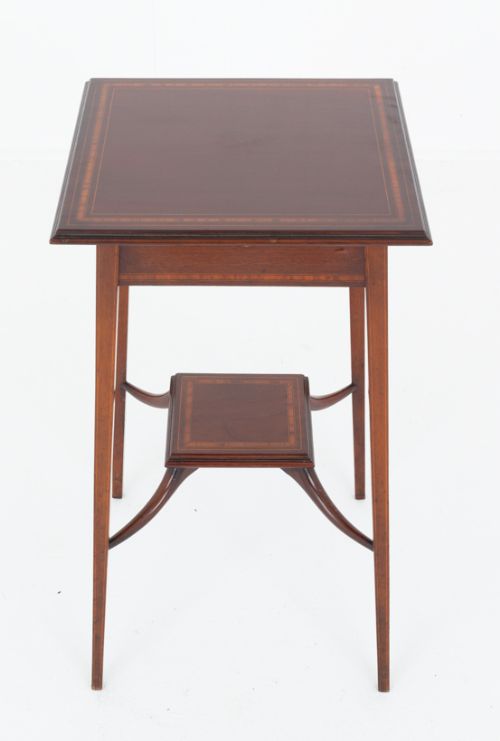
Makers of this period drew heavily on earlier pattern books, producing occasional tables and two-tier etageres that served light refreshment or displayed ornaments. The design vocabulary relies on slender tapered legs, crossbanding, and delicate proportion rather than heavy timber.
The survival of these tables shows a steady demand for polite parlor furniture well into the twentieth century. Many examples retain their original folding leaves, painted floral swags, or marquetry details designed to catch the light of a formal room.
Construction and Materials
Cabinetmakers built these tables using solid mahogany or satinwood carcasses, often applying fine veneers to table tops and friezes. Secondary timbers provided stable framing for foldover card actions and two-tier etagere shelves.
Surface ornament relied on contrasting stringing and boxwood inlay to define geometric panels and borders. Selected examples feature hand-painted floral decoration or elaborate marquetry work set directly into the primary wood.
Joinery techniques combined traditional tenon framing with light structural bracing appropriate for decorative parlor furniture. Brass hinges and castors completed pieces intended to be moved easily across carpeted floors.
Recorded forms span occasional tables, side tables, centre tables, card tables, and two-tier etageres dating from eighteen eighty to nineteen ten.
Judging Quality
The distinction between standard commercial output and finer workshop production rests on the crispness of the inlay and the selection of cabinet woods. Dense mahogany and highly figured satinwood elevate an otherwise simple occasional table into a significant decorative object.
Execution of hand-painted details and marquetry panels separates workshop tiers considerably. Finer pieces demonstrate precise botanical motifs and balanced borders, whereas simpler production relies on plain timber with minimal stringing.
Maples of London·Edwards and Roberts
The Sheraton Revival Tea Table Glossary
- Sheraton Revival
- A late nineteenth and early twentieth-century design movement inspired by the neoclassical furniture of Thomas Sheraton. It reinterprets slender proportions, delicate inlay, and classical motifs for modern homes.
- Satinwood
- A lustrous tropical hardwood native to Ceylon and India, prized for its golden yellow colour and reflective grain. Cabinetmakers used it extensively as both solid timber and decorative veneer.
- Marquetry
- The art of forming decorative patterns by fitting together thin slices of various woods, shells, or ivories. Craftsmen applied these assemblies to table tops to create pictorial or geometric designs.
- Crossbanding
- A border technique where veneer strips run perpendicular to the main grain of the table top. This frames the central panel and provides a neat perimeter finish.
- Etagere
- A set of open shelves supported by slender columns, designed for displaying small ornaments or books. Examples often feature two or three tiers connected by upright supports.
Sheraton Revival Tea Table: Frequently Asked Questions
What is a sheraton revival tea table?
It is a light occasional table produced around the turn of the twentieth century in the neoclassical taste of the seventeen nineties.
These pieces borrow the proportions, tapered legs, and inlaid motifs associated with Thomas Sheraton's original pattern books.
How were these tables used originally?
They served primarily in drawing rooms and parlours for holding tea service, books, or decorative lamps.
Foldover variants also provided a compact surface for card games and social gatherings when guests visited.
How do I distinguish satinwood from mahogany?
Satinwood presents a pale, golden-yellow timber with a high natural sheen and a tight grain that catches the light.
Mahogany offers a darker reddish-brown tone with a distinct open grain that ranges from plain straight lines to heavy flame figures.
Are these tables suitable for daily use?
Their slender legs and delicate veneers make them better suited for gentle display and light placement rather than heavy domestic service.
Placing them away from direct heat sources helps preserve the delicate boxwood stringing and polish.
How do I identify the period of a piece?
Construction methods, secondary timbers, and the character of the brass hardware usually point toward late Victorian or Edwardian production.
The style is a deliberate revival rather than original eighteenth-century work, which is reflected in the internal framing and finish.