







Painted Oval Tea Table
A painted oval tea table brings a lightness of surface and form to a room, offering a decorative surface that has drawn collectors since the Georgian period.
Painted Oval Tea Table
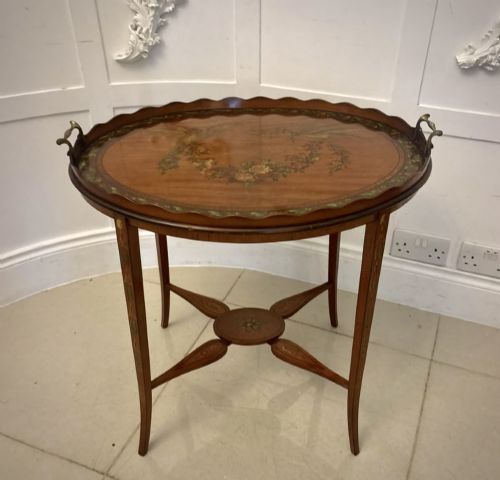
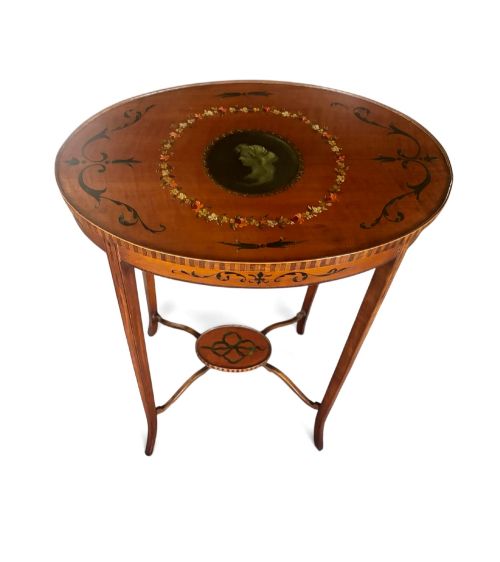
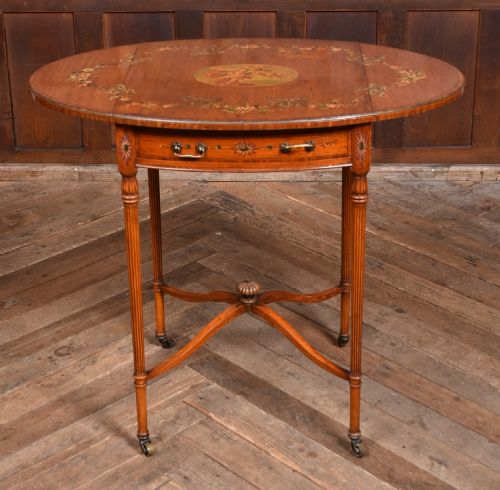
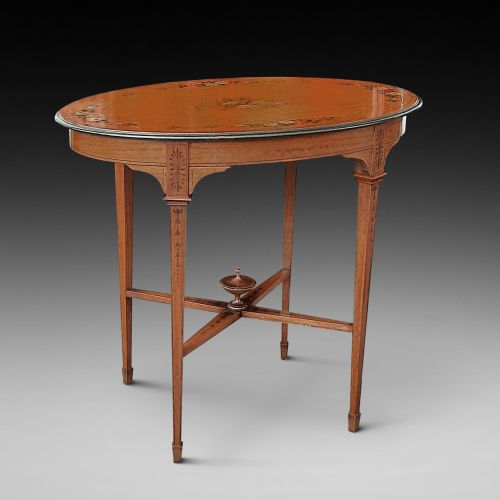
A painted oval tea table combines a curved top with delicate brushwork, appearing across Georgian, Regency, and Edwardian periods. Most examples encountered here belong to the Edwardian era, often taking the form of occasional or centre tables with satinwood or mahogany frames.
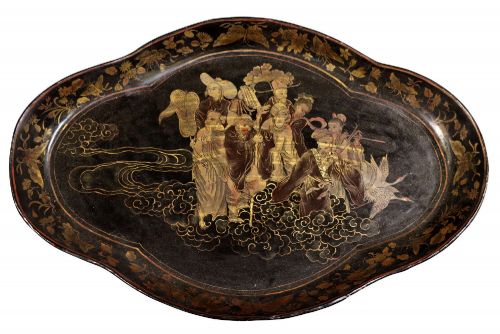
The form spans several distinct styles, including Sheraton Revival, Chinoiserie, and Neoclassical designs. Pieces range from drop-leaf pembroke tables to tray-top occasional tables and small serving trays adapted for stands.
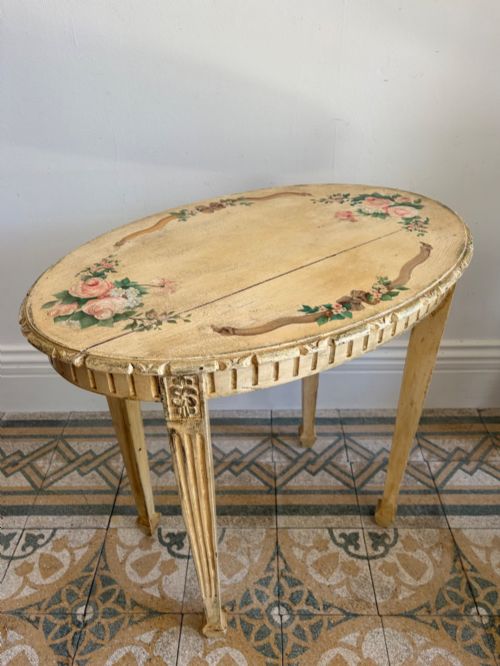
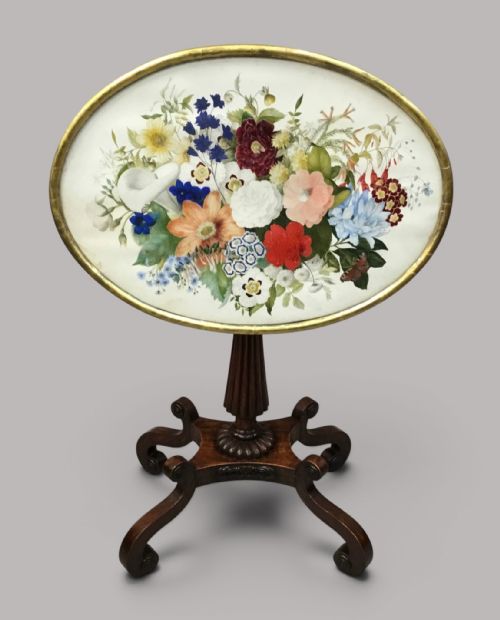
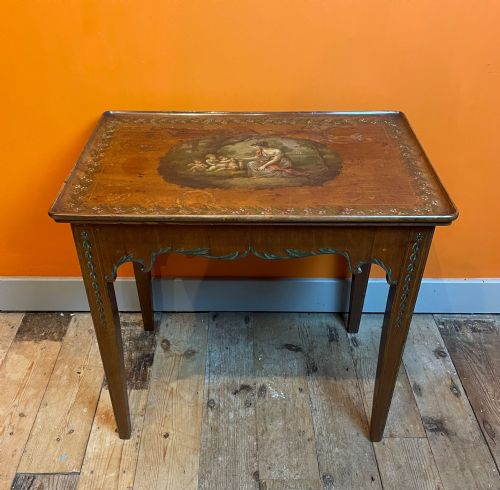
Makers utilised various surfaces to display floral motifs, classical scenes, and oriental landscapes. The oval shape softens the geometry of a traditional seating area while providing a functional resting place for small objects.
Materials and Construction
Craftsmen built these tables using timber frames of satinwood and mahogany, often applying paint and gold leaf directly to the wood or over a gesso base. Some pieces incorporate papier-mâché or brass elements to complete the structure.
Decorative finishes vary from early hand-painted neoclassical scenes to later embellishments, such as the twentieth-century hand-painted additions found on certain Sheraton Revival pieces. Chinoiserie decoration employs lacquer techniques to build up intricate surface patterns.
Painted Oval Tea Table Retail Price Guide 2026
Typical asking prices for painted oval tea table among the pieces listed under this phrase on Sellingantiques today, from the lower quarter to the upper quarter. They describe what is for sale here now, not the wider market.
Some tea tables started life as removable serving trays before acquiring a dedicated folding stand.
Assessing Quality and Execution
The refinement of the painted surface dictates the distinction between standard and superior pieces, particularly in the precision of floral garlands and figurative scenes. Original painted decoration holds greater artistic merit than later surface updates.
Timber selection and the crispness of the turning on legs and supports reveal the underlying standard of manufacture. The integration of the oval top with the frame demonstrates the joiner's skill in handling curved edges.
The Painted Oval Tea Table Glossary
- Satinwood
- A light-coloured tropical hardwood prized for its natural sheen and smooth grain. It frequently serves as the primary timber for Edwardian painted tables.
- Chinoiserie
- European artistic interpretation of Chinese and East Asian motifs. This style appears on tables through lacquered surfaces and fantastical landscape scenes.
- Pembroke Table
- A small table with hinged drop-leaves on either side. These pieces offer adjustable surface area and compact proportions.
- Gesso
- A plaster-like mixture applied to wood surfaces as a preparation for painting or gilding. It provides a smooth ground for detailed artwork.
Painted Oval Tea Table: Frequently Asked Questions
What is a painted oval tea table used for?
These tables served historically for serving tea or displaying small decorative objects in a drawing room. Today, collectors utilise them as occasional or lamp tables in living spaces.
The elongated curve of the oval top allows the piece to fit neatly beside seating arrangements without blocking walkways. Their decorative surfaces make them focal points in traditional and eclectic interiors.
How do I date an Edwardian painted table?
Dating relies on examining the timber species, construction methods, and the style of the painted decoration. Edwardian examples often feature satinwood and specific neoclassical or Sheraton Revival motifs characteristic of the early twentieth century.
Secondary woods and hardware underneath the table also provide clues to the manufacturing period. Comparing the wear on the paint to the structure helps confirm whether the decoration is original to the piece.
Are painted finishes usually original?
While many tables retain their original nineteenth or twentieth-century decoration, some pieces received later hand-painted updates. Inspecting the relationship between the paint layer and the underlying wood reveals whether the artwork is contemporary to the table's construction.
Original surfaces show natural ageing and craquelure consistent with the age of the timber. Later embellishments often use different pigments and lack the integration found in period workshop pieces.
How do I care for antique painted furniture?
Protection from direct sunlight and stable indoor humidity levels prevent the painted surface and timber from drying out or cracking. Dusting with a soft, dry cloth preserves the delicate pigments and gold leaf without abrasive friction.
Avoid placing damp items or heavy objects directly on the painted top. Using protective pads under lamps or display pieces safeguards the finish over time.