

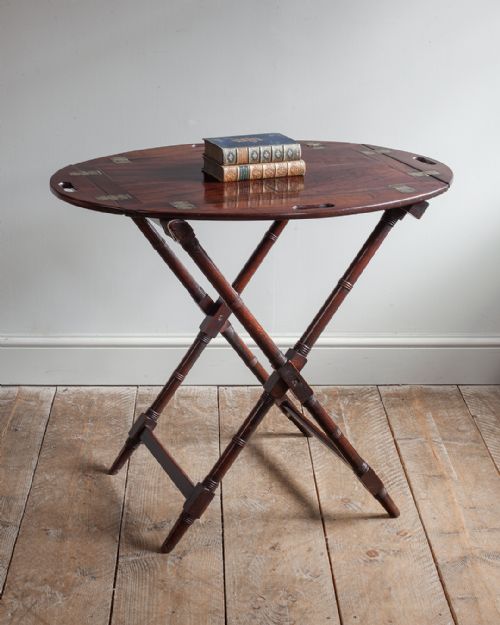


Vintage Oval Tray Table
A vintage oval tray table combines the portability of a serving platter with the sturdy construction of a dedicated stand.
Vintage Oval Tray Table
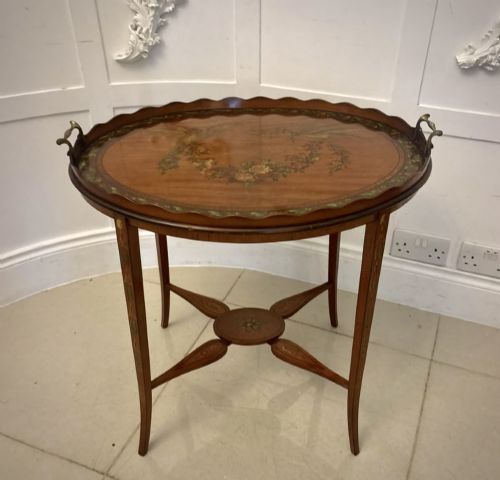
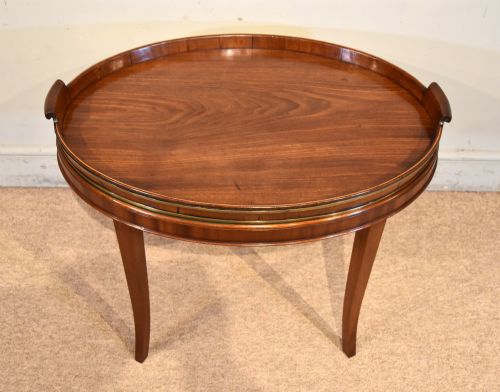
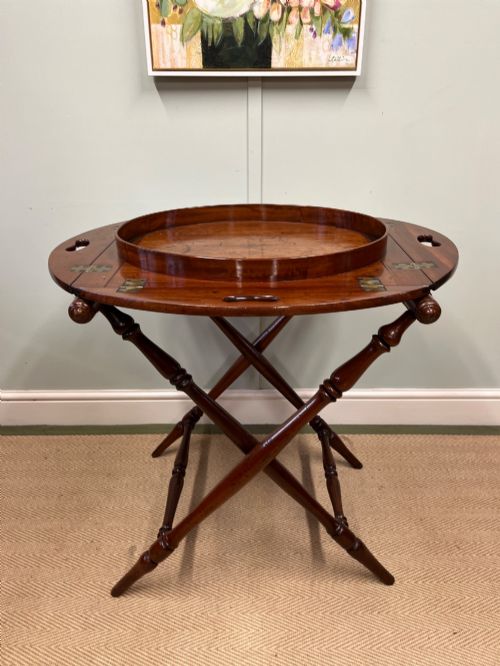
A vintage oval tray table serves multiple functions within a room, often taking the form of a removable tray resting upon a folding or fixed stand. These versatile furnishings appear across several periods, including Edwardian examples and pieces from the nineteenth and twentieth centuries.
Origins span British workshops, French studios, and Chinese export pieces, utilising styles such as Georgian revival, Rococo revival, and Edwardian craftsmanship. The primary role of these items shifts easily between an occasional tea table and a low coffee table.
Materials and construction
Cabinetmakers utilised robust timbers such as mahogany, walnut, oak, and satinwood to construct both the tray surfaces and their supporting stands. Inlaid details, burr veneers, and painted finishes frequently adorn the woodwork of Edwardian and Georgian revival pieces.
Metal elements also feature prominently, incorporating brass fittings, silver plate, silvered metal, and mirrored glass panels. These materials are combined with traditional joinery techniques to ensure the removable tray fits securely onto its folding base.
Vintage Oval Tray Table Retail Price Guide 2026
Typical asking prices for vintage oval tray table among the pieces listed under this phrase on Sellingantiques today, from the lower quarter to the upper quarter. They describe what is for sale here now, not the wider market.
Early tray stands were collapsible so servants could pack them flat after tea was served.
Evaluating craftsmanship
Quality reveals itself in the precision of the woodwork, particularly where the raised gallery meets the base of the tray and how snugly the tray sits within the stand. Superior examples display carefully matched wood grains, subtle inlay work, and robust structural joints that endure repeated lifting.
Material selection dictates much of the distinction between standard and finer pieces, with choice timbers like figured mahogany or rich satinwood elevating the visual weight. Metal components such as brass handles and silver-plated mounts show superior casting and finishing in the higher tier of items.
Mappin And Webb
The Vintage Oval Tray Table Glossary
- Butler tray
- A portable wooden tray with hinged or fixed sides, designed to be lifted off its folding stand for serving. It provides practical utility as a mobile surface for drinks and dishes.
- Etagere
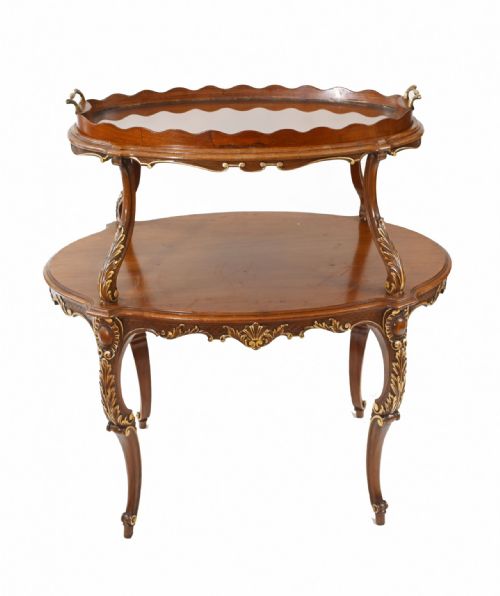
- A tiered piece of furniture with multiple open shelves for displaying objects or serving tea. These structures often incorporate delicate wooden supports and multiple oval or rectangular tiers.
- Gallery
- A raised wooden or metal rim running around the edge of a tray to prevent items from sliding off. This feature is often pierced or shaped for aesthetic effect.
- Satinwood
- A light, lustrous timber native to India and Sri Lanka, highly prized for fine cabinet making. It yields a distinctive golden sheen when polished.
- Inlay
- A decorative technique where contrasting woods or metals are inserted into recessed portions of a base material. This method creates geometric patterns or pictorial designs on table tops.
Vintage Oval Tray Table: Frequently Asked Questions
How are these tables used?
These pieces function primarily as movable serving surfaces, occasional tables, or low coffee tables depending on the height of the stand. The removable tray top allows for easy transport of items from kitchen to living space.
Many modern homes utilise them next to seating areas where surface space needs to adapt for entertaining or daily relaxation.
Can the tray be removed?
Most traditional examples feature a loose tray that lifts directly off its folding or rigid stand. This original design allowed servants to clear food and drinks without moving the heavy base.
Buyers should verify whether a specific piece has a fixed or removable top, as some later adaptations secure the tray permanently to the frame.
What periods do these pieces span?
The selection encompasses eighteenth-century Georgian designs, nineteenth-century butler trays, and Edwardian painted or inlaid variations. Later examples extend into the nineteen-thirties with modernist French and colonial styles.
Each era imparts distinct decorative characteristics, from simple mahogany frames to elaborate satinwood etageres and brass-accented structures.
How do I care for wooden tray tops?
Routine maintenance involves dusting with a soft cloth and occasionally applying appropriate furniture wax to nourish the timber. Avoiding direct sunlight and moisture prevents the wood from warping or the finish from fading.
Using coasters and placemats protects antique surfaces from liquid rings and heat damage during regular daily use.