



Inlaid Mahogany Etagere
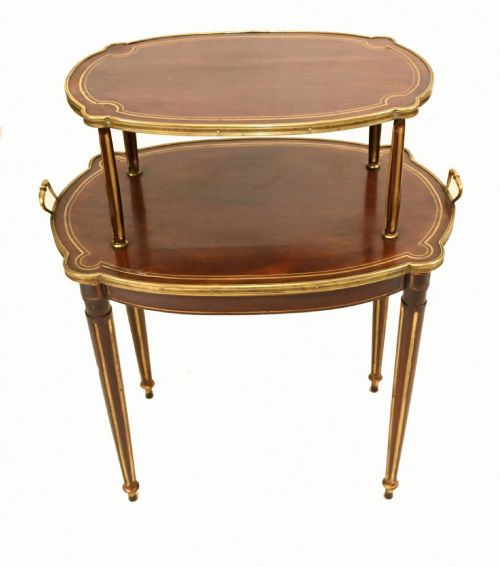
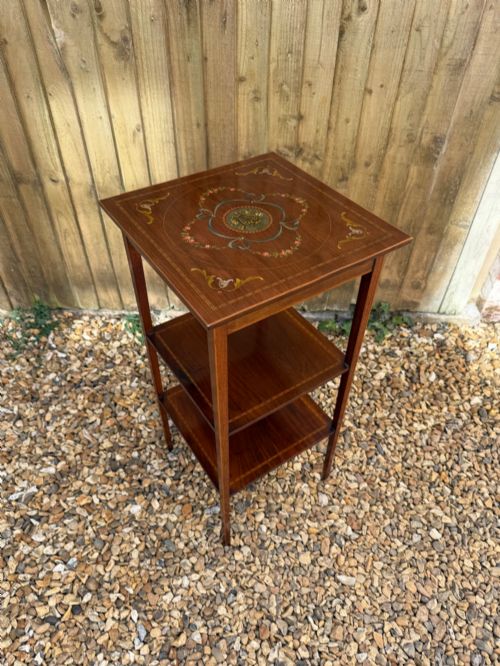
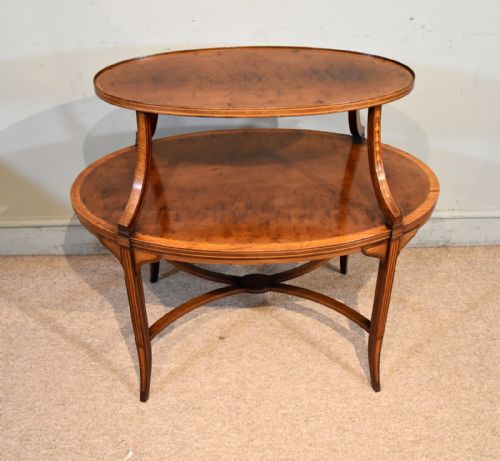
These inlaid mahogany etagere pieces offer tiered display surfaces finished with crisp wood marquetry, making them ideal for practical daily use and ornamental placement.
Inlaid Mahogany Etagere
An inlaid mahogany etagere is a multi-tiered open furniture piece designed for display, originating primarily in the late nineteenth and early twentieth centuries. Buyers seeking an inlaid mahogany etagere will discover items functioning as occasional tables, tray tables, drinks tables, and wall shelves. The form relies on slender uprights supporting multiple platforms intended for ornaments, books, or tea services.
The versions most commonly met on this page date from the Edwardian period and the late nineteenth century. These pieces frequently employ two or three tiers, sometimes incorporating removable glass trays or shaped circular and oval tops. The overarching style draws heavily on Sheraton Revival and French design vocabularies, blending utility with decorative lightness.
Materials and construction
Makers built these pieces using a foundation of solid or veneered mahogany, enhanced with contrasting lighter timbers for decoration. Satinwood, boxwood, and walnut appear frequently in linear stringing and pictorial marquetry motifs set into the primary wood surfaces. Brass details, including gallery rails, handles, or inlay, provide structural accent and edge protection.
Joinery focused on achieving lightness and stability across multiple tiers without heavy vertical supports. Surface decoration relies on precise woodworking techniques where contrasting veneers are fitted flush into recessed channels or larger panels. Clear polishing methods were applied to accentuate the rich grain of the mahogany alongside the bright tones of the satinwood inlay.
Inlaid Mahogany Etagere Retail Price Guide 2026
Typical asking prices for inlaid mahogany etagere among the pieces listed under this phrase on Sellingantiques today, from the lower quarter to the upper quarter. They describe what is for sale here now, not the wider market.
Listings for this phrase span the Edwardian period, 1900, the late nineteenth century, and 1920, predominantly featuring mahogany, satinwood inlay, and brass.
Qualities that separate examples
Quality in these pieces rests upon the precision of the marquetry and the architectural balance of the tiered structure. Finer examples display intricate, tightly fitted floral or geometric inlays using varied timbers rather than painted substitutes. The crispness of edge moulding and the integration of functional elements like removable trays or brass galleries also elevate a piece.
The choice of secondary woods and the stability of the upright supports distinguish standard production from superior workshops. Pieces that maintain structural rigidity across three tiers while retaining slender, elegant proportions represent the upper tier of craftsmanship. The depth and warmth of the polished mahogany finish further indicate the original standard of manufacture.
The Inlaid Mahogany Etagere Glossary
- Etagere
- A piece of furniture consisting of a set of open shelves for displaying small objects. The form developed in France and became popular in Britain during the Victorian and Edwardian eras.
- Marquetry
- Decorative woodwork in which pieces of fine timber are inserted into a veneer to form geometric or pictorial patterns. This technique defines the surface decoration of many refined tables.
- Satinwood
- A durable, lustrous yellow-brown timber imported from tropical regions and utilised for contrasting inlay work. It provides high visual contrast against darker mahogany.
- Sheraton Revival
- A late nineteenth-century design movement inspired by the neoclassical furniture of George Sheraton. It emphasises light proportions, straight tapered legs, and delicate inlay.
- Whatnot
- A nineteenth-century multi-shelved stand used for displaying ornaments and curiosities. The term is frequently interchangeable with etagere in period listings.
Inlaid Mahogany Etagere: Frequently Asked Questions
What is an inlaid mahogany etagere used for?
These pieces served historically as display stands for porcelain, decorative objects, and small books. In modern interiors, they function well as side tables, drinks surfaces, or focal display points in living spaces.
The open tiered design allows owners to place items across multiple levels without occupying a large floor footprint. Their light proportions make them easy to reposition within a room as living arrangements require.
How do I distinguish Edwardian from Victorian pieces?
Edwardian examples generally display lighter proportions, brighter satinwood inlay, and cleaner neoclassical lines inspired by the Sheraton Revival. Victorian pieces often lean towards heavier timber selection, darker finishes, and denser marquetry or walnut combinations.
Examining the overall weight and secondary framing woods helps clarify the manufacturing era. Edwardian makers prioritized visual airiness, whereas their Victorian predecessors often favoured more substantial, complex silhouettes.
Are the trays on these tables removable?
Many etageres feature upper tiers designed as lift-off trays with handles and raised edges. This allowed servants to clear or set items away from the main frame during entertaining.
Buyers should inspect the perimeter of the top shelf to see if handholds or slip-joints indicate a removable tray. Fixed tiers remain rigidly integrated into the vertical support posts.
How do I care for antique mahogany furniture?
Keep these items away from direct sunlight and heat sources to prevent the dry timber and delicate veneer inlays from warping or cracking. Regular dusting with a soft, dry cloth maintains the polished finish without requiring heavy chemical polishes.
Periodic application of a suitable wax feed helps preserve the moisture and natural lustre of the mahogany and satinwood surfaces. Avoid placing damp items directly onto unsealed wood to prevent ring marks.