




Scalloped Tray Table
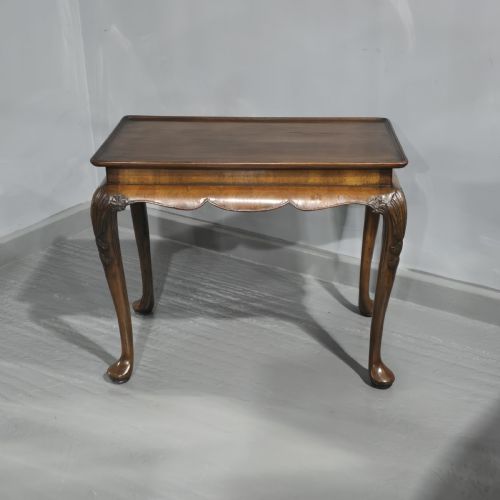
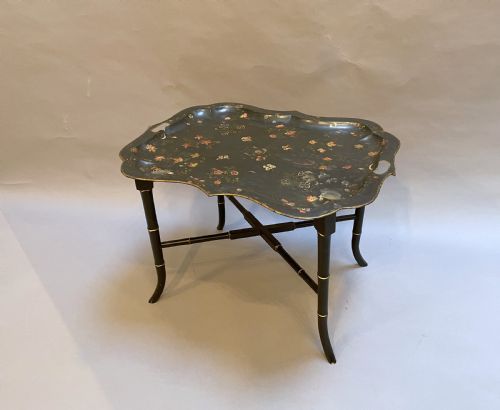
A scalloped tray table brings a removable serving surface onto a fitted stand, offering a versatile arrangement for drinks and display.
Scalloped Tray Table
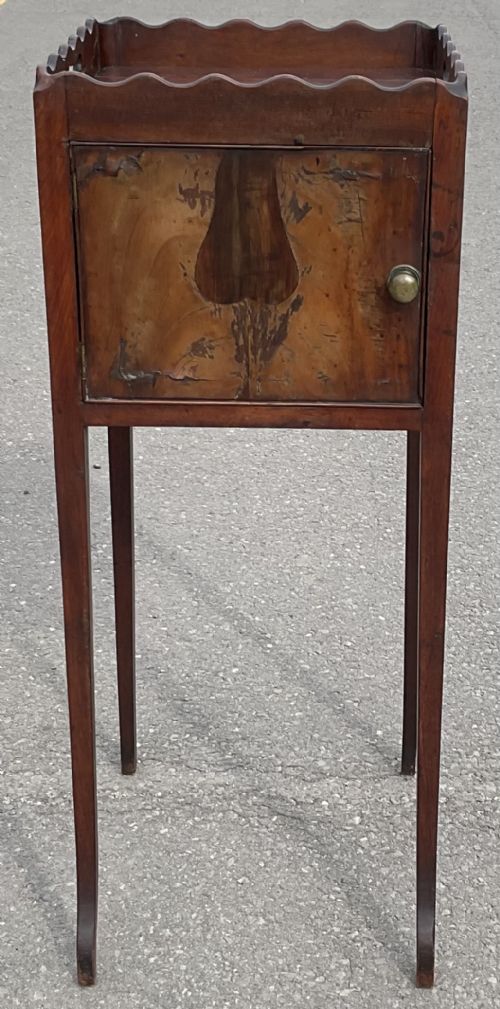
When you search for a scalloped tray table, you look at pieces that combine a raised, shaped rim with a supportive base. These items merge portable serving vessels with stable furniture frames, originating from periods when trays were lifted from stands after use.
The versions you meet on this page span Georgian, Regency, and Victorian eras, alongside later Edwardian and twentieth-century interpretations. They appear in mahogany, walnut, papier-mâché, and painted finishes, sometimes pairing an earlier tray with a later stand.
How they were made
Cabinetmakers shaped solid timbers such as mahogany and walnut, carving edges into undulating outlines or turning wood for folding stands. Papier-mâché trays received layers of lacquer and paint, often incorporating gilt or Chinoiserie designs before placement on iron or wooden supports.
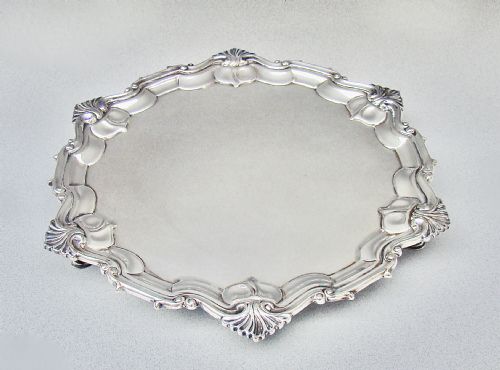
Joinery techniques varied from traditional frame-and-panel construction to simpler pegged joints on auxiliary stands. Metal examples utilised silver plating or brass, shaping sheet metal into raised profiles with decorative handles.
Scalloped Tray Table Retail Price Guide 2026
Typical asking prices for scalloped tray table among the pieces listed under this phrase on Sellingantiques today, from the lower quarter to the upper quarter. They describe what is for sale here now, not the wider market.
Papier-mâché started out as wet paper pulp, yet cured hard enough to hold heavy tea services for generations.
What varies in quality
The distinction between tiers of quality rests on the crispness of the carved scalloping and the integrity of the timber or lacquer. Superior examples display harmonious proportions between the tray and its base, whereas assembled pieces show discrepancies in age and finish between the two components.
Finishing work on the surface dictates visual success, from finely detailed marquetry inlay to carefully preserved painted decoration. The weight of the materials and the stability of the stand under load further separate standard utility pieces from finer salon furniture.
William Hutton & Sons·Gillows·Tiffany & Co·Whytock and Reid
The Scalloped Tray Table Glossary
- Scalloped
- Having an edge formed of a series of curves resembling the shell of a scallop. This contour appears along the raised rims of trays and tabletops.
- Papier-mâché
- A composite material made from paper pulp or sheets of paper mixed with glue and resin, pressed and dried. It forms a smooth, lightweight surface suited to lacquering and painting.
- Butler tray
- A portable rectangular tray with hinged sides that fold down, designed to rest upon a folding wooden stand. It allowed servants to transport items and clear surfaces efficiently.
- Chinoiserie
- A European artistic style reflecting Chinese motifs and techniques, applied to furniture and decorative objects. It frequently appears on lacquered and painted surfaces.
Scalloped Tray Table: Frequently Asked Questions
What is a scalloped tray table?
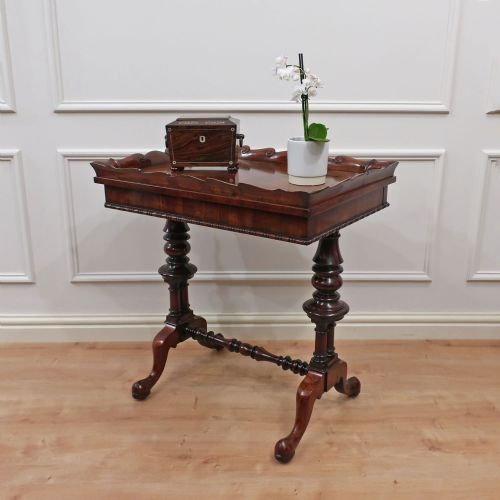
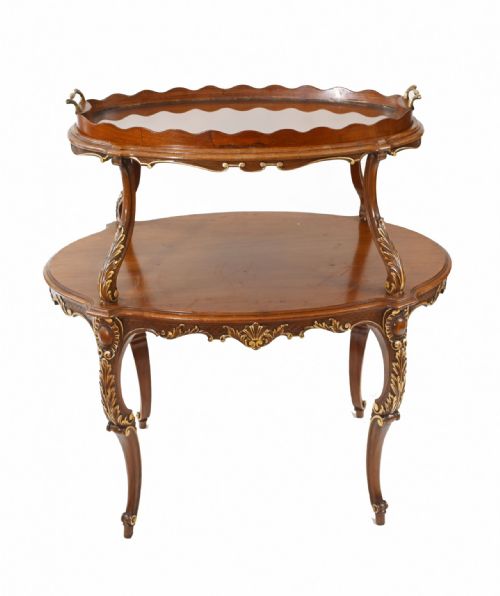
A scalloped tray table is a piece of furniture featuring a raised, curved rim on the upper surface, supported by a folding or fixed stand. It functions as both a portable tray and a stable occasional table.
These items range from Georgian mahogany designs to nineteenth-century papier-mâché pieces mounted on iron or wooden bases. They provide practical surface area that can be cleared or moved with ease.
Are the trays removable?
Many trays lift straight off their supporting stands, following the traditional domestic practice of carrying refreshments to a room. Some examples are permanently fixed or secured to the frame.
Examining the underside reveals whether the tray sits loose upon battens or fastens directly to the legs. Removable versions often show minor wear on the contact points where wood meets wood.
How do I date a papier-mâché tray table?
Dating relies on the composition of the base material, the style of the painted decoration, and the construction of the stand. Nineteenth-century examples often feature lacquerwork on compressed paper pulp paired with later iron or wooden stands.
Examining the pigment, craquelure in the varnish, and the joinery of the base helps establish the period. Many antique trays were married to stands long after their initial manufacture.
How do I care for wood and lacquer surfaces?
Wooden surfaces require minimal moisture and occasional treatment with appropriate wax to preserve the grain and finish. Lacquered papier-mâché benefits from gentle dusting with a soft cloth without harsh chemical polishes.
Keeping pieces away from direct sunlight and heat sources prevents the timber from warping and protects painted or gilded details from fading over time.