

Vintage Etagere Stand
A vintage etagere stand brings tiered open display into a room, holding books, plants or ornaments across stacked shelves.
Vintage Etagere Stand
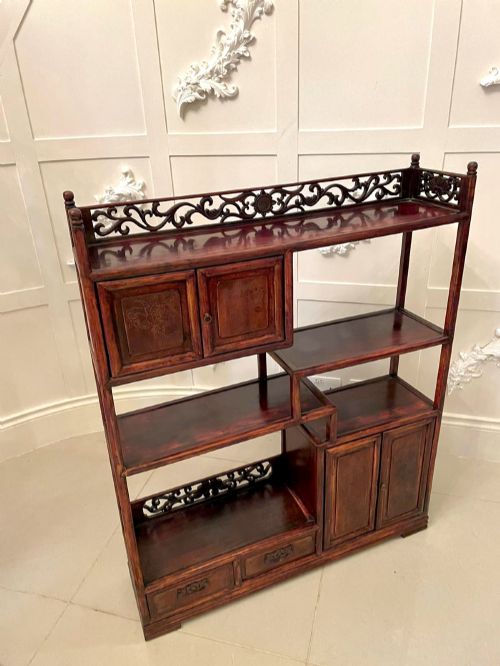
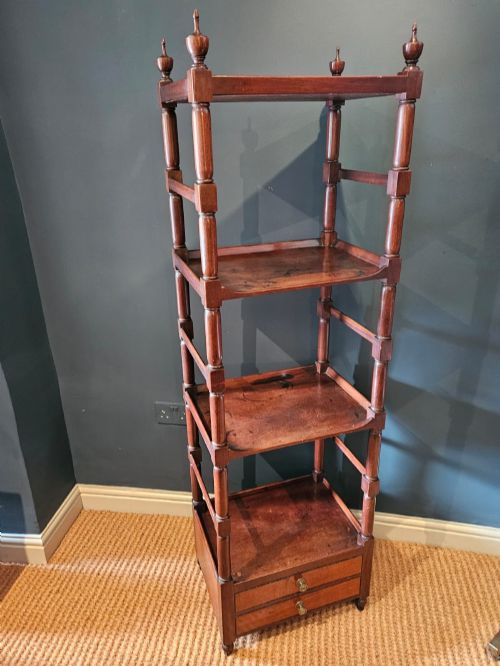
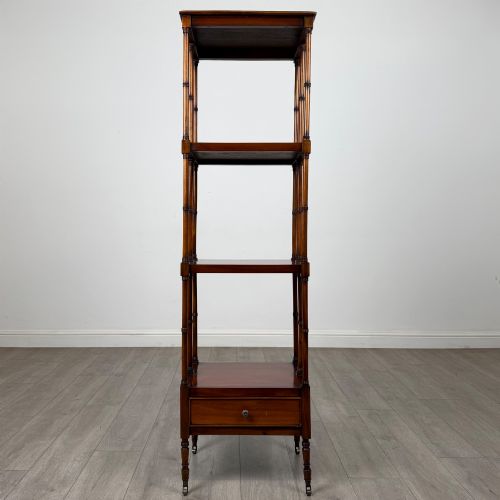
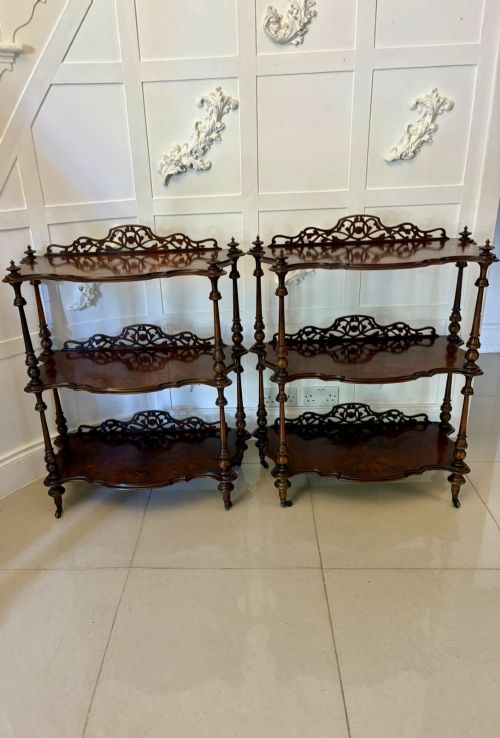
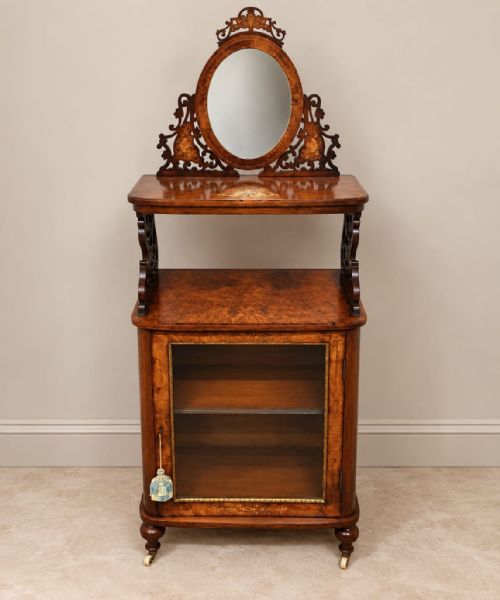
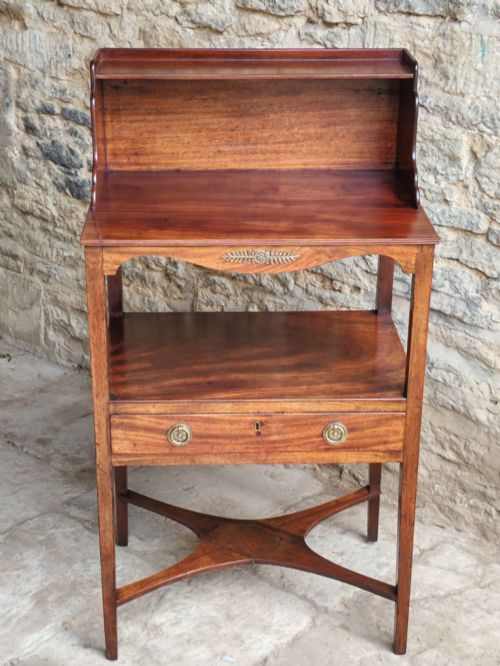
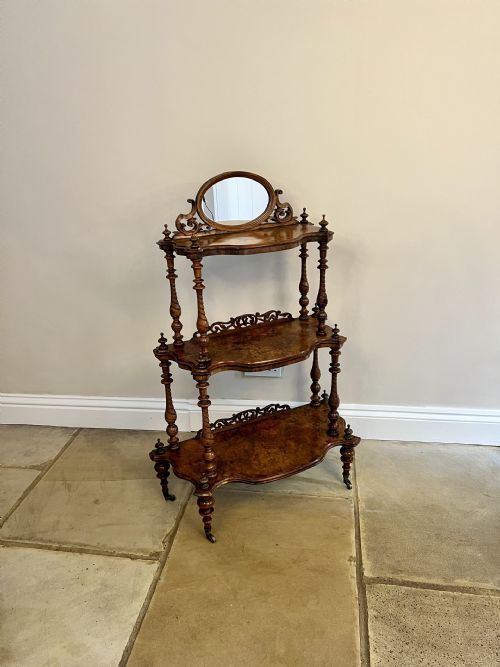
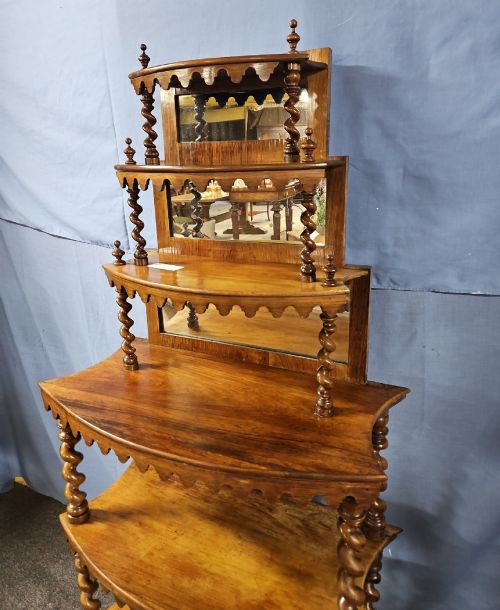
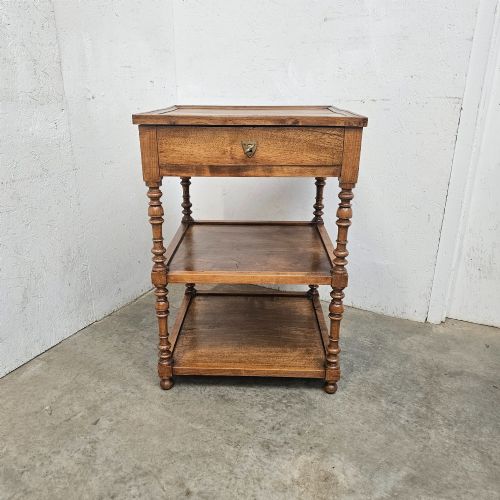
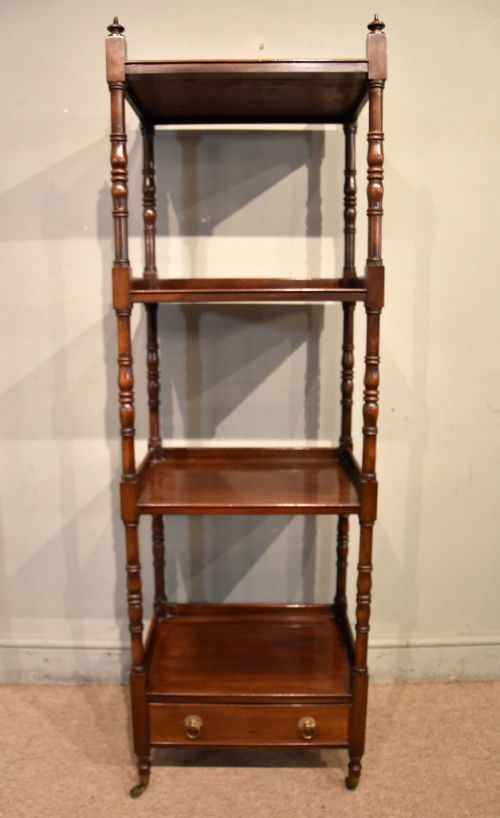
When you search for a vintage etagere stand, you are looking at multi-tiered open shelving units designed for display and occasional storage. These pieces trace their lineage through Victorian and Edwardian whatnots, Regency bookcases, and French walnut or rosewood display tables.
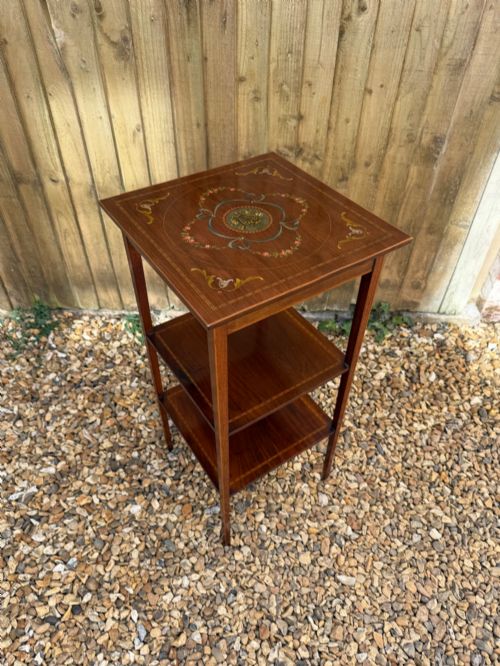
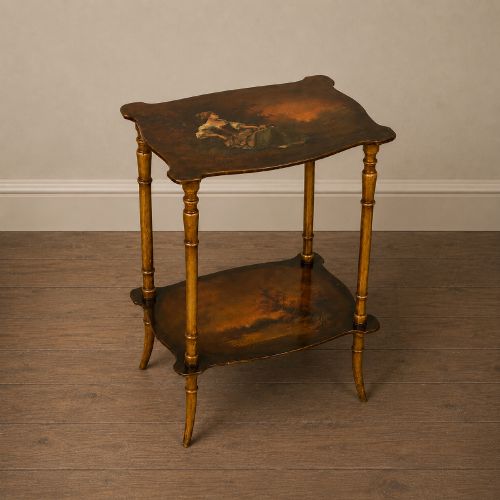
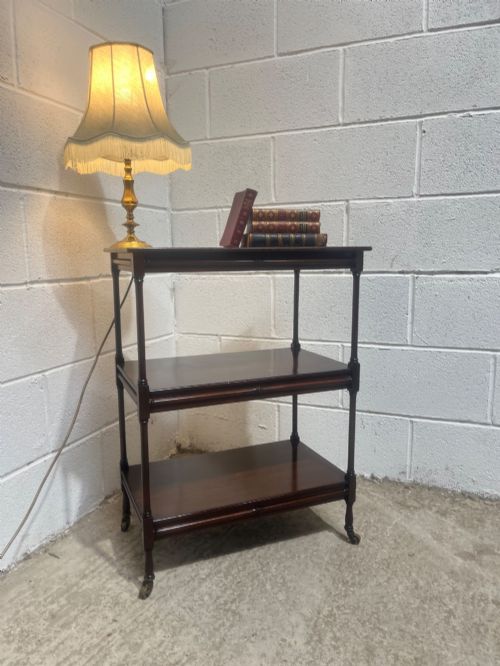
You are most likely to meet mahogany or burr walnut pieces featuring three or four tiers, alongside occasional examples in bamboo, brass, wrought iron or painted wood. They appear as corner shelves, side tables, plant stands and tall freestanding waterfall units.
How they were made
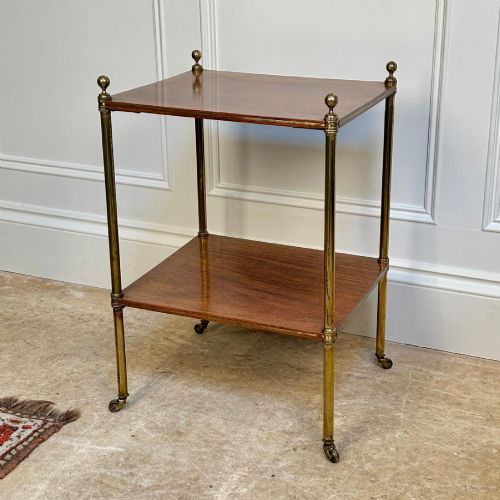
Cabinetmakers utilised dense timbers such as mahogany, walnut and rosewood, often selecting figured burr veneers or adding intricate parquetry and marquetry inlay. Brass and ormolu mounts, galleries or rods frequently reinforce the tiered structure and accent the wood grain.
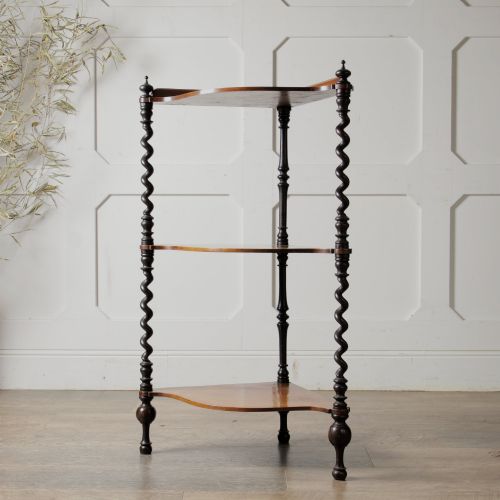
Lighter alternatives rely on turned bamboo, bent wirework or forged wrought iron to create sturdy vertical frames. Tiered shelves are joined by turned columns, barley twist supports or slender legs, occasionally finished with paint, gilt or lacquer.
Formats range from corner shelves and plant stands to French Napoleon III tables and bakers wrought iron racks.
What varies in quality
The distinction between standard output and finer examples rests upon the selection of timber and the precision of the joinery. Burr walnut veneers with matching grain patterns and crisp, hand-turned supports signal superior workshop execution compared to plain timber assemblages.
Refinement in secondary details, such as cast brass ormolu mounts, fine parquetry inlay and stable tiered platform construction, elevates the piece. The integrity of the upright supports and the flush fit of each shelf dictate the overall build standard.
Samson & Son London
The Vintage Etagere Stand Glossary
- Whatnot
- A nineteenth-century multi-shelved stand used for displaying ornaments, books or curiosities. It is a direct British precursor to the modern etagere classification.
- Burr walnut
- Wood taken from a walnut tree growth where the grain has grown in a deformed, swirling pattern. Cabinetmakers slice this timber into decorative veneers for high-status furniture fronts and tops.
- Marquetry
- Decorative woodwork where pieces of veneer are fitted into a ground to form ornamental patterns or pictures. It appears frequently on French and Edwardian inlaid tables.
- Ormolu
- Gilt-bronze decorative mounts applied to furniture. It provides metallic contrast against dark woods such as rosewood and mahogany.
Vintage Etagere Stand: Frequently Asked Questions
What is an etagere used for?
An etagere is designed for open display, holding books, small ornaments, ceramics and plants across its stacked tiers.
Its multiple shelves allow items to be arranged vertically without crowding the floor space of a room.
How do I date a Victorian whatnot?
Victorian whatnots are generally dated by examining the timber choices, turning styles on the columns, and assembly methods.
Heavier burr walnut and rosewood pieces often point to the mid to late nineteenth century, while lighter inlaid Edwardian examples follow later.
Can an etagere be used as a bedside table?
Multi-tiered stands and smaller etageres function well beside a bed when the height matches the mattress.
The stacked shelves provide convenient surfaces for books, reading lamps and night-time essentials.
What is the difference between a whatnot and an etagere?
A whatnot is a traditional British term for a multi-tiered display stand popular during the Victorian and Regency periods.
An etagere is often used interchangeably, though the term historically encompasses French-influenced tiered side tables and display units.