


Removable Tray Table
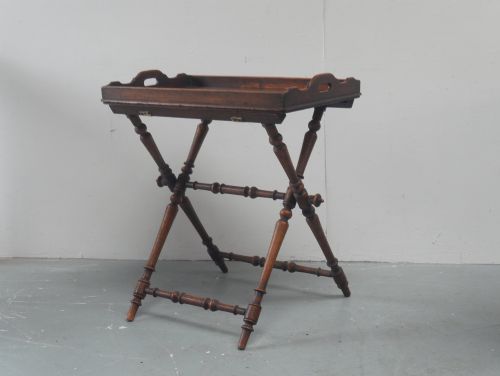
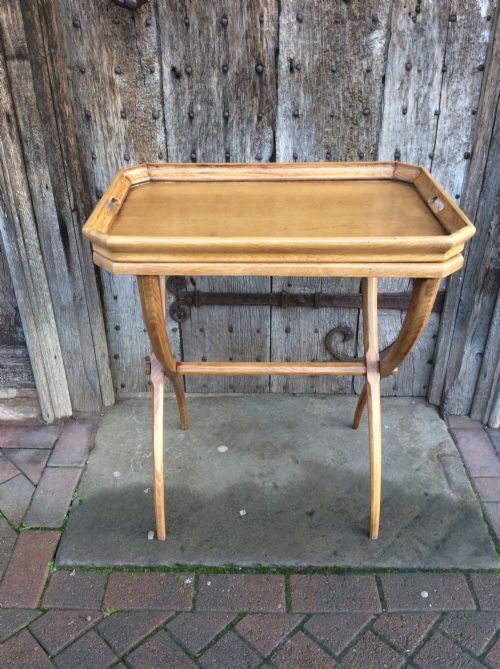
These removable tray table examples are practical side pieces designed to carry food or drink and lift off their stands with ease.
What a removable tray table is
A removable tray table combines a portable serving surface with a folding or fixed wooden stand. These pieces serve as flexible occasional tables in domestic interiors.
The selections encountered here span the Victorian and Edwardian periods, including the year 1900. Alongside standard English examples, one meets French influenced forms.
Makers produced these objects primarily as side tables and occasional tables. The central feature remains the lift off tray resting on a supporting frame.
How they were made
Cabinet makers utilised solid timbers and selected veneers such as mahogany, satinwood and kingwood for the frames and trays. These woods provided both structural stability and rich grain patterns.
Makers incorporated brass handles, glass surfaces and ormolu mounts to add functional utility and decorative contrast. Inlaid details demonstrate fine woodworking techniques of the nineteenth and early twentieth centuries.
Retail Price Guide 2026
Typical UK retail prices for removable tray table, calculated from the Sellingantiques database of over a million retail prices indexed since 2003. This retail price guide relies exclusively on Sellingantiques data; no external sources or auction records are used, so the figures do not describe the wider market.
A butler tray invites you to carry the entire tea service back to the kitchen in one effortless lift.
What varies in quality
Quality rests in the selection of timber veneers and the precision of the joinery between the tray and its stand. Finer pieces display careful inlay work and well integrated mounts.
The distinction between standard utility items and finer examples lies in the refinement of the decorative details, such as French rococo revival styling or finely cast brass hardware.
The Removable Tray Table Glossary
- Tray table
- A piece of furniture consisting of a detachable top used for carrying items, supported by a distinct frame. This dual function defines the primary use.
- Etagere
- A set of open shelves or tiers used for displaying small objects or serving. These pieces often incorporate glass trays and fine wood veneers.
- Ormolu
- Gilded bronze mounts applied to furniture for decorative effect. This technique was frequently utilised in French revival pieces.
- Inlay
- A method of inserting contrasting pieces of wood or other materials into a solid surface to form patterns. Satinwood is commonly used for this purpose on mahogany grounds.
Frequently Asked Questions
How do I use a removable tray table today?
These tables function well as flexible side surfaces for drinks or books in a living room. The detachable top allows you to carry items directly to the kitchen.
The folding stands also make them convenient to store or reposition when space is needed.
What periods do these tray tables come from?
The pieces seen here date from the nineteenth century through the Edwardian era up to 1900. Victorian and Edwardian examples predominate in this selection.
French rococo revival styles also appear among the nineteenth century pieces.
What materials were used to make them?
Makers constructed the frames and trays primarily from mahogany, kingwood and satinwood. Brass hardware and glass inserts also feature frequently.
Ormolu mounts appear on pieces influenced by French design traditions.
How do butler trays differ from etageres?
Butler trays typically feature rectangular wooden surfaces with shaped galleries and cutout handles designed for lifting off a folding stand. They emphasise straightforward utility.
Etageres often incorporate multiple tiers and decorative elements like glass trays, serving more as display pieces.