
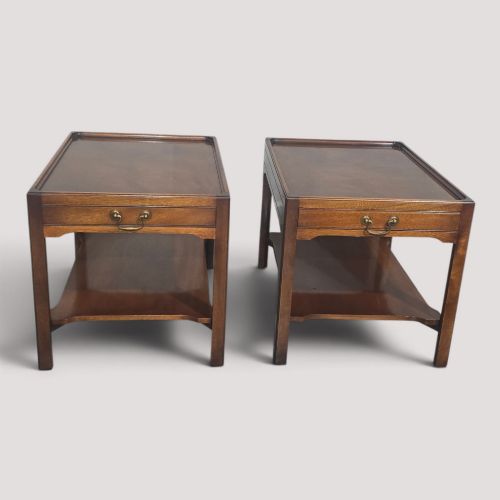
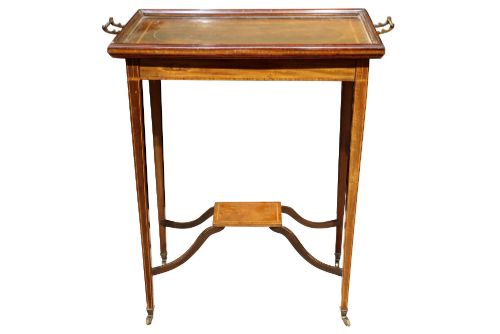


Brass Handled Tray Table
A brass handled tray table brings versatile surface space and refined period warmth to a room.
Brass Handled Tray Table
When you search for a brass handled tray table, you are looking at practical serving surfaces raised on stands, ranging from Georgian butlers trays to Edwardian occasional tables. These pieces combine portable trays with dedicated side tables, tiered etageres, and bedside cabinets.
You are most likely to meet Edwardian and Georgian versions on this page, constructed primarily from mahogany with satinwood inlay. Forms vary from kidney shaped serving trays on stands to marquetry side tables and lamp end tables.
The objects serve multiple functions as side tables, coffee tables, and console halls, reflecting the adaptability demanded by period households. Each piece balances utility with the decorative warmth of figured timber and polished metal fittings.
How they were made
Cabinet makers utilised solid mahogany and mixed wood veneers for the structural frames and tray bodies, ensuring both durability and a rich dark grain. Satinwood inlay and boxwood details provide contrasting linear decoration across tabletops and friezes.
Metalworking skill is evident in the cast brass handles integrated into tray rims for lifting and serving. Marquetry techniques add intricate floral or geometric patterns using various dyed and natural woods set into the primary surface.
What varies in quality
The distinction between standard items and finer examples rests on the crispness of the inlay and the subtlety of the timber selection. Marquetry executed with varied wood tones and precise jointing demonstrates superior workshop practice.
Proportion and the integration of the tray to the stand dictate the overall elegance of the piece. Solid timber construction and well-cast brass handles indicate higher standards of period craftsmanship compared to simpler veneered alternatives.
The Brass Handled Tray Table Glossary
- Butler tray
- A portable wooden tray with hinged or cutout sides, designed to sit upon a folding or fixed stand. These pieces originated for domestic service before becoming permanent furniture fixtures.
- Étagère
- A piece of furniture consisting of open shelves for displaying small objects or serving items. These tiered tables often incorporate brass handles and fine inlay work.
- Satinwood inlay
- A decorative technique using thin veneer pieces of pale satinwood inserted into contrasting dark timber. This method creates borders and geometric motifs on table surfaces.
- Marquetry
- The art of applying pieces of veneer to a structure to form decorative patterns and pictures. Makers used diverse wood species to achieve tonal variation without paint.
Brass Handled Tray Table: Frequently Asked Questions
What is a brass handled tray table?
A brass handled tray table is a piece of furniture featuring a removable or fixed tray top equipped with metal carrying handles, supported by a stand. These versatile items function as side tables, serving pieces, or occasional furniture.
Originating in various forms through the eighteenth and nineteenth centuries, they combine the portability of a serving tray with the stability of a table. Mahogany and satinwood are the predominant woods used in their construction.
How were tray tables used historically?
These tables served primarily for the transport and presentation of food, drinks, or silver in period homes. The raised edges and side handles allowed servants to move the tray easily between rooms.
Over time, many trays became permanently paired with folding or fixed stands to serve as permanent lamp tables or bedside cabinets. Their dual utility made them essential items in well-appointed drawing rooms and parlours.
How do I date a tray table?
Dating relies heavily on the timber species, construction methods, and stylistic details visible in the piece. Georgian examples often feature simpler, robust mahogany framing, while Edwardian pieces frequently showcase delicate satinwood inlay and marquetry.
Edge profiles, handle designs, and the presence of mixed wood veneers further help assign pieces to specific periods like the Regency or Edwardian eras. Examining the underside and joinery reveals workshop practises characteristic of each decade.
Where should I place one at home?
These tables fit naturally beside sofas as lamp stands or as occasional surfaces in hallways and bedrooms. Their compact footprints make them useful in smaller spaces where flexibility is required.
Styling them with books, ceramics, or glassware highlights their decorative wood veneers and brass details. They work well paired with traditional interiors as well as contrasting modern spaces.