

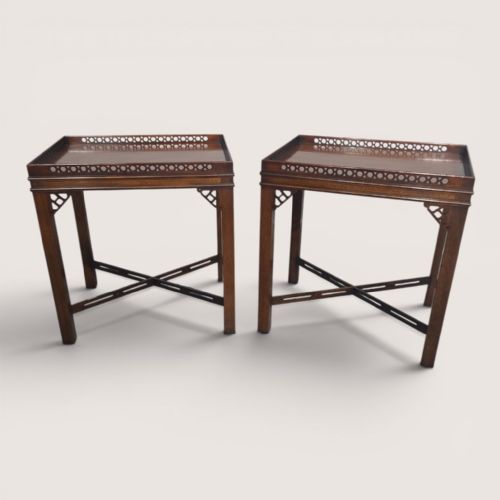
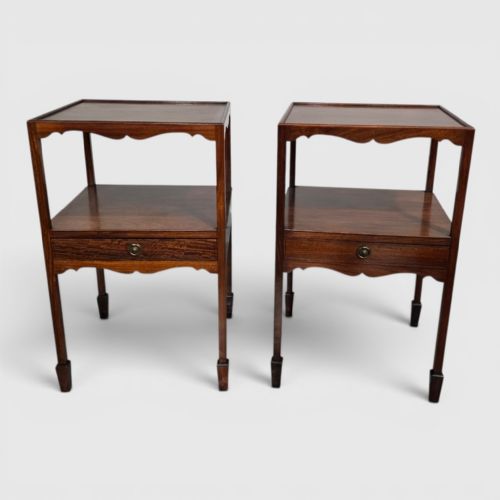


Georgian Style Tray Table
A georgian style tray table brings portable serving surfaces and traditional craftsmanship into daily interior use.
Georgian Style Tray Table
A georgian style tray table combines classic eighteenth-century proportions with practical portability, designed originally for easy movement around a room. The items on this page span genuine eighteenth-century pieces alongside later revival interpretations from the Edwardian era and the early twentieth century.
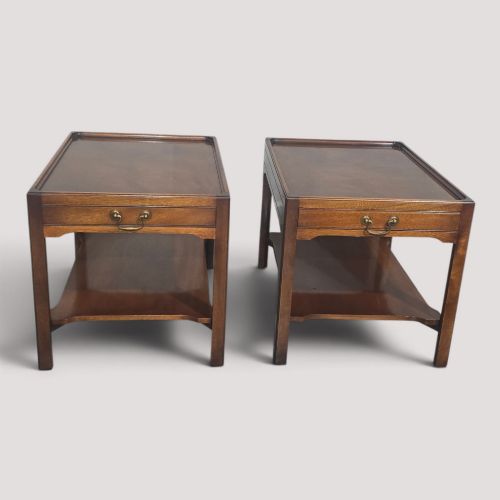
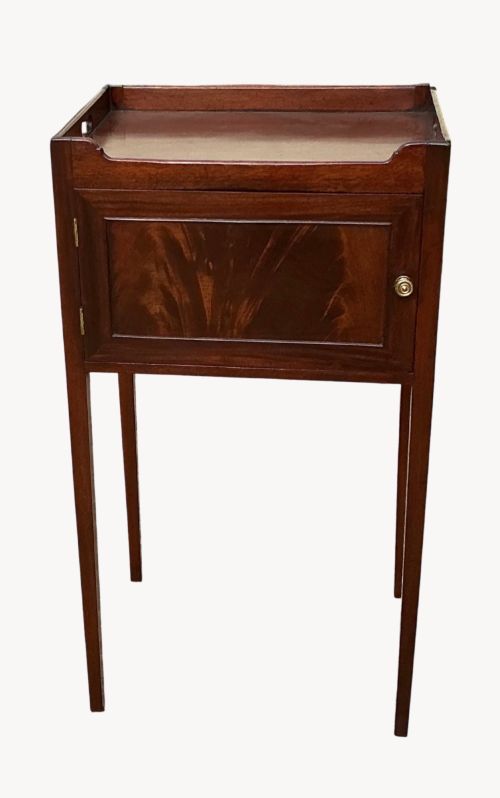
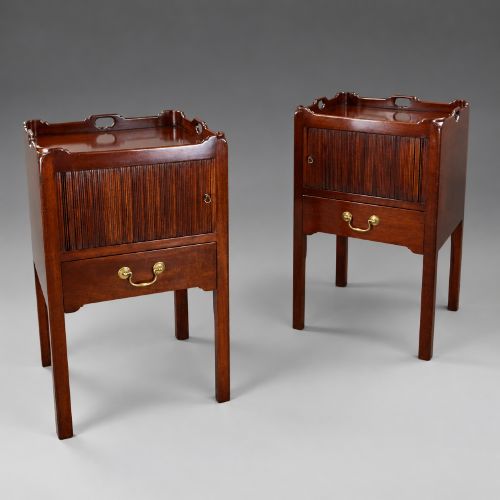
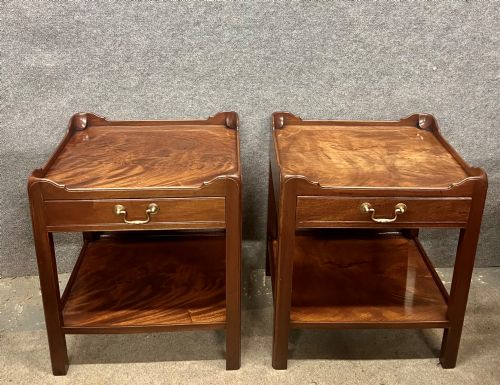
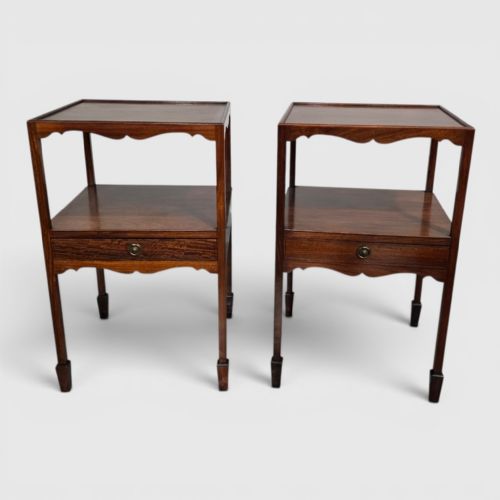
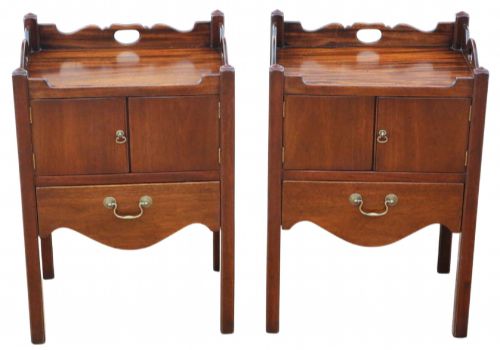
Most examples you encounter here take the form of side tables, occasional tables, or bedside cabinets featuring raised tray tops, supported either by folding stands or fixed legs. Mahogany and walnut dominate the construction, reflecting the timber choices of the original periods and subsequent revivals.
Makers drew on specific stylistic vocabularies such as Chippendale and Sheraton, incorporating gallery edges and folding mechanisms to create versatile surfaces. These designs serve comfortably as lamp tables or coffee tables in modern domestic spaces.
Materials and construction
Makers relied heavily on solid mahogany and figured walnut, often incorporating burr walnut veneers on tray tops to create rich decorative grain patterns. Satinwood appears alongside these darker timbers, offering a lighter contrast on revival pieces.
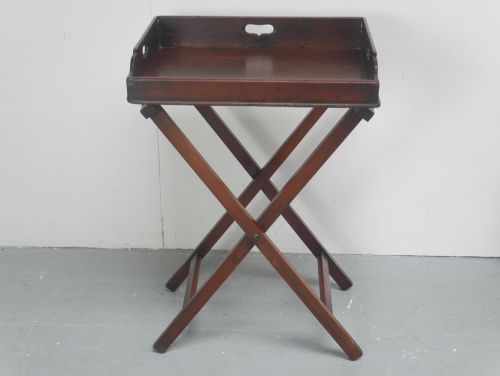
Joinery methods include traditional mortise and tenon construction for the frames, while tray edges frequently feature shaped galleries joined at the corners. Folding stands utilise hinged X-frames designed to collapse smoothly when the removable tray top is lifted off.
A revolving lazy susan sneaks into the nineteenth-century selections, proving Victorians loved spinning their condiments.
Assessing craftsmanship
Quality rests in the crispness of the timber mouldings, the selection of figured veneers on the tray surfaces, and the structural integrity of the joints. Finer examples display hand-cut dovetails in any drawer construction and precise turning on the legs.
The degree of hand-carving on the rails and legs separates standard production from superior pieces, particularly in revival styles where crisp detailing mimics eighteenth-century originals. Patina and the depth of the polished finish further distinguish the better items.
The Georgian Style Tray Table Glossary
- Tray table
- A piece of furniture featuring a removable or fixed raised-edge tray top designed for serving or display. This form allows the surface to be lifted entirely from its folding or rigid stand.
- Butlers tray
- A rectangular wooden tray with hinged or fixed gallery sides, traditionally used by domestic staff for carrying silver and glassware. When paired with a collapsible stand, it functions as a portable side table.
- Silver table
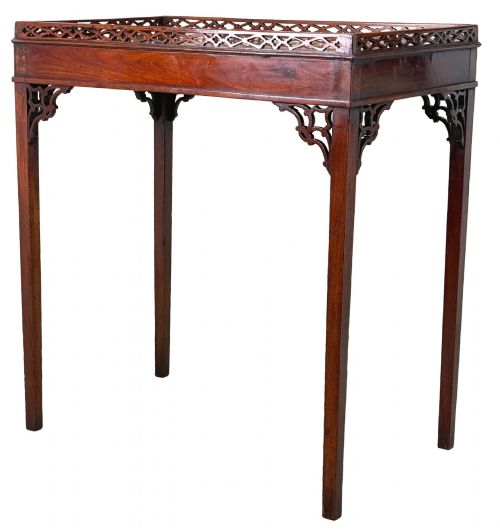
- An occasional table with a raised gallery edge designed during the eighteenth century to hold tea services or silver display pieces. Later revival periods reinterpreted this formal dining form for domestic sitting rooms.
- Gallery
- A raised wooden border around the edge of a tabletop or tray designed to prevent items from sliding off. These borders range from simple moulded rims to pierced fretwork frets.
- Chippendale style
- A design vocabulary drawing on the mid-eighteenth-century pattern books of Thomas Chippendale, characterised by carved mahogany frames and classical motifs. Revival makers utilised these patterns extensively during the Edwardian period.
Georgian Style Tray Table: Frequently Asked Questions
How were tray tables used originally?
These tables served primarily for the flexible service of tea, coffee, or silver items within large residences. Staff could carry the tray portion directly to the drawing room before mounting it on a folding stand.
Over time, the convenience of a removable surface led to their adoption as permanent side tables or bedside stands. Their lightweight construction made shifting them between rooms straightforward.
Are these tables sturdy enough for daily use?
Solid timber construction and traditional joinery ensure these tables handle everyday household items like lamps and books with ease. Folding stands require proper alignment of the hinges to maintain complete stability.
Placing them on level flooring prevents undue strain on the joints of older frames. Regular polishing maintains the moisture resistance of the wood surface.
How do I distinguish an original from a revival piece?
Examining the secondary timbers, tool marks, and wear patterns helps clarify the age of a piece. Eighteenth-century examples display hand-tooling and specific timber shrinkage consistent with substantial age.
Revival pieces from the Edwardian and early twentieth-century periods often use machine-sawn components while still employing traditional styling. Both categories offer robust construction, but material analysis dates the manufacture.
Where should I place a tray table at home?
A tray table functions effectively beside a sofa or armchair as a convenient surface for drinks and reading material. Their modest footprints suit narrower spaces like hallways or beside a bed.
Keeping them away from direct heat sources protects the timber veneers and polished finishes from drying out. The raised gallery edges provide practical security for items placed upon them.