

Edwardian Inlay Side Table
An Edwardian inlay side table brings refined marquetry and slender timber proportions into a sitting room.
Edwardian Inlay Side Table
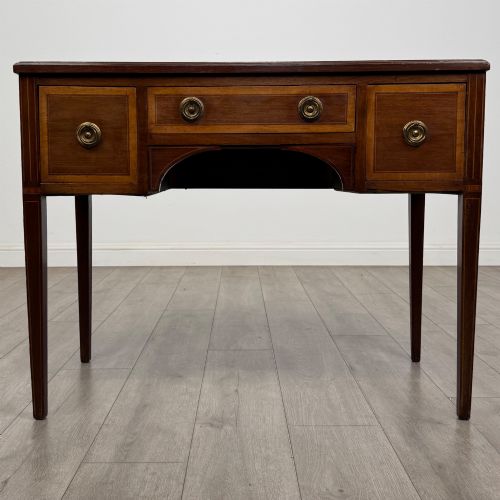
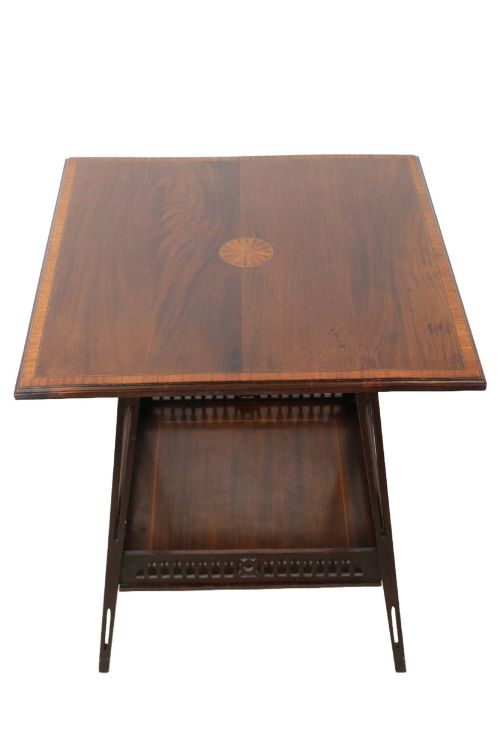
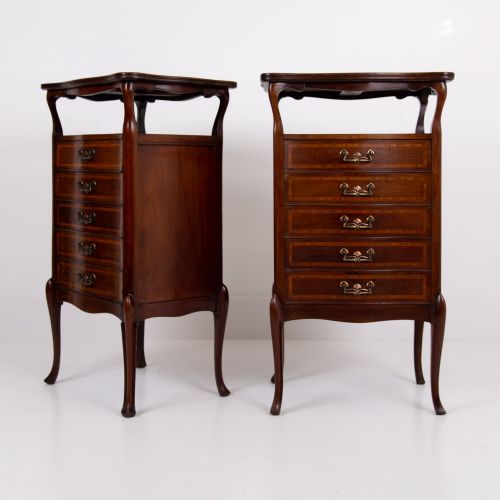
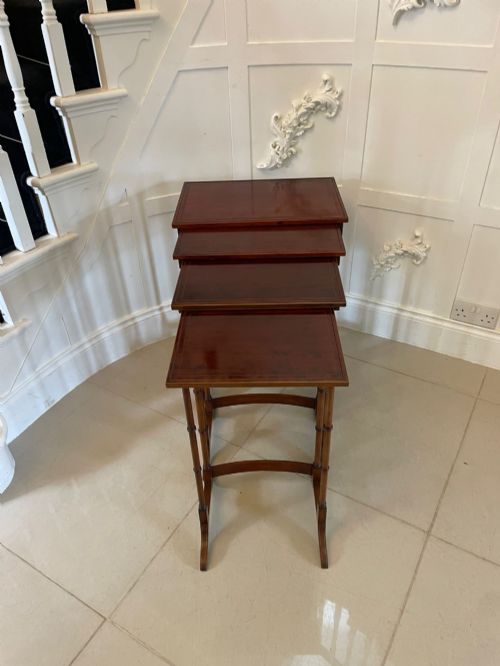
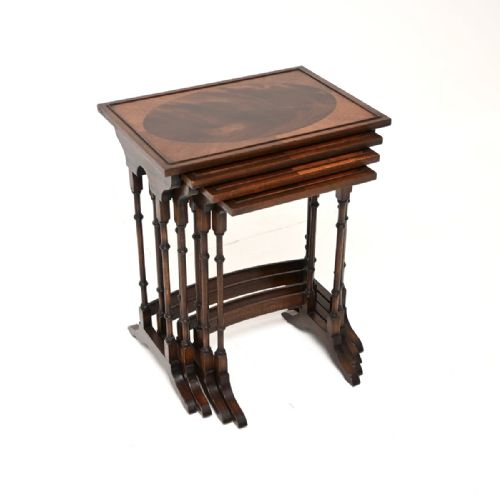
An edwardian inlay side table is typically constructed from mahogany or rosewood, frequently incorporating contrasting boxwood and satinwood details across the surface. These pieces span from the late nineteenth century into the early twentieth century, reflecting the revival of lighter eighteenth-century design principles. While the primary function is serving as a lamp or display table, the category also encompasses nests of tables and occasional forms.
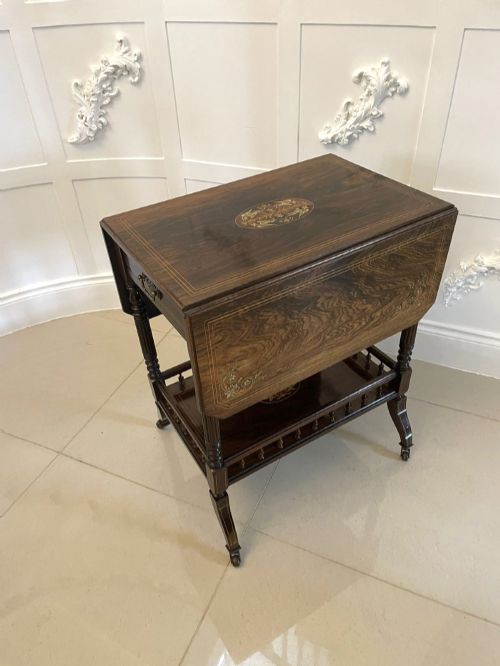
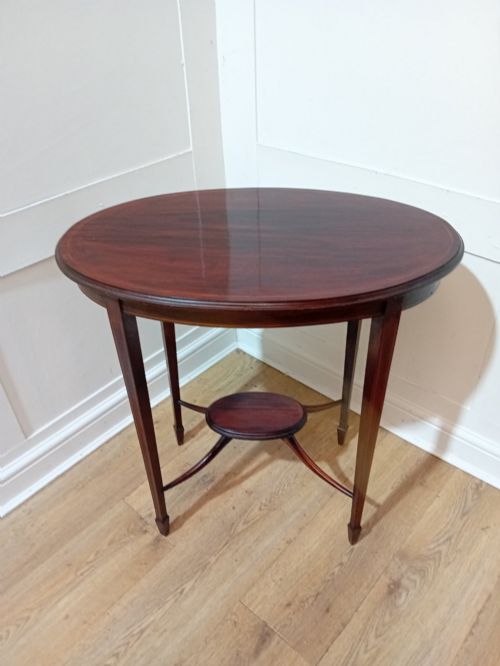
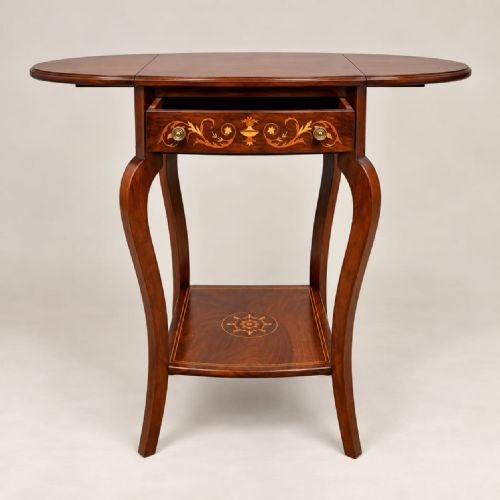
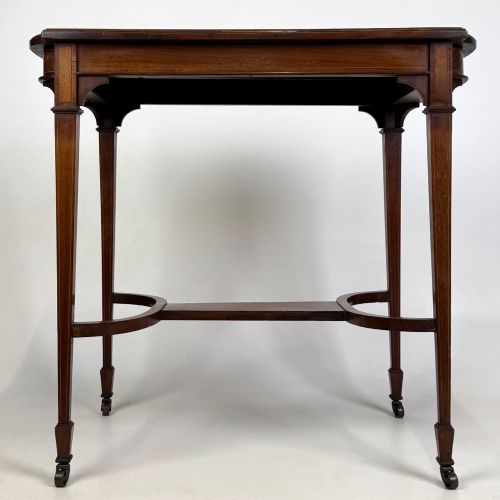
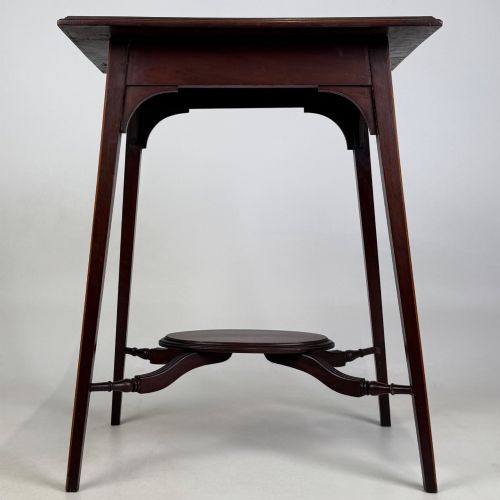
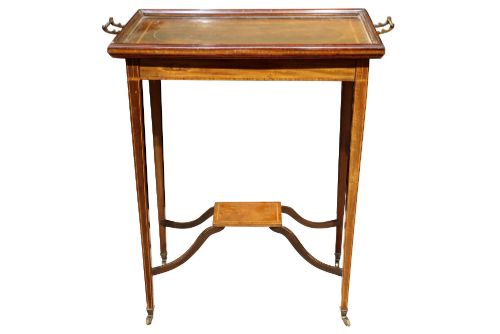
The dominant aesthetic draws heavily on Sheraton Revival traditions, featuring clean lines, square tapered legs, and delicate floral or geometric motifs. Buyers frequently encounter oval, octagonal, or kidney-shaped tops designed to fit beside upholstery or in smaller reception spaces. Alongside straightforward side tables, the selection includes variants with trays, undershelves, or folding leaves.
Originating predominantly from British workshops of the Edwardian era, these items demonstrate a shift away from heavier Victorian furniture toward portable, graceful household furnishings. The integration of boxwood inlay and contrasting timber borders unifies the category, providing decorative impact without heavy mass.
How they were made
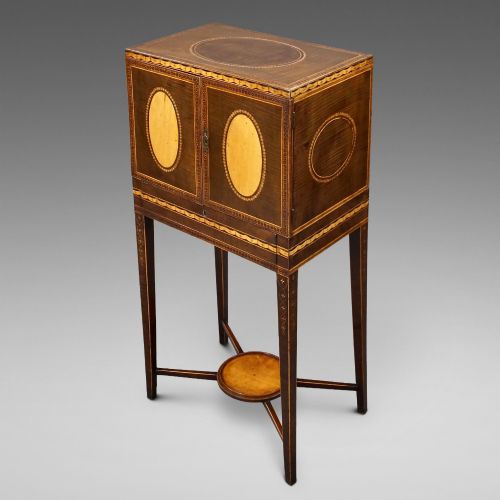
Cabinet makers utilised solid mahogany and rosewood for primary framing, applying thin veneers of exotic timbers to tabletops to create complex geometric patterns and decorative borders. Boxwood, satinwood, and harewood were sliced into fine threads for stringing and floral marquetry, set carefully into channelled recesses.
Joinery relied on traditional mortise and tenon joints for stability, paired with light underframes that kept the overall weight minimal. Surface finishes were hand-polished with shellac to build a glossy French polish that highlighted the natural grain of the underlying timber.
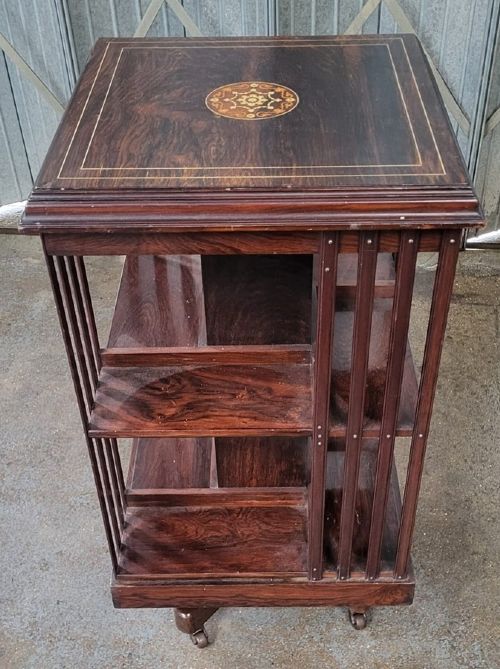
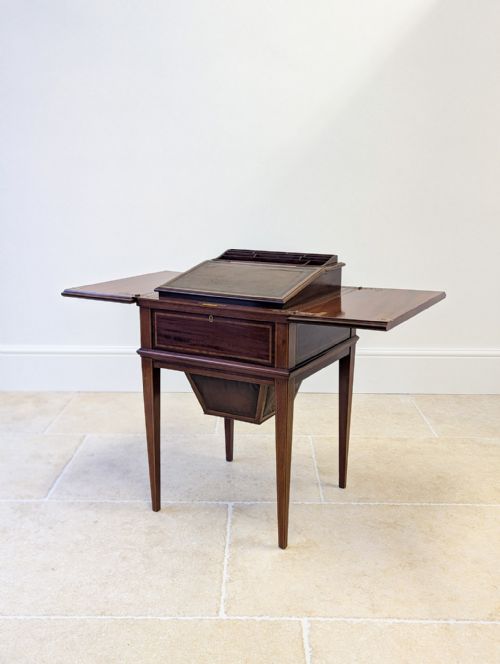
Several tables include clever compartments, from revolving book drums to sewing boxes lined with tiny fitted wooden trays for needlework.
What varies in quality
The standard of an edwardian inlay side table depends upon the precision of the marquetry work and the choice of secondary timbers. Finer examples display tight, seamless joints where the contrasting wood meets the main ground, with no visible gaps or heavy filler.
Proportion and execution of the legs dictate the overall elegance, as hand-tapered supports and crisp edge-banding require superior craftsmanship compared to stamped or machine-cut substitutes. The depth and clarity of the original French polish further separate standard production items from exhibition pieces.
Trevor Page & Co·Liberty & Co·William Birch
The Edwardian Inlay Side Table Glossary
- Inlay
- The technique of inserting pieces of contrasting material into a recessed wooden base to form a decorative design. This method defines the surface ornamentation of Edwardian tables.
- Sheraton Revival
- A late nineteenth and early twentieth century design movement that reinterpreted the elegant, classical forms of eighteenth-century designer Thomas Sheraton. It relies on satinwood, slender legs, and restrained classical motifs.
- Marquetry
- Elaborate veneer patterns applied to furniture structures to form pictorial or geometric designs. Craftsmen assemble various wood species like rosewood and boxwood on a paper backing before pressing them onto the timber core.
- Cross banding
- A border of veneer laid around the edge of a tabletop so that the grain runs at right angles to the central panel. This technique provides a neat framing effect for inlaid surfaces.
- Quartetto nest
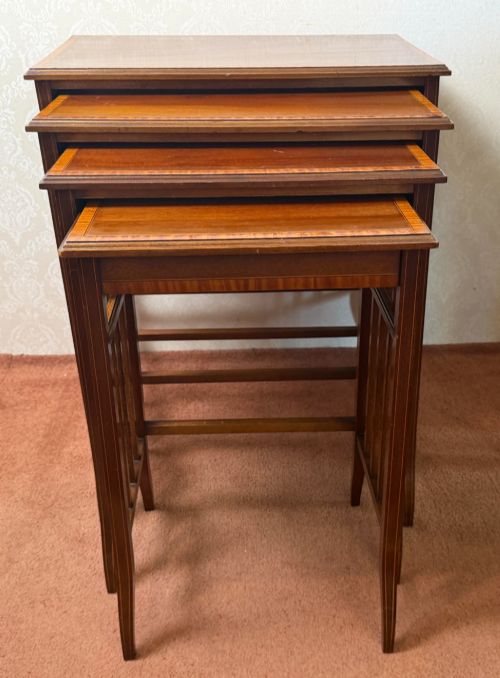
- A set of four graduating tables designed to slide neatly beneath one another. They gained popularity during the Edwardian period for their versatility in entertaining.
Edwardian Inlay Side Table: Frequently Asked Questions
Where should I place an Edwardian inlay side table?
These tables suit placement beside a sofa or armchair where the surface can hold a small lamp or a book. Their finished backs and compact proportions also allow them to stand freely against a hallway wall.
Because direct sunlight can fade rosewood and mahogany veneers, positioning them slightly away from bright south-facing windows preserves the rich tones of the timber.
How do I clean the inlaid surface?
Dust the table regularly with a soft, dry cloth to prevent grit from scratching the delicate French polish. Avoid using modern silicone sprays or household multi-surface cleaners, which can soften the historic finish.
Apply a traditional beeswax polish sparingly once or twice a year to nourish the wood and maintain a gentle, protective sheen across the boxwood details.
Are these tables sturdy enough for daily use?
Edwardian occasional furniture was built to be light and portable rather than heavy-duty. While they easily support lamps, cups, and decorative items, sitting on them or placing excessive weight on the corners is unwise.
Checking that the leg joints remain firm ensures the table safely handles normal domestic tasks without wobbling.