

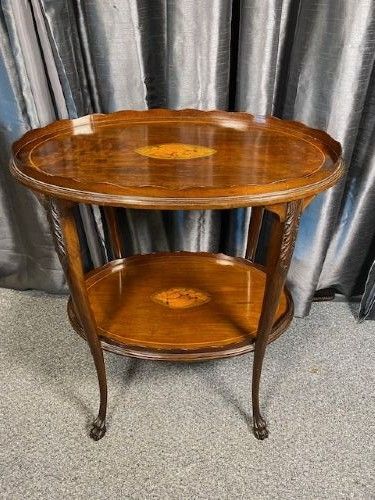
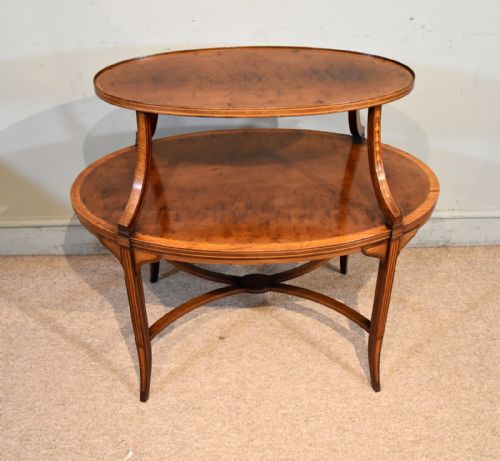


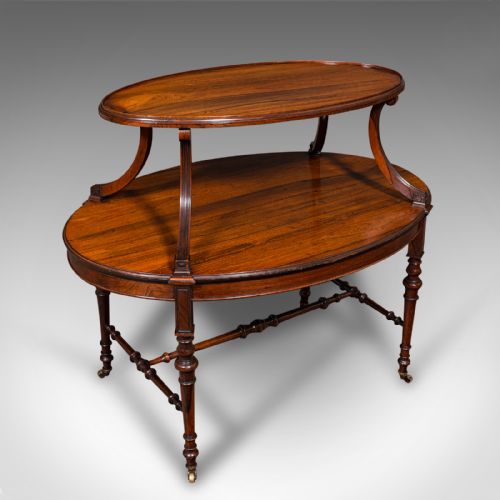


Oval Tiered Display Table
An oval tiered display table brings layered elegance to a room, offering elevated surfaces for objects and lamps.
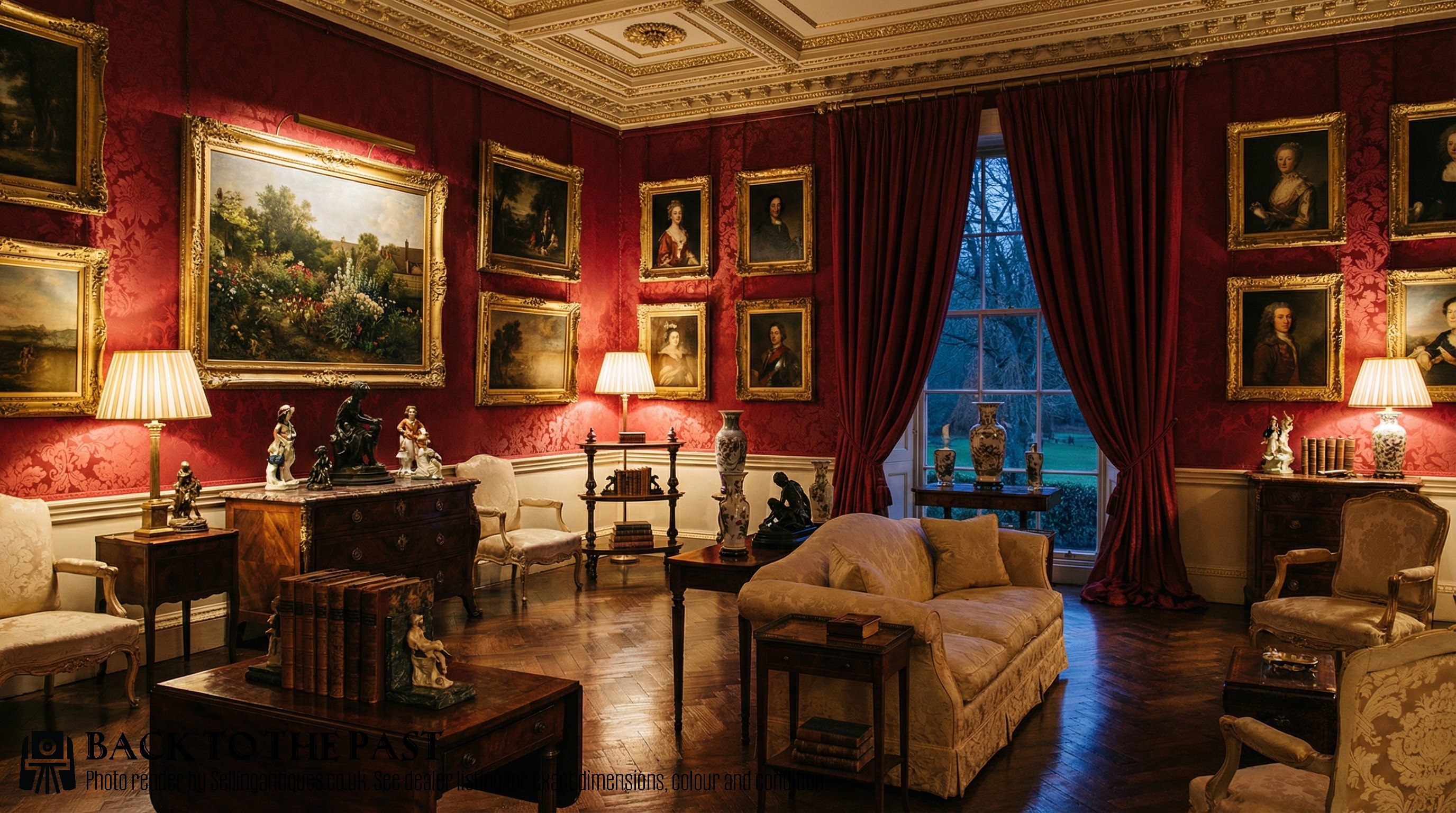
Oval Tiered Display Table
An oval tiered display table serves as an occasional table, etagere, or whatnot, providing multiple levels for arrangement. The selection spans the Victorian and Edwardian eras, with examples reaching back to the nineteenth century.
Most pieces encountered on this page take the form of two-tier or three-tier tables in mahogany, walnut, or satinwood. These multi-level surfaces function as side tables, centre tables, and display stands within domestic interiors.
Stylistic influences range from Sheraton Revival and Regency to French Second Empire, reflecting diverse periods of manufacture. Pieces incorporate marquetry inlay, satinwood banding, and brass details to distinguish their curved oval profiles.
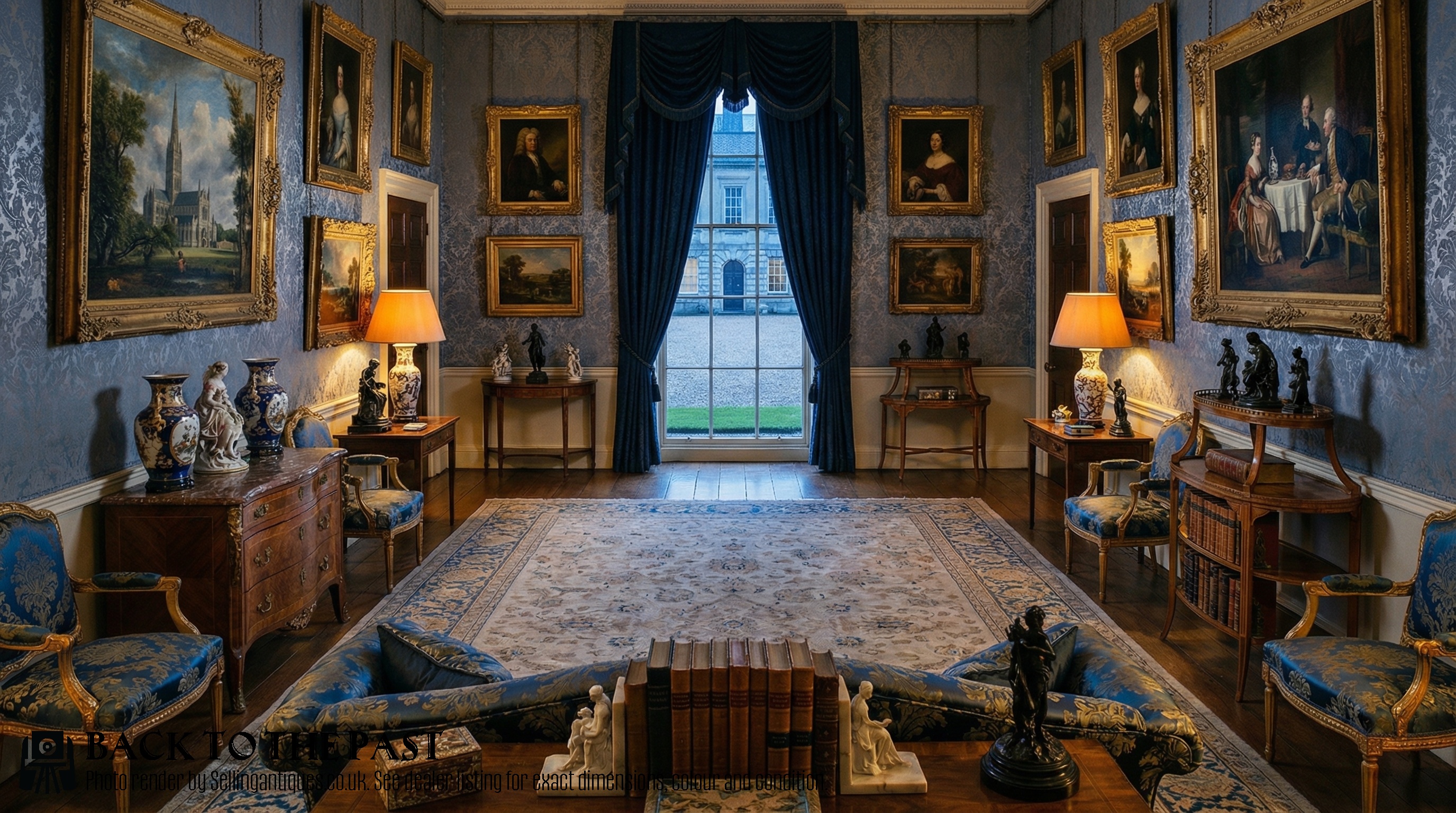
How they were made
Cabinet makers utilised solid timbers and veneers such as mahogany, walnut, burr walnut, and rosewood for the primary frames and tier tops. Satinwood, boxwood, bone, and ebony were employed for intricate inlay work and stringing.
Structural elements frequently include brass fittings, gallery rails, and turned or tapered supports holding the stacked surfaces. Marquetry and painted decorations adorn the tiers, combining contrasting woods to define the oval perimeter.
Listings span the nineteenth and early twentieth centuries, featuring Edwardian, Victorian, and Regency periods alongside Sheraton Revival styles.
What varies in quality
The sophistication of the timber selection and inlay determines the distinction between standard and superior pieces. Figures in the grain of burr walnut or figured mahogany, alongside precise marquetry, mark out finer examples.
The crispness of turned supports, the integration of brass gallery work, and the precision of the joinery between tiers dictate the structural refinement of each table.
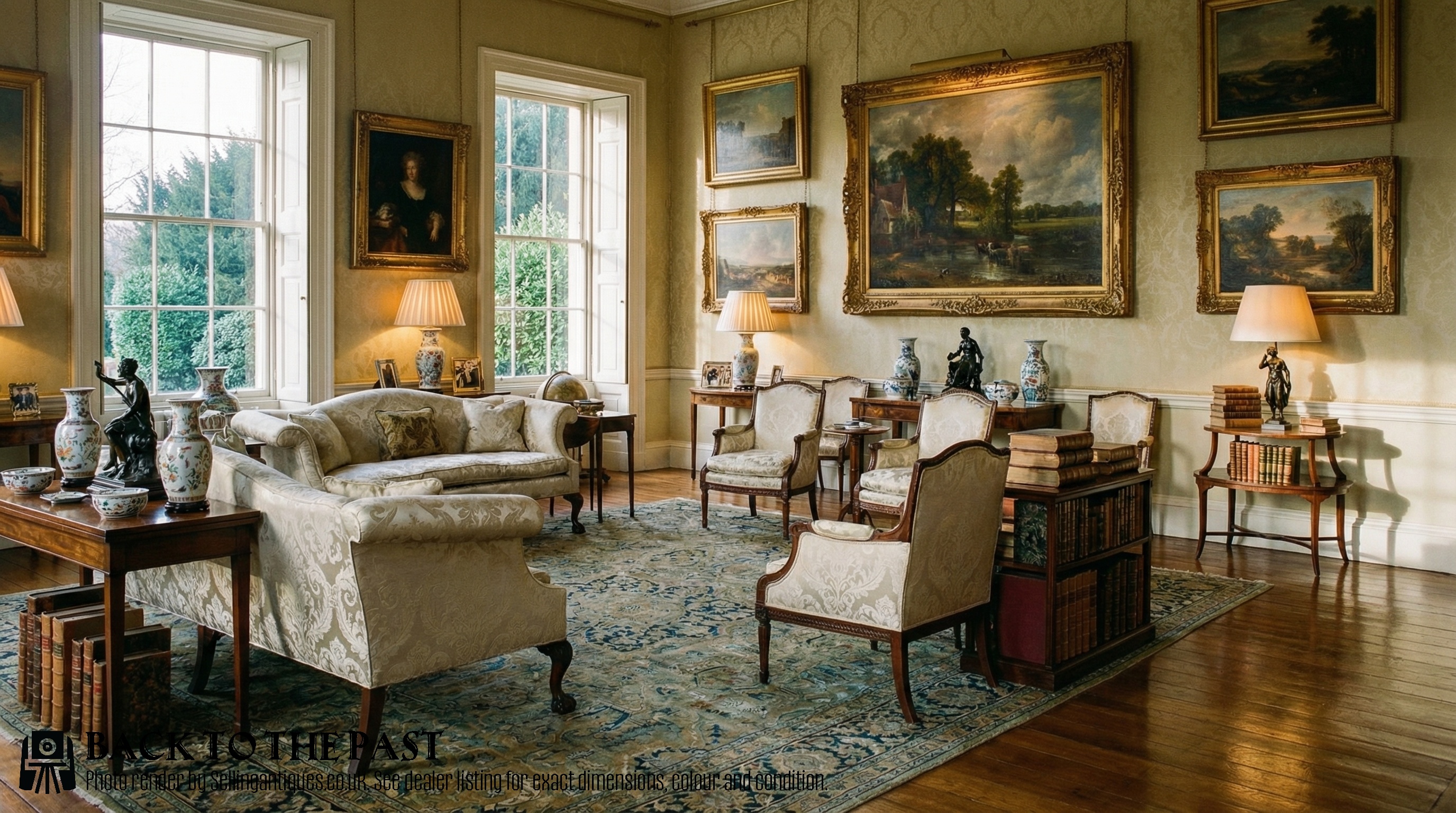
The Oval Tiered Display Table Glossary
- Etagere
- A set of open shelves or tiers designed for displaying small objects or ornaments. It originated in France and provides multiple levels for arrangement.
- Marquetry
- Decorative woodwork where pieces of veneer are fitted into a ground to form floral or geometric designs. This technique enhances the visual depth of table tiers.
- Satinwood
- A durable, lustrous timber with a golden yellow sheen, frequently used for banding and inlay. It provides strong contrast against darker woods like mahogany and rosewood.
Oval Tiered Display Table: Frequently Asked Questions
What is an oval tiered display table used for?
These tables provide layered surfaces suited for holding lamps, books, and decorative objects in a living space. The multiple tiers maximise surface area without expanding the floor footprint.
Historically, they functioned as occasional tables, etageres, or serving stands in drawing rooms and parlours. Today, they serve similar display purposes while adding period character to an interior.
How do I distinguish Edwardian from Victorian tables?
Victorian pieces often display heavier timbers, carved elements, and darker walnut or mahogany finishes. They tend to emphasise solid presence and utility.
Edwardian examples frequently showcase lighter satinwood inlay, Sheraton Revival styling, and more delicate proportions. The use of marquetry and stringing is characteristic of this later period.
What woods are typical for these tables?
Mahogany forms the primary structure for many pieces, often paired with satinwood borders or inlay. Burr walnut and rosewood also appear frequently across the selection.
Secondary woods like boxwood, ebony, and bone provide fine contrasting details in the stringing and floral motifs. Brass hardware completes the material palette.
Are these tables sturdy enough for daily use?
The multi-tiered construction relies on slender vertical supports, which are designed to hold decorative objects and lighting rather than heavy loads. Proper placement on level flooring ensures stability.
While built for functional domestic use as side or centre tables, their tiered design requires mindful placement to maintain balance.