


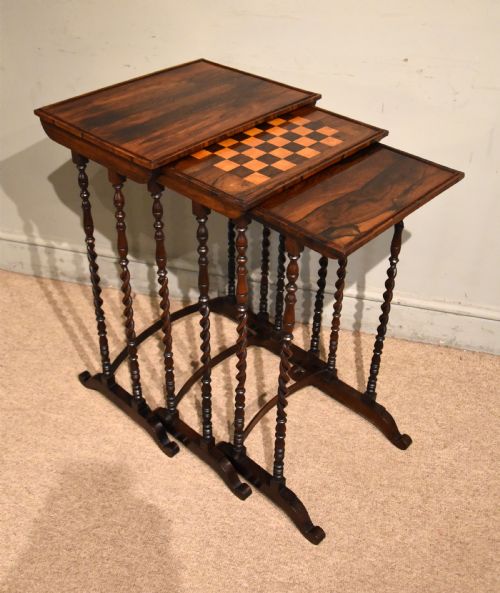

Dark Wood Nest Tables
Dark wood nest tables offer a clever, space-saving solution that slides together neatly when not in use.
Understanding dark wood nest tables
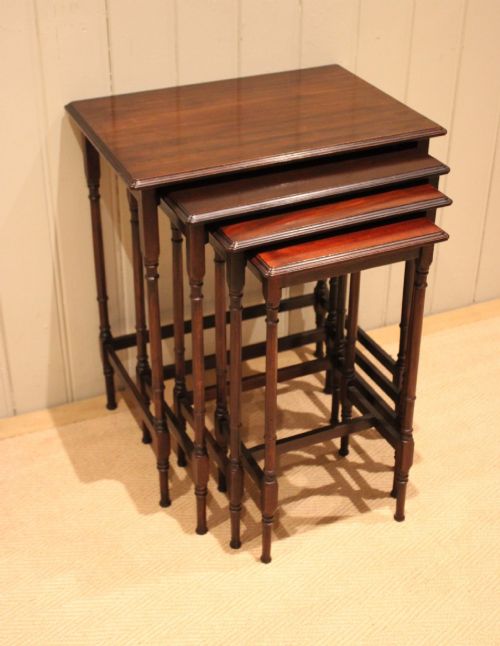
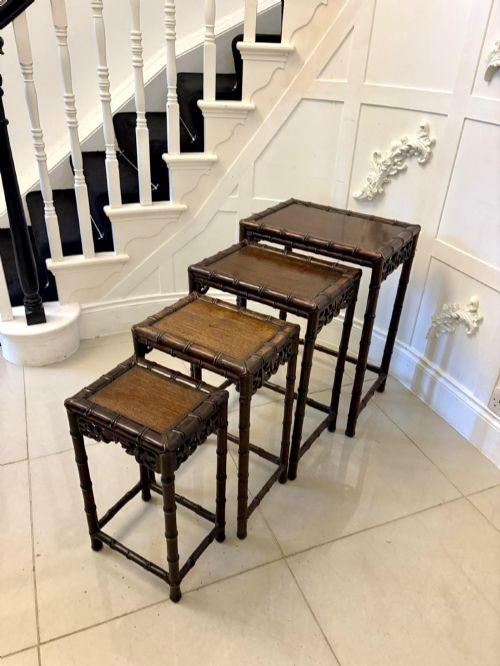
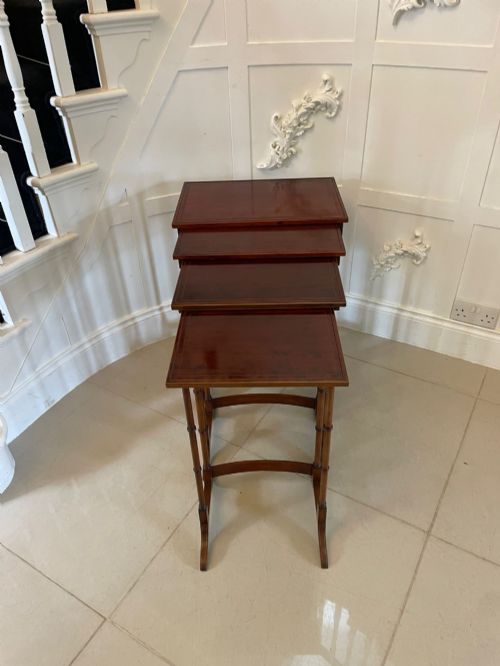
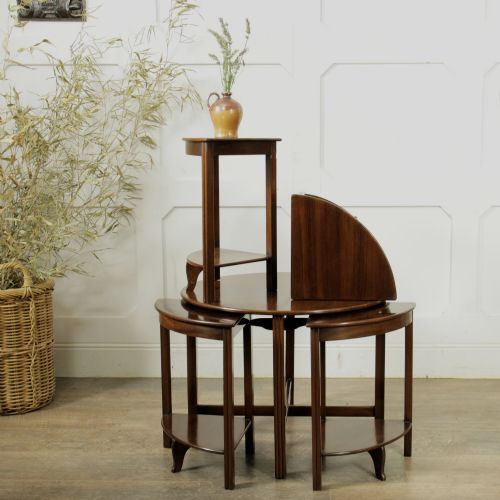
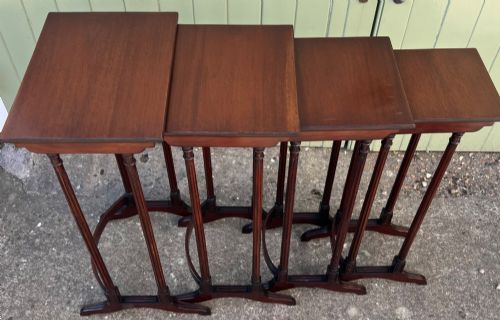
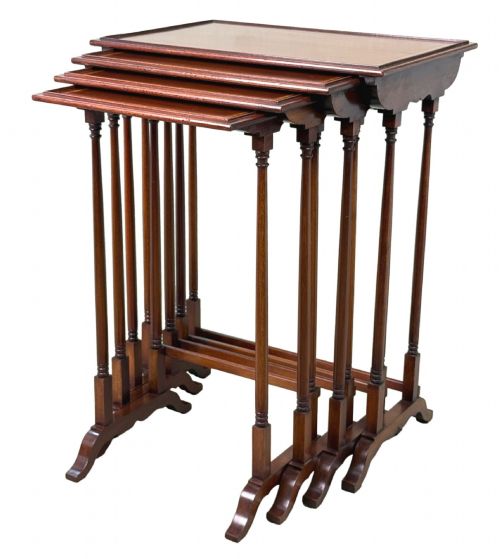
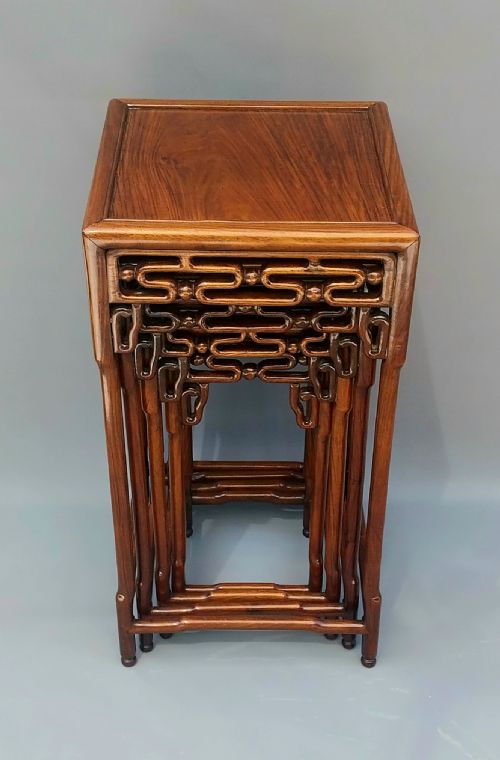
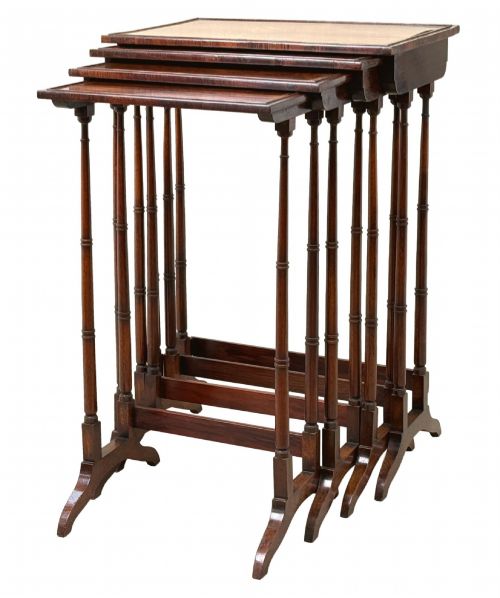
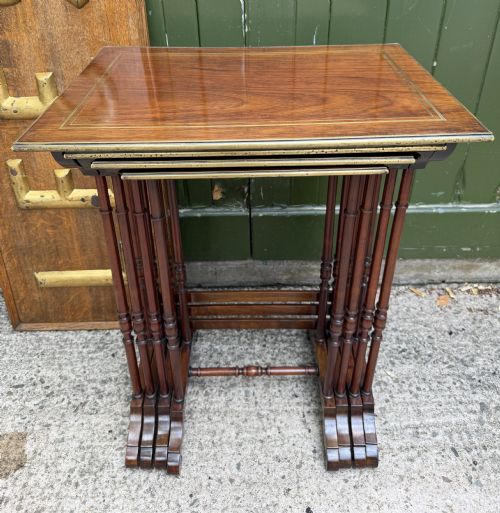
Dark wood nest tables comprise sets of graduating tables designed to slide neatly beneath one another to save space. Buyers searching for dark wood nest tables encounter forms ranging from Regency rosewood and Victorian mahogany to Edwardian and Chinese hardwood examples.
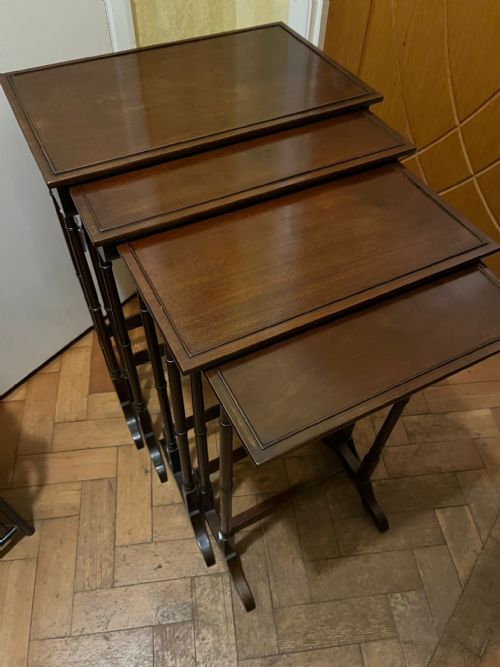
The configurations commonly feature sets of three or four tables with square or rectangular tops. These pieces appear across various periods including the nineteenth century, Regency era, and the nineteen twenties.
Materials and construction
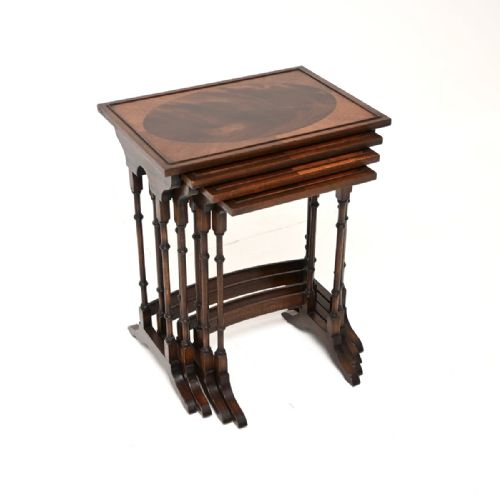
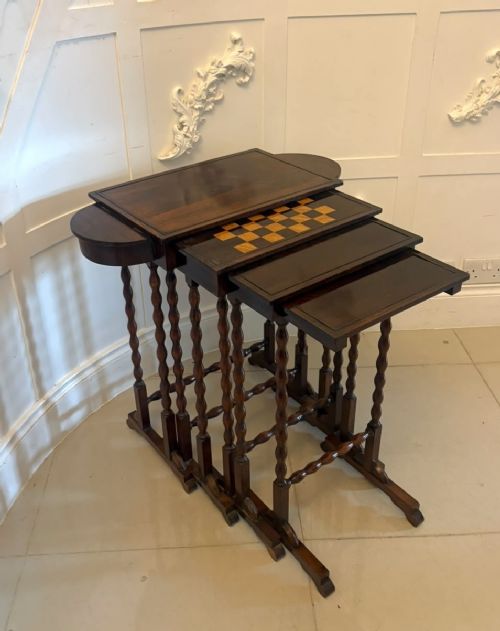
The construction relies on dense timbers such as mahogany, rosewood, teak, and oak, often paired with contrasting inlay work like satinwood and boxwood. Some Asian export and Chinese traditional pieces utilise carved hardwood.
Tables are built as graduated sets so that each smaller frame fits precisely under the one above it. Glass is also incorporated into the design of certain surfaces.
Retail Price Guide 2026
Typical UK retail prices for dark wood nest tables, calculated from the Sellingantiques database of over a million retail prices indexed since 2003. This retail price guide relies exclusively on Sellingantiques data; no external sources or auction records are used, so the figures do not describe the wider market.
A nest of tables is essentially Russian dolls for people who like tea.
Assessing quality and craftsmanship
Quality rests in the choice of timber and the precision of the joinery that allows each table to slide smoothly into its neighbour. Finer examples feature intricate inlay work in satinwood and boxwood or detailed carving on hardwood frames.
Simpler constructions rely on plain mahogany or oak surfaces without decorative banding. The integration of materials like rosewood and teak elevates the presence of the set.
The Dark Wood Nest Tables Glossary
- Nest of tables
- A set of graduating tables designed to fit one beneath another. This arrangement maximises floor space in smaller rooms.
- Inlay
- Pieces of contrasting timber such as satinwood or boxwood fitted into the primary surface. This technique creates geometric or decorative borders.
- Graduated
- Describing tables made in decreasing sizes so they nest together. Each smaller frame slides into the void beneath the larger one.
- Asian export
- Items produced in Asia specifically for Western markets. These often incorporate traditional carving and dense hardwoods.
Frequently Asked Questions
How were nest tables used historically?
Historically, these tables served living spaces and parlours where extra surfaces were needed intermittently for tea, writing, or sewing. When not in use, the smaller tables remained tucked away to keep rooms uncluttered.
Their modular design made them particularly versatile for entertaining guests in smaller nineteenth and early twentieth century homes.
How do I live with nest tables?
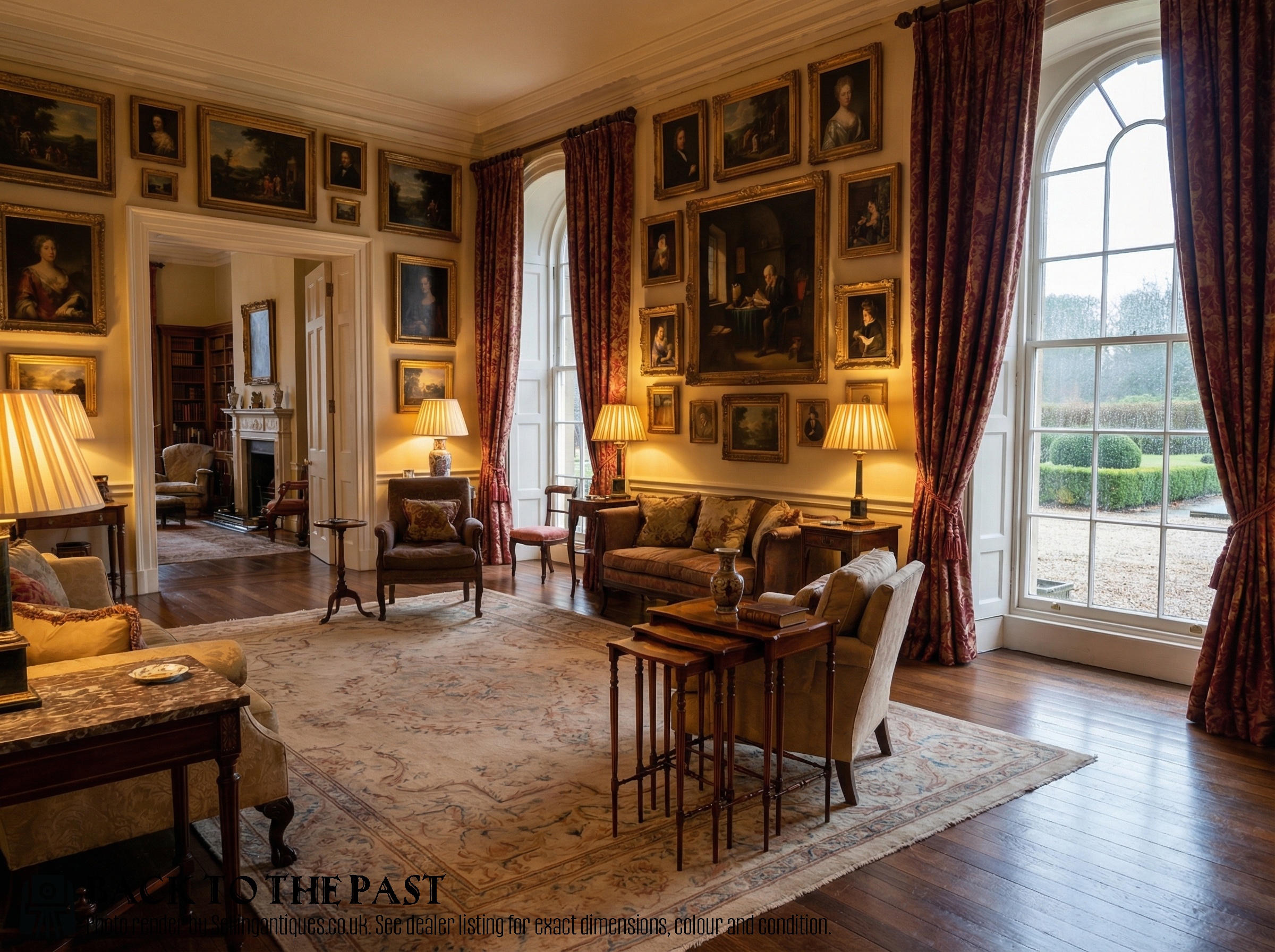
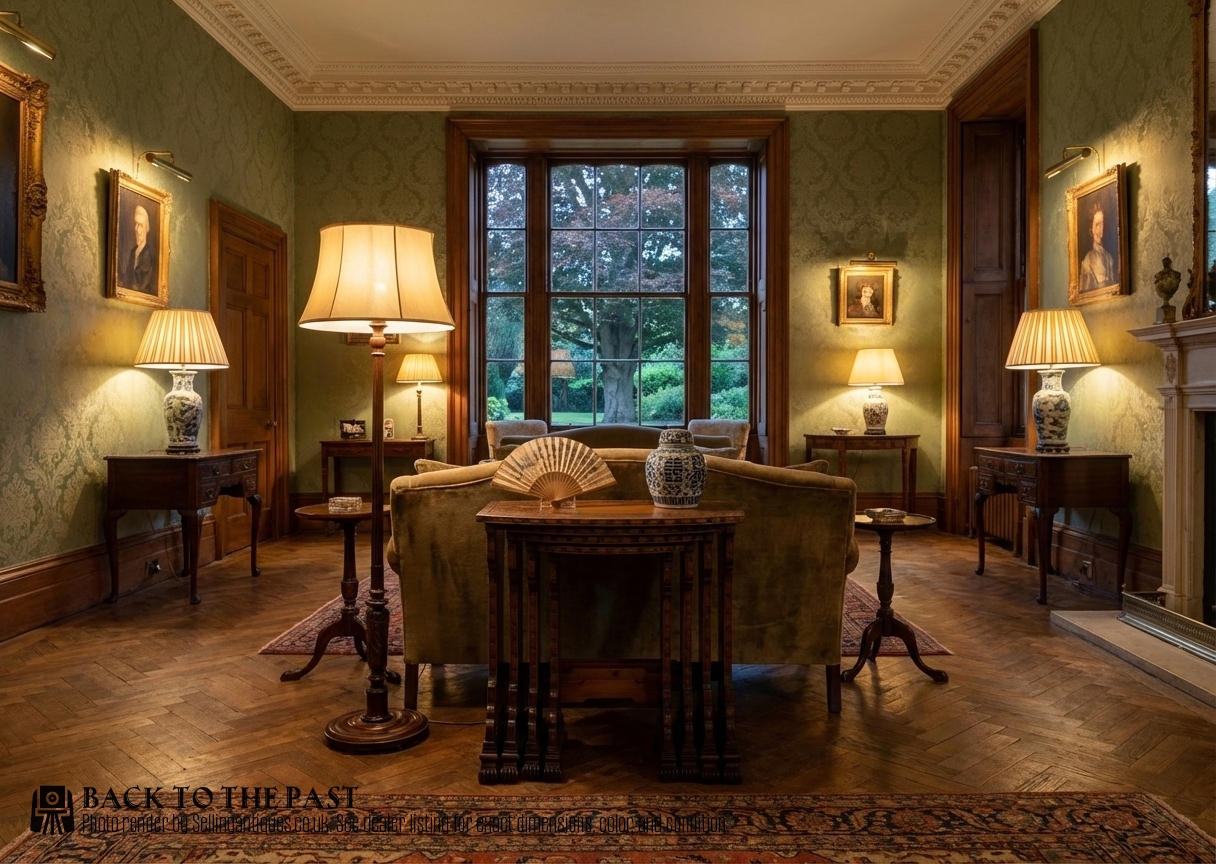
Living with these tables involves separating the set around a room when hosting visitors and sliding them back together afterward. They work well beside sofas or armchairs as flexible side surfaces.
Care should be taken to protect the polished wood surfaces from excessive moisture and direct sunlight.
How do I tell periods apart?
Distinguishing periods relies on observing timber choices, decorative inlay work, and structural carving styles. Regency and Victorian examples often feature rich mahogany or rosewood with fine boxwood stringing.
Edwardian and later twentieth century pieces tend toward simpler lines, while Asian export items display distinct traditional hardwood carving.