


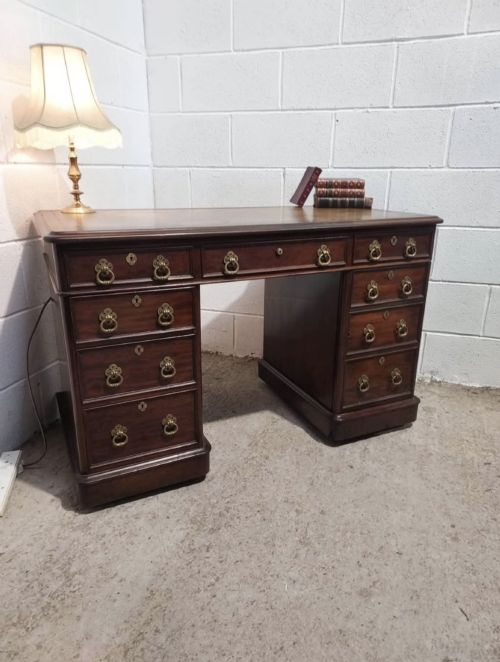
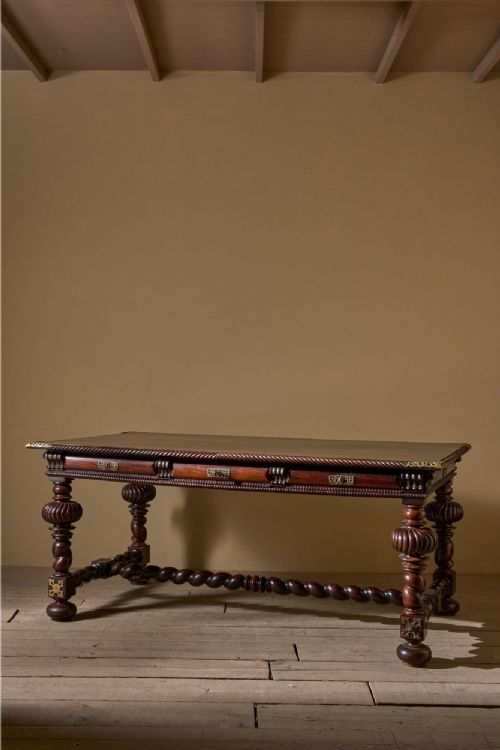
Dark Wood Library Desk
A dark wood library desk brings rich mahogany and rosewood tones into a study, offering a sturdy workspace built for heavy volumes and daily correspondence.
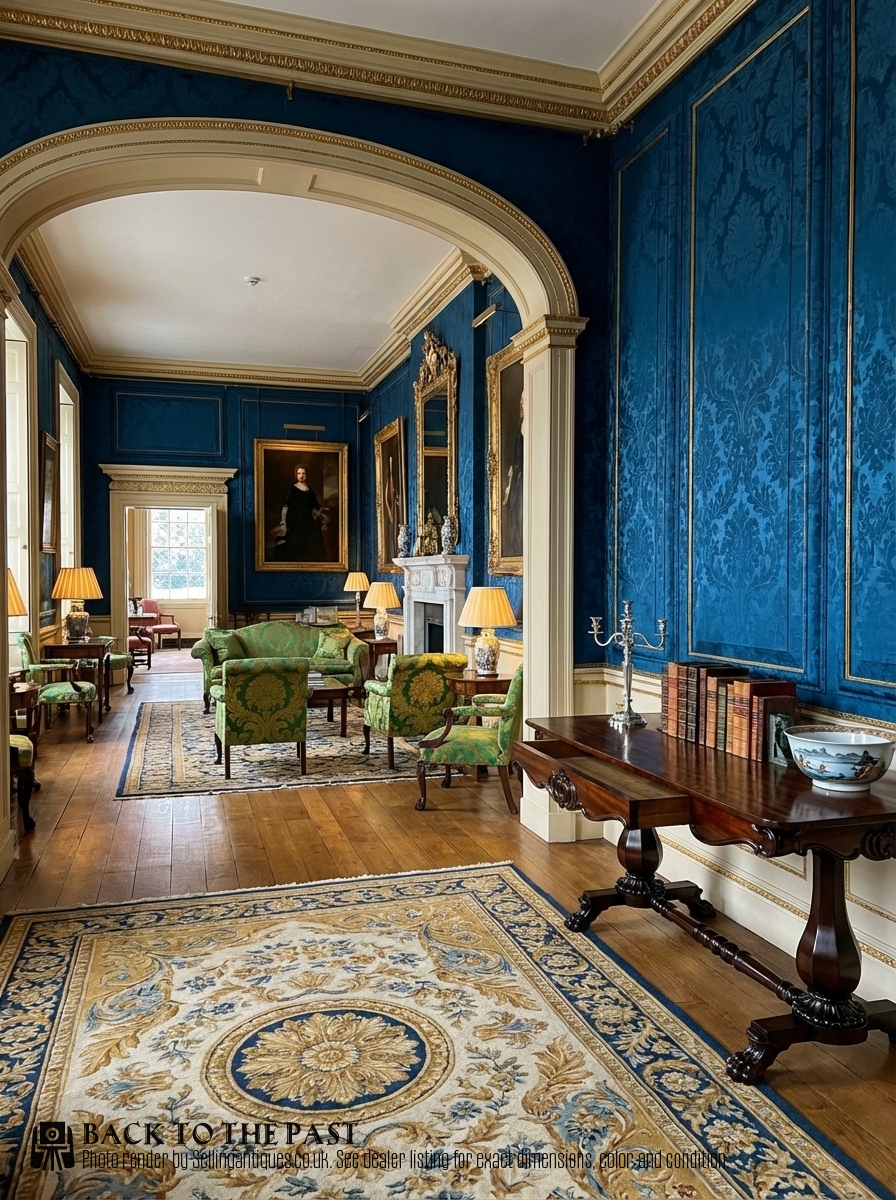
Dark Wood Library Desk
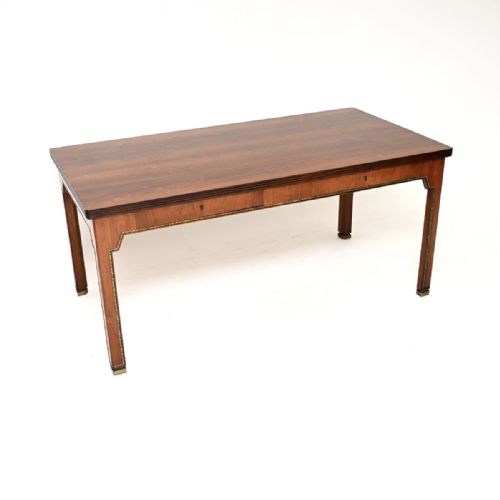
A dark wood library desk sits at the centre of a traditional study or reading room, providing a heavy writing surface often fitted with drawers for paper and ink. You will frequently encounter nineteenth century pedestal models and freestanding tables made from dense timbers designed for serious use.
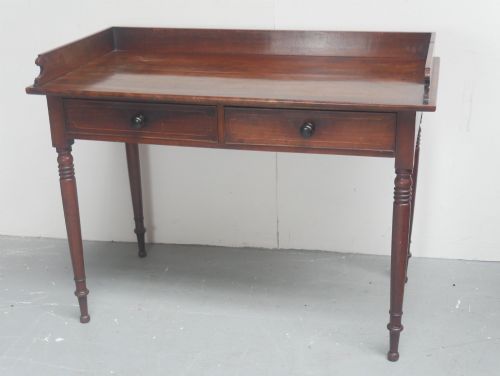
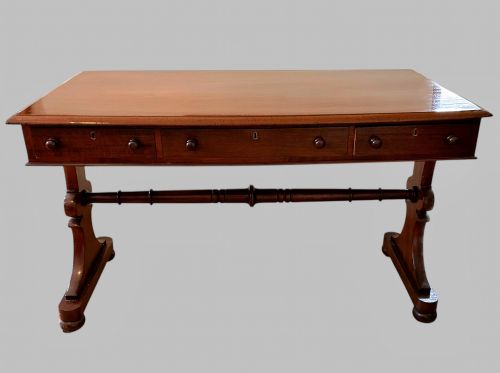
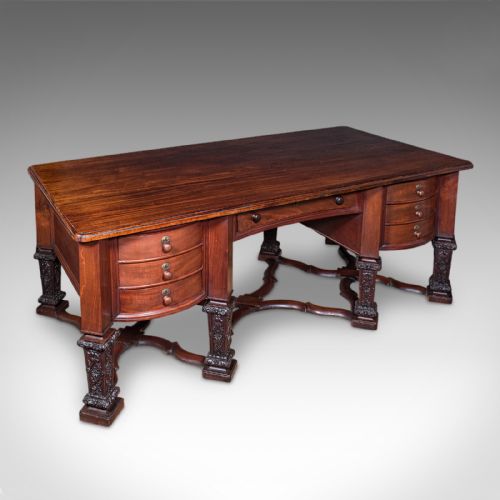
The pieces on this page span the Georgian, Regency, and Victorian periods, alongside later revivals. They include partner desks with drawers on both sides, library tables suitable for central room placement, and writing tables meant to stand against a panelled wall.
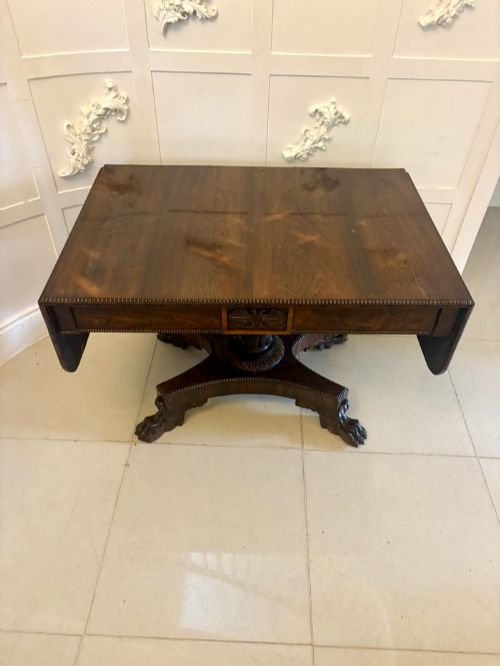
Makers such as Gillows, Trollope and Sons, and Holland and Sons appear among these listings, alongside unmarked examples. Most survivors use mahogany or rosewood, sometimes accented with brass fittings, leather writing inserts, or carved lion paw feet.
Materials and Construction
Cabinetmakers built these desks from heavy hardwoods like mahogany, rosewood, and oak, chosen for their structural strength and deep natural grain. Selected sections were polished to a dark lustre, while working surfaces frequently received inset panels of tooled leather.
Joinery relied on tight dovetails for drawer construction and sturdy mortise and tenon frames to support the weight of books and ledgers. Brass castors, handles, and locks were integrated into the timber to allow movement and secure correspondence.
Dark Wood Library Desk Retail Price Guide 2026
Typical asking prices for dark wood library desk among the pieces listed under this phrase on Sellingantiques today, from the lower quarter to the upper quarter. They describe what is for sale here now, not the wider market.
Several desks come equipped with hidden compartments for secret correspondence, proving that historical paperwork required absolute discretion.
Craftsmanship and Proportion
Quality rests in the selection of the timber figures, the precision of the dovetail joints, and the crispness of any carved ornamentation such as scroll arms or lion paw feet. Tables with finished backs intended to stand freely in a room demonstrate higher ambition than those meant solely for a wall.
Makers known for supplying elite households, such as Gillows or Holland and Sons, achieved greater refinement in their secondary timbers, drawer linings, and hardware integration. The survival of original leather inserts, brass castors, and working locks elevates a piece above those altered or stripped over time.
Trollope and sons·Gillows·Holland and Sons·Mein of Kelso
The Dark Wood Library Desk Glossary
- Pedestal desk
- A heavy writing desk consisting of two independent pedestals containing drawers, connected by a central top and modesty panel. It provides substantial storage and a formal stance in a study.
- Partner's desk
- A large double-sided desk designed so two people can sit opposite each other with matching drawer arrangements on both faces. These pieces were standard in large libraries and administrative offices.
- Sofa table
- A small freestanding table with drop leaves on either side, originally placed in front of a sofa. They frequently feature trestle ends and small drawers.
- Brass castor
- A small swivelling wheel mounted in a brass mount fitted to the base of furniture legs. They allowed heavy mahogany and rosewood tables to be moved across carpets.
- Dovetail
- A joint formed by interlocking wedge-shaped fingers, used to secure drawer corners with great tensile strength. This method indicates traditional cabinetmaking.
Dark Wood Library Desk: Frequently Asked Questions
What is a partners desk?
A partners desk is a large, double-sided writing table built with drawers and cupboards facing both directions. This design allowed two people to work opposite one another in a shared library or study.
These pieces usually require a central room placement rather than sitting against a wall, as they are finished on all four sides.
How do I care for rosewood?
Rosewood requires stable humidity and protection from direct sunlight to prevent the deep grain from fading or drying out. Dust the surface regularly with a soft cloth and apply quality wax polish sparingly.
Avoid placing hot cups or damp items directly on the polished wood or any leather writing inserts to preserve the original finish.
Are these desks suitable for laptops?
Many nineteenth century writing tables and pedestal desks offer sufficient surface area and knee clearance for modern laptop use. Drawer spaces can accommodate small accessories and charging cables discreetly.
Check the internal height of the central drawer or kneehole to ensure comfortable seating before placing a chair beneath the top.
How do I spot a Regency desk?
Regency desks typically feature classical restraint, architectural proportions, and dark timbers like mahogany or rosewood. Look for brass inlay, reeded legs, and scroll supports influenced by ancient Roman and Greek designs.
These pieces often date from the early nineteenth century and possess a lighter, more elegant frame than heavier Victorian equivalents.
What is a library table?
A library table is a large freestanding table used historically for reading heavy folios and laying out maps or newspapers. They usually feature spacious rectangular tops and sturdy underframes.
Unlike standard desks, they often omit kneehole drawers to maintain an open, table-like appearance suitable for placement in the middle of a room.