


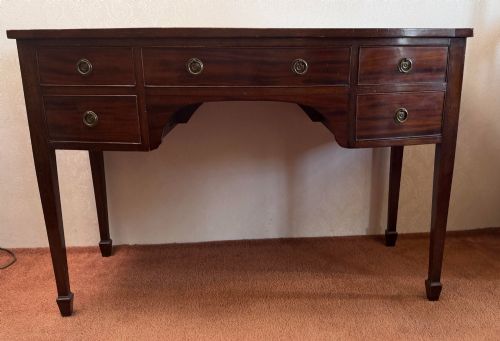
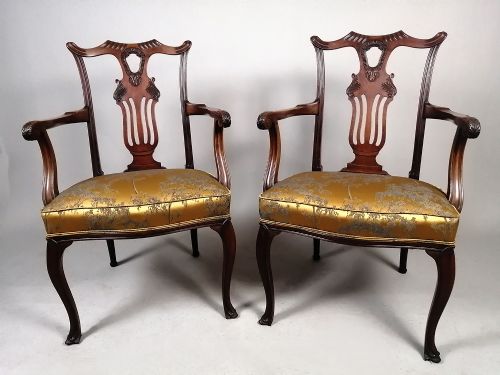
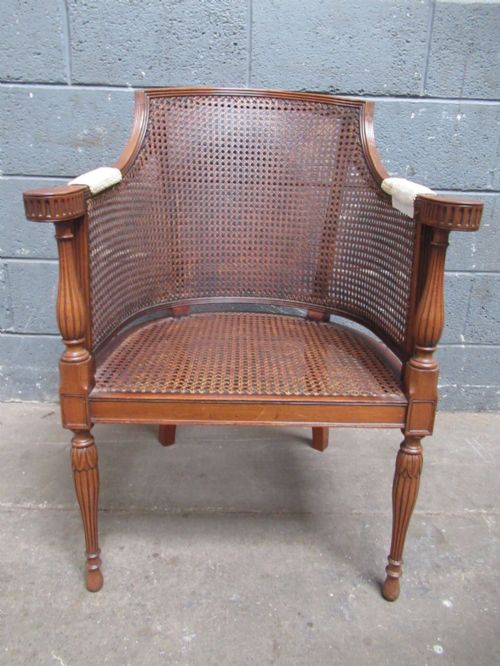


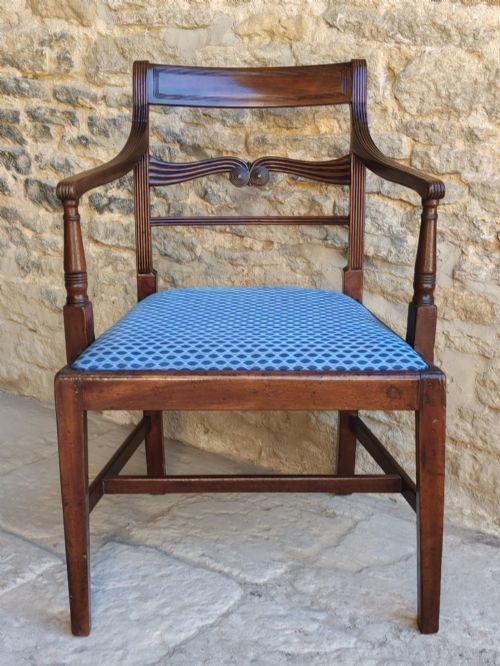
Regency Style Desk
When you search for a regency style desk, you are looking for classic proportions, clean lines, and architectural timber work.
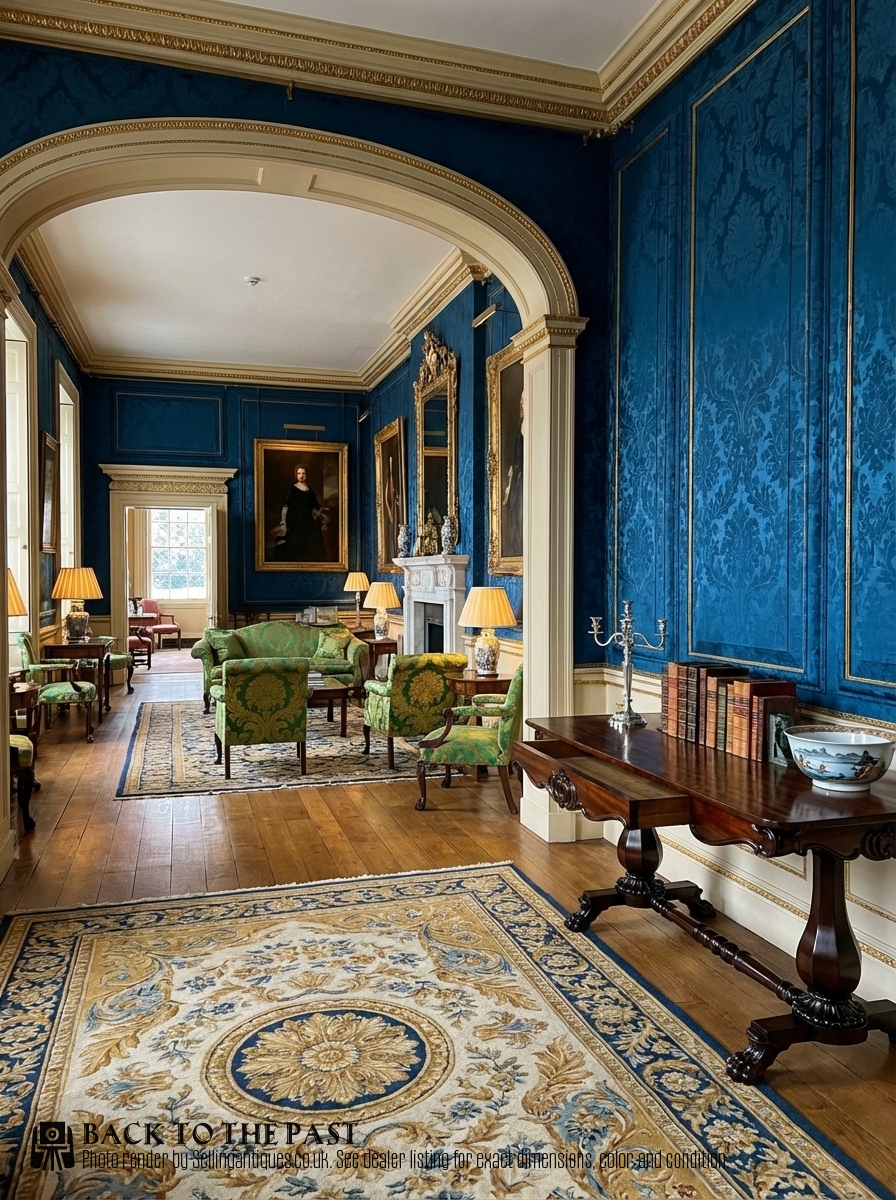
Regency Style Desk
A regency style desk encompasses writing tables, pedestal desks, cylinder bureau desks, and ladies writing tables produced across the nineteenth, twentieth, and early twentieth centuries.
The pieces on this page draw upon the architectural idioms of the Regency, Georgian, George IV, and William IV periods, alongside later revivals from Edwardian and interwar decades.
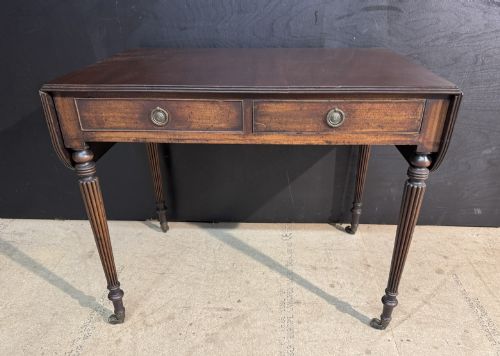
Writing tables with leather tops and pedestal desks dominate the selection, often incorporating mahogany timbers and brass fittings.
Materials and construction
Makers utilised solid and veneered mahogany as the primary timber, complemented by rosewood, padouk, and burr root maple in select pieces.
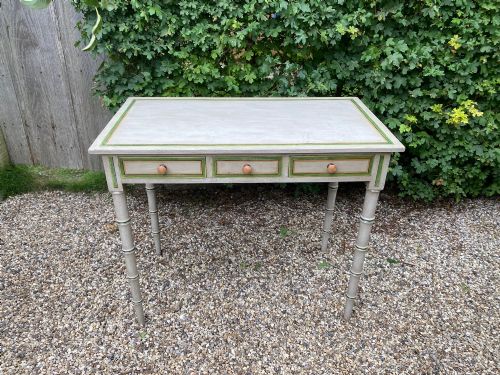
Surfaces frequently feature inset leather writing panels, while structural detailing relies on brass mounts, gilt bronze, ormolu, and turned wood components such as faux bamboo.
Distinctions in execution
Quality rests in the precision of the cabinetmaking, visible in the selection of figured mahogany veneers and the crispness of carved details like lyre supports or brass handles.
Finer examples demonstrate disciplined proportions and robust internal framing in drawers, separating disciplined workshop production from simpler revival pieces.
Gillows·S and H Jewell
The Regency Style Desk Glossary
- Pedestal desk
- A heavy freestanding writing desk comprising two banks of drawers supporting a shared top. The design provides substantial storage flanking a central seated recess.
- Pediment
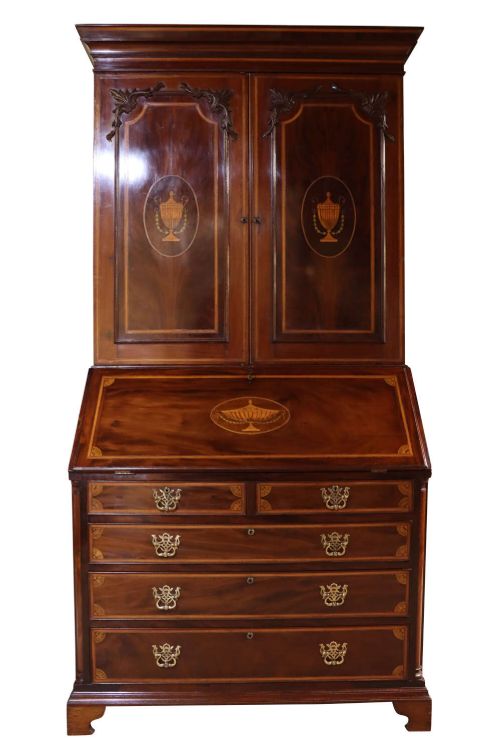
- The triangular or curved architectural crowning feature above a bookcase or bureau. It draws directly from classical temple architecture.
- Ormolu
- Gilt bronze ornamentation applied to furniture and clocks. The technique involves fusing finely ground gold to a bronze base.
- Caning
- Woven rattan material used for chair seats and backs. It offers lightweight flexibility and decorative openwork texture.
- Inlay
- The technique of fitting contrasting strips of wood or metal into the primary timber surface. It creates geometric or pictorial borders.
Regency Style Desk: Frequently Asked Questions
What defines a regency style desk?
These pieces follow the restrained classical lines, symmetry, and architectural ornamentation popular during the early nineteenth century and later revival eras.
They rely heavily on mahogany timber, rectangular or bowfront silhouettes, and inset leather writing surfaces.
How do I spot a reproduction?
Examine the secondary woods inside drawers, the uniformity of the timber grain, and the manufacturing marks on brass fittings and screws.
Nineteenth-century pieces display hand-cut joinery and natural timber ageing that differ from twentieth-century revival furniture.
Where should I place a pedestal desk?
Pedestal desks work best freestanding in the centre of a room because their finished backs allow all-round viewing.
Ensure you leave adequate clearance behind the chair for comfortable movement in your study or library.
Are these desks suitable for daily work?
Most antique and revival writing tables offer sturdy surfaces and workable drawer depths for contemporary laptops and stationery.
Protect the antique leather tops with appropriate blotters to prevent ink stains and surface scuffs.