





Claw Foot Library Table
A claw foot library table brings substantial timber and period presence into a room, offering a heavy pedestal base and a practical writing surface.
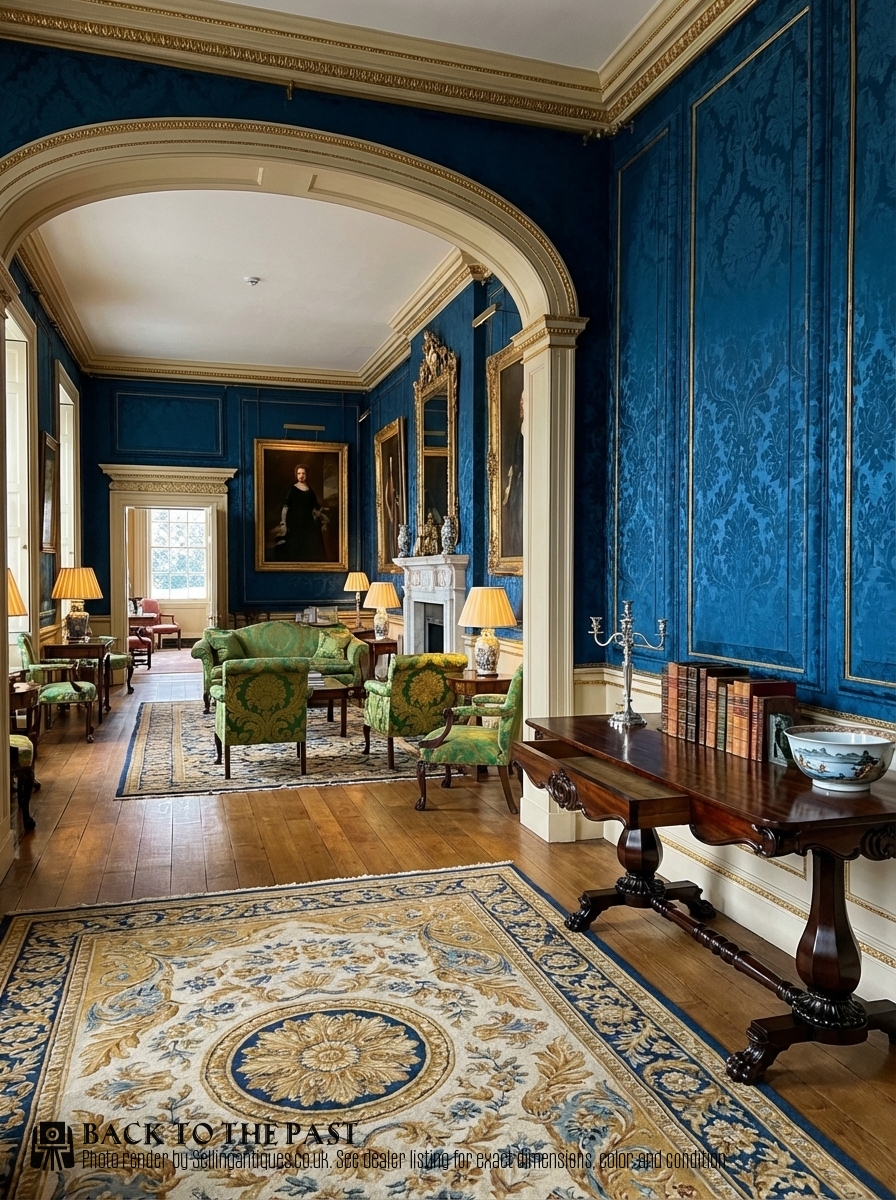
Claw Foot Library Table
A claw foot library table is a substantial piece of furniture designed for reading, writing, and central placement within a room. When you examine the listings, you find these tables originating predominantly from the nineteenth century alongside examples spanning the eighteenth and twentieth centuries.
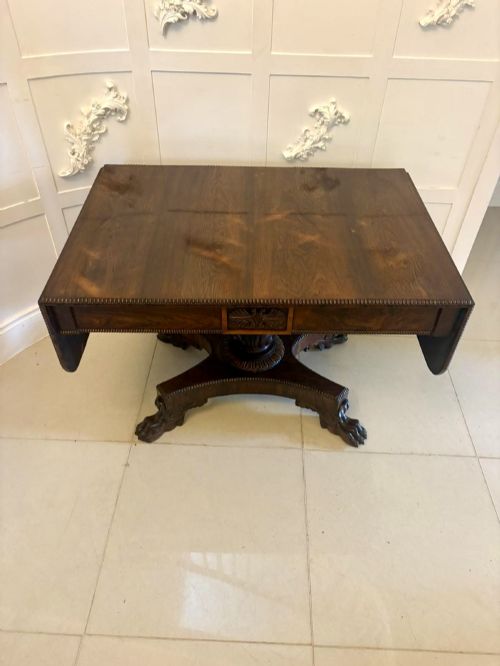
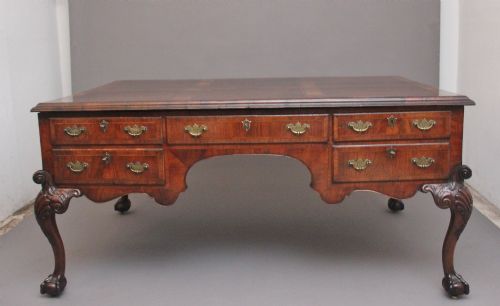
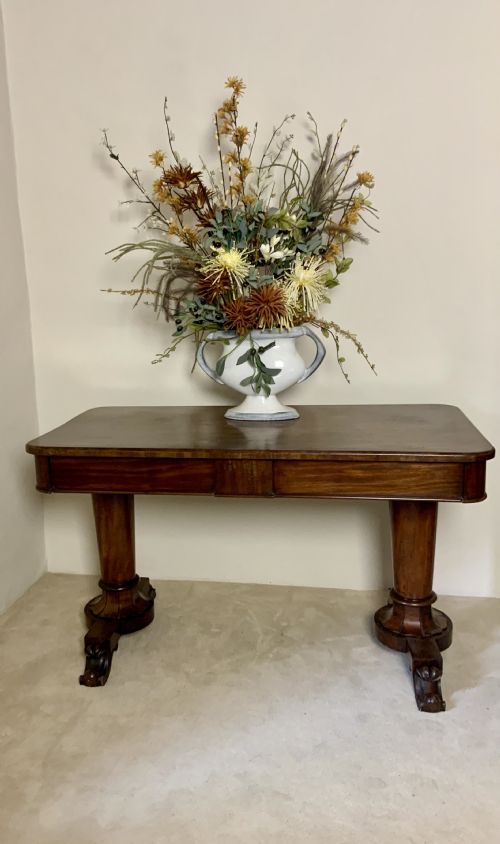
The forms on this page include library tables, drum tables, sofa tables, partners desks, and centre tables. You are most likely to encounter nineteenth-century mahogany and rosewood variants featuring pedestal supports or distinct table formats.
Styles range across Regency, William IV, George III, George IV, and Edwardian periods, as well as Chippendale and Victorian Gothic Revival. These pieces reflect the formal layout of historic libraries and study rooms where freestanding placement was essential.
Materials and construction
Makers utilised dense hardwoods such as mahogany, rosewood, oak, walnut, and occasional exotic veneers for these tables. These timbers were selected for their structural strength and capacity to take a deep, polished finish.
Details incorporate brass fittings and inset leather writing surfaces on desks and tables. Carving and turning define the pedestal bases and feet associated with the various Regency and Victorian styles.
Claw Foot Library Table Retail Price Guide 2026
Typical asking prices for claw foot library table among the pieces listed under this phrase on Sellingantiques today, from the lower quarter to the upper quarter. They describe what is for sale here now, not the wider market.
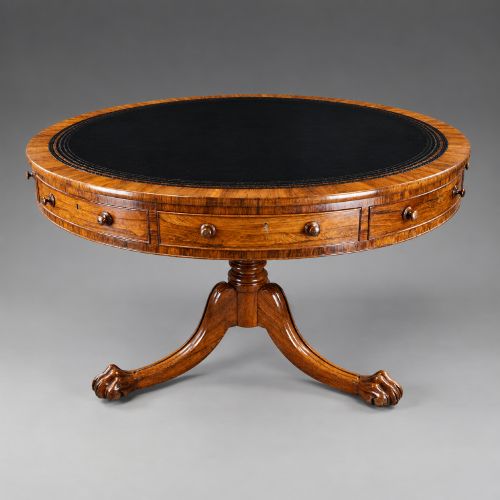
Several drum tables rotate smoothly on their central pedestals, ready for someone to spin them in search of the correct inkwell.
Assessing quality and finish
Quality rests in the selection of timber figure, such as the rich grain of rosewood or the depth of mahogany, and the crispness of carved wooden details. Finer pieces display careful proportion in their pedestal bases and harmonious integration of brass hardware.
The integrity of the construction, from rotating drum mechanisms to the fit of writing surfaces and drawers, separates standard utility pieces from finer examples. Original leather inserts and well-preserved patination on the timber further distinguish higher-tier tables.
The Claw Foot Library Table Glossary
- Drum table
- A circular library table with a deep top skirt containing drawers, typically supported on a central pillar and tripod or platform base.
- Partners desk
- A large double-sided desk designed so two people can sit opposite each other, featuring drawers and cupboards on both faces.
- Sofa table
- A rectangular table traditionally placed against the back of a sofa, fitted with drop leaves at either end.
- Metamorphic table
- A piece of furniture designed to transform into another form, such as a table converting into a set of library steps.
- Freestanding table
- A table finished on all sides intended to stand away from walls in the centre of a room.
Claw Foot Library Table: Frequently Asked Questions
What is a library table?
A library table is a large, freestanding table historically used in studies or libraries for reading and writing. They are finished on all sides so they can sit in the middle of a room.
These tables often feature drawers beneath the top and heavy timber pedestal bases or legs to support a substantial writing surface.
How do I use one today?
A claw foot library table works well as a large desk in a home office or as a central console in a spacious hallway. Their finished backs allow them to float in open spaces rather than being pushed against a wall.
The surface provides ample room for books, lamps, and daily working materials while adding period character to an interior.
What is a drum table?
A drum table is a round library table with a deep band beneath the top that usually houses alternating real and false drawers. They rotate on a central column above a sturdy base.
This specific form became popular during the Regency period for central placement in libraries.
How do I identify the period?
Period identification relies on observing the combination of timber, hardware, and stylistic carving motifs. Regency and William IV pieces often use dark rosewood or mahogany with bold pedestal bases.
Earlier eighteenth-century pieces display lighter proportions and distinct cabinetmaking techniques, while Edwardian items reflect later revivals of these historic forms.