



Vintage Escritoire Desk
A vintage escritoire desk combines concealed writing surfaces with upright storage, offering a compact bureau solution for modern study spaces.
Vintage Escritoire Desk
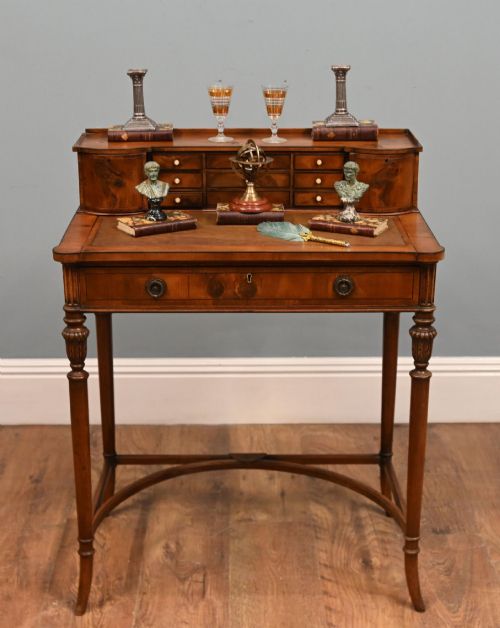
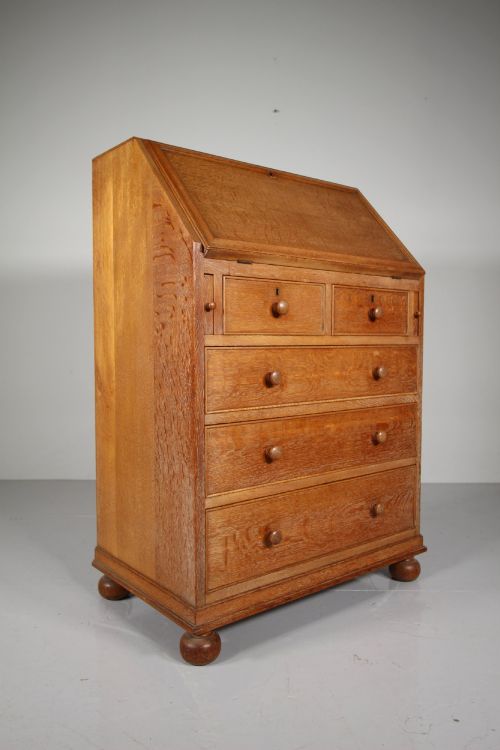
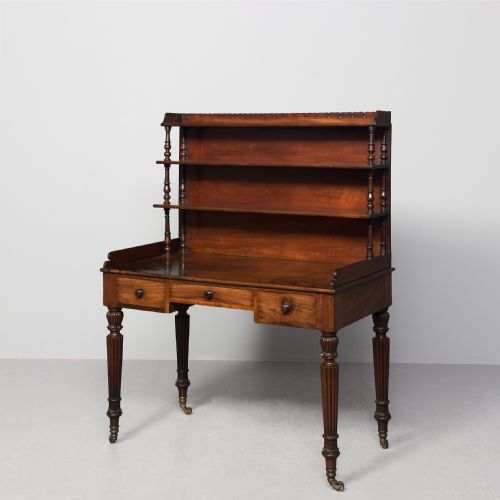
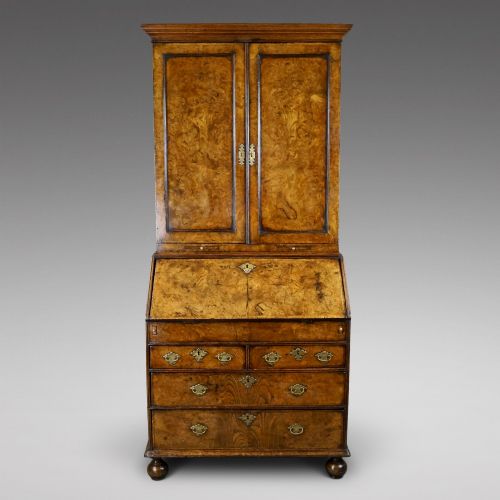
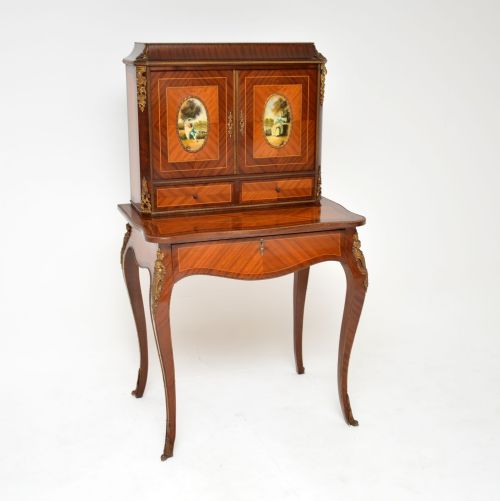
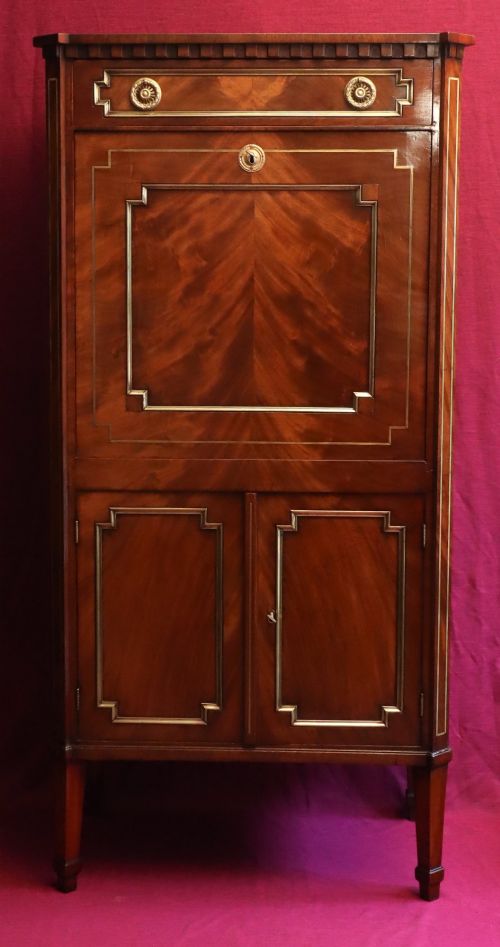
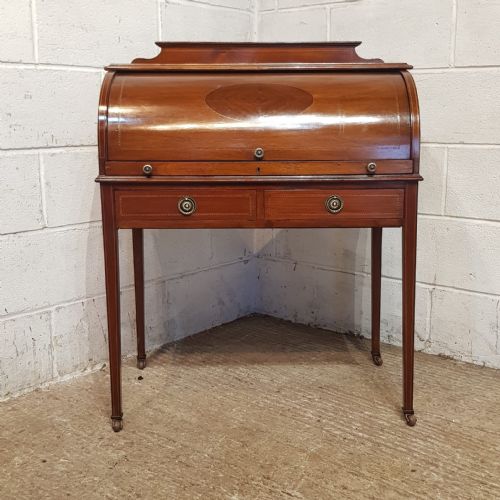
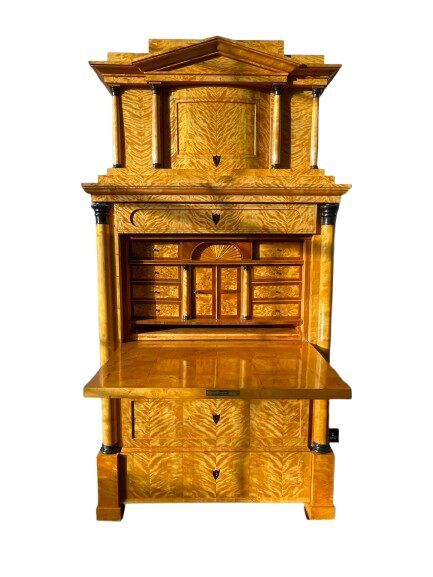
A vintage escritoire desk is primarily encountered as a drop-front fall cabinet or cylinder desk designed for correspondence and storage. These pieces span periods from the seventeenth century through to the Edwardian era, incorporating styles such as French Rococo Revival, William and Mary, and Victorian.
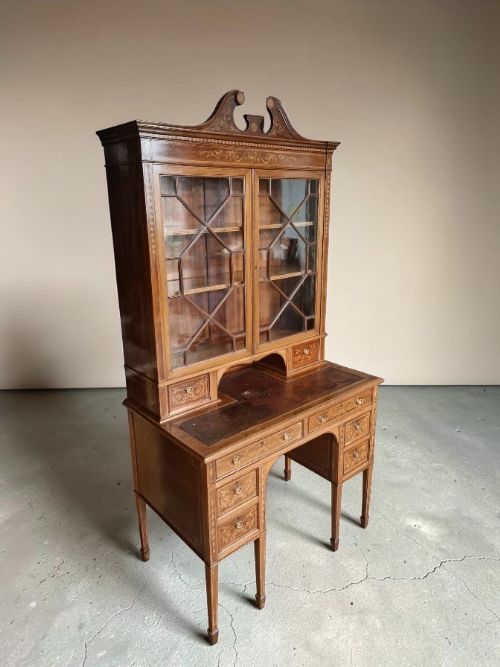
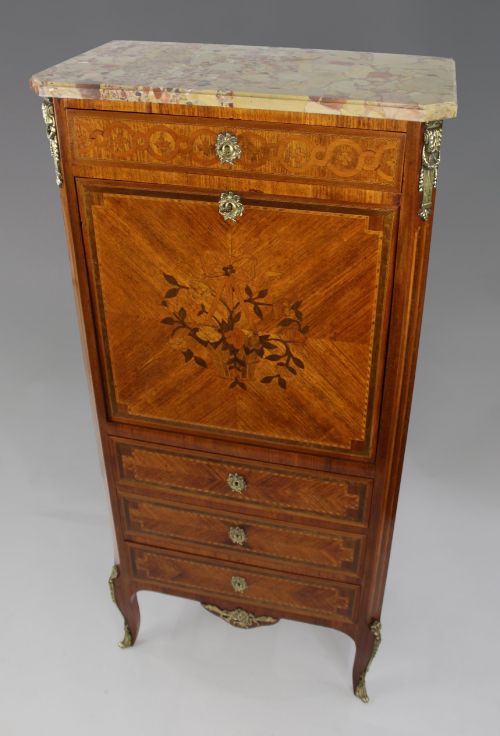
Buyers seeking this form will find examples ranging from walnut bureau bookcases to inlaid mahogany secretaires and kingwood writing cabinets. The selection includes both English cabinet-making and continental European pieces featuring marquetry and ormolu mounts.
Materials and construction methods
Cabinet makers utilised dense hardwoods such as mahogany, walnut, burr elm, and kingwood, frequently applying decorative veneers and marquetry inlay. Satinwood and brass often highlight internal compartments and key escutcheons.
Structural execution relies on traditional joinery to support heavy fall-front panels and cylinder lids, occasionally incorporating marble tops and gilt-bronze ormolu mounts for ornamental emphasis.
Vintage Escritoire Desk Retail Price Guide 2026
Typical asking prices for vintage escritoire desk among the pieces listed under this phrase on Sellingantiques today, from the lower quarter to the upper quarter. They describe what is for sale here now, not the wider market.
The listings feature pieces spanning the seventeenth century through to the 1930s, constructed in mahogany, walnut, and kingwood.
Distinctions in grade and execution
Quality separates along the precision of veneer selection, such as matched oyster walnut or intricate floral marquetry, and the crispness of bronze ormolu cast work. Internal drawer configuration and the retention of original hardware heavily influence the standing of a piece.
Finer examples demonstrate seamless movement in drop-front mechanisms and cylinder shutters, alongside disciplined proportions in revival styles that echo earlier seventeenth and eighteenth-century craftsmanship.
James Mein of Kelso
The Vintage Escritoire Desk Glossary
- Escritoire
- A writing cabinet featuring a fall-front panel that conceals a fitted interior of small drawers and pigeonholes.
- Secretaire a abattant
- A tall, upright writing cabinet with a hinged vertical writing flap, typically originating from French workshop traditions.
- Bureau bookcase
- A dual-purpose piece combining a lower writing desk section with upper shelving enclosed by doors.
- Ormolu
- Gilt-bronze mounts applied to furniture for decorative enrichment, common in continental revival pieces.
- Marquetry
- Decorative patterns formed by the insertion of contrasting veneers into wood surfaces.
Vintage Escritoire Desk: Frequently Asked Questions
What is an escritoire?
An escritoire is an upright writing cabinet designed to keep correspondence and writing materials neatly stored behind a closed door or drop-front lid. It provides a dedicated writing surface without occupying the floor space of a traditional library table.
The form typically includes multiple internal compartments, small drawers, and hidden cubbies designed for letter-writing.
How do I use a drop-front desk?
The drop-front panel lowers to create a horizontal writing ledge, supported by side arms or the weight of the lowered door resting against the frame. This allows papers to remain undisturbed inside while the writing surface is closed.
When finished, the panel lifts vertically to conceal the interior workspace.
How do I tell periods apart?
Period identification relies upon timber choice, decorative vocabulary, and structural proportions. Seventeenth-century pieces often display oyster walnut or burr elm, whilst nineteenth-century revival items utilise exotic kingwood and marquetry.
Cabinet hardware and internal drawer construction further anchor pieces to specific decades.
Where should I place an escritoire?
These upright cabinets suit drawing rooms, studies, and bedrooms where floor space is limited. Their finished height and decorative fronts make them suitable for display against plain walls.
Positioning away from direct sunlight protects vulnerable wood veneers and antique leather surfaces.