





Brass Castor Desk
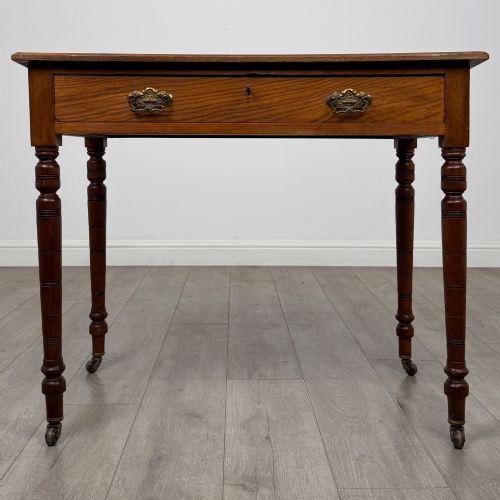
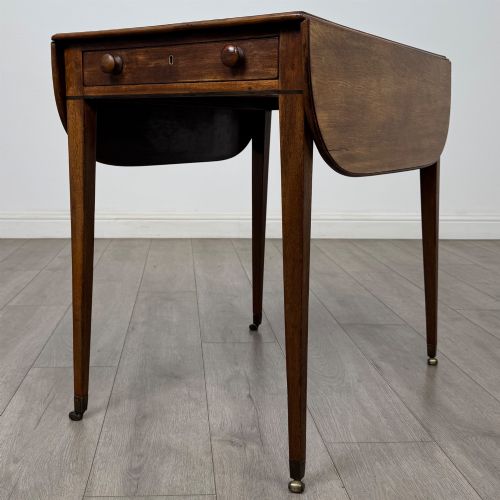
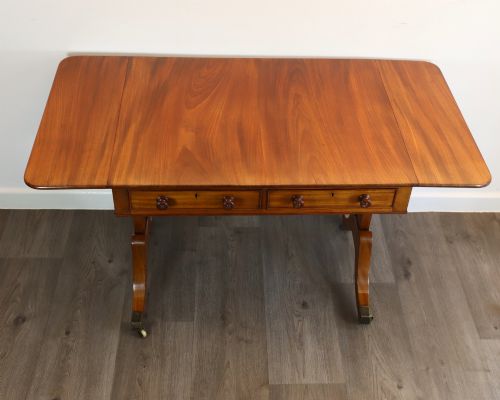
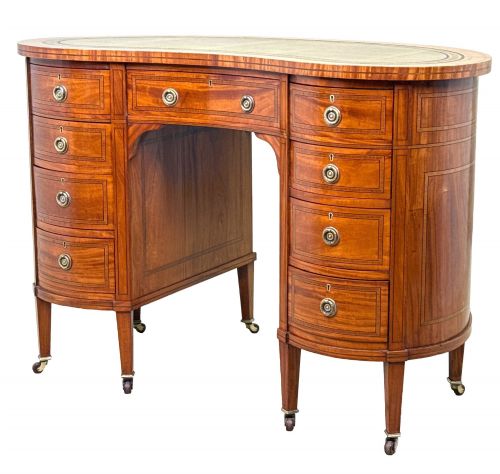
These brass castor desk items are writing tables and desks designed for practical study and finished with metal wheel mounts.

What a brass castor desk is
A brass castor desk or writing table provides a sturdy surface for correspondence and study while resting on wheeled metal supports. These pieces emerge from the Regency, Victorian, and Edwardian periods.
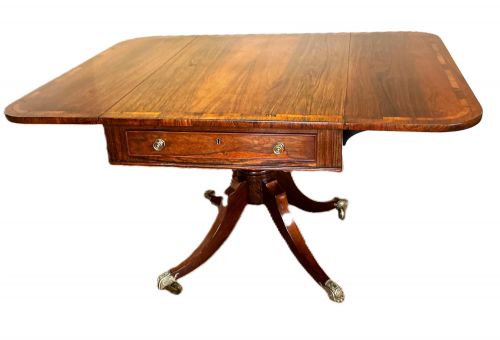
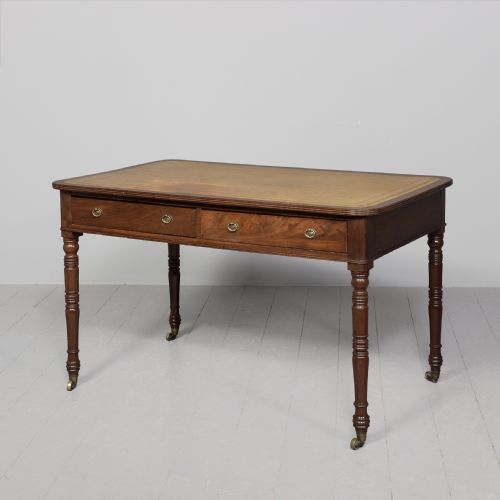
The assortment on this page includes freestanding writing tables, library tables, and ladies writing desks. Woods such as mahogany, rosewood, satinwood, and ebony appear alongside leather surfaces.
How they were made
Cabinet makers utilised dense hardwoods like mahogany and rosewood, sometimes adding satinwood or ebony inlays for decorative contrast. Turned and reeded tapering supports often lift the main writing body off the floor.
Metal components such as brass castors, handles, and caps provide mobility and corner protection. Leather inserts form the writing surface on several examples.
Retail Price Guide 2026
Typical UK retail prices for brass castor desk, calculated from the Sellingantiques database of over a million retail prices indexed since 2003. This retail price guide relies exclusively on Sellingantiques data; no external sources or auction records are used, so the figures do not describe the wider market.
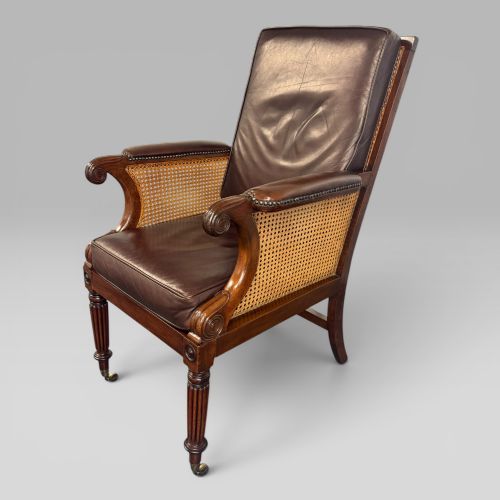
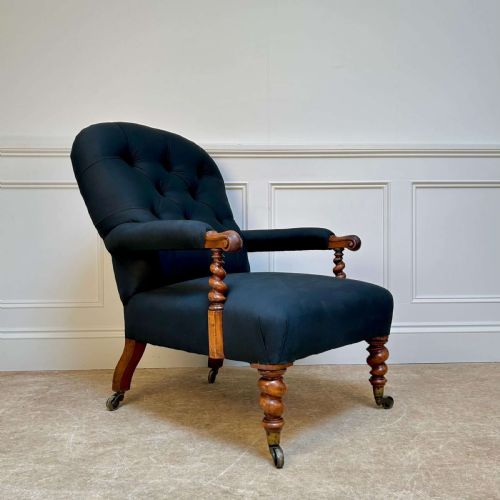
Desk chairs sometimes matched the writing table by wearing identical brass shoes on their feet.
What varies in quality
Finer examples display sophisticated timber selection and precise inlay work, such as ebony detailing on mahogany structures. The presence of documented workshop attributions or fine brass mounts distinguishes superior pieces from standard furniture.
Structural complexity also dictates standing, with multi-drawer configurations and finely turned supports representing the higher tier of cabinet making.
Gillow·Marsh and Tatham
The Brass Castor Desk Glossary
- Castor
- A small wheel fixed to the bottom of a leg to allow smooth movement across a floor. These metal fittings are often made of brass.
- Reeded
- A decorative moulding consisting of parallel convex strips carved directly into the wood. This technique appears on table supports.
- Inlay
- A decorative technique where pieces of contrasting timber are inserted into recesses in the primary wood surface. Edwardian Neoclassical Revival pieces often utilise this method.
- Freestanding
- A description for furniture designed to be viewed from all sides rather than pushed against a wall. Rosewood writing tables are frequently built in this manner.
Frequently Asked Questions
What is a brass castor desk?
It is a writing table or desk fitted with small metal wheels to allow easy repositioning in a library or study.
Such furniture dates from the Regency, Victorian, and Edwardian eras, combining utilitarian purpose with polished timber construction.
How do I date a brass castor desk?
Dating relies on identifying the prevailing timber choices, structural forms, and decorative styles. Regency pieces feature clean lines and specific wood combinations, whereas Edwardian examples often display neoclassical revival inlays.
Examining the turning on the supports and the style of the brass mounts also helps narrow down the period of manufacture.
Were these desks used in libraries?
Many larger examples serve as library tables, designed to stand centrally within a room for reading and reference work.
Smaller ladies writing desks cater to personal correspondence in private drawing rooms and boudoirs.
What woods were used for these desks?
Cabinet makers predominantly used mahogany, rosewood, and oak as the structural base for these writing surfaces.
Satinwood and ebony frequently appear as contrasting inlay materials to accent the primary timber.