



Antique Ratcheted Table
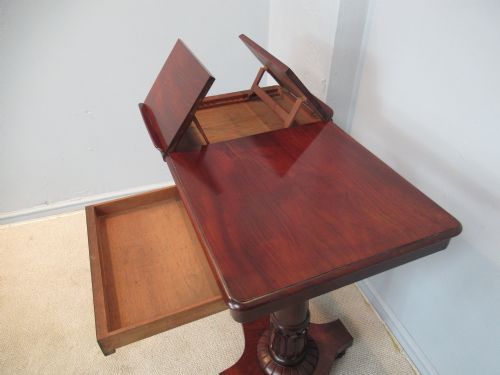
An antique ratcheted table brings mechanical ingenuity to domestic life, offering adjustable surfaces for reading, writing, and drafting.
Antique Ratcheted Table
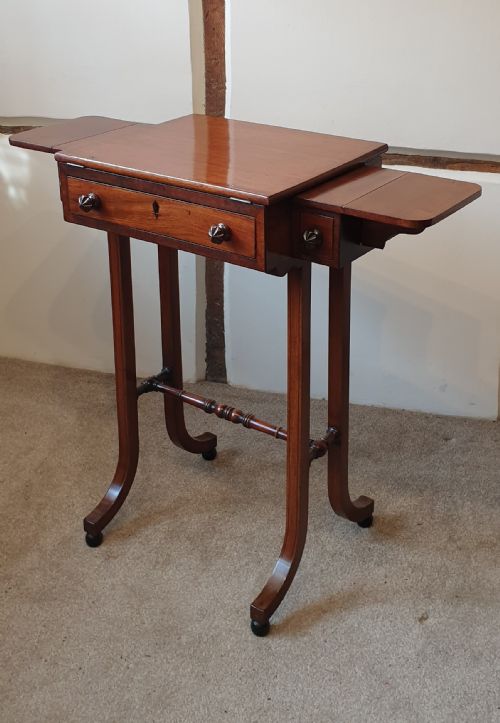
An antique ratcheted table serves varied specialised tasks through mechanical adjustment, appearing across the Georgian, Regency, and Victorian periods. The selection on this page centres primarily on reading tables, desks, and architects tables designed for specific functional needs.
Makers produced these pieces in forms ranging from compact occasional tables with reading stands to substantial estate rent tables and campaign desks. Mahogany dominates the surviving pieces, accompanied by rosewood, walnut, and fruitwood examples from the eighteenth and nineteenth centuries.
Materials and Construction
Cabinetmakers utilised dense timbers like Cuban mahogany and rosewood to withstand the stress of moving mechanical parts. Brass ratchets, hinges, and supports provide the adjustable mechanism that alters the angle of the writing or reading surface.
Secondary details involve inlay work such as Dutch marquetry, boxwood stringing, and inset leather writing surfaces. Construction methods rely on sturdy joinery to anchor the metal ratchets securely into the wooden frame.
Cartographers and architects relied on these adjustable surfaces long before modern drafting boards existed.
Evaluating Execution
Quality rests in the precision of the ratcheted mechanism and how smoothly the adjustable ledge or desktop operates. Finer examples integrate the metal ratchets cleanly into the timber framework without unnecessary play in the joints.
Gillows
The Antique Ratcheted Table Glossary
- Ratchet
- A mechanical device consisting of a gear wheel and pawl that allows movement in only one direction. This mechanism holds the adjustable desktop or reading slope at the desired angle.
- Architects table
- A specialised form with a rising centre section supported by a rack or ratchet. It allowed draughtsmen and architects to work while standing or sitting at various angles.
- Bramah lock
- A high-security cylindrical lock invented by Joseph Bramah in the late eighteenth century. These locks frequently appear on better quality library and writing desks of the period.
- Marquetry
- The art of applying pieces of veneer to a structure to form decorative patterns. Dutch examples often display floral designs executed in this technique.
Antique Ratcheted Table: Frequently Asked Questions
How do you operate the mechanism?
The mechanism relies on an internal or exposed ratchet arm that engages with a notched bar beneath the surface. Lifting the tabletop allows the pawl to catch at the chosen height or angle.
To lower the surface, you lift the top past the highest notch to release the mechanism before guiding it back down flat. Careful handling preserves the original brass and iron components.
Where were they used?
These tables were utilised in libraries, studies, architectural offices, and drawing rooms. Their adjustable surfaces accommodated books, maps, and large architectural drawings.
Wealthy households kept them in private libraries or estate offices for daily administration and reading. Campaign and military versions also served officers on the move.
How do I date a piece?
Dating relies on stylistic clues, timber choice, and the evolution of the mechanical ratchets. Georgian and Regency pieces often feature Cuban mahogany and simpler brass ratchets, while Victorian versions incorporate patented systems.
Makers' marks, patent stamps, and secondary woods like oak or pine provide further evidence for the period of manufacture. Construction techniques shift from hand-cut dovetails to more standardised nineteenth-century methods.