

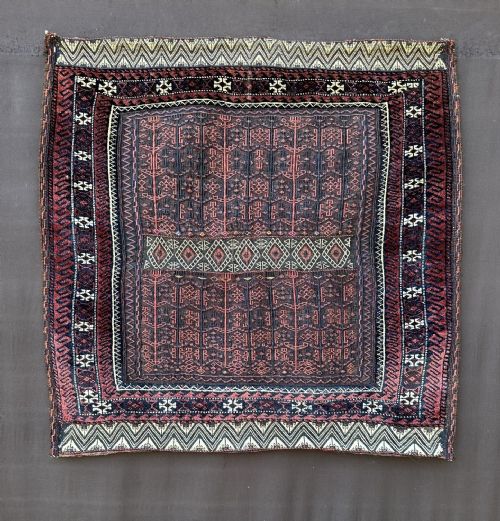


Dark Red Wool Wall Hanging
These dark red wool wall hanging examples bring rich tribal textile history directly into a modern interior.
Dark Red Wool Wall Hanging
A dark red wool wall hanging typically originates from tribal weaving traditions across Persia, Afghanistan, and Central Asia, capturing centuries of nomadic craft. These pieces often began life as functional domestic items such as torbas, chuvals, bread sofreh, or storage bags before finding a new purpose on display.
The selection here draws primarily from late nineteenth-century and early twentieth-century tribal workshops. You will encounter nomadic formats like saddle-bag faces and asmalyks adapted for vertical display.
How they were made
Weavers relied on durable wool foundations combined with natural dyes to achieve deep crimson and dark red hues. Cotton and silk sometimes appear for contrast in specific motifs and detailing.
Traditional tribal looms produced dense pile surfaces or flatweave structures depending on the specific utilitarian origin of the textile. Knotting and weaving techniques varied by region, creating distinct structural weights.
The listings span tribal traditions from Turkmen, Baluch, and Qashqa'i groups, utilising wool, cotton, silk, and natural dyes.
What varies in quality
Quality rests upon the fineness of the weave and the depth of the natural dyes used across the surface. Tighter knotting and sophisticated tribal guls indicate superior workmanship by the weaver.
The preservation of original structural elements, such as hanging loops or complete backs, elevates a piece. Subtle variations in wool quality and dye saturation distinguish standard utility pieces from exceptional tribal examples.
The Dark Red Wool Wall Hanging Glossary
- Torba
- A small Turkmen storage bag face often adapted for hanging on a wall. These pieces frequently display traditional gul motifs and rich red fields.
- Chuval
- A larger Turkmen tent-storage bag face designed for household organisation. They showcase structured rows of primary medallions.
- Gul
- A major repeating medallion motif central to Turkmen and tribal carpet design. These geometric emblems often denote specific tribal lineages.
- Sofreh
- A flatweave cloth traditionally used for serving bread or meals in nomadic households. Their minimalist formats translate well to vertical display.
Dark Red Wool Wall Hanging: Frequently Asked Questions
How do I hang a textile safely?
Mount the piece using a fabric sleeve or specialised textile velcro system that distributes the weight evenly along the top edge.
Avoid direct nails or clips that pinch the fibres and cause localized tearing over time.
What rooms suit these hangings?
Study rooms, hallways, and living spaces benefit from the warmth and rich texture of nomadic wool textiles.
Keep them away from direct sunlight to preserve the natural dyed reds.
How do I clean old wool?
Gentle surface vacuuming with low suction through a mesh screen removes loose dust safely.
Professional textile conservationists should handle any washing to prevent dye migration.
Are these pieces authentic antiques?
The pieces date from the late nineteenth and early twentieth centuries, originating from tribal regions in Persia and Central Asia.
Their materials reflect traditional hand-spun wool and natural dye recipes of the period.