


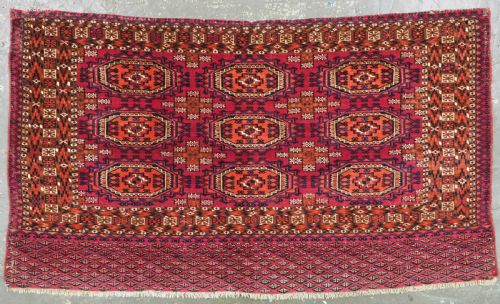


Antique Nomadic Camel Bag
An antique nomadic camel bag is a woven tribal textile that brings rich pattern and history into a room.
Antique Nomadic Camel Bag
When you search for an antique nomadic camel bag, you encounter tribal textiles created for practical use by nomadic communities across Central Asia, Azerbaijan, and Persia. These pieces include saddle bags, torbas, and chuvals that served utilitarian purposes in daily nomadic life.
The selections span from the mid-eighteenth century through to the early twentieth century, representing diverse tribal groups such as the Teke, Yomut, Ersari, Saryk, Salor, and Shahsevan nomads. These items function today as wall hangings or decorative rugs that anchor an interior space with tribal character.
Materials and construction
These textiles rely principally on wool, often combined with cotton, silk highlights, leather, and metal elements. Weavers utilised natural dyes to achieve deep colour palettes across flatweaves and pile-woven structures.
Many surviving examples retain their original plain weave backs, hanging loops, tassels, and embroidered faces. Artisans constructed these bags to endure travel, employing durable techniques that preserve the integrity of the weave over centuries.
Some antique bags still retain their original hanging loops, ready to be mounted on a wall after a century of travel.
Factors of quality
Quality rests upon the density of the weave, the clarity and complexity of guls or tribal motifs, and the preservation of original elements like backs and tassels. Intricate details such as embroidered silk highlights distinguish finer pieces from simpler formats.
Condition plays a definitive role, with complete sets or fragments retaining robust structures commanding greater attention. The vibrancy of natural dyes and the precision of geometric layouts further separate standard examples from exceptional ones.
The Antique Nomadic Camel Bag Glossary
- Torba
- A small tent-bag used by nomadic tribes for storage. These rectangular bags often feature distinctive tribal guls and were hung inside the yurt.
- Chuval
- A large storage bag made by Turkmen tribes. They typically display multiple rows of guls and were stacked within the tent.
- Gul
- A medallion pattern used in Turkmen carpet and textile design. Each tribal group traditionally wove its own characteristic gul.
- Flatweave
- A textile made without pile by interweaving warp and weft threads. Examples include banded designs and simpler utilitarian covers.
Antique Nomadic Camel Bag: Frequently Asked Questions
What is a torba?
A torba is a specific type of storage bag produced by Turkmen and other nomadic groups for use inside a traditional dwelling. They served to organise household goods.
These pieces were typically hung against the lattice walls of a tent and display distinct tribal patterns.
How were these bags used?
Nomadic communities utilised these textiles on pack animals for transport during seasonal migrations. They held personal possessions, bedding, and household items.
Once inside the camp, they functioned as fitted storage containers hung within the tent space.
How do I care for a textile?
Protect the wool and natural dyes by keeping the textile away from direct sunlight and damp environments. Gentle vacuuming through a mesh screen helps remove dust.
Avoid harsh chemical cleaners and consult a textile specialist for professional conservation advice.
How are different tribes identified?
Tribal attribution relies on specific design motifs, colour combinations, and structural layouts unique to each group. Patterns such as the aishk gul or specific medallion arrangements point to makers like the Teke, Yomut, or Saryk.
Weaving techniques and wool quality provide further clues to regional origins in Central Asia, Persia, or Azerbaijan.