


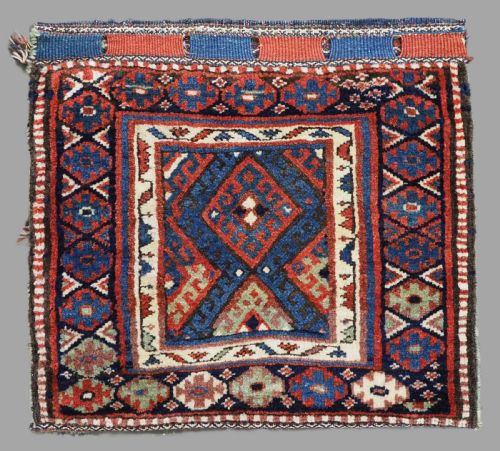


Antique Tribal Storage Bag
An antique tribal storage bag brings woven history into a room, offering practical nomadic craftsmanship designed to hold household goods across Central Asia and Persia.

Antique Tribal Storage Bag
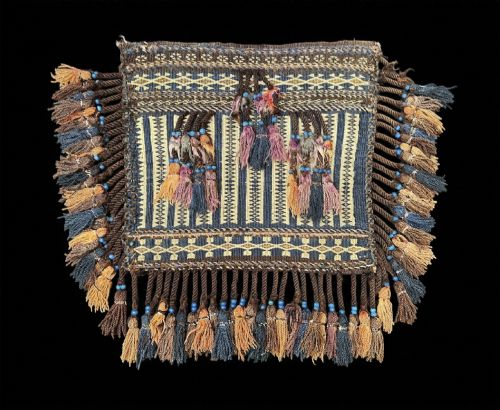
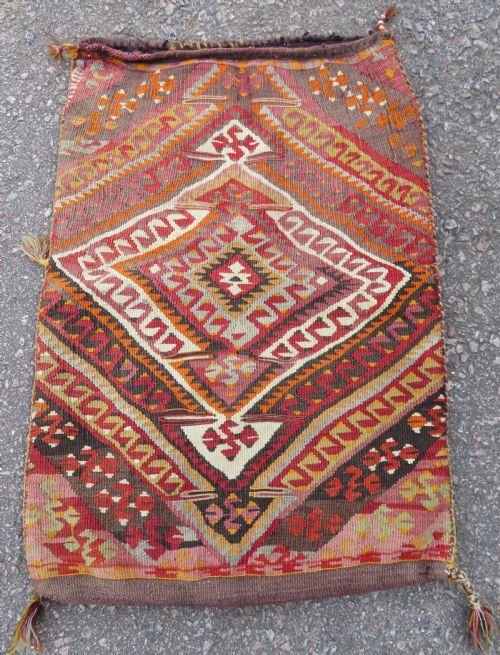
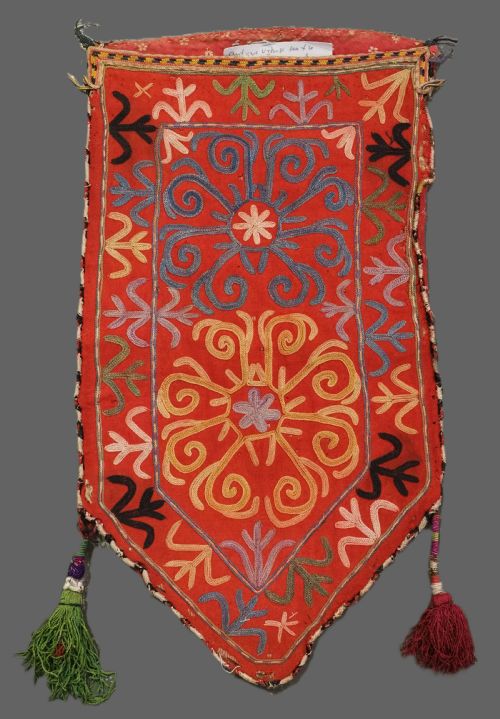
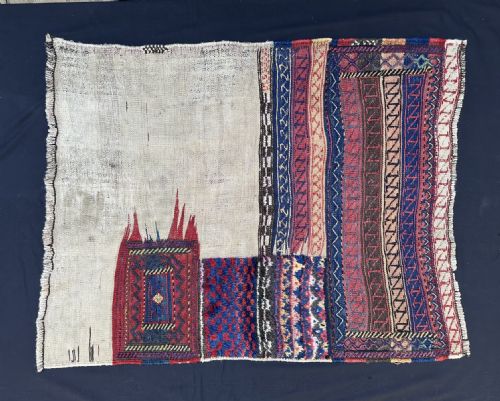
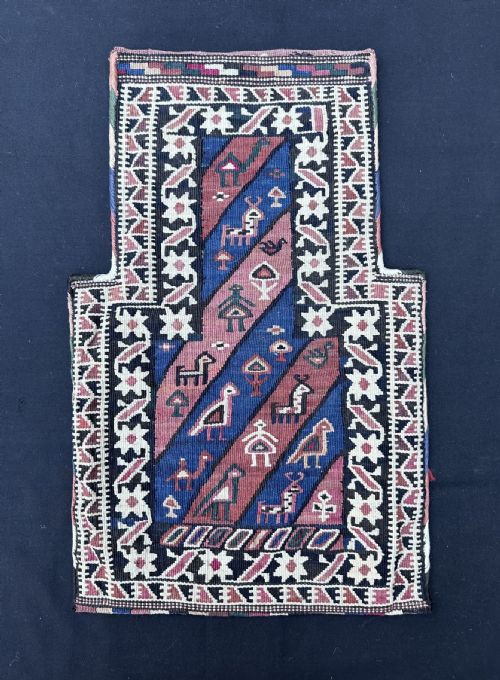
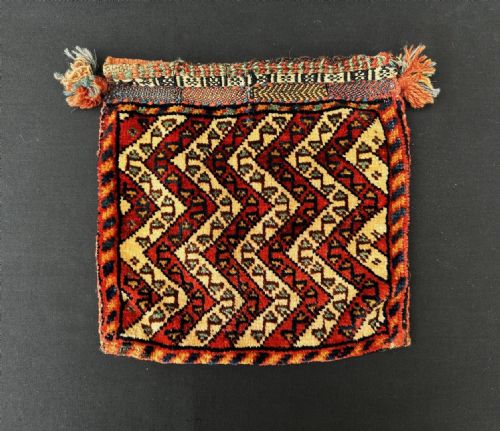
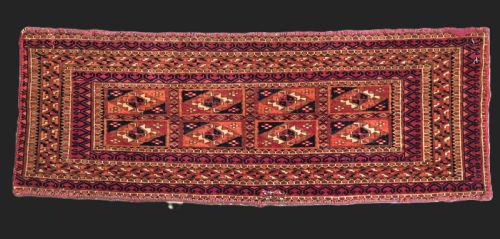
An antique tribal storage bag represents the utilitarian weaving tradition of nomadic and village groups across Persia, Central Asia, and the Caucasus, produced to hold grain, salt, bedding, or household belongings inside tents and dwellings. These pieces encompass specific regional forms such as chuvals, torbas, mafrahs, and salt bags created by tribes including the Yomut, Tekke, Ersari, Baluch, Qashqa'i, and Bakhtiari.
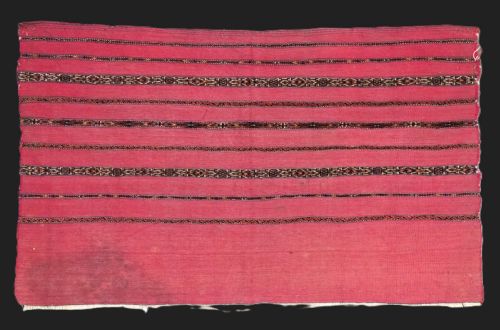
The items found within this selection range from complete sacks retaining their original plain weave backs and hanging loops to cut bag faces displayed as wall hangings. Many examples hail from the nineteenth and early twentieth centuries, reflecting the distinct tribal motifs and functional shapes generated by nomadic makers.
How they were made
Weavers constructed these pieces predominantly using hand-spun wool, cotton, and occasional goat hair or silk highlights, dyed with natural colorants to achieve rich hues. The structural foundation relies on knotted pile or flatweave techniques, often combining supplementary weft work and embroidered details.
Many storage containers incorporate durable plain weave backs designed to withstand the rigours of nomadic migration and daily handling. Artisans applied glass beads and specialised dyeing methods to finish specific tribal designs.
Antique Tribal Storage Bag Retail Price Guide 2026
Typical asking prices for tribal storage bag among the pieces listed under this phrase on Sellingantiques today, from the lower quarter to the upper quarter. They describe what is for sale here now, not the wider market.
What varies in quality
The standard of an antique tribal storage bag depends largely on the tightness and consistency of the weave, which dictates structural integrity and fineness of design execution. Greater knot density and careful proportioning of motifs distinguish superior examples from simpler utilitarian pieces.
The vibrancy and depth of the natural dyes, alongside the survival of original components such as backs, hanging loops, and tassels, heavily influence the overall character and preservation of the work.
The Antique Tribal Storage Bag Glossary
- Chuval
- A large tent storage bag used by Turkmen nomads for bedding and household goods. These pieces typically feature multiple guls arranged across the face.
- Torba
- A smaller Turkmen storage bag traditionally hung on the lattice walls of a yurt. They often display repeated tribal medallions.
- Mafrash
- A rectangular storage sack or pannier, frequently originating from Persian or Caucasian nomadic groups, used during seasonal migrations. Complete examples form box-like containers.
- Gul
- A primary medallion or repeating motif characteristic of Turkmen and Central Asian tribal weaving. Each pattern often denotes a specific tribal lineage.
- Plain weave
- A simple, unpiled structural technique utilising alternating warp and weft threads. This method frequently forms the durable back panels of storage bags.
Antique Tribal Storage Bag: Frequently Asked Questions
How were tribal storage bags used?
Nomadic families utilised these woven sacks inside tents to organise, transport, and protect grain, salt, bedding, and personal belongings during seasonal migrations. They hung from tent poles or stacked on floors to maintain order in mobile dwellings.
Over time, many of these utilitarian items transitioned into decorative elements within homes, valued for their distinct patterns and robust construction.
What is the difference between a chuval and a torba?
A chuval is a larger storage bag designed primarily for holding bulky items like blankets and bedding inside a nomadic tent. They usually display a grid of major guls.
A torba is notably smaller in size and functioned as a wall-hanging pouch for smaller possessions. Both formats share similar wool foundations and natural dye palettes.
How do I care for an antique textile?
Protect antique wool textiles by keeping them out of direct sunlight to prevent natural dye fading. Gentle vacuuming with a mesh screen covering the nozzle helps remove dust without pulling loose fibres.
Avoid hanging heavy bags by isolated threads or loops that cannot support the total weight. Professional textile conservators should handle any necessary cleaning.