



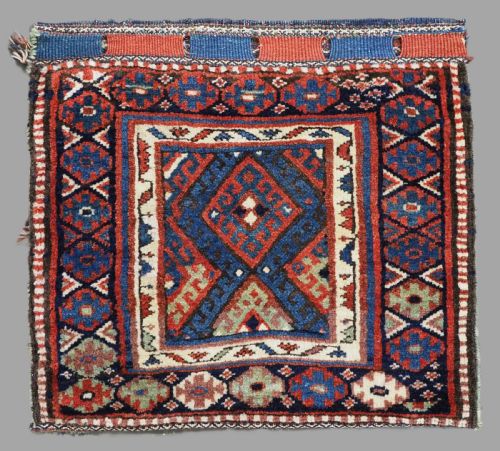
Persian Tribal Bag
When you search for a persian tribal bag, you encounter utilitarian textiles woven by nomadic communities across nineteenth and early twentieth century Persia.
Persian Tribal Bag
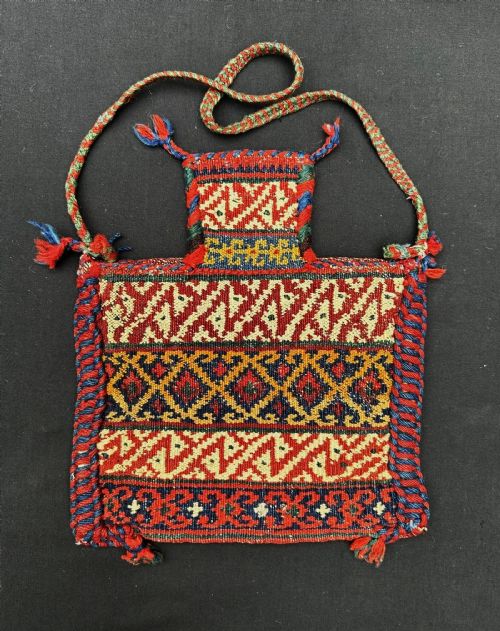
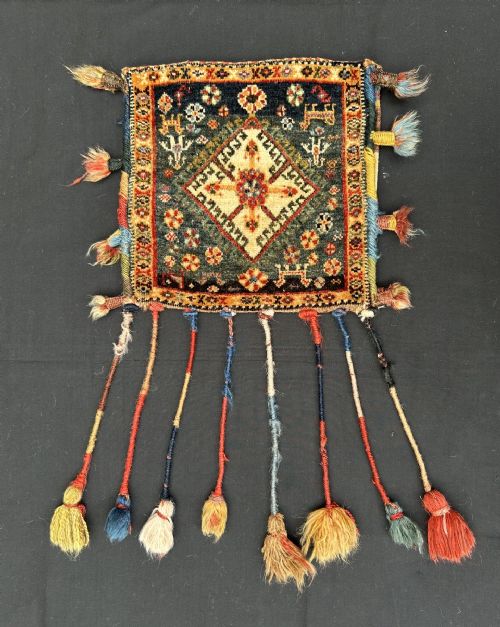
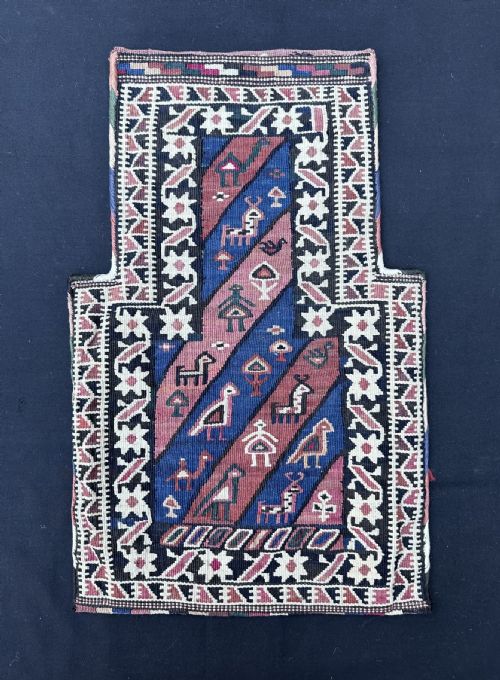
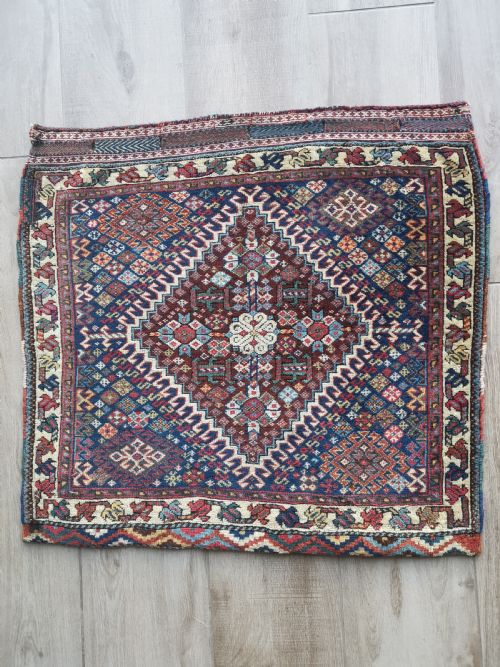
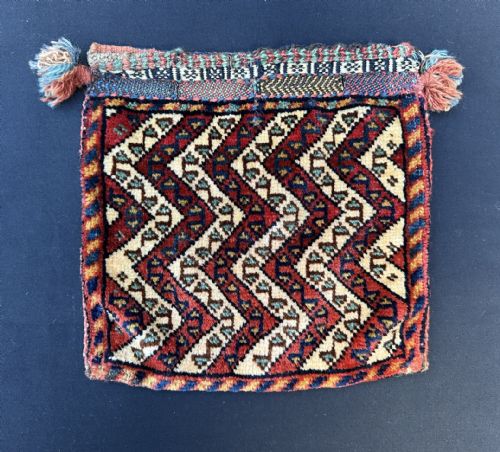
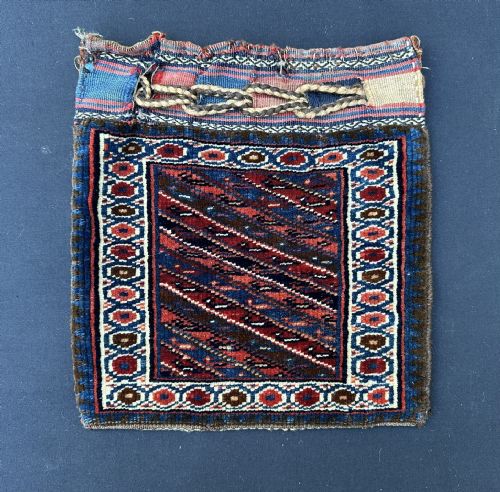
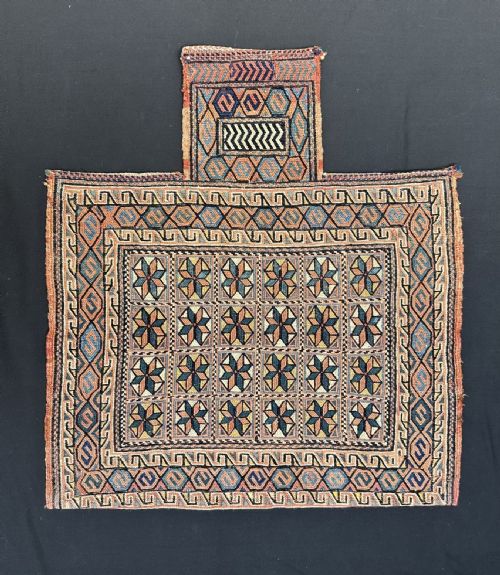
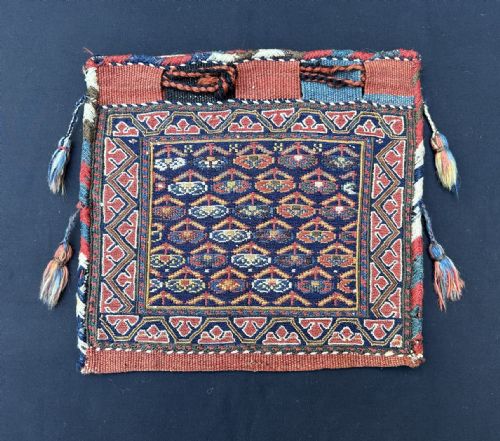
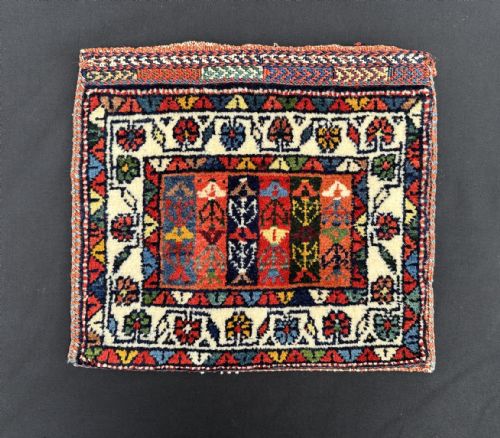
A persian tribal bag encompasses functional items such as salt bags, vanity bags, saddle bags, and smaller personal carriers known as chantehs. These pieces originated from nomadic and confederate groups including the Qashqai, Afshar, Shahsavan, Bakhtiari, and Kurdish tribes.
Most examples found in current records date from the mid-nineteenth century through to the early twentieth century. They reflect the specific regional weaving traditions of areas such as Fars, Kerman, and Khorassan.
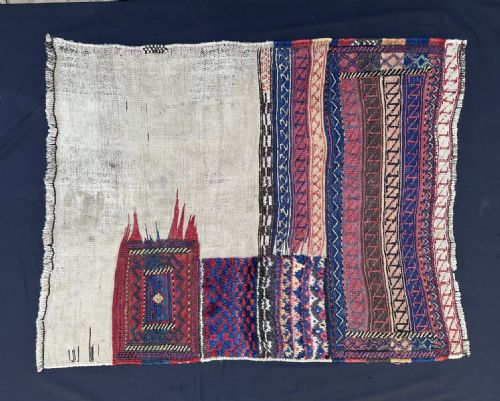
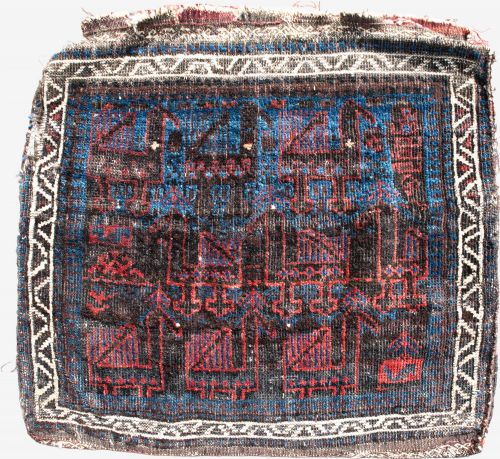
Buyers frequently encounter bag faces where the original reverse has worn away or been removed, alongside complete khorjin pairs intended for animal transport. Form follows the utilitarian requirements of pastoral life, translating into compact, portable containers.
Materials and Construction
The foundation and pile rely predominantly on hand-spun wool, occasionally supplemented by cotton foundations in later pieces and durable goat hair used for structural selvages and backs. Natural dyes provide the palette, yielding saturated reds, indigos, and earthy tones that age with deep patination.
Weaving techniques vary by tribal group, combining pile knotting with flatweave structures such as soumak, soumac, and plain weave tapestries. Artisans integrated structural reinforcements like cowrie shells into specific utilitarian items.
Certain utilitarian salt and vanity bags retain stitched cowrie shells intended to ward off the evil eye during nomadic travels.
Factors Determining Quality
Quality rests upon the tightness of the weave, the handling of the wool, and the depth achieved by natural dyestuffs. Finer knot counts and precise execution of complex tribal motifs indicate superior workshop or tent production.
The integrity of the structural wool and the survival of complete backs or original closures heavily influence the standing of an individual piece. Superior examples retain their original proportions and crispness of drawing within the central medallions and border systems.
The Persian Tribal Bag Glossary
- Chanteh
- A small personal vanity or possession bag woven by nomadic women for personal use. These portable pouches often feature intricate face designs.
- Khorjin
- A pair of saddlebags linked by a central web, designed to be thrown over the back of a pack animal for transport. Surviving halves are frequently encountered.
- Soumak
- A supplementary weft-wrap weaving technique that produces a durable, textured surface without a pile. It is commonly identified on Shahsavan and Afshar utility bags.
- Salt-bag
- A utilitarian container shaped with a tapered neck for storing and dispensing salt within the nomad tent. These bags typically feature dense geometric weaving.
- Balisht-face
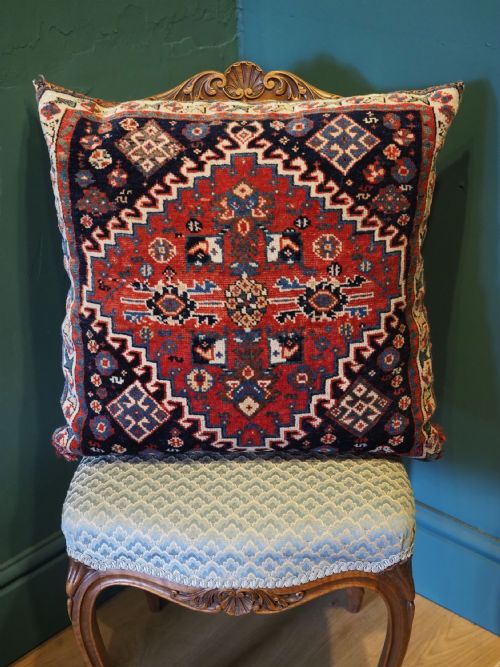
- The decorative front of a sleeping pillow or cushion cover produced within tribal households. These textiles utilise similar iconography to larger storage bags.
Persian Tribal Bag: Frequently Asked Questions
How were these bags used?
Nomadic groups utilised these woven containers for practical storage and transport during seasonal migrations. They held personal possessions, salt, tobacco, pipes, and household provisions within the tent.
Saddlebags functioned as paired units draped across horses, mules, or camels. Smaller pouches served as personal carryalls for daily essentials.
How do I identify the tribe?
Attribution relies on specific structural traits, palette choices, and wool characteristics associated with particular regions. For instance, Shahsavan weaving often displays distinct soumak wrapping, while Afshar work from Kerman employs characteristic blue and red tones.
Motifs such as latch-hook medallions, boteh repeats, and tribal animal markers help narrow the origin down to confederacies like the Qashqai or Kurdish groups.
Can I use them as floor cushions?
Many collectors adapt complete bags or sturdy bag faces by stuffing them to function as decorative floor cushions or stools. This practice continues a long tradition of repurposing durable nomadic textiles for domestic comfort.
Care should be taken to protect fragile historical wool and natural dyes from heavy friction or direct abrasive contact.
Why do some pieces lack backs?
Plain weave backs frequently suffered heavy wear during transit and use, eventually rotting or wearing through while the decorative pile face remained intact. Owners or later traders often separated the surviving face for easier display as a wall hanging or flat textile.
Finding a complete piece with an intact original back remains less common than encountering isolated bag faces.