
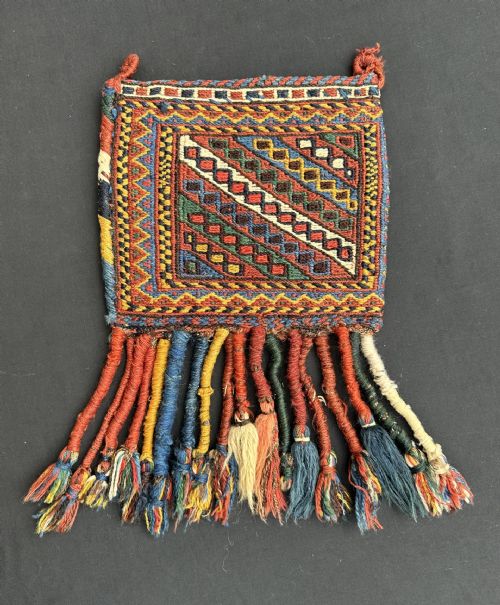


Vintage Persian Bag
A vintage persian bag brings the texture and geometry of nomadic weaving into a room.
Vintage Persian Bag
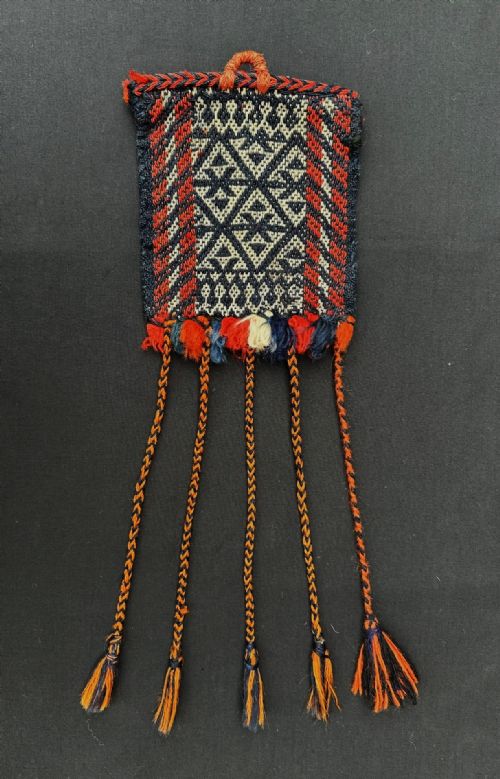
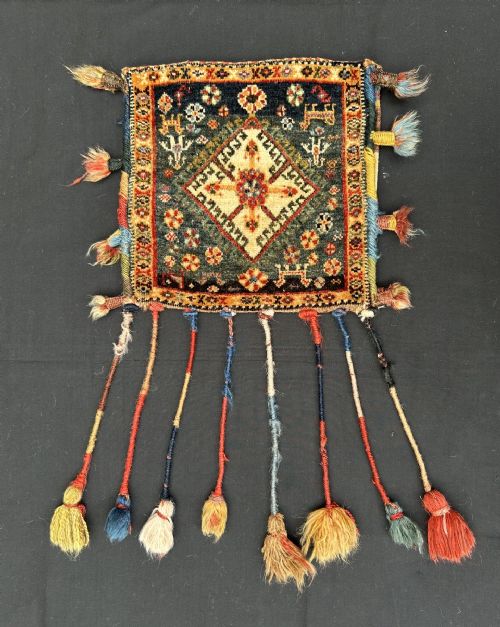
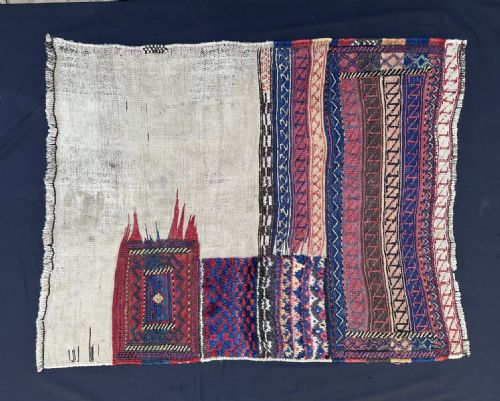
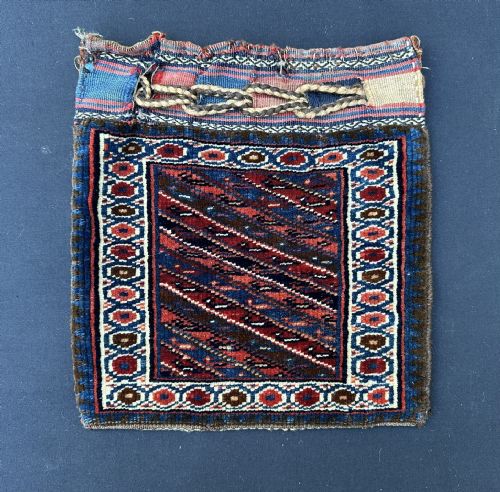
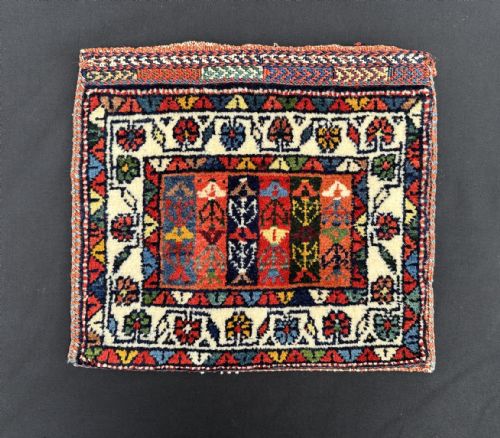
When you search for a vintage persian bag, you encounter utilitarian weaving made by tribal groups across the regions of Persia. These items include saddle bags, storage sacks, vanity bags, and bag faces that once served practical daily functions in nomadic and village life.
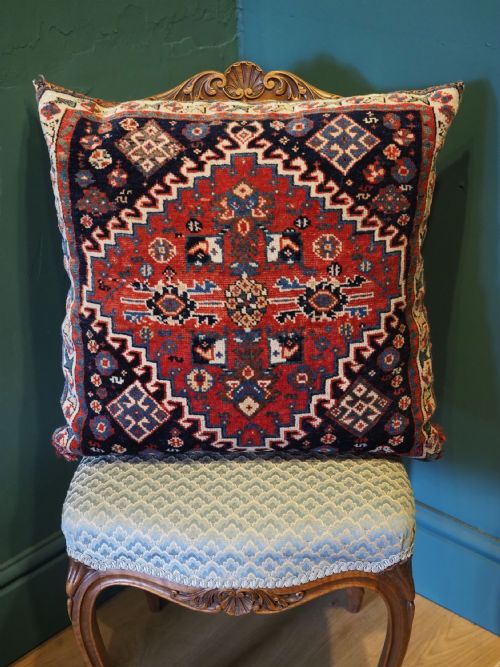
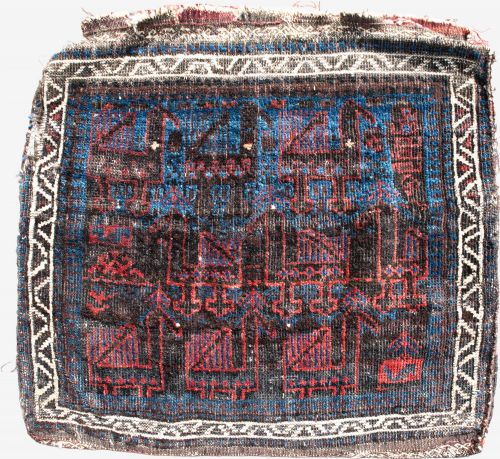
The pieces on this page span the nineteenth and early twentieth centuries, created by groups such as the Afshar, Qashqa'i, Shahsavan, Kurdish, and Baluch tribes. Many survive as single bag faces or complete storage containers, transformed over time into decorative cushions or wall textiles.
How they were made
These textiles rely on hand-spun wool and cotton, often reinforced with goat hair for durability along the edges and structural parts. Weavers utilised natural dyes and vegetable dyes to colour the wool, producing deep tones that age with character.
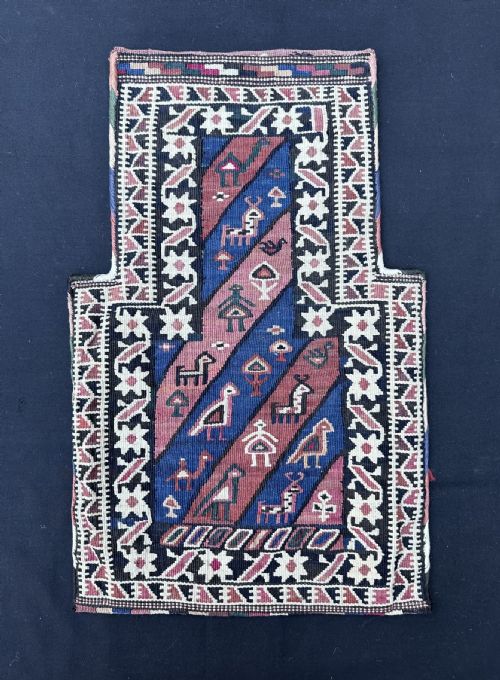
Construction methods range from flat-woven plain weave and soumak wrapping to dense pile knots. Artisans incorporated techniques suited to transport and storage, creating sturdy textiles designed to withstand the rigours of nomadic migration.
Nomadic weavers occasionally tucked small personal amulets or stray goat hairs into the weave to ward off bad luck during long seasonal migrations.
What varies in quality
The distinction between ordinary and exceptional examples rests in the handling of the wool and the saturation of the natural dyes. Lustrous, luminous wool combined with complex tribal motifs like the boteh or bird design elevates the visual weight of the weaving.
Fidelity to regional patterns and the tightness of the knotting or soumak work dictate the tier of a piece. Finer weave structures and well-preserved original backs indicate greater care during creation by the tribal maker.
The Vintage Persian Bag Glossary
- Bag face
- The decorative front panel of a storage or saddle bag, often preserved and mounted as a cushion or small rug after the back wore away.
- Soumak
- A flat-weave technique where coloured weft threads wrap around the warp threads in a herringbone pattern, creating a textured surface without pile.
- Khorjin
- A traditional double saddle bag used for transport on animals during nomadic journeys.
- Tacheh
- A large flat-woven storage sack or wheat sack utilised by tribal groups for grain and household goods.
- Boteh
- A stylised almond or paisley motif representing a floral or flame shape, frequently found in tribal textile designs.
Vintage Persian Bag: Frequently Asked Questions
What is a persian bag face?
A bag face is the ornamented front panel of a nomadic storage container or saddle bag. These sections received the most intricate weaving and design work.
Collectors often find these panels detached from their plain-weave backs. Many are finished as cushions or displayed independently as flat textiles.
How do I identify tribal origins?
Tribal attribution relies on specific colour palettes, structural techniques, and recurring geometric motifs. Different confederations like the Afshar or Qashqa'i utilised distinct weaving signatures.
Examining the edge finishes and wool quality further clarifies the regional source within Persia.
How were these bags used?
Nomadic groups utilised these textiles for carrying possessions, storing grain, and transporting goods on pack animals. Double saddle bags hung across horses or camels during seasonal migrations.
Smaller vanity bags held personal items, while larger sacks managed household storage within tribal tents.
How should I care for a textile?
Protect antique wool textiles from direct sunlight to prevent natural dye fading. Gentle vacuuming without a rotating brush removes embedded dust safely.
Professional textile conservationists should handle any necessary washing or structural stabilisation.