




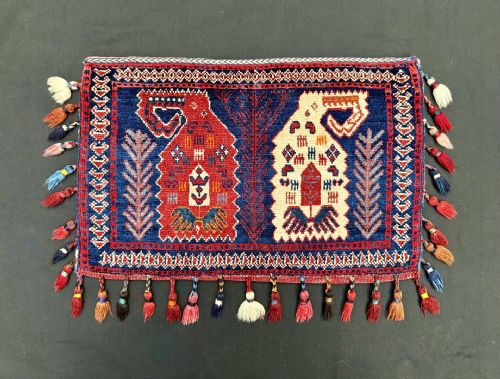
Antique Chanteh Bag
An antique chanteh bag is a small tribal textile woven for personal use, offering a direct tactile link to nomadic life in Persia.
Antique Chanteh Bag
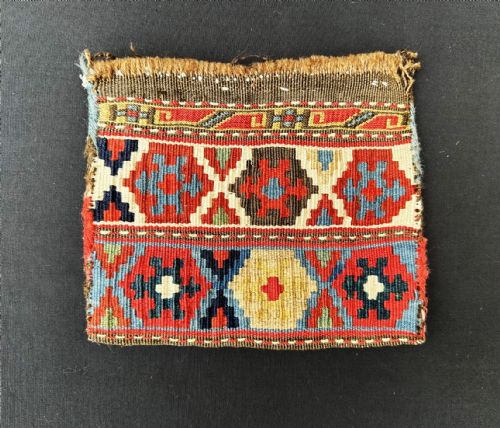
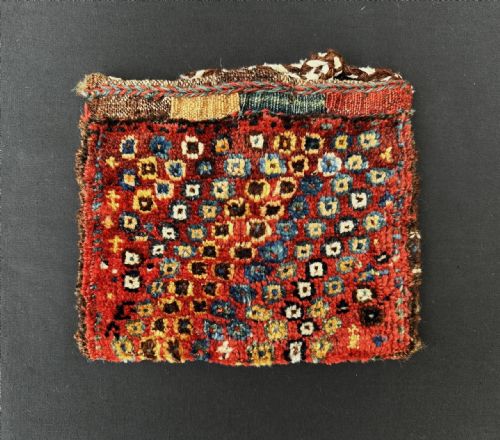
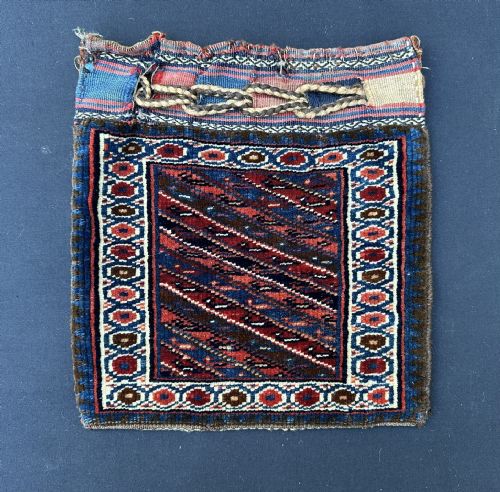
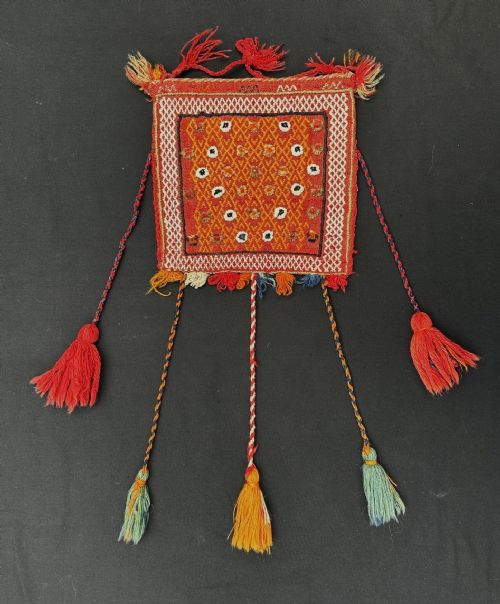
An antique chanteh bag is a portable personal pouch made by tribal groups across Persia. These small textiles served as vanity bags, tobacco pouches, or storage containers for daily necessities during nomadic migration.
The pieces appearing here include works attributed to the Afshar, Qashqa'i, Baluch, Kurdish, Shahsevan, and Timuri tribes. They span the late nineteenth century through to the early decades of the twentieth century.
Most examples function as either complete small bags or individual bag faces saved from larger trappings. Their dimensions remain compact, designed to be carried on the person or packed upon animals.
How they were made
The structure relies on handspun wool for the pile and foundation, sometimes paired with cotton elements. Weavers built these pieces on portable ground looms set up in camps.
Natural dyes provide the palette, yielding saturated reds, blues, and earthy tones that age with distinct character. Pigments derive from plant and mineral sources common to specific regional groups.
Nomads occasionally wove tiny compartments into their personal bags just to hide a favourite mirror from wandering goats.
What varies in quality
Quality rests in the tightness of the weave and the precision of the tribal motifs. Finer knots per square inch allow intricate geometric or figural designs to emerge with clarity.
The integrity of the natural dyes and the handled condition of the wool define the visual power of the textile. Pieces with complete original structures retain more historical utility than isolated bag faces.
The Antique Chanteh Bag Glossary
- Chanteh
- A small Persian tribal bag utilised for personal items, vanity gear, or tobacco. These pouches represent some of the most concentrated examples of nomadic weaving.
- Bag face
- The decorative front panel of a utilitarian pouch, often preserved independently when the plain wool back deteriorated. Collectors frame or display these panels as miniature rugs.
- Natural dyes
- Colourants sourced from plants, insects, and minerals before the widespread adoption of synthetic alternatives. These dyes produce complex, muted patinas over decades of light exposure.
- Tribal
- Pertaining to nomadic or semi-nomadic groups operating outside urban workshop traditions. Designs reflect ancestral patterns passed down through generations within specific confederacies.
Antique Chanteh Bag: Frequently Asked Questions
What did they store inside?
Nomads used an antique chanteh bag to carry small personal items such as mirrors, tobacco, pipes, or vanity gear. Their compact size kept essential belongings close at hand during travel.
Specific variants held water pipes or spindles, reflecting the daily domestic tasks of the weaver. Each pouch was tailored in scale to its intended practical function.
How do I display one?
These small textiles suit mounting on a wall or placement in flat display cases where the weave remains protected. Their restricted dimensions make them adaptable for spaces unsuited to full-sized carpets.
Keep them away from direct sunlight to protect the natural dyes from fading. Gentle rotation and occasional cleaning help maintain the wool fibre integrity.
How are tribal origins identified?
Attributions rely on specific structural traits, palette choices, and wool characteristics linked to regional groups like the Qashqa'i or Afshar. Border motifs and minor ornamentation often point to particular tribal confederacies.
Comparative study of archive pieces helps confirm the likely geographic region of production. Structural quirks in the weaving technique further narrow down the specific workshop or camp.
Are complete bags rare?
Surviving examples frequently appear as isolated bag faces rather than intact pouches with original backs. The utilitarian nature of these objects meant the plain wool backs wore out faster than the decorated fronts.
Finding a complete piece with both sides intact remains an interesting bonus for collectors. However, the artistry is typically concentrated entirely within the visible face.