





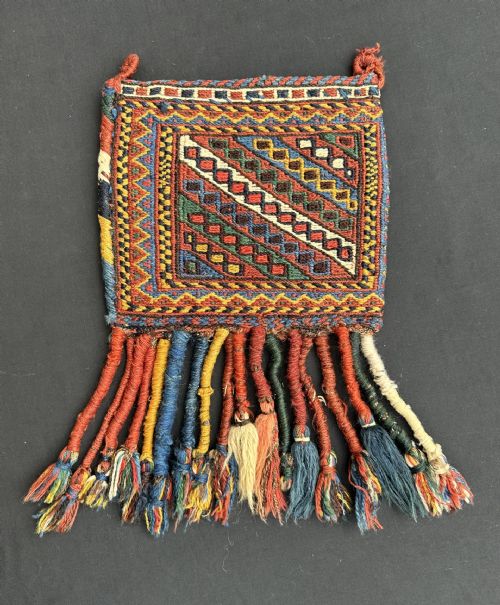

Persian Rug Pouch
These antique textiles, known to collectors searching for a persian rug pouch, are small tribal containers woven for daily nomadic life.
Persian Rug Pouch
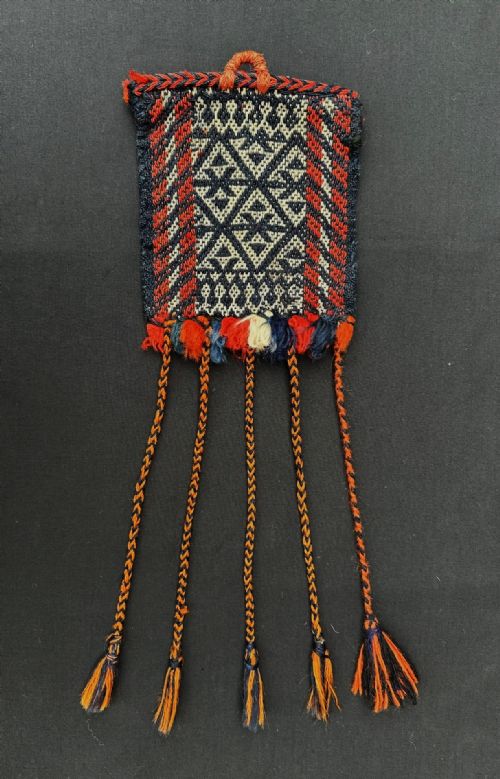
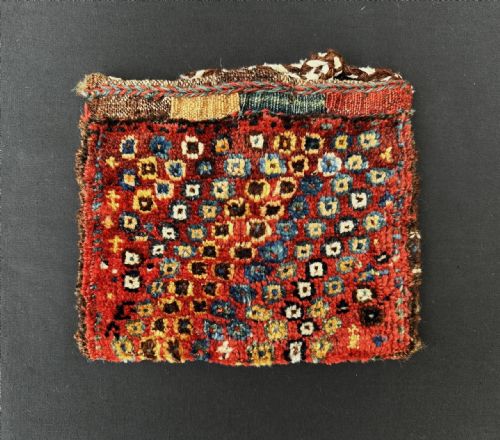
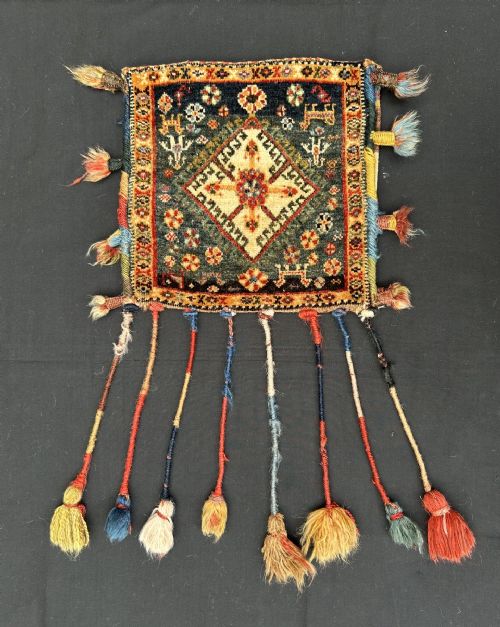
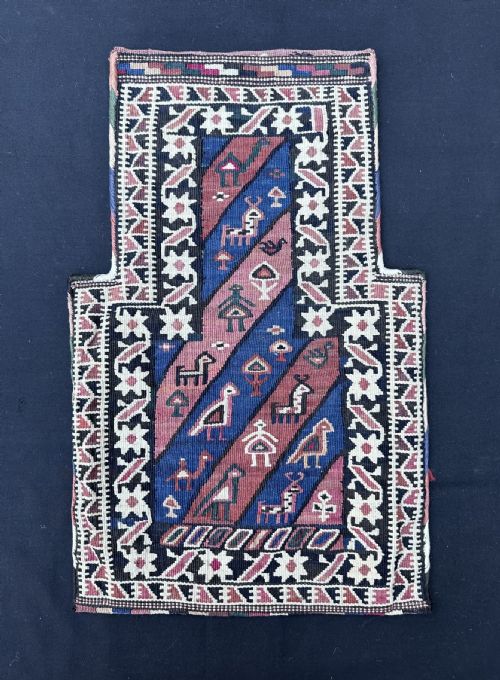
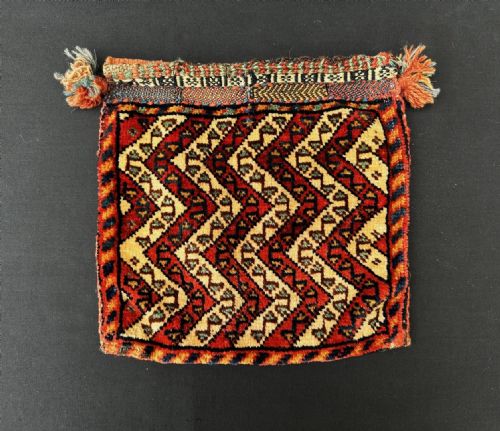
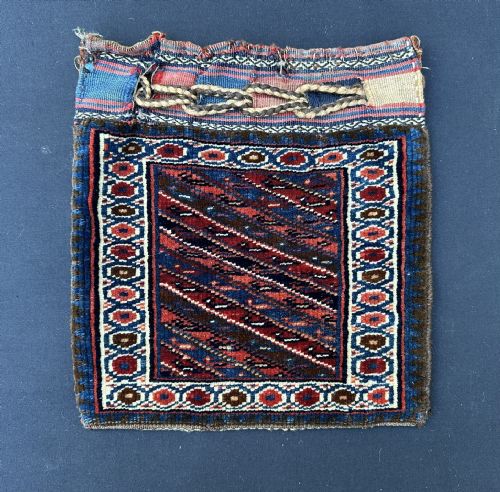
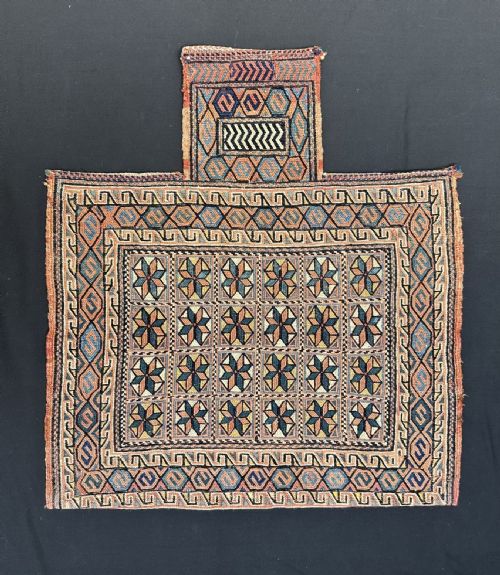
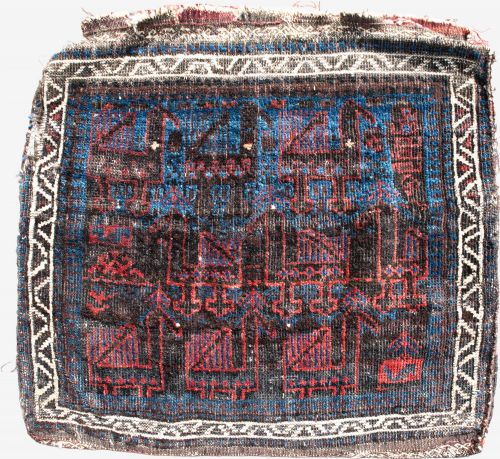
A persian rug pouch typically manifests as a small utility container such as a vanity-bag, salt-bag, or chanteh, created by nomadic confederacies across Persia. The pieces on this page originate from tribal groups like the Qashqa'i, Afshar, and Baluch, spanning the late nineteenth and early twentieth centuries. These woven objects served specific utilitarian functions within nomadic households, carrying tobacco, pipes, salt, or personal items.
Makers designed these miniature textiles with specific regional patterns, distinguishing the salt-bags of Khorassan from the vanity-bags of Fars province or the saddle-bags of Azerbaijan. The forms range from complete double pouches to single face panels and complete pairs of kilim bags. Each variation reflects the weaving traditions and structural requirements of the specific tribe that produced it.
Materials and Construction
Weavers constructed these pieces using handspun wool for the pile and flatweave surfaces, supported by cotton foundations in specific regions. Natural dyes provide the characteristic palette, yielding deep tones that anchor the geometric and tribal motifs. Artisans occasionally integrated cowrie shells into the design scheme for ornamentation.
Techniques varied from pile weaving and soumak work to banded weft designs and flatwoven kilim structures. Many surviving examples retain their original wool or flatweave backs, maintaining the integrity of the initial construction.
The listings feature wool, cotton, natural dyes, and cowrie shells across pieces dated from 1860 to 1920.
Evaluating the Weaving
Quality rests upon the precision of the tribal patterning and the density of the knotting or flatweave structure. Pieces executed with exceptional finesse display finer handling of the wool and greater complexity in the geometric layout.
The survival of original elements, including backing materials and edge finishes, elevates an example. The depth and clarity of the natural dye palette further distinguish standard utility pieces from exceptional tribal works.
The Persian Rug Pouch Glossary
- Chanteh
- A small Persian tribal bag or personal pouch. These miniature textiles were traditionally used for carrying personal belongings.
- Namakdan
- A traditional Persian salt-bag. These narrow-necked containers were woven by nomads to store and transport rock salt.
- Soumak
- A flatweaving technique where pattern yarns are wrapped over the warp threads. This method creates a durable surface with a braided appearance on the face.
- Kilim
- A tapestry-woven carpet or bag face made without a pile. These flatwoven pieces rely solely on the interweaving of warp and weft threads.
- Tayefeh
- A sub-tribe or clan within a larger nomadic confederacy. This designation helps pinpoint the specific origin of tribal weavings.
Persian Rug Pouch: Frequently Asked Questions
What is a chanteh?
A chanteh is a small Persian tribal bag used by nomads to carry personal items. These pieces represent a distinct category of miniature nomadic textiles.
Collectors prize them for their concentrated tribal designs and portable format. They serve as accessible examples of village and nomadic weaving traditions.
How were salt bags used?
Nomadic groups used salt bags, or namakdans, to store rock salt for household consumption and livestock. Their distinctive narrow necks prevented the contents from spilling during transit.
Families hung these pouches inside tents or packed them on animals. The strong weave protected the contents from moisture and dust.
What is a vanity bag?
A vanity bag is a small personal pouch used by nomads to hold grooming items, amulets, or small possessions. These containers were often kept close at hand in the tent.
They display the same intricate tribal motifs found on larger carpets. Each piece showcases the aesthetic preferences of the specific maker.
How do I identify tribal origins?
Tribal attribution relies on specific structural traits, colour palettes, and motif arrangements unique to each weaving group. Regional identifiers often appear in the border patterns and structural techniques.
Reference literature and comparative examples assist in linking specific designs to regions like Fars province, Kerman, or Khorassan. The specific wool characteristics also offer clues to geographic origin.